
Risk qiymətləndirilmiş yüklər hətta Çin standartlarına uyğun daşınmaları belə necə yavaşlatır
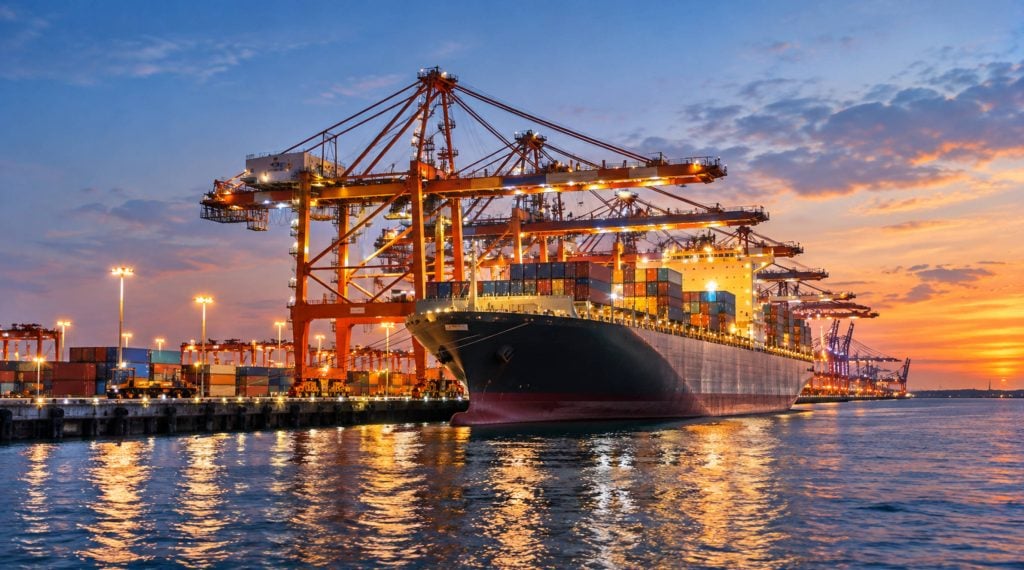
A container leaves Yantian with a clean commercial invoice, a matching packing list, and an ISF filed well ahead of the loading deadline. Every box is exactly what the paperwork says it is. By the time the vessel reaches Los Angeles or Long Beach, the importer has done everything a compliance checklist would ask of them. And yet the cargo still gets pulled for a hold, sits at the terminal for a week, and racks up demurrage that eats into the margin on the entire order. This scenario has become common enough in 2026 that it is no longer treated as bad luck by experienced freight forwarders — it is treated as a predictable side effect of how U.S. Customs and Border Protection now decides who gets examined.
The reason is a shift that has been building for several years and has now fully arrived: customs enforcement is no longer built around inspecting a shipment on its own merits. It is built around a score, generated before the ship even docks, that weighs the shipment against the importer’s history, the product category, the country of origin, and a growing web of trade-policy triggers tied specifically to China. Understanding how that score is built, and why a technically compliant shipment can still land in the wrong bracket, has become essential reading for anyone moving freight out of China this year.
What makes this shift harder to plan around is that it is largely invisible until it isn’t. There is no dashboard an importer can check to see their current score, no notification that a threshold has been crossed, and no appeal process for a shipment that simply looked slightly different from the pattern the model expects. The first sign most companies get that their risk profile has shifted is a hold notice from their broker — by which point the container is already sitting, the clock on demurrage is already running, and the only real question left is how quickly the paperwork can be resolved.
From Manual Checks to Predictive Risk Engines
For most of the past two decades, CBP’s targeting relied on a mix of manifest review, random selection, and flags tied to specific tariff lines or known bad actors. That system still exists in name, but the mechanics underneath it have changed. CBP’s Automated Targeting System now runs on machine learning models trained on years of seizure records, audit outcomes, and global trade data, and it scores a shipment’s risk before the container is even loaded, using entry history, HTS classification patterns, and the importer’s track record as inputs rather than waiting for a single red flag to appear at the border.
That predictive layer got a significant policy boost in mid-2026. Executive Order 14411, Strengthening Customs Enforcement, published in the Federal Register on June 10, directed CBP to tighten importer-of-record verification, bond requirements, broker accountability, and origin enforcement, with a rollout structured across 45-, 90-, and 180-day windows and full compliance required by the end of November 2026. Alongside it, a new system referred to internally as Detective Border was introduced specifically to catch transshipped goods before release rather than during a post-entry audit, closing a loophole that had let mislabeled or minimally processed Chinese goods slip through under another country’s origin marking.
The scale of the shift shows up in the numbers CBP itself has published. Comparing similar windows before and after January 2025, the volume of shipments flagged for post-release discrepancies rose sharply, and the associated revenue assessments tied to those discrepancies climbed into the tens of billions of dollars. None of this means every shipment is being physically opened — most still are not — but it does mean the model deciding who gets a second look is drawing on far more data, updated far more often, than the manual review process it replaced.
CBP has also been explicit that this is not just an AI story on the import side — the Department of Justice has leaned more heavily on the False Claims Act over the same period to pursue civil penalties against importers accused of undervaluation, misclassification, or evasion of Section 301 and 232 duties. That combination means a data inconsistency that once might have drawn a routine correction can now, in the wrong pattern, become the starting point for a much larger civil inquiry, which is part of why brokers describe 2026 compliance less as a paperwork task and more as an ongoing data-discipline exercise.
Why “Compliant” No Longer Guarantees a Clean Pass
The uncomfortable part of a predictive risk model is that it does not score a single shipment in isolation. It scores a relationship. An importer with years of consistent, accurate filings builds up a lower baseline score over time, and a single shipment from that importer benefits from that history even if it looks slightly unusual. An importer with a thinner track record, vague product descriptions on past entries, or shipments tied to a country or factory that has appeared in enforcement data before starts every new shipment from a higher baseline — regardless of whether that particular container has anything wrong with it at all.
Forced labor enforcement adds another layer that catches compliant shippers off guard. The Uyghur Forced Labor Prevention Act operates on a rebuttable presumption: any goods made wholly or partly in Xinjiang, or sourced from any entity on the UFLPA Entity List, are presumed to involve forced labor and are barred from entry unless the importer can produce clear and convincing evidence otherwise. That presumption applies even when the importer had no knowledge of a sub-supplier’s location, which means a shipment can be technically compliant on the buyer’s end and still get detained because a raw material several tiers back in the supply chain traces to a flagged region.
In 2026, the list of sectors drawing this kind of scrutiny expanded well beyond the cotton and polysilicon cases that first made headlines. The Forced Labor Enforcement Task Force added caustic soda, copper, jujubes, lithium, and steel to its priority list, while apparel and textiles remain the single most detained category and electronics carrying lithium-ion batteries or polysilicon components are being flagged at record rates. The table below summarizes where enforcement attention is currently concentrated.
| Sector / Product Category | Why It Is Flagged | Typical Risk Signal |
| Apparel, textiles, footwear | Longest-running UFLPA priority sector; cotton, rayon, silk and synthetic fiber origin all under review | Unclear fiber or fabric origin documentation |
| Electronics & lithium-ion batteries | Polysilicon and battery mineral supply chains link back to flagged regions | Component sourcing not traceable past tier-1 supplier |
| Steel, aluminum & auto parts | Added as a 2026 priority sector amid transshipment concerns | Origin marking inconsistent with mill certificates |
| Solar cells & modules, copper, lithium | Direct supply-chain links to Xinjiang production | Entity List match anywhere in the sub-supplier chain |
| PVC, vinyl flooring & plastics | Raw chemical origin increasingly scrutinized | Missing chain-of-custody for base chemicals |
It also helps to remember that transshipment concerns are no longer confined to obviously suspicious routes. A White House trade policy report released in mid-2026 named more than forty countries as elevated-risk transshipment points, including several major trading partners whose overall volumes are large enough to provide cover for relabeled or minimally processed Chinese goods. For an importer sourcing components from more than one country and assembling them into a finished product, that broader net means origin documentation now has to hold up to scrutiny even when China is only one link in a longer chain, not the final shipping point.
What a Risk Score Actually Costs You
The financial impact of an elevated risk score rarely shows up as a single line item — it accumulates across several charges that only appear once a container has already missed its free time at the port. Demurrage is charged by the carrier or terminal once the free period, typically three to seven days, expires. Detention applies separately when an empty container is not returned on time. On top of those carrier-side charges, CBP exam fees, additional trucking for container transfer to an exam site, and storage at the terminal or a bonded facility all stack on top of each other the longer a hold lasts.
Freight forwarders who track this closely put the numbers in stark terms: a routine seven-day delay past free time can add well over a thousand dollars per container in demurrage alone, before exam fees or storage are even counted, and in higher-cost port markets the daily rate can run several hundred dollars once a container passes into the steeper tiered pricing that most carrier tariffs apply after the first few days. For a mid-value container of consumer goods, that is often enough to erase the margin the importer was counting on for the entire order.
| Xərc komponenti | Tipik 2026 Aralığı | Tətbiq edildikdə |
| Demurrage (per container/day, after free time) | 100 dollar - 400 dollar + | Container remains at the terminal past the carrier’s free period |
| Detention (per container/day) | $ 50 - $ 150 | Empty container returned late to the carrier |
| CBP exam / intensive exam fee | 300 dollar - 2,000 dollar + | Shipment selected for document review, scan, or physical exam |
| Additional storage / CFS handling | $100 – $500+ per week | Cargo held for exam transfer or extended review |
| Late ISF penalty | Hər qayda pozuntusu üçün 5,000 dollara qədər | Importer Security Filing missed the 24-hour pre-load deadline |
A useful way to see how quickly this compounds is to walk through a plain example. A mid-sized importer bringing in twenty-five thousand dollars’ worth of China-origin electronics can already expect duties, government fees, and brokerage to add up to roughly forty percent of the cargo’s value under current Section 301 and MPF rates. Layer a single week of demurrage and an intensive exam on top of that baseline, and the total landed cost for that one container can climb well past what the same order would have cost to import even eighteen months ago, before either the duty structure or the exam frequency shifted as far as they have.
Multiply any of these figures by a week or two of holdup, and it becomes clear why brokers increasingly describe a high risk score not as a compliance issue but as a cash-flow issue. A shipment that eventually clears without a single penalty can still cost the importer thousands of dollars simply for having sat in the queue longer than it should have.
The Small Mistakes That Push a Clean Shipper Into the Red Zone
Most elevated risk scores trace back to a handful of avoidable triggers rather than genuine wrongdoing. A mismatch between the ISF filed before loading and the final entry summary is one of the most common — even a small discrepancy in weight, quantity, or product description can be enough for the model to flag the entry for a closer look. A commercial invoice value that does not quite match the packing list, even by a modest amount, produces the same effect, because the system is built to treat inconsistency itself as a signal, independent of whether the underlying goods are actually a problem.
Relying on a supplier’s DDP quote is another trap that catches otherwise careful importers. It feels convenient on paper, but the buyer remains the legal importer of record regardless of who arranged the shipping, and if the supplier misclassifies the goods or under-declares value to shave costs on their end, the U.S. importer is the one who owns the resulting fines and back duties. A generic or overly broad HTS code chosen for convenience rather than accuracy has the same effect — it may pass on the first shipment and then trigger a manual review the moment the pattern repeats across several entries.
The De Minimis Shockwave
Layered on top of these individual triggers is a structural change that reshaped the entire volume of formal entries CBP has to process. Since the $800 duty-free de minimis threshold for China-origin goods was eliminated in late 2025, every parcel — not just full container loads — now requires a formal entry and duty payment. Importers who once split large orders into hundreds of small, duty-free packages are now filing formal entries for all of them, and the resulting surge in entry volume has strained processing capacity at major hubs. Even fully compliant, well-documented shipments can get pulled into longer queues simply because the system as a whole is processing far more formal entries than it was built to handle a year ago.
Why the Bottleneck Feels Worse at Certain Ports
Not every gateway is absorbing this shift the same way. Los Angeles and Long Beach still handle the largest share of China-origin ocean volume, and importers moving through those ports describe a system that is fast when everything lines up — release can happen within a day or two for a clean entry filed before the vessel even arrives — but unforgiving the moment something does not. A single wrong digit in an HTS code or a value mismatch between invoice and packing list is often all it takes to trigger a manual review that adds five to seven days on top of an otherwise routine transit.
East Coast and Gulf ports have absorbed some of the overflow as importers diversify routing to spread out risk, but that diversification carries its own tradeoff: a forwarder unfamiliar with a newer gateway’s exam patterns can inadvertently reintroduce the very inconsistencies that a more experienced, single-provider process would have caught earlier. The lesson many importers have taken from this in 2026 is less about which port to choose and more about making sure the same team is managing documentation across whichever ports the cargo actually moves through.
Rebuilding a Lower-Risk Profile Without Slowing Down Sourcing
The good news buried inside this stricter environment is that risk scores respond to consistency, and consistency is something an importer and its logistics partner can actually control. Filing the ISF at least 24 hours before loading, and making sure the description, weight, and value on that filing match the eventual entry summary exactly, closes off the single most common trigger in the current system. Treating HTS classification as a standing discipline rather than a one-time decision — reviewing it whenever a product changes materials, packaging, or components — prevents the kind of drift that eventually catches an automated reviewer’s attention.
Supply chain mapping matters just as much as paperwork accuracy now that forced labor enforcement reaches several tiers back from the direct supplier. Importers in the flagged sectors are increasingly asking their factories for documented origin trails on raw materials, not just finished-goods certificates, precisely so they have something to hand CBP if a shipment is questioned rather than scrambling to produce it after a container is already detained. None of this eliminates risk entirely, but it moves the importer’s baseline score in the right direction over time, which is exactly how the model is designed to reward good behavior.
How Topway Shipping Helps Compliant Shippers Stay Ahead of the Score
Since 2010, Topway Shipping, headquartered in Shenzhen, has worked specifically on the China–U.S. lane, and the founding team’s combined background of more than fifteen years in international logistics and customs clearance shapes how the company approaches this exact problem. Rather than treating booking and customs clearance as separate handoffs between different vendors, Topway manages the full chain — first-leg transportation out of the factory, overseas anbar, customs clearance, and last-mile delivery — under one coordinated process, which removes several of the points where documentation typically drifts out of sync between parties.
That single-provider structure is particularly useful against the ISF-mismatch and invoice-inconsistency triggers described above, because the same team that books the ocean freight is also the team preparing the entry paperwork, rather than two separate companies reconciling numbers after the fact. For shippers who need flexibility rather than a fixed container size, Topway also offers both full-container-load and less-than-container-load ocean freight from China to major ports worldwide, which lets importers consolidate smaller orders without resorting to the kind of split-shipment habits that de minimis enforcement has made far riskier than it used to be.
For importers who are unsure whether their current classification or documentation practices are quietly pushing their risk score upward, working with a forwarder that has clearance expertise built in — rather than outsourced — gives visibility into potential red flags before the container ever leaves China, which is a considerably cheaper place to fix a mismatch than a bonded facility at the Port of Los Angeles.
Nəticə
Risk-based targeting is not going away, and the trend line through 2026 points toward more automation, more data sources, and more scrutiny of the full supply chain rather than less. For importers moving cargo out of China, that means compliance can no longer be treated as a single-shipment checklist. It has to be treated as an ongoing track record — one built through consistent filings, accurate classification, mapped supply chains, and a logistics partner who understands exactly where the current triggers sit. Shippers who make that adjustment now will spend 2026 clearing customs in days rather than weeks; those who do not will keep discovering, container by container, that being technically compliant and being scored as low-risk have quietly become two different things.
FAQ
Q: Does a high customs risk score mean my shipment did something wrong?
A: Not necessarily. The score reflects the importer’s history, product category, and consistency of documentation as much as the current shipment itself, so a fully compliant container can still be flagged for review.
Q: Which China-origin goods face the most scrutiny in 2026?
A: Apparel and textiles remain the top UFLPA priority category, alongside electronics with lithium-ion batteries or polysilicon components, and newly added sectors including steel, aluminum, copper, lithium, and caustic soda.
Q: How much can a customs hold actually cost per container?
A: Between demurrage, detention, exam fees, and storage, a week-long hold can add well over a thousand dollars to a single container, and costs climb quickly the longer the container sits past its free time.
Q: Did the end of the $800 de minimis exemption really affect large importers too?
A: Yes. The surge in formal entries from smaller parcels has strained processing capacity industry-wide, which has lengthened queues even for importers with large, well-documented shipments.
Q: What is the single most common trigger for an unnecessary hold?
A: A mismatch between the Importer Security Filing and the final entry summary — even a small discrepancy in description, weight, or value — is consistently cited as the most common avoidable trigger.
Q: Can a freight forwarder actually lower an importer’s risk score?
A: A forwarder cannot change CBP’s model directly, but a provider that manages booking, documentation, and clearance together — like Topway Shipping — can eliminate the inconsistencies between vendors that most often cause a score to rise.