
Heç kimin sizə demədiyi gizli 125-300 dollarlıq broker haqqı (Çindən ABŞ-a çatdırılma)
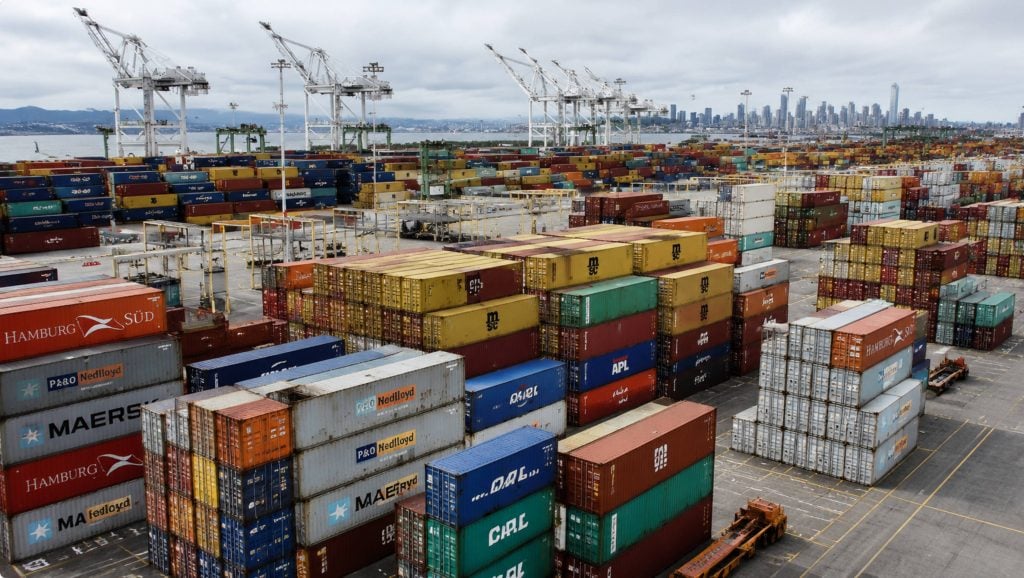
Eventually each importer gets the same unpleasant revelation. The goods quote was reasonable, the supplier invoice was as expected, and then a bill arrives from the customs broker for somewhere between $125 and $300 – a charge that never showed up on any of the prior paperwork. It isn’t a fraud and it’s not a mistake. It’s a structural cost of importing from China to the United States in 2026 and if nobody told you about it before your first shipment, you’re far from alone.
This charge was not always attached to each lot. For years, low-value imports from China entered the US duty-free and mostly fee-free under a law known as Section 321 de minimis. That loophole is closed.” The exemption disappeared for Chinese-origin items and all shipments, large or small, need a formal or informal customs entry. Every entry comes with a broker cost. This article explains exactly where the $125-300 comes from, why it’s so fluid, what extra costs tend to go along with it, and how skilled importers keep the amount under check.
None of the figures given here is theoretical. These are based on the actual structure of CBP fees in 2026 and what freight forwarders and customs brokers are quoting for real China-to-US entries, so take it as a working reference and not a rough estimate.
Why This Fee Suddenly Exists: The End of De Minimis for China
For the past 20 years, parcels worth at less than $800 have been allowed to enter the United States without any duty or official customs process. That one guideline was the financial motor underpinning much of direct-to-consumer dropshipping and small-parcel e-commerce out of China. Nearly four million low-value packages crossed the border daily at its peak under this exemption.
That changed in 2025. The de minimis exemption has been repealed for goods from China and Hong Kong, with enforcement becoming completely routine in the second half of the year and remaining firmly in place through 2026. The practical result is easy to describe, but costly to live with: a $40 phone case and a $40,000 cargo of furniture now both processed via the same customs machinery, and both involve broker engagement, filing fees and – depending on classification – duty and tariff exposure.
This is the basis of the fee that catches so many vendors out. The brokers haven’t upped their prices. It is that a class of shipment that used to skip the broker altogether now needs one, every time.
Also important is that this is a lasting change and not a momentary surge in enforcement. While previous reports had indicated that some categories may be subject to carve-outs or phase-in periods, there is no hint of a return to blanket duty-free status for Chinese shipments as of mid-2026. Those sellers who built entire business models on the old $800 barrier have had well over a year to modify their price, and most of the ones still standing have already integrated the broker charge into their landing cost calculations rather than treating it as a one-off shock.
What a Customs Broker Actually Does — and Why It Costs Money
A licensed customs broker is more than just a paperwork mediator. U.S. brokers are licensed by Customs and Border Protection to file entries on behalf of the importer, categorise the products under the correct Harmonised Tariff Schedule code, compute duties and applicable tariffs, submit the entry summary and be the point of əlaqə if CBP has queries or flags a shipment for inspection.
That work has actual liability. An incorrect HTS code might result in underpaid duty, penalties, or a shipment being held up at the port while changes are made. Brokers price their services accordingly and the fee tends to scale with the complexity of the entry, not only the value of the items. The lower end of the range is a single-line, low complexity cargo; the higher end is typically an entry with multiple product lines, government agency approval or a first time importer of record.
Plus there is a bond and licensing cost that most importers never see. All registered brokers are subject to continuing education requirements, carry errors-and-omissions coverage and are answerable directly to CBP if an entry turns out to be false. None of that infrastructure is cheap, and the flat cost that is charged every entry is how brokers recoup it across a huge volume of shipments rather than charging it hourly, which would be significantly more expensive for ordinary importers.
Where the $125-300 Actually Comes From
The broker fee is just one item in a small pile of costs that comprise the actual cost of clearing a shipment. Below is a table depicting the separate components most sellers will experience on a conventional China to US entrance in 2026.
| Haqq | Tipik Məbləğ | Tətbiq olunur |
| Gömrük brokerinin haqqı | Giriş üçün $125 - $300 | Every formal or informal entry |
| Malların emal haqqı (MPF) | 0.3464% of cargo value (min ~$33.58, max ~$651.50) | Nearly all commercial entries |
| Liman Baxımı haqqı (HMF) | Yük dəyərinin 0.125%-i | Yalnız dəniz daşımaları |
| İdxalçı Təhlükəsizlik Sənədi (ISF) | $ 25 - $ 50 | Ocean shipments (filed 24 hrs before departure) |
| Customs exam / inspection fee | $100+ if selected | Randomly or risk-selected shipments |
None of these data look spectacular in isolation. The difficulty is that they stack, and are additive on top of any duty or section 301 tariff owing on the products themselves. The seller who just budgets for freight and product cost regularly finds that the landed bill is 30 to 50 percent higher than what the original quote predicted.
A Worked Example: What This Looks Like on a Real Shipment
Numbers are more trustworthy than percentages, so here’s how the charge stack breaks down for two common instances – a little e-commerce item and a mid-size ocean container.
| Ssenari | Yük Dəyəri | Broker haqqı | mpf | HMF | təqribən. Cəmi |
| Single e-commerce parcel | $500 | $ 50 - $ 150 | $27.98 (dəq) | N / A | $ 78 - $ 178 |
| 20ft ocean container | $25,000 | $ 150 - $ 250 | $86.60 | $31.25 | $ 268 - $ 368 |
| Bulk sea container | $50,000 | $ 175 - $ 300 | $173.20 | $62.50 | $ 410 - $ 535 |
Look at how the broker charge hardly varies for a $ 500 parcel versus a $ 50,000 container . MPF and HMF scale with value . For sellers of low value items shipping several little boxes, the broker fee alone might be a larger percentage hit than duty. For large importers shipping entire containers, the cost is absorbed into a lesser percentage of the overall shipment – one reason why consolidation and full-container-load shipping has become more attractive again in 2026.
Why the Fee Range Is So Wide
Quote 5 brokers and you will likely get a different number from each, somewhere in the $125-300 range. There are a couple reasons for the dispersion.
Number of line items
Filing on a single product with a single HTS code is uncomplicated. More of the broker’s time is required, and it often costs more, if you have a mixed pallet with ten distinct SKUs that each need to be classified.
Whether a government agency is involved
Some products – electronics with radio parts, fabrics, articles that come in contact with food, beauty products – may need to be examined by agencies like the FDA or FCC on top of CBP. If a Partner Government Agency is involved, the review time increases and the charge often increases.
First-time importer status
New importers of record without an existing bond or customs history may often pay higher up-front fees while the broker sets up the account, obtains a bond and validates documentation.
Nəqliyyat növü
Air and express couriers typically build a cheaper flat clearance cost into their service. Ocean freight entries are virtually always formal entries, and tend to come in at the higher end of the scale, due to extra files such as the ISF.
Hidden Costs That Travel Alongside the Broker Fee
The broker fee gets the top billing, but it’s not often by itself. The sellers who only planned for that one number are nonetheless astonished by what shows up next to it on the final invoice.
Demurrage and detention fees are charged when a container remains at the port or the chassis is held over its free period – they may reach into the hundreds of dollars a day and they’re among the most damaging surprises to first-time importers of ocean freight. If goods are not collected upon release, storage fees shall be charged. If you need a single entry bond for an occasional shipment or a continuous bond that covers a full year of imports, bond expenses are a separate line item that many first-time importers neglect to account for altogether. Plus the delay it produces. And if a shipment is marked for a CBP exam, that inspection alone can easily add over $100.
And then on top of all this comes the tariff matter, which in 2026 is not minor. The base Section 301 duty now applies to most commodities of Chinese origin, and depending on the product category, the cumulative tariff burden might easily exceed the product’s reported value in percentage terms when additional taxes are considered. A seller who has just priced in the customs broker charge and omitted the tariff stack is operating from a landed cost that is quietly inaccurate from the initial calculation.
It is worth noting that none of these ancillary costs are optional add-ons that a vendor can simply refuse. Demurrage, storage and bond charges are structural components of how ports and CBP operate, and are not an option to avoid once a container has landed. The only real lever an importer has is to minimise exposure to them via better planning: booking pickup appointments before the free time expires, keeping documentation accurate so an exam is less likely to be triggered, and maintaining a continuous bond so there is no scramble to arrange one after the cargo has already arrived at port.
Common Mistakes That Push the Fee Toward the High End
A huge number of the vendors that are paying $300 instead of $125 are paying more because of avoidable process errors, not because of any true complexity in their products.
The most frequent one is the submission of incomplete or conflicting commercial invoices. So if the reported value, product description, or country of origin on the invoice doesn’t match the packing list or the supplier’s paperwork, then the broker has to go back and forth to fix it before submitting, and that extra time gets invoiced. Another delay occurs when the classification discussion starts only after the shipment has left China. If brokers have the HTS guidance in hand, they can pre-clear the entry and file as soon as the cargo is in port. Brokers trying to classify the goods after they arrive will often have to pay rush fees in addition to the base charge. Hiring a different broker for every shipment also eliminates the possibility of establishing the ongoing relationship that results in volume-based pricing. Repeat importers who consolidate with a single logistics partner tend to have their average fee gravitate toward the lower end of the range over time rather than the upper end.
How Experienced Importers Keep the Total Under Control
That doesn’t mean sourcing from China ceases to make sense, it just means the planning has to be done earlier and more accurately than it used to be. A few habits differentiate the sellers who safeguard their margins from the vendors who get blindsided every quarter.
Getting the HTS classification right the first time means you don’t overpay duty and don’t face penalties for underpaying it, and it’s better to have that classification confirmed by someone who does it every day than to guess from a similar product’s code. Consolidating multiple smaller packages into fewer, bigger entries spreads out the flat broker fee and the ISF cost over a greater cargo value, dramatically lowering the effective clearance cost per unit for anyone shipping frequent tiny parcels. As soon as the shipment frequency exceeds a few entries per year, the cost of a continuous customs bond rather than paying for a single entry bond each time pays for itself relatively rapidly.
The second lever that many sellers underutilise is just working with a partner that manages the whole chain, instead of juggling four unconnected connections, including a separate factory pickup, freight forwarder, customs broker, and last-mile carrier. This is where the economics shift with a full service logistics company.
Topway Shipping, founded in 2010, has been offering logistics services from China to the US out of its Shenzhen headquarters. The founding team has more than 15 years of experience in international logistics and customs clearance, especially in the China-U.S. lane. Topway Shipping covers the entire chain – from first leg transportation from the factory, overseas anbar, customs clearance and last mile delivery, along with flexible FCL and LCL ocean freight to major ports around the world – so clients receive one coordinated quote and one accountable partner, instead of a broker fee appearing as a disconnected surprise weeks after the freight was booked. That kind of unified service is frequently the simplest option for sellers who are tired of trying to reconcile many separate bills to see what a shipment really cost.
Planning a Realistic Landed Cost in 2026
The biggest single mentality shift for anyone still importing from China is to stop thinking of the product price and freight quote as the expense of doing business and start thinking of them as the beginning point. A realistic landing cost includes the broker fee, MPF, HMF if applicable, ISF for ocean shipments, any duty or Section 301 tariff exposure, and a reasonable buffer for storage or exam risk. Sellers who price that complete stack in, from day one, are never surprised. Sellers who don’t tend to relearn that lesson on their very first formal entrance.
This broader picture warrants a re-examination of shipping mode choice. Express courier services sometimes provide a bundled, all in price that already accounts for clearing charges that might make them more predictable, although not always cheaper, for very small, regular shipments. Ocean freight, particularly for full container loads, tends to have the lowest per unit cost if sufficient volume is available to spread the flat costs over a greater shipment value – that’s the same calculation a partner like Topway Shipping helps sellers with before they decide on a shipping method.
And timing matters as well. It’s one of the more underutilised levers. By filing documentation and classification requests early, before the cargo even leaves the port of origin, a broker has the ability to pre-clear an entry so that the shipment proceeds through customs the instant it lands, rather than sitting about waiting for paperwork to be worked out after arrival. That one habit is typically what distinguishes a cargo that clears in a day from one that accumulates several days of unanticipated storage charges on top of everything else, more than any haggling over the flat fee itself.
Nəticə
The $125-300 customs broker cost isn’t hidden because someone is trying to dupe importers. It’s hidden because the rules changed faster than most sellers’ mental model of exporting from China. The de minimis exemption is gone and every single shipment is now a formal customs entry, not a fee-free parcel process. The broker fee is the visible tip of a cost stack which includes MPF, HMF, ISF forms, probable exam charges and full tariff exposure. Knowing exactly where that fee comes from, why it varies as it does and what tends to accompany it is the difference between a landed cost estimate that stands up and one that silently collapses at the port. Experience working with an established full chain logistics partner with over 15 years of experience handling the China-U.S. channel, like Topway Shipping, converts a pile of disparate surprises into one number merchants can actually plan around.
Regardless of the size of a seller, the questions below address the details that most typically arise once the whole charge stack is presented.
FAQ
Q: Is the $125-300 broker fee a one-time cost or does it apply to every shipment?
A: It applies to all formal or informal customs entries, therefore in practice all shipments from China since the de minimis exception was removed. There is no exception for multiple shipments from the same importer.
Q: Can I avoid the broker fee by using a freight forwarder instead?
A: Nope. Freight forwarders who do customs clearance either have a licensed broker on staff or subcontract it to one, so the cost is still buried somewhere in the price. A transparent forwarder will break it out rather than roll it up into some mysterious surcharge.
Q: Does the broker fee change based on the value of my shipment?
A: Not really. The fee is based on the complexity of the entry, such as the number of line items, agency approval and documentation, not the cargo value. This is why it impacts low value parcel shippers more as a percentage of shipment cost.
Q: What is the difference between MPF and the broker fee?
A: The Merchandise Processing Fee is a government fee collected by CBP on a percentage of cargo value. The broker fee is a private service cost paid to the licensed broker for filing the entry. They work on one on top of the other.
Q: Is it cheaper to ship by air or by sea once all these fees are included?
A: Depends on the volume. Small, infrequent shipments are frequently better handled by express couriers that combine the clearing price with the cost of delivery, whereas high-volume ocean freight will normally have a lower overall cost per unit because the flat costs are spread over a larger value of container.
Q: Can a logistics partner like Topway Shipping reduce my average broker fee over time?
A: The average cost per entry often goes down by consolidating shipments and developing a continuing relationship with one provider who handles first-leg transport, warehousing, clearance and last-mile delivery together. Repeat volume and cleaner documentation both reduce the time a broker needs to file each shipment.