
ভ্যাঙ্কুভার বনাম প্রিন্স রুপার্ট: আপনার পণ্যের জন্য কোন বন্দরটি বেশি উপযুক্ত?
ভূমিকা
Every month, thousands of containers leave Shanghai, Ningbo, Qingdao and Shenzhen with the same final line on the booking form: discharge at a British Columbia port. On paper, the choice between Vancouver and Prince Rupert looks small. Both sit on Canada’s Pacific coast, both are served by the big ocean alliances, and both hand containers to transcontinental railways. In practice, the decision shapes your door-to-door transit time, your inland trucking bill, your exposure to disruption and, for some shippers, whether your cargo arrives on the day your customer expects it.
The timing of this decision also matters more than usual. According to Sea-Intelligence data reported in May 2026, laden imports across North America’s West Coast fell 3.9% year on year to 3.49 million TEU in the first quarter, yet Prince Rupert grew 7.8% to roughly 491,000 TEU, and Vancouver and Prince Rupert together absorbed about one million TEU. Shippers are clearly testing Canadian gateways, and many of them are discovering that the two ports are very different tools for very different jobs.
This guide compares the two ports the way a freight forwarder would: scale, ocean transit, rail reach, terminal capacity, cost drivers, labour risk and cargo fit. You will find current 2025 and 2026 figures, side-by-side tables and a practical framework you can apply to your next booking.
Why This Choice Matters in 2026
Canada’s west coast is no longer a side door into North America. Vancouver handled a record 170.4 million tonnes of cargo in 2025, up 8% on the previous year, and its container throughput reached 3,778,996 TEU, a 9% rise on the 3,473,822 TEU recorded in 2024. Prince Rupert moved 26.3 million tonnes in 2025, a 14% increase, with container traffic through DP World’s Fairview Container Terminal rising 20% to 885,797 TEU. Both ports are growing, but they are growing from very different bases and in very different ways.
Several forces are pushing importers to look north. Congestion and labour uncertainty at US West Coast ports have made risk-averse shippers diversify. Trade-policy friction between Washington and Beijing, including proposals for fees on Chinese-built and Chinese-operated vessels calling at US ports, has led analysts to predict cargo diversion toward Vancouver and Prince Rupert. Canadian ports also sit outside the United States Harbor Maintenance Tax, which has long been one of the structural arguments for the Canadian rail corridors into the Midwest.
Still, caution is warranted. Analysts quoted in 2026 coverage describe the recent Canadian gains as a recovery rather than a takeover, noting that US ports retain most West Coast volume and have deeper hinterland connections. For a shipper, the lesson is simple: Canadian gateways are a strong option for the right cargo, not a universal answer.
| Indicator (2025 unless noted) | ভ্যাঙ্কুভার বন্দর | প্রিন্স রুপার্টের বন্দর |
| মোট কার্গো | 170.4 million tonnes (record) | 26.3 মিলিয়ন টন |
| Cargo growth vs 2024 | + + 8% | + + 14% |
| ধারক ভলিউম | 3,778,996 TEU (+9%) | 885,797 TEU at Fairview (+20%) |
| কন্টেইনার টার্মিনাল | চার | One (Fairview) |
| Terminal operator(s) | GCT and DP World | ডিপি ওয়ার্ল্ড |
| Class I rail access | CN and CPKC | CN only |
| Next major capacity step | Roberts Bank Terminal 2, mid-2030s | Fairview expansion to 1.8M TEU |
Sources: Vancouver Fraser Port Authority and Prince Rupert Port Authority 2025 results, as reported by AJOT, Port Technology and DP World. Figures rounded.
পোর্ট প্রোফাইল
Port of Vancouver: Scale and Breadth
Vancouver is Canada’s largest port by a wide margin, and it behaves like a full-service gateway rather than a specialist. Its four container terminals handled 1.88 million TEU in the first half of 2025 alone, with laden imports up 4% to 963,000 TEU. Deltaport and Vanterm are run by Global Container Terminals, while DP World operates Centerm, whose expansion lifted capacity by more than 60% to 1.5 million TEU, and Fraser Surrey Docks. Deltaport sits at Roberts Bank in Delta, about 30 kilometres south of downtown, and is the port’s deepest-draft, big-ship facility.
What makes Vancouver powerful is the surrounding ecosystem. The Lower Mainland holds the country’s densest concentration of container freight stations, transload warehouses, empty depots, customs brokers and truckers. Autos, grain, forest products, fertilizer and project cargo all pass through the same port authority, which means carriers, trucking firms and rail yards are used to a wide variety of freight. Nearly all of Canada’s Asian-built vehicle imports arrive here, and the port is also the natural entry point for retail cargo headed to British Columbia and the Prairies.
Port of Prince Rupert: Speed and Simplicity
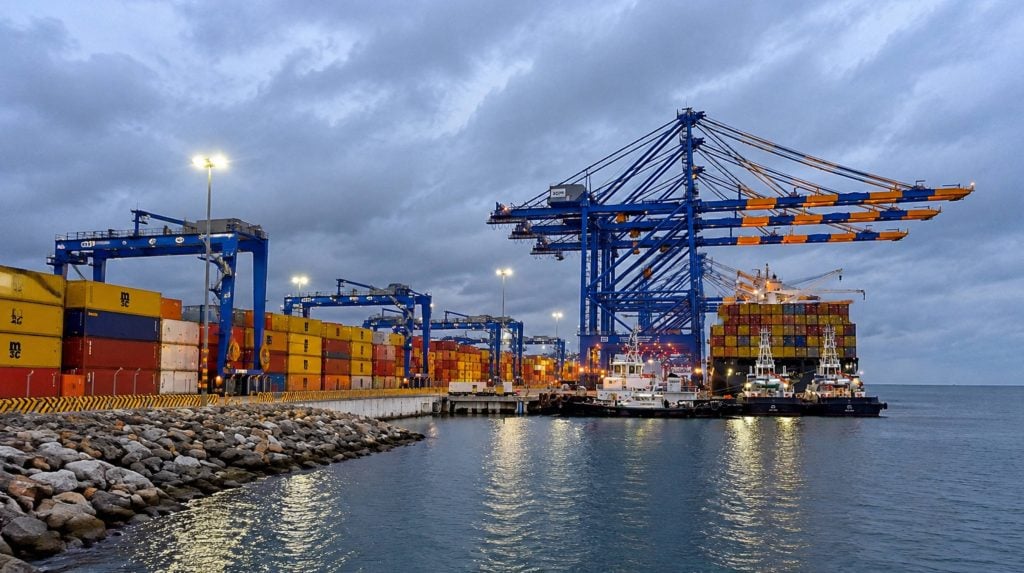
Prince Rupert is a different animal. It lies about 745 kilometres northwest of Vancouver, on an ice-free harbour that the port authority describes as up to 68 hours closer to Shanghai in sailing time than Los Angeles. The port is built around one idea: take a container off a ship and put it on a train as fast as possible. Fairview Container Terminal has on-dock rail capacity of about 19,000 feet, so a single working gang can move boxes from vessel to railcar without long truck or yard shuffles.
The terminal has run under DP World since 2015, and it has been expanded in stages. Stage 1A, finished in July 2022, lifted sustainable capacity to 1.6 million TEU, and Stage 1B is designed to take it to 1.8 million TEU. In 2026, the port is also adding new export and logistics capacity, including the CANXPORT transload facility, which Ray-Mont Logistics will operate, and the port authority says more than 50% of containers returning to Asia currently go back empty, which gives exporters real equipment availability.
The trade-off is scale. Prince Rupert is a city of roughly 12,000 people, so the local pool of trucking, গুদাম and labour is thin compared with Vancouver. It also has a single terminal and a single Class I railway. For cargo that is bound for inland rail, that simplicity is a strength. For cargo that needs local delivery, consolidation or flexible routing, it can be a constraint.
Exports deserve a mention, because many forwarders and shippers focus only on imports. Vancouver is the main outlet for Canadian grain, fertilizer, energy and forest products, and about 10% of the grain it handles now moves in containers, up from three or four percent a decade ago. Prince Rupert is building its own export identity, with transload capacity for agricultural, forestry and plastic resin products. Cross-border sellers that import on one leg and export on the return leg can sometimes improve their economics by using the same gateway in both directions, since empty equipment is easier to find where export demand is growing.
হেড টু হেড তুলনা
The table below condenses what matters most when you are choosing a gateway. Treat it as a screening tool; your specific origin port, carrier service and destination will move the answer.
| গুণক | ভ্যাঙ্কুভার | প্রিন্স রূপার্ট |
| সেরার জন্য পরিচিত | Volume, variety, local market access | Speed to North American interior by rail |
| Ocean transit from Shanghai | About 11 to 13 days on direct services | About 10 to 12 days on direct services |
| শিকাগো যাওয়ার রেলপথ | About 5 days (CN and CPKC) | About 4.5 days (CN) |
| Local trucking and warehousing | Deep, competitive market | সীমিত, উন্নতিশীল |
| Carrier and sailing choice | প্রশস্ত | Narrower, growing under Gemini services |
| Local delivery in BC and Alberta | চমত্কার | Possible, but not the natural fit |
| Single-point-of-failure risk | Lower (multiple terminals and two railways) | Higher (one terminal, one railway) |
| ভবিষ্যৎ ক্ষমতা | RBT2 adds about 2.4M TEU in the mid-2030s | Fairview to 1.8M TEU, further phases possible |
Transit figures are indicative averages from port, rail and industry sources. Always confirm against the specific carrier schedule at the time of booking.
Read the table as a pattern, not a scoreboard. Vancouver wins on breadth and redundancy, while Prince Rupert wins on the specific job of moving Asian cargo quickly to the continental interior. Many shipments fall clearly into one camp, and the rest need a closer look.
Transit Time: Ocean and Rail
The Ocean Leg
Geography gives Prince Rupert its headline advantage. The port sits on the great circle route from Asia, which is why DP World describes it as offering the shortest sailing time between key Asian markets and North America. Industry sources put direct sailings from Shanghai to Prince Rupert at roughly 10 to 12 days, compared with about 11 to 13 days to Vancouver. That is a gap of a day or two on a good week, not a revolution.
The advantage is also uneven across origins. It is strongest for cargo starting in northern and central China, Japan and Korea, where the great circle path is shortest. From South China, including Shenzhen and Yantian, the ocean gap narrows because ships often rotate through several Asian ports before heading east. If your factories sit in the Pearl River Delta, do not assume Prince Rupert will save you two days; check the actual vessel rotation and the first port of call in North America.
The Rail Leg to Chicago and Toronto
Rail time is where Prince Rupert often earns its reputation. CN lists average rail transit from Prince Rupert of 4.5 days to Chicago, and 5.5 days to both Toronto and Memphis, and the railway has promoted a Shanghai-to-Chicago move of about 16 days when ocean and rail are tightly connected. CN’s own network map shows about five days from Vancouver to Chicago, so the rail difference is smaller than the headline suggests, but it compounds with the ocean gap.
| ছন্দোময় | ভ্যাঙ্কুভার হয়ে | প্রিন্স রুপার্টের মাধ্যমে | Typical difference |
| Shanghai to BC port (ocean) | 11 থেকে 13 দিন | 10 থেকে 12 দিন | প্রায় ১ দিন |
| BC port to Chicago (rail) | প্রায় 5 দিন | প্রায় 4.5 দিন | প্রায় ১ দিন |
| Shanghai to Chicago, door to ramp | প্রায় ১০ থেকে ১৪ দিন | প্রায় ১০ থেকে ১৪ দিন | মোটামুটি ২ থেকে ৫ দিন |
| BC port to Toronto (rail) | Comparable, service-dependent | প্রায় 5.5 দিন | Varies by train |
Ranges combine published rail and port figures and exclude port dwell, ramp dwell and drayage. Real-world results vary with vessel schedules and congestion.
Those numbers assume smooth operations. Dwell time at the port and at the rail ramp can wipe out a one-day advantage, and an unplanned disruption can swamp everything else. The fastest route on paper is not always the fastest route in a given week, which is why a forwarder who tracks live performance is worth more than a static comparison.
When a Day Really Matters
A one- to three-day gain is meaningful for replenishment cargo, seasonal goods with fixed in-store dates and e-commerce inventory that is already sold forward. It matters much less for slow-moving inventory, bulky furniture shipped well ahead of demand, or cargo that will sit in a distribution centre for weeks anyway.
Seasonality adds another layer. During the peak months from late summer through autumn, vessels tend to arrive in bunches and terminals can see yard utilisation climb, which stretches dwell on both sides of the Pacific. Prince Rupert’s compact, rail-centred design helps it recover quickly when conditions are good, while Vancouver’s larger yards and multiple terminals give it more room to absorb surges, at the cost of more complex truck and rail coordination. Neither port is immune, so the sensible approach is to book earlier for peak cargo and avoid planning around best-case transit numbers.
Terminals, Capacity and Congestion Risk
Speed means little if a terminal is full. Both ports are under capacity pressure, but in different ways. Vancouver has multiple terminals and can shift volume between them when one is stressed, though the port authority itself concedes it still trails peers on global port performance indexes and projects a capacity shortfall without new supply. Roberts Bank Terminal 2, a three-berth facility approved by the federal government in 2023, would raise the port’s container capacity by roughly 50%. In April 2026 the port authority and Global Container Terminals signed a memorandum of understanding to explore a partnership on the project, and the authority expected to choose a preferred builder in summer 2026. Operations are not expected to start until the mid-2030s, so shippers should plan around today’s capacity for the next several peak seasons.
Prince Rupert has one container terminal and one chance to get things right. Fairview has been running close to its sustainable capacity in strong months, which is why Stage 1B and the surrounding logistics projects matter. Reports in 2026 count more than 800 million dollars of port, logistics and energy investment in and around Prince Rupert, and total port volume to the end of July 2026 reached 15.4 million tonnes versus 15.2 million a year earlier, a sign of steady rather than explosive growth.
| প্রান্তিক | অবস্থান | অপারেটর | নোট |
| Deltaport | Roberts Bank, Delta | জিসিটি | Largest, big-ship capable, about 2.4M TEU capacity |
| Vanterm | বারার্ড ইনলেট | জিসিটি | North shore access, strong local delivery |
| Centerm | বারার্ড ইনলেট | ডিপি ওয়ার্ল্ড | Expanded to about 1.5M TEU |
| Fraser Surrey Docks | ফ্রেজার নদী | ডিপি ওয়ার্ল্ড | River terminal, mixed cargo |
| Fairview, | প্রিন্স রূপার্ট | ডিপি ওয়ার্ল্ড | On-dock rail, 1.6M TEU now, 1.8M planned |
Capacity figures from terminal operators and rail network information; rounded. Check current berth windows before relying on them.
For importers, the practical takeaway is that Vancouver offers more places to be rescued and Prince Rupert offers a cleaner path when everything works. If your supply chain has little buffer, redundancy has real value.
Cost Structure: What Actually Changes the Bill
People often ask which port is cheaper, and the honest answer is that it depends on the lane, the carrier contract and the season. Ocean freight to Vancouver and Prince Rupert is typically quoted close together, because carriers price Canadian west coast base ports as a region. The real differences show up in what happens after discharge.
For cargo headed to Vancouver’s own market, Prince Rupert makes no financial sense: you would pay to move boxes 745 kilometres. For cargo headed to the US Midwest or Ontario, a Prince Rupert routing can reduce transit days, and fewer days in transit means less pipeline inventory carrying cost and less demurrage exposure. Rail contracts, container availability and free-time terms then decide whether the saving is real.
Trucking is the other big variable. Vancouver has a deep drayage market, which usually means more competitive local rates but also more exposure to trucker capacity swings, as the port has seen when container truckers have threatened strikes over detention pay. Prince Rupert’s compact geography keeps drayage short, but the small local market means fewer options for transload or storage if something goes wrong.
US-bound shippers should note that Canadian ports are not subject to the Harbor Maintenance Tax, but that is not a way to avoid duty. US customs duties, including Section 301 and any other origin-based measures, follow the goods rather than the port, so routing through Canada does not change the tariff your product faces when it enters the United States.
| খরচ চালিকাশক্তি | Where Vancouver tends to help | Where Prince Rupert tends to help |
| মহাসাগর মালবাহী | More carriers competing on price | Similar base rates, occasional service-specific offers |
| মজুদ বহন খরচ | মধ্যপন্থী | Lower on US Midwest and Ontario lanes |
| Drayage and local delivery | Competitive, many options | Short hauls, limited provider pool |
| Storage and transload | প্রচুর | Growing, with new facilities coming online |
| Demurrage and detention risk | Depends on terminal congestion | Depends on train departure cut-offs |
| US Harbor Maintenance Tax | প্রযোজ্য নয় | প্রযোজ্য নয় |
Rail Access and Inland Reach
Vancouver is served by both CN and CPKC, which gives shippers a choice of networks and a hedge against operational problems on either. CPKC reaches the US Midwest and, through its Mexico connection, deep into North American supply chains, while CN reaches Chicago, Memphis, Toronto and Montreal. Competition between two railways also tends to improve service and pricing at the margin.
Prince Rupert is a CN-only port. The railway is exceptionally well matched to the terminal, with long on-dock tracks and a direct, relatively uncongested mainline to Edmonton and onward to Chicago, but there is no second option. When CN was involved in a rail stoppage in August 2024, both ports were affected and the federal labour minister ordered the dispute to binding arbitration to restart operations. A single-railway gateway concentrates that kind of risk.
For Western Canada, rail matters less than you might think. Cargo for Calgary, Edmonton, Saskatoon and Winnipeg can come through either port, and which one wins depends on the rail service, equipment availability and the customer’s receiving location. In those cases, ask your forwarder for both options and compare them as a total landed time, not as a port name.
It also helps to understand how the two ports differ in their ability to recover. Vancouver’s multiple terminals and two railways give it more paths to clear a backlog, but the sheer size of the queue after a stoppage can take weeks to work through. Prince Rupert’s smaller volume means a backlog can clear faster once trains resume, yet a single point of failure means any problem on the CN mainline hits every container at once. Neither pattern is better in the abstract. What matters is whether your inventory buffer can survive the specific type of disruption your cargo is most exposed to.
Labour and Disruption Risk
Canada’s west coast has a recent history of disruptions that every shipper should price into their planning. In July 2023, about 7,400 longshore workers went on strike, halting container operations at both Vancouver and Prince Rupert and collapsing rail moves of containers into the United States. The strike lasted 13 days before a tentative deal collapsed and unrest resumed, producing weeks of backlogs. In August 2024, a short rail stoppage hit CN and CPKC, and in late 2024 port employers locked out union foremen at both ports after talks broke down.
Disruptions at the two ports are usually correlated, because the same union and employers bargain for both ports and the same railways serve them. That reduces the value of splitting volume between Vancouver and Prince Rupert as a pure labour-risk hedge. If risk is your main worry, the stronger hedge is a plan that can pivot to a US West Coast port, or a Canadian east coast routing, rather than one that simply swaps one BC port for another.
| কাল | ঘটনা | Impact on both ports |
| জুলাই 2023 | ILWU Canada strike, 13 days initially | Container operations halted, rail flows to the US collapsed |
| আগস্ট 2024 | CN and CPKC rail stoppage | Rail-dependent cargo stranded until arbitration ordered |
| দীর্ঘ 2024 | Foremen lockout | Vessel queues at both ports |
| 2026 | CUSMA review deadline passes without extension | Trade-policy uncertainty, no direct port stoppage |
Compiled from FreightWaves, CBC and Miller Thomson coverage. This table lists events that shaped risk perception, not a complete history.
Good forwarders watch collective agreement expiry dates, rail negotiation calendars and carrier advisories months ahead. If you are shipping peak-season cargo, build in a buffer and keep a documented alternate routing ready before notices go out.
FCL vs LCL: Does the Port Change the Answer?
For full container loads, the port decision is mostly about destination. A 40-foot container from Qingdao headed to a Chicago distribution centre leans toward Prince Rupert, while the same container headed to a Surrey warehouse is a Vancouver shipment. The box is sealed and stays that way until it reaches its destination or an inland ramp.
Less-than-container-load cargo behaves differently. LCL needs a container freight station where boxes are devanned, sorted and released, and the Lower Mainland has far more of that infrastructure than the north coast. Consolidators typically build their weekly Canadian services around Vancouver, so smaller shippers tend to find more sailing frequency and more flexibility there. If you are shipping a few pallets rather than a full box, Vancouver is usually the practical choice unless your forwarder has an established Prince Rupert consolidation lane.
Shippers of e-commerce inventory sit somewhere in between. A seller sending several hundred cartons to an overseas warehouse may fill a full container, but may also prefer to split inventory across two sailings to keep fulfilment centres stocked. In that case, the port question becomes a question of cadence: which gateway offers the more reliable weekly rhythm from your origin, and which one lets you keep the supply pipeline flowing without long gaps between arrivals.
Which Cargo Fits Which Port?
The matrix below translates the comparison into cargo categories. It is a starting point, and the right answer for a specific shipment still depends on carrier service, free time, equipment availability and your inventory strategy.
| Cargo or scenario | Usually better fit | কেন |
| Consumer goods to Chicago and Midwest DCs | প্রিন্স রূপার্ট | Shortest ocean plus direct CN train, fewer transit days |
| Retail goods for BC and Alberta stores | ভ্যাঙ্কুভার | Local delivery, deep warehouse and trucking base |
| Cargo for Ontario and Quebec | উভয় ক্ষেত্রেই | Depends on rail schedule and service strength |
| Cargo from Shenzhen and South China | Often Vancouver | Prince Rupert’s ocean edge narrows from southern origins |
| LCL and small parcels of freight | ভ্যাঙ্কুভার | More consolidation capacity and sailing frequency |
| সময়-সংবেদনশীল পুনঃপূরণ | প্রিন্স রূপার্ট | Compressed schedule, subject to train departures |
| Vehicles, project cargo, bulky items | ভ্যাঙ্কুভার | Broader terminal mix and handling experience |
| Exporters needing empty containers | প্রিন্স রূপার্ট | Empty equipment currently abundant on the return leg |
Planning guidance only. Verify the live schedule and equipment position before committing.
Consider a few realistic scenarios. An apparel importer in Illinois replenishing spring stock from northern China will probably find a Prince Rupert routing saves a couple of days and reduces risk of missing a store reset. A furniture retailer with warehouses in the Lower Mainland gets nothing from Prince Rupert but extra cost. A Toronto electronics distributor may see little difference and should choose on rail service quality instead of port brand.
A growing group of shippers does not choose a single port at all. They select Prince Rupert for steady, time-critical Midwest lanes and keep Vancouver as the default for local, LCL and overflow cargo. That dual-gateway approach requires a forwarder with contracts and customs processes on both sides, but it matches how real supply chains operate.
US-Bound Cargo via Canada: Compliance Essentials
Many readers of this article are looking at Vancouver and Prince Rupert primarily as backdoors into the United States, and the compliance side deserves attention. Containers destined for US markets typically move in bond across Canada, which means advance electronic manifest data, correct bonded carrier arrangements and consistent documentation across the ocean carrier, the railway and the customs broker. Errors at this stage cause holds that no amount of transit speed can fix.
The geopolitical backdrop has made the topic sensitive. Canada and the United States remain in a tense trade relationship, and the mandatory CUSMA review deadline of July 1, 2026 passed without an agreement to extend the treaty to 2042. Although the agreement remains in force, shippers should not assume stability. Origin rules, tariff classification and valuation declarations need to be accurate, since the United States applies duties based on country of origin and product classification, not the port where goods first touched land.
The practical advice is to treat the Canadian leg as part of a single customs process, not as a separate one. Align your Canadian and US filings, confirm who is importer of record, and make sure the broker on each side understands the cargo.
A Practical Framework for Choosing
A simple sequence of questions resolves most cases. Start with the final destination: if it is in or near British Columbia, Vancouver is almost always the answer, and if it is in the US Midwest or Ontario, both ports are candidates. Next, look at the origin: northern and central China, Japan and Korea favour Prince Rupert more than South China does.
Then weigh your tolerance for disruption. A shipper with deep inventory can accept a single-terminal, single-railway gateway, while a shipper running lean may prefer Vancouver’s redundancy. Finally, check the details that quietly decide outcomes: the specific vessel service, free time at the terminal, equipment availability, train departure cut-offs and the reliability of the drayage partner. Compare quotes on a landed-time basis, not on a port-name basis, and revisit the choice each quarter because both ports are changing quickly.
Booking Details That Quietly Decide the Outcome
Most missed delivery dates are not caused by the port you chose. They come from small operational details that nobody checked before the booking was confirmed. The first is the vessel service itself. Two sailings both marked as Vancouver or Prince Rupert can have very different rotations, with one calling at several Asian ports before crossing the Pacific and another sailing almost directly. Ask for the full port rotation, not just the discharge port, and compare the estimated arrival at the Canadian port against your required ramp or delivery date.
The second detail is the rail cut-off. Intermodal trains leave on fixed schedules, and a container discharged an hour after the cut-off can wait a full day or more for the next departure. A routing that looks two days faster on a brochure can lose that advantage entirely if the vessel’s arrival pattern keeps missing departures. Good forwarders know which services tend to connect to which trains and will flag the weak links before you ship.
Third, think about equipment and free time. Container availability at inland destinations, per diem charges and terminal storage rules differ between ports and carriers. A shipper who plans well negotiates enough free days to cover the realistic dwell at the terminal and the ramp, rather than assuming everything will move on the day of arrival. During peak season, when vessel bunching can create short surges of discharge, extra free time is cheap insurance.
Finally, align your documents early. Commercial invoices, packing lists, HS codes and importer details should be consistent from the factory to the final consignee. Customs holds are one of the few delays that no port or railway can compress, and they hit cross-border and in-bond cargo harder than ordinary domestic moves. A clean document package prepared before the vessel sails is one of the highest-value steps in the entire process.
How Topway Shipping Supports Your Canada Gateway Strategy
Choosing between Vancouver and Prince Rupert is easier when one provider can quote and manage both. Topway Shipping, headquartered in Shenzhen, China, has been a professional provider of cross-border e-commerce logistics solutions since 2010. The founding team has more than 15 years of experience in international logistics and customs clearance, with a strong focus on China to US transportation, which is exactly the lane where Canadian gateways increasingly compete with US West Coast ports.
The service covers the full logistics chain, including first-leg transportation, overseas warehousing, customs clearance and last-mile delivery. Topway Shipping also offers flexible full container load and less than container load ocean freight from China to major ports worldwide. In practice, that means a shipper can compare a Vancouver routing and a Prince Rupert routing on the same lane, with the same documentation discipline from the Chinese origin through to final delivery.
For e-commerce sellers and importers who feed inventory into US fulfilment centres, the value is in the integration. Origin pickup, booking, ocean freight, customs filings, overseas warehousing and last-mile delivery are coordinated rather than stitched together from separate vendors. If you are not sure which gateway fits a given product line, Topway Shipping can model the options by origin port, cargo type and destination before you commit a booking.
উপসংহার
Vancouver and Prince Rupert are complementary rather than interchangeable. Vancouver is the broad, deep, redundant gateway, best for local delivery, LCL, mixed cargo and shippers who value options. Prince Rupert is the focused, fast corridor to the continental interior, best for full containers heading to Chicago, the US Midwest and parts of Ontario, particularly from northern and central Asian origins.
The numbers show that both are winning share in a changing market, but neither is risk free. A single labour or rail event can slow both ports at once, and capacity at Prince Rupert and Vancouver will remain tight until new projects arrive. The best strategy is to match the port to the cargo, build a buffer for disruption, keep customs paperwork clean, and review the decision regularly. Work with a forwarder that can quote both routes honestly, and the choice becomes a competitive advantage instead of a guess.
বিবরণ
Q: Is Prince Rupert always faster than Vancouver?
A: No. It is usually faster to the US Midwest and Ontario, especially from northern and central Asia, but the gap is often one to three days and depends on the vessel service, port dwell and train departures. For local BC delivery, Vancouver is faster in practice.
Q: Can routing through a Canadian port avoid US tariffs?
A: No. US duties follow the country of origin and the product classification, not the port of discharge. Canadian ports do avoid the US Harbor Maintenance Tax, but that is a small component compared with duties.
Q: Which port is better for LCL cargo?
A: Vancouver, in most cases. It has more container freight stations, consolidators and sailing frequency, which is what LCL depends on.
Q: Do a strike at one port affect the other?
A: Often yes. The same union, employers and railways serve both, so disruptions such as the 2023 strike hit Vancouver and Prince Rupert together.
Q: Can Topway Shipping quote both Vancouver and Prince Rupert routings?
A: Topway Shipping handles FCL and LCL ocean freight from China to major ports worldwide, along with customs clearance, overseas warehousing and last-mile delivery. যোগাযোগ the team with your origin, cargo and destination to compare options.