
Nearshoring yn Meksiko yn 2026: Echte besparrings of gewoan in nije set hoofdpijn?
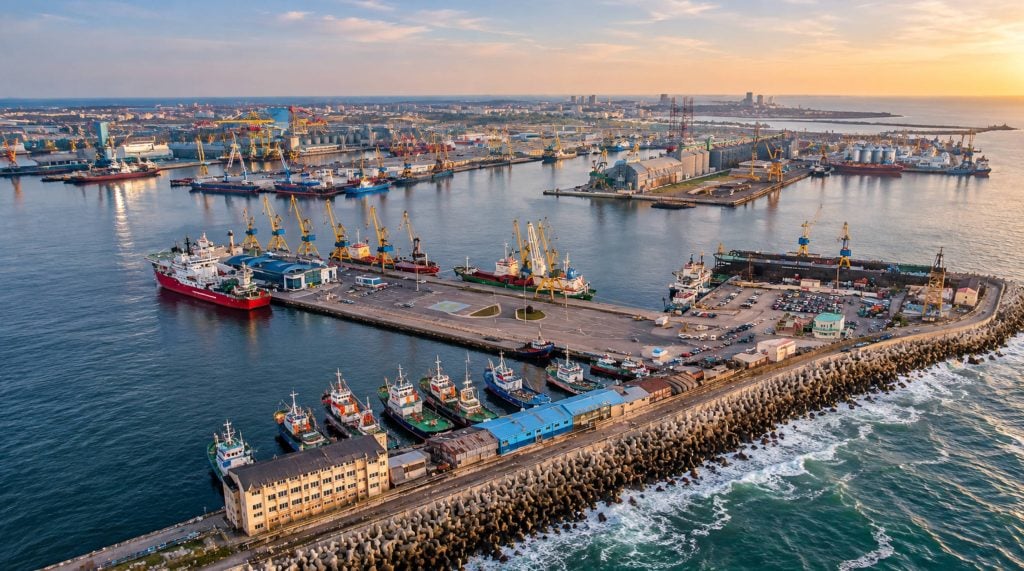
Ask ten freight forwarders whether nearshoring to Mexico is paying off in 2026, and you will likely get ten different answers. Some will point to trucks crossing Laredo in two days instead of container ships spending a month at sea. Others will point to a driver shortage, a stalled USMCA review, and customs paperwork that can stall a shipment for a week. Both answers are correct, which is exactly the problem for anyone trying to plan a supply chain around Mexico this year.
Nearshoring is no longer a theory. U.S. imports from Mexico rose sharply in 2025, factories in Bajío and the northern border states keep expanding, and procurement teams that once defaulted to Shenzhen or Ningbo are now asking their logistics partners for a Mexico option. But “moving production closer” and “actually saving money and time” are not the same thing. This article looks past the marketing slogans and digs into what nearshoring costs, what it saves, and what forwarders and shippers need to get right before they commit.
The Nearshoring Numbers: How Big Is the Shift, Really?
The scale of the shift is easier to see in trade data than in press releases. Mexico’s economy generated roughly $1.86 trillion in GDP in 2025, growing at around 2 percent, and exports to the United States reached about $534.9 billion for the year. That made Mexico the largest single foreign source of automotive components entering the U.S. market, supplying an estimated 42 percent of all imported auto parts. None of that happened overnight; it is the compounding result of several years of factories relocating assembly and light-manufacturing work out of Asia and into Mexican industrial parks.
For freight forwarders, the more telling number is the year-over-year growth rate. U.S. imports from Mexico increased by about 7.4 percent in 2025, a pace that outstrips overall U.S. import growth and signals a structural reallocation of freight volume rather than a short-term blip. Automotive, electronics, medical devices, and consumer goods have led the expansion, and each of those sectors carries a different mix of ocean, air, and cross-border trucking demand.
| Metric | 2025–2026 Figure |
| Mexico GDP (2025) | ≈ $1.86 trillion |
| Mexico exports to the United States (2025) | ≈ $534.9 billion |
| Share of Mexican exports bound for the U.S. | ≈ 81% |
| Growth in U.S. imports from Mexico (YoY, 2025) | + 7.4% |
| Mexico’s share of U.S. imported auto parts | ≈ 42% |
| Estimated Mexican trucking driver shortfall | ≈ 28,000 positions |
| Share of Mexican exports still duty-free under USMCA rules of origin | ≈ 85% |
Those figures tell a growth story, but they also hint at the pressure points this article will come back to repeatedly: a tight labor market for drivers, and a large share of trade that depends on paperwork being done correctly. Growth without infrastructure and compliance discipline is exactly how bottlenecks form.
It also helps to remember where this growth is coming from geographically. The Bajío region, anchored by cities like Querétaro, León, and San Luis Potosí, has become a magnet for automotive and electronics suppliers because it sits within a manageable trucking distance of both central Mexico’s labor pool and the Texas border crossings. Northern border states such as Nuevo León and Chihuahua, meanwhile, are absorbing overflow demand for opslach and light assembly precisely because they shorten the last mile even further. Freight forwarders that once routed everything through a handful of coastal gateways are now having to build relationships across a wider, more dispersed set of inland origins.
Where the Real Savings Actually Come From
The most tangible benefit of nearshoring is time, not necessarily unit cost. A container leaving a Chinese port for the U.S. West Coast typically spends 25 to 30 days in transit before it even clears customs, and that number can stretch further during peak season congestion or when carriers blank sailings to manage capacity. A truck loaded in Monterrey or Querétaro can be at a Texas distribution center in two to five days. That difference changes everything downstream: safety stock requirements shrink, working capital tied up in transit inventory drops, and companies can react to demand swings in days instead of months.
Shorter lead times also reduce exposure to the kind of disruption that defined the previous decade — port congestion, blank sailings, container shortages, and the freight-rate spikes that came with them. A shipper running weekly truckloads from Mexico is simply less vulnerable to a single vessel delay than a shipper depending on one container ship crossing the Pacific.
There is a quieter savings channel as well: markdown risk. Fashion, seasonal goods, and fast-moving consumer electronics lose value quickly if they arrive late or in the wrong quantity. Cutting the order-to-delivery cycle from ten weeks to two weeks lets planners forecast closer to the selling season, which reduces both stockouts and the discounting that follows overproduction.
None of this means nearshoring is automatically cheaper on a per-unit basis. Mexican manufacturing labor and certain raw material inputs can run 10 to 25 percent higher than equivalent costs in parts of Asia, depending on the sector. The savings case has to be built on total landed cost — freight, duties, inventory carrying cost, and risk — not on the factory invoice alone.
Working capital deserves a closer look here too, because it is often the line item finance teams care about most and logistics teams talk about least. Every extra week of transit time is a week of goods sitting on a balance sheet as inventory rather than converting into revenue. For a company financing that inventory, shaving four weeks off a transit cycle can free up a meaningful amount of cash that would otherwise be tied up on the water, cash that can be redeployed into production, marketing, or simply held as a buffer against the kind of demand swings that longer supply chains struggle to absorb.
The USMCA Review: The Elephant in Every Warehouse
No conversation about Mexico freight in 2026 can avoid the USMCA review. The agreement remains fully in force, and tariff preferences, rules of origin, and certification procedures continue to operate as before — nothing changed automatically when the original July 1, 2026 deadline passed without a deal. What did change is the review cycle itself: instead of a review every six years, the three countries now face annual check-ins through 2036, with the first scheduled for July 2027.
The unresolved issues are concentrated but consequential. Washington is pushing for 50 percent U.S.-specific content in vehicles, well above the current 75 percent regional value content threshold split across all three countries, while Mexico is seeking relief from the 25 percent tariff on autos and the 50 percent tariff on steel and aluminum that are already in effect under Section 232. A fourth negotiating round was set for Washington in early September 2026, following a third round in Mexico City that failed to close the gap. Most trade analysts now expect the process to run into late 2026 or beyond rather than wrap up neatly.
Layered on top of the bilateral talks is a separate Section 301 investigation into structural overcapacity across 16 economies, including Mexico, with a ruling that could add new tariffs on automotive, machinery, computing, and medical-device sectors. A related Section 301 forced-labor enforcement action already applies across dozens of economies, Mexico included, though Mexican officials argue it changes little in practice since roughly 85 percent of Mexican exports to the U.S. still qualify for duty-free treatment under existing rules of origin.
| Tariff / Trade Action | Status as of September 2026 |
| Section 232 tariff on Mexican-made autos | 25% |
| Section 232 tariff on steel and aluminum | 50% |
| USMCA-qualifying goods (rules of origin met) | Duty-free (≈85% of Mexican exports) |
| Section 301 forced-labor enforcement action | In force across 60+ economies, including Mexico |
| Section 301 structural overcapacity investigation | Ruling pending; could stack on existing duties |
| Mexico’s tariff on Chinese-made vehicle imports | 50% (effective January 1, 2026) |
The practical takeaway for shippers and forwarders is that USMCA qualification is no longer a paperwork formality — it is the single biggest lever separating a duty-free shipment from one carrying a 25 to 50 percent surcharge. Foreign direct investment into Mexico has already dipped roughly 10 percent year-over-year amid the uncertainty, a reminder that unresolved trade policy has real, measurable costs even before a single new tariff is announced.
Capacity, Drivers, and the Infrastructure Gap
Trade volume is only useful if there is enough capacity to move it. Mexico’s trucking sector is estimated to be short around 28,000 drivers, a gap that mirrors the driver shortage on the U.S. side of the border and creates the same symptoms: rate volatility, longer dwell times at cross-border yards, and less patience for shippers who book capacity at the last minute. Corridors around Nuevo Laredo, Otay Mesa, and El Paso, which already carry a large share of northbound freight, feel this strain first.
Infrastructure has not always kept pace with demand either. Persistent bottlenecks in highway capacity, limited rail-to-truck connectivity in some regions, and security concerns along certain freight corridors continue to add cost and unpredictability. None of these issues are new, but nearshoring has raised the stakes: a delay that was tolerable when it affected a handful of shipments now ripples through much larger, faster-moving cross-border networks.
Forwarders that succeed in this environment tend to treat Mexican trucking capacity the way they treat ocean allocation during peak season — something to book ahead of time, with backup carriers and buffer days built into the plan, rather than a commodity that is always available on demand.
Rail and multimodal options are getting more attention as a release valve for some of this pressure, particularly for heavier or less time-sensitive cargo where a slightly longer transit time is an acceptable trade for lower cost and reduced dependence on scarce truck drivers. Cross-border rail connections between Mexican industrial hubs and U.S. inland points are still underdeveloped relative to demand, but shippers who can split volume between truck and rail tend to have more resilience when either mode hits a capacity crunch.
Customs Compliance: Where Nearshoring Deals Actually Die
Ask any experienced cross-border broker where nearshoring plans go wrong, and the answer is rarely the factory floor — it is the paperwork. A missing certificate of origin, a mismatched HS code, or an incomplete commercial invoice can turn a two-day truck crossing into a week-long hold, and with 85 percent of Mexican exports depending on USMCA preference to avoid tariffs of 25 percent or more, an error is not a minor inconvenience.
Setting up properly in Mexico also means navigating the RFC tax registration, IMMEX maquiladora program requirements for companies doing temporary imports, and the labor-content and wage-threshold rules that determine whether a finished good actually qualifies for USMCA treatment. Companies that treat this as a one-time setup task, rather than an ongoing compliance discipline, tend to be the ones caught off guard when a shipment gets flagged.
The forwarders that add real value here are the ones investing in pre-clearance, digital documentation, and EDI integration with customs brokers on both sides of the border, so that paperwork is verified before a truck ever reaches the bridge rather than while it is sitting in a queue. That shift from reactive to proactive compliance is quickly becoming the dividing line between forwarders who can promise reliable transit times and those who can only promise an average.
Nearshoring vs. Offshoring: A Practical Cost Comparison
Total landed cost, not factory price, is the right basis for comparing Mexico to a traditional Asia-based supply chain. The table below lays out the trade-offs as they typically look in 2026 for a mid-size importer moving general cargo or light manufactured goods.
| Factor | Asia Ocean Freight (Offshoring) | Mexico Cross-Border (Nearshoring) |
| Typical transit time to U.S. door | 25–35 dagen | 2–7 dagen |
| Inventory buffer typically required | 6-8 wike | 1-3 wike |
| Kosten foar ienheidsproduksje | Faak leger | Often 10–25% higher, sector dependent |
| Tariefbleatstelling | Section 301 China duties, in some cases well above 25% | Duty-free if USMCA rules of origin are met (~85% of exports) |
| Main cost risk | Ocean freight rate volatility, peak-season surcharges | Trucking capacity, driver shortage, border delays |
| Main compliance risk | Anti-dumping and Section 301 classification | Rules-of-origin certification and RFC/IMMEX setup |
Read this way, nearshoring rarely wins on every line item. It wins on speed, inventory efficiency, and — for companies that get their USMCA paperwork right — tariff exposure. It can lose on raw unit cost and on capacity reliability if a shipper has not lined up dependable trucking and warehousing partners in advance. The companies getting the best results tend to run a hybrid model: keeping some sourcing and raw-material supply in Asia while shifting final assembly, packaging, or light manufacturing to Mexico to capture the USMCA benefit and the shorter last-mile transit.
Building a Reliable Bridge Between China, Mexico, and the U.S.
This hybrid reality is exactly why the China-to-Mexico and China-to-U.S. ocean leg has not disappeared — it has simply become one link in a longer chain rather than the whole chain. Many of the components, sub-assemblies, and raw materials used in Mexican factories still originate in China, which means the first-leg ocean freight, customs clearance, and warehousing on the Asia side matter just as much as the trucking network on the North American side. A nearshoring strategy that only plans for the Mexico-to-U.S. leg and treats the China-to-Mexico leg as an afterthought is planning half a supply chain.
This is the gap that a forwarder with deep roots in China–U.S. logistics is built to close. Topway Shipping, headquartered in Shenzhen since 2010, has spent more than 15 years focused on international logistics and customs clearance between China and the United States. Its service line covers the full chain that a nearshoring strategy actually needs: first-leg transportation out of China, overseas warehousing, customs clearance on both ends, and last-mile delivery, alongside flexible full-container-load and less-than-container-load ocean freight to major ports worldwide.
For a shipper piecing together a China–Mexico–U.S. flow, that combination matters in practice. FCL service handles the steady, high-volume component shipments a factory needs on a predictable schedule, while LCL flexibility absorbs the smaller, more frequent replenishment orders that come with a shorter, more responsive nearshoring model. Overseas warehousing gives shippers a buffer point to consolidate, relabel, or stage inventory before it moves onward, and coordinated customs clearance on the China side reduces the chance that a documentation gap upstream turns into a border delay downstream in Mexico or the U.S.
Whether a company is fully committed to a Mexico assembly strategy or still testing the waters with a partial shift, working with a forwarder that already understands both the Pacific crossing and the practical realities of cross-border North American freight removes one of the biggest sources of risk: the handoff between legs of the journey, where miscommunication and paperwork mismatches most often occur.
That kind of continuity matters most during the moments a supply chain is most likely to break — a factory in China falling behind schedule, a Mexican customs broker flagging a mismatched invoice, or a peak-season surge that strains warehouse space at both ends. A forwarder that only owns one leg of the journey has limited ability to fix a problem that starts somewhere else in the chain. A forwarder that owns first-leg transport, warehousing, customs, and last-mile delivery together can absorb a delay in one link without letting it cascade through the rest of the shipment’s journey to the end customer.
Konklúzje
Mexico nearshoring in 2026 is neither the guaranteed windfall the early hype suggested nor a strategy not worth pursuing. The savings are real for companies that value speed, inventory efficiency, and tariff certainty, and the trade data shows the shift is structural rather than temporary. But the headaches are equally real: a USMCA review that has run past its original deadline without resolving auto content and metals tariffs, a trucking sector short tens of thousands of drivers, and a customs process where a single documentation error can erase the tariff advantage the whole strategy depends on.
The companies doing well in this environment share a common trait — they plan the full chain, not just the Mexico leg. They lock in trucking capacity ahead of demand, keep USMCA certification current rather than treating it as a one-time task, and work with logistics partners who can move goods reliably from the factory in China through warehousing and customs and all the way to the final delivery point in the United States. Nearshoring rewards preparation over enthusiasm, and in 2026, preparation starts with picking the right partners on both ends of the supply chain.
FAQs
Q: Is nearshoring to Mexico actually cheaper than shipping from Asia?
A: Not always on a per-unit basis — Mexican manufacturing costs can run higher for some sectors. The savings usually come from shorter transit times, lower inventory carrying costs, and duty-free treatment under USMCA rules of origin, so the comparison needs to be made on total landed cost, not factory price alone.
Q: What is the current status of the USMCA review?
A: The agreement remains fully in force. The original July 1, 2026 deadline passed without a renewal agreement, shifting the review to an annual cycle through 2036. Talks between the U.S. and Mexico continued into a fourth round in September 2026, mainly over automotive content rules and steel and aluminum tariffs.
Q: What is the biggest operational risk for shippers moving into Mexico?
A: Trucking capacity and customs documentation are the two most common failure points. An estimated shortage of around 28,000 drivers strains cross-border schedules, while errors in rules-of-origin certification can turn a duty-free shipment into one facing tariffs of 25 percent or more.
Q: Does nearshoring mean companies stop sourcing from China entirely?
A: Usually not. Many nearshoring strategies are hybrid models where raw materials or components still come from China by ocean freight, with final assembly, packaging, or light manufacturing shifted to Mexico to capture shorter last-mile transit times and USMCA tariff benefits.
Q: How can a freight forwarder help reduce nearshoring risk?
A: A forwarder that manages the full chain — first-leg transportation from China, overseas warehousing, customs clearance, and last-mile delivery, plus flexible FCL and LCL ocean freight — reduces the handoff risk between supply chain legs, which is where most delays and documentation errors occur.