
Kirim ti Cina ka Éstonia: Sistem Bea Cukai Paling Digital di Éropa
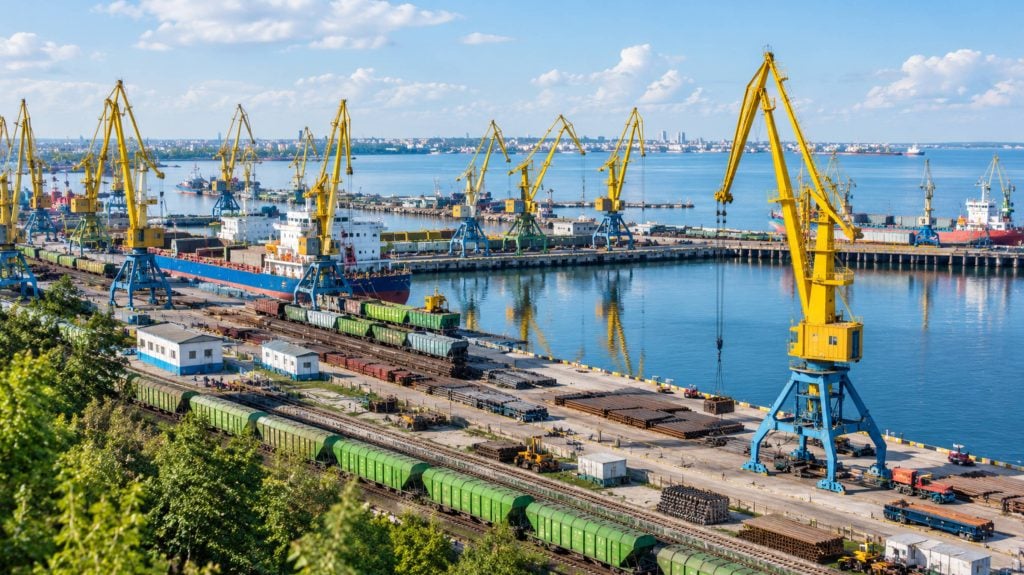
When importers consider entrance points into the European Union, Estonia is rarely at the top of the list. Because of their vast ports and extensive transportation systems, Germany, the Netherlands, and Poland typically come to mind first. However, Estonia has emerged as a subtly alluring entry point into the Baltic region, Scandinavia, Finland, and even markets close to Russia for an increasing number of Chinese exporters and international e-commerce vendors. The cause is more related to how the nation manages paperwork than it is to the size of its ports.
Estonia’s customs administration adopted the same principle as one of the world’s first entirely digital administrations. Declarations, tariff categorisation, VAT payments, and even ID verification for business registration can all be done online, frequently without the need to exchange any paper documents. That difference directly results in less delays, fewer human errors, and a more predictable landed cost for a freight forwarder or an online retailer shipping large quantities of small packages. This article explains what makes Estonia’s customs system unique, how items actually go from Chinese factories to Estonian warehouses and doorsteps, what the EU’s 2026 customs reform means for sellers, and how a logistics partner like Topway Shipping fits into that process.
Why Estonia Stands Out as Europe’s Digital Customs System
It took time for Estonia to establish a reputation for digital governance. The nation constructed its public services around digital identity from the bottom up after regaining independence in 1991 since it had virtually no legacy IT infrastructure to impede it. Through the Estonian Tax and Customs Board’s e-MTA platform, the same philosophy was applied to the administration of taxes and customs. With only one login, businesses and individuals can use e-MTA to handle excise responsibilities, pay import VAT, submit customs declarations, and monitor the status of shipments.
The identification layer beneath this system is what makes it truly beneficial for importers rather than merely a marketing talking point. A person or a business representative can digitally sign customs documents with the same legal weight as a handwritten signature using Estonian ID cards, mobile IDs, and smart IDs. A Chinese exporter’s local partner or customs agent in Estonia does not need to physically visit a government office to file paperwork on the exporter’s behalf because foreign enterprises who apply for e-Residency have access to many of the same tools.
This digital-first strategy helps freight forwarders avoid one of the most frequent bottlenecks in European customs clearance: the delay between a container’s arrival at port and the completion of the necessary documentation. A missing stamp or a document sent to the incorrect office can lengthen the clearance process in many EU nations. Estonia’s system was created to reduce precisely that kind of friction, and in terms of processing speed and transparency, it routinely ranks among the EU’s more effective customs administrations.
A Trusted Trader Environment
Estonia is also a full participant in the EU’s Authorised Economic Operator (AEO) program, which offers businesses with a track record of compliance quicker clearance and fewer physical inspections. An AEO-certified importer or its customs broker can frequently clear routine shipments from China with little manual intervention when combined with the digital declaration system, saving physical checks for higher-risk cargo.
Physical Infrastructure Behind the Digital Layer
Without the physical infrastructure to support it, none of this digital efficiency would be significant. Muuga Harbour, which is a part of the larger Port of Tallinn complex, is located near open sea and is always free of ice, which is not always the case for a port on the Baltic Sea in the winter. Once container cargo passes customs, it has an easy route inland thanks to Muuga’s good road and rail connections to the rest of Estonia and Latvia. For angkutan barang hawa, Tallinn Airport fulfils a similar function by acting as a small but well-connected hub for supplies that must swiftly travel to other locations throughout Northern Europe.
Forwarders are increasingly routing Baltic-bound cargo through Estonia instead of only treating it as a secondary stop after larger Western European ports because of the combination of a capable, ice-free port, a working airport, and a customs system that rarely becomes the bottleneck.
China-Estonia Trade in Context
Despite having a small population, Estonia is a major center for logistics and reexport. Instead of remaining inside Estonian boundaries, goods that arrive at Muuga Harbour near Tallinn or transit through Estonia’s international airport often continue on to Latvia, Lithuania, Finland, and Sweden. Because of this transit function, products from China are frequently sent to fulfilment centers that distribute them throughout the larger Baltic and Nordic markets rather than just Estonian consumers.
A significant portion of the commodities that are transported from Chinese companies into Estonian warehouses are electronics, consumer goods, furniture components, textiles, and machinery parts. Packages transported directly to individual customers via systems that rely on postal and courier networks instead of conventional container freight have emerged as a second, faster-growing segment in cross-border e-commerce. Although all categories transit via the same digital customs backbone, once the new 2026 regulations—discussed later in this article—come into force, they are handled very differently.
The primary kinds of items that are frequently transported from China to Estonia are listed in the table below, along with the preferred means of transportation for each.
| Kategori Barang | Mode Angkutan has | Common Destination Pattern |
| éléktronika konsumén & asesoris | Sea FCL/LCL, air for urgent restock | Puseur distribusi régional |
| Cross-border e-commerce parcels | Air freight, postal/courier networks | Direct to consumer, EU-wide |
| Perabot, barang-barang imah | Laut FCL | Warehousing then road onward |
| Tekstil & apparel | Sea LCL, rail for mid-volume | Retail and wholesale buyers |
| Komponén mesin | Laut FCL | Industrial end users |
Over the past few years, the profile of goods entering Estonia has changed, especially due to cross-border e-commerce. Ten years ago, the average shipment from China to Estonia was a full container of finished items headed for a wholesaler; today, a rising portion of the volume consists of considerably smaller parcels that are sent directly to individual purchasers via online marketplaces. This change is precisely why low-value consignments are given so much attention in the EU customs reform that is covered later in this article: the sheer volume of small parcels has rendered the previous, more manual clearing method unfeasible at scale.
Main Shipping Routes from China to Estonia
Moving cargo from China to Estonia can be done in a variety of ways, and the best option typically depends on factors including budget, urgency, and cargo volume. In actuality, there are three main routes: air freight, either directly or through a European hub; angkutan karéta api between China and Europe; and ocean freight via Baltic or Northern European ports.
Angkutan laut Samudra
For anything more than small packages, ocean freight continues to constitute the mainstay of trade between China and Estonia. Instead of sailing straight into Muuga Harbour, the majority of containers arrive at a major European transshipment center like Rotterdam, Hamburg, or Gdansk before continuing on to Estonia via feeder vessel or truck and rail. Compared to a single-port visit, this two-leg arrangement adds a few days, but Estonia has access to the same regular, reasonably priced sailings that serve the rest of Northern Europe. While less-than-container-load service allows smaller enterprises to share container space and avoid paying for capacity they do not need, full-container-load shipments are ideal for importers transporting consistent, high-volume merchandise.
Angkutan Rel Cina-Éropa
Rail freight has developed into a true compromise between the speed of air cargo and the cheap cost of ocean shipping. Before linking to further road or rail legs into the Baltic nations, trains departing from locations like Chengdu, Chongqing, and Yiwu enter Europe via Kazakhstan, Russia, and Belarus, or increasingly by alternate lines. Rail is appealing for mid-volume shipments where angkutan laut is too sluggish but air freight is too costly because transit times typically range from two to four weeks, depending on the route and any border delays.
hawa angkutan barang
For high-value gadgets, urgent replenishment stock or e-commerce goods that must reach a consumer within days rather than weeks, air freight is the quickest but most costly choice. Before a final short-haul segment or road transfer completes the trip, the majority of aviation cargo headed for Estonia passes through a major EU hub airport. The speed premium of air freight is frequently worth the additional expense for international e-commerce vendors using lean inventory strategies in order to prevent stockouts.
A broad idea of how these three modes compare to each other may be found in the comparison below.
| mode | Waktos Transit Biasa | Biaya Relatip | Paling Cocog Pikeun |
| Samudra FCL / LCL | poé 30-45 | Terendah | Bulk, kargo non-urgent |
| Angkutan karéta api | poé 18-28 | Mid-range | Pertengahan volume, barang sénsitip waktos |
| Pengiriman udara | poé 3-8 | Pangluhurna | Urgent, high-value, or small parcels |
How Customs Clearance Actually Works at Estonian Ports
Regardless of the route of transportation, clearance occurs through the same e-MTA declaration system whenever goods physically arrives at Muuga Harbour, an inland train station, or Tallinn Airport. An electronic customs declaration containing the commercial invoice, packing list, transport document, and the appropriate product classification number under the EU’s Combined Nomenclature is submitted by an importer, or more frequently, a licensed customs broker working on the importer’s behalf.
Instead of automatically inspecting every shipment, Estonian customs personnel use a risk-scoring methodology to identify packages for physical inspection after reviewing the declaration electronically. If duties and VAT have been paid or a deferment arrangement is in place, low-risk, well-documented shipments from reputable importers typically clear within hours of the declaration being accepted. Shipments that are identified for inspection, whether due to inadequate documentation, banned products, or value issues, naturally take longer and may require a physical examination at the port or an inland customs station.
At the declaration stage, accuracy is crucial. The most frequent causes of a shipment being held include an erroneous HS code, an undervalued invoice, or a discrepancy between the packing list and the actual cargo. These mistakes are typically detected more quickly than in paper-based systems since the entire process is digital, which is beneficial for compliance but leaves less opportunity for the kind of informal rectification that occasionally occurs in less automated customs environments.
A duty deferment account, which enables customs duty and VAT to be settled periodically rather than shipment by shipment, is frequently established by larger importers with regular shipping quantities. While precise declarations are still necessary, this streamlines cash flow and lowers the administrative burden of completing a separate payment each time a container clears, which is important for any company shipping several containers from Chinese suppliers each month.
The essential documentation needed to get a commercial shipment through Estonian customs are listed in the table below.
| surat penting | maksud |
| Tagihan dagang | Establishes declared value and buyer/seller details |
| Daptar bungkusan | Confirms cargo contents, weight, and dimensions |
| Bill of lading / hawa waybill | Buktina kontrak angkutan sareng angkutan |
| Sertipikat asal (upami aya) | Supports preferential tariff treatment |
| Import license or permit (for restricted goods) | Confirms regulatory compliance for controlled items |
| Nomer EORI | Identifies the importer for customs purposes EU-wide |
The 2026 EU Customs Reform and What It Means for China-Estonia Shipments
A more comprehensive change that affects the entire European Union, not just Estonia, should be closely monitored by international e-commerce vendors shipping to Estonia. The EU has been gradually eliminating the unofficial benefits that very low-value parcels used to have, and Estonia has, as usual, been one of the more open member states in explaining how the reforms will be implemented.
The Import One-Stop Shop, or IOSS, is the starting point. It was created to make VAT collection on shipments under 150 euros easier by allowing VAT to be paid at the point of sale rather than at the border. Individuals in Estonia are no longer able to self-declare IOSS consignments as of July 1, 2026; instead, the postal or courier service handling the package is now in charge of doing so. This raises the bar for selecting a partner that already has the processes in place to manage it effectively because it places more of the compliance burden on logistics providers and platforms rather than end users for sellers and forwarders.
The establishment of an EU Customs Data Hub, which will eventually replace the patchwork of several national customs systems, including Estonia’s own e-MTA infrastructure, is the driving force behind this particular move. The fundamental idea of the reform is to replace the declaration-based paradigm, in which importers inform customs of the contents of a cargo, with a more data-driven model that gives customs officials greater insight into supply chains prior to the arrival of products. Estonian officials have openly said that this will lessen the administrative burden for compliance companies while increasing surveillance of the low-value parcel volumes that have skyrocketed in tandem with cross-border e-commerce.
One specific element that is important to comprehend is that, in contrast to the past, many low-value parcels passed through with little examination. However, under the reform, small consignments including many items that share the same commodity code might now trigger customs duty even at very modest amounts. Estonian customs has demonstrated how the reform eliminates gaps that previously allowed packaged low-value items to avoid charge entirely by using the example of two books sharing a commodity code and incurring a minor customs fee.
Instead of happening right away, the rollout is staged. In 2028, the Customs Data Hub opens to e-commerce traffic; in 2031, all enterprises can use it voluntarily; in 2034, it is anticipated to become required. The regulations governing shipments from China to Estonia will continue to change over the next few years, so it is worthwhile to work with a logistics partner who tracks these changes as part of daily operations rather than something clients need to monitor themselves. However, that timeline also gives importers and forwarders a real planning window.
| milestone | Tanggal éféktif | Naon Parobahan |
| IOSS self-declaration removed for individuals | 1 Juli 2026 | Postal/courier operators handle IOSS declarations instead of consumers |
| EU Customs Data Hub opens to e-commerce | 2028 | Data-driven declarations begin replacing national systems for e-commerce flows |
| Data Hub voluntary for all businesses | 2031 | Broader business adoption becomes possible ahead of the mandatory deadline |
| Data Hub becomes mandatory | 2034 | National customs systems, including Estonia’s, are fully superseded |
Duties, VAT, and the True Landed Cost
Because Estonia uses the EU’s standard external tariff, the customs tax rate on a particular Chinese product is determined by its commodity categorisation rather than any Estonian-specific factors. In contrast, import VAT is determined at the national level. Estonia’s standard rate is 24 percent, which is applied to the products’ customs value plus the cost of duty, goods and insurance up until the point of entrance into the EU.
When everything is set up properly, the IOSS system permits VAT to be collected at checkout rather than at the border for consignments up to 150 euros, which is why cross-border e-commerce goods pass Estonian customs so swiftly. VAT and any applicable duty are computed and collected as part of the formal customs declaration for items outside the IOSS system or beyond that threshold. This can be done directly by the importer or through a deferral account run by a customs broker.
Sometimes vendors that are new to the Estonian or larger EU market misunderstand how quickly little errors add up. The appropriate duty rate can be significantly changed by a cargo that is slightly overvalued on the commercial invoice or that is categorised under the incorrect HS code, particularly for categories like electronics or textiles where rates vary by subcategory. Over the course of a year’s worth of shipments, accurate classification—ideally with a freight partner who has experience with comparable product categories—tends to save significantly more money than any single negotiated freight cost.
It’s also important to keep in mind that the total landed cost calculation includes more than just duty and VAT. Importers who solely budget for the customs line item are frequently taken aback by the final figure since freight charges, insurance, warehousing fees and last-mile delivery pile on top of the customs figures. In order to avoid unpleasant surprises and make it much easier to price products competitively in the Estonian and wider Baltic market, a full landed-cost model should be built before committing to a shipping plan, rather than after the first invoice arrives.
Common Challenges When Shipping from China to Estonia
Shipments from China to Estonia encounter a common set of challenges even with an efficient digital customs system. A commercial invoice that shows a different quantity than the packing list or a product description that is so ambiguous that customs cannot verify the correct tariff code will nearly always result in a human review, making documentation mismatches the most common source of delays.
Another persistent issue is transshipment timing. Congestion at Rotterdam, Hamburg, or another major hub can affect Estonian arrival timetables even when nothing has gone wrong on the Estonian side because the majority of maritime cargo arrives in Estonia through a larger European hub port before a feeder vessel completes the final leg. Including a buffer in delivery expectations helps prevent the kind of last-minute scrambling that erodes consumer confidence in online retailers, especially during busy shipping seasons.
Simply keeping up with regulatory changes presents a third difficulty. The regulations defining what constitutes compliant documentation are dynamic, as evidenced by the IOSS modifications that will take effect in mid-2026 and the longer multi-year implementation of the EU Customs Data Hub. A rule change that discreetly went into effect months earlier is most likely to catch businesses off guard if they view customs compliance as a one-time setup rather than a continuous activity.
An additional degree of unpredictability is introduced by seasonal peaks. Both airlines and ocean carriers experience a spike in reservations from Chinese ports in the lead-up to key shopping seasons, which may result in increased freight costs and limited availability. Experienced forwarders typically advise locking in capacity several weeks ahead of any known peak season since importers who wait until the last minute to reserve space during these windows frequently find themselves paying a premium or missing their intended delivery window entirely.
Communication and language barriers also cause a subtle but significant friction. There is a lot of opportunity for a detail to be misinterpreted when coordinating across three time zones and, frequently, three languages between a Chinese plant, a goods forwarder and an Estonian customs broker. One more reason why many importers prefer working through a single forwarder who handles both ends of the conversation rather than juggling separate contacts in China and Estonia is that standardising document templates and verifying important details in writing before cargo ships tends to close most of that gap before it becomes an expensive delay.
How Topway Shipping Simplifies China-Estonia Logistics
While it is feasible to handle all of this on your own, most importers find that working with a forwarder who is already familiar with both the European import and the Chinese export sides of the equation is significantly more efficient. For cross-border e-commerce logistics, Topway Shipping, which has its headquarters in Shenzhen since 2010, was founded on precisely that kind of end-to-end coverage.
With especially strong ties to China and the United States, the founding team has over 15 years of combined experience in international logistics and customs clearance. transportation routes that now serve the Baltic and broader European markets, as well as wider global pathways. When a package requires coordinated transportation to the port of loading, first-leg pickup from a Chinese plant, and a customs clearance process on the receiving end that doesn’t stop due to a documentation gap, that experience matters.
The entire logistical chain is covered by Topway Shipping’s services, including first-leg transportation from suppliers, international warehousing to stage goods closer to final consumers, customs clearance managed by staff knowledgeable about EU regulations, and last-mile delivery to finish the trip. Topway provides flexible full-container-load and less-than-container-load ocean freight services from China to major ports worldwide for businesses that require container-level capacity. This allows smaller importers to access competitive FCL-level rates without having to fill an entire container on each shipment.
The practical benefit of working with a team like Topway Shipping typically boils down to fewer surprises: consistent documentation practices, warehousing options that shorten last-mile delivery times once goods reach Europe, and a working familiarity with the type of digital customs environment Estonia operates, which lowers the odds of a shipment sitting idle over an avoidable paperwork issue.
Best Practices for a Smooth Customs Clearance
Importers who successfully navigate Estonian customs are routinely distinguished from those who encounter frequent delays by a few practices. They are all straightforward, but they call for discipline to be applied to each shipment rather than simply the initial ones.
Maintain exact consistency between commercial invoices, packing lists, and shipping papers, including weights and quantities. Since tariff schedules are revised on a regular basis and product specifications are subject to change, classify products under the correct HS code prior to shipping instead of using the code that was previously used. Instead of rushing after the cargo is in transit, apply for an EORI number well in advance of the first shipment. Additionally, if volume warrants it, think about collaborating with a customs broker or forwarder who has AEO status or a comparable trusted-trader connection with Estonian authorities. This status alone can significantly reduce inspection rates.
Lastly, schedule at least one quarterly evaluation of impending regulatory changes. A shipping procedure that functions flawlessly now might need to be modified well in advance of the ultimate deadline, given how much is changing between now and the EU Customs Data Hub’s full rollout in 2034.
Any new product line’s initial shipments should be viewed as a test run rather than a regular transaction. An importer can verify that the HS code, valuation method, and paperwork format all work well by sending a modest trial cargo before committing to full container volumes. This way, there is no risk of a significant amount of inventory being held at the border while a problem is fixed. Scaling up to regular FCL or LCL quantities usually proceeds much more predictably once that pattern has been confirmed.
kacindekan
The size of Estonia’s ports or the amount of cargo that passes through Muuga Harbour in comparison to giants like Rotterdam are not what make it a desirable gateway from China to Europe. It originates from a customs system that is based on actual digital infrastructure, where identity verification, payments, and disclosures are made online by default rather than as an afterthought added to a paper-based procedure. If the underlying documentation is correct and the shipment is appropriately classified, this translates into quicker and more reliable clearance for importers and cross-border e-commerce vendors.
But the regulatory environment is evolving. Businesses moving from China to Estonia require a flexible logistics approach rather than one that is set in stone due to the IOSS amendments that will take effect in July 2026 and the multi-year rollout of the EU Customs Data Hub through 2034. Working with a seasoned partner like Topway Shipping, which handles last-mile delivery, customs clearance, foreign warehousing, and first-leg shipping all under one roof, offers importers a useful way to stay up with those developments while maintaining the efficiency of their supply chain.
FAQs
Q: Why is Estonia considered Europe’s most digital customs system?
A: Estonia uses the e-MTA platform to handle identity verification, VAT payments, and customs declarations. This allows importers and brokers to finish clearing completely online using digital signatures instead of paper forms.
Q: How long does ocean freight from China to Estonia usually take?
A: Because cargo usually transships through a large European hub port before a feeder vessel completes the last journey into Muuga Harbour, most ocean shipments take between 30 and 45 days.
Q: What changed for e-commerce sellers on 1 July 2026?
A: Individuals in Estonia are no longer able to self-declare IOSS shipments; instead, postal and courier services are now in charge of doing so, transferring compliance accountability to logistics companies.
Q: What is Estonia’s import VAT rate?
A: A standard VAT rate of 24 percent is applied in Estonia. This rate is determined by adding duty, goods and insurance expenses to the customs value of the items.
Q: Can Topway Shipping handle customs clearance as well as freight?
A: Indeed. In addition to FCL and LCL ocean freight services from China to major international ports, Topway Shipping handles the entire logistics chain, including first-leg transportation, overseas warehousing, customs processing, and last-mile delivery.