
“Parçalar,” “Kimyasallar,” “Ekipman”: Belirsiz Etiketler AB Sevkiyatlarını Neden Donduruyor?
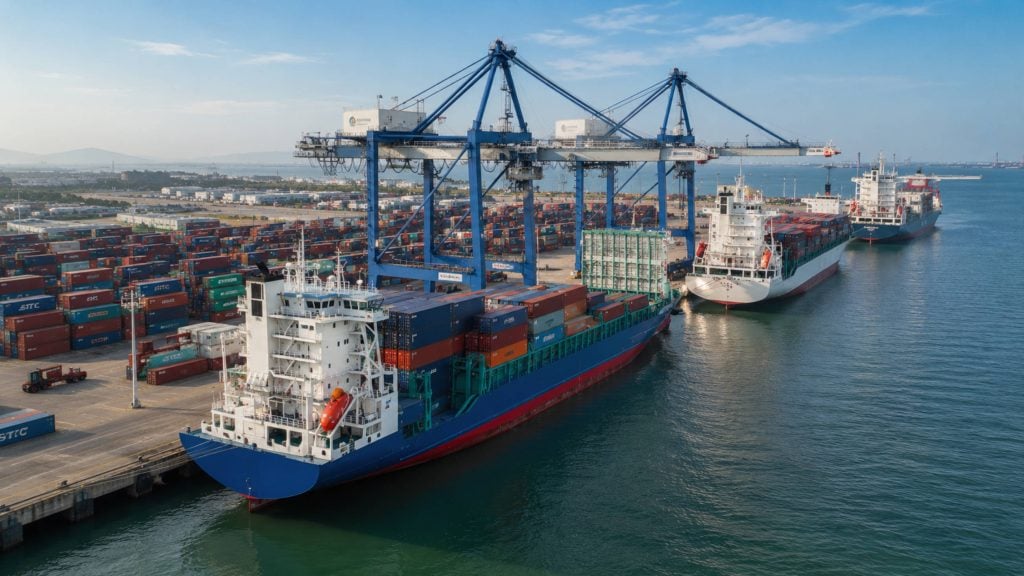
Freight forwarders working the China–Europe and US–Europe lanes have spent much of 2026 fielding the same panicked phone call. A shipment that cleared the same route a dozen times before is suddenly sitting in a bonded warehouse, its Entry Summary Declaration rejected, and nobody on the shipper’s side can explain why. Nine times out of ten, the answer is buried in a single field on the customs filing: the goods description. Words that used to be perfectly acceptable shorthand — “parts,” “chemicals,” “equipment,” “accessories” — are now treated by EU customs systems as red flags rather than descriptions.
This is not a rumor, and it is not one overzealous inspector at one port. It is the deliberate, system-enforced consequence of the EU’s Import Control System 2 (ICS2) and a wider package of 2026 customs reforms that raised the bar for what counts as sufficient information to move a container, a pallet, or a parcel across the border. For freight forwarders and the shippers who depend on them, knowing exactly why vague labels get frozen — and what a compliant description actually looks like — has become just as important as knowing the correct HS code.
The New Reality: ICS2 and the End of “Good Enough” Descriptions
ICS2 is the EU’s advance cargo information and risk management system. It requires carriers and traders to submit an Entry Summary Declaration before goods physically reach an EU border crossing, giving customs authorities a window to run safety and security screening before the cargo is even loaded. The system became mandatory across air, sea, road, and rail transport on 1 September 2025, and it has been tightened in stages ever since.
The mechanism that catches vague labels is unforgiving by design. When a filing includes one of the prohibited terms — whether it stands alone or is buried inside a longer sentence — the ICS2 Common Repository does not flag it for manual review. It rejects the filing automatically, immediately, and without warning. There is no grace period and no soft landing. The forwarder or carrier has to correct the description and resubmit, and the cargo does not move until the corrected filing is accepted.
The rollout has been sequential rather than a single cutover. Old message formats were switched off in favor of ICS2 version 3 on 3 February 2026, and by 1 June 2026 the same strict data requirements extended to road and rail operators, who now must lodge complete filings well before reaching an EU border. Each phase closed off another route by which a vague description could previously slip through.
What Exactly Is a “Stop Word”?
A stop word, in ICS2 terms, is a word or phrase the European Commission has identified as too vague, generic, or ambiguous to serve any purpose in a customs risk assessment. The published list is not a short one — it now runs to more than 200 terms — and it is explicitly described as dynamic and non-exhaustive. Member states and the Commission add to it as everyday filing practice reveals new terms that customs officers cannot actually act on.
The list covers more than the goods description field. It also bans generic entries for the consignor and consignee, such as “private,” “unknown,” or “N/A” in a name or address field, on the logic that a shipment customs cannot trace to a real sender or receiver is just as much of a risk signal as one it cannot identify by contents. The table below groups a sample of the terms that regularly appear on shippers’ paperwork without anyone realizing they now trigger rejection.
| Alan | Examples of Rejected Terms | Neden Başarısız Oluyor |
| İyi Açıklama | Parts, Equipment, Accessories, Chemicals, Electronics, Consolidated, General cargo | Gives no indication of what the item actually is or which HS chapter it belongs to |
| İyi Açıklama | As per attached invoice, As ordered, Attached manifest | Defers the description instead of stating it in the required field |
| İyi Açıklama | Aid consignment, Vegan, Sample, Gift | Describes intent or category, not the physical product |
| Consignor / consignee name | Private, Unknown, Mister, Name | Does not identify a real, traceable party |
| Consignor / consignee address | NA, 00200, address mentioned elsewhere | Cannot be matched to an actual location |
Why “Parts,” “Chemicals,” and “Equipment” Keep Triggering Rejections
These three terms deserve special attention because they are the ones freight forwarders report seeing most often on commercial invoices, and they are also the ones shippers are most reluctant to change, usually because a factory’s packing list has used the same wording for years without complaint.
“Parts” is a problem because it could describe almost anything: a bicycle pedal, a jet engine bracket, or a plastic clip for a kitchen appliance. Each of those belongs to a different HS chapter, carries different duty rates, and raises entirely different safety questions, so a customs risk engine cannot do anything useful with the word on its own. The same logic applies to “equipment,” which spans everything from hand tools to industrial machinery to electronic test instruments, and to “chemicals,” which sits directly on top of the EU’s dangerous-goods and REACH compliance concerns and therefore gets scrutinized hardest of all.
Because these are also some of the most common words in English-language commercial documentation, the Commission has treated them as priority targets rather than edge cases. The stop-word list is reviewed and expanded on a rolling basis, and the most recent update, effective 4 May 2026, added nine further terms to the prohibited list, a reminder that a description that passed clearance six months ago is not guaranteed to pass today.
For freight forwarders, the practical implication is that a client’s existing product description library cannot be treated as fixed. It needs to be reviewed against the current list before every booking cycle, not just when a shipment first gets rejected.
It is worth stressing that a stop word does not have to appear as the entire description to cause a rejection. A phrase such as “assorted parts and accessories” fails just as reliably as the bare word “parts,” because the system scans the field for the prohibited term wherever it sits in the sentence. Shippers who assume that padding a vague word with extra text will satisfy the requirement are usually the ones most surprised when the filing bounces back.
The Real Cost of a Rejected ENS
A rejected declaration is rarely just a paperwork inconvenience. Once a vehicle, container, or shipment is held pending a corrected filing, EU port and border storage charges typically run from roughly €150 to €300 per day, and those charges start accruing from the moment the goods are stopped, not from when anyone notices the problem. Add the cost of rebooking a missed delivery slot, and any penalty clauses tied to a project deadline, and a delay that started as a single wrong word in a description field can escalate quickly.
Industry estimates suggest that a 48-hour resolution on a high-value shipment can produce total delay costs in the range of €3,000 to €6,000 before the goods move again, and the figure climbs further for time-sensitive cargo such as retail goods ahead of a peak season or components feeding a production line. These figures vary by port, carrier, and shipment value, but the direction is consistent: the cost of fixing a description after rejection is always higher than the cost of writing it correctly the first time.
| Maliyet Sürücüsü | Tipik Aralık | notlar |
| Port or border storage | Günlük 150 - 300 € | Starts accruing immediately once goods are held |
| Delivery slot rebooking | Taşıyıcıya göre değişir | Missed windows often mean the back of the queue, not a quick re-slot |
| Total delay cost, ~48 hrs | € 3,000 - € 6,000 | Illustrative figure for a high-value shipment; scales with cargo value and urgency |
| Contractual penalties | Davaya göre | Applies when a delivery deadline is tied to a customer or project contract |
2026: Several Reforms Landing at Once
Part of what makes this moment disorienting for shippers is that the stop-word crackdown is not happening in isolation. It is converging with a separate overhaul of how the EU treats low-value shipments, and the two reforms reinforce each other: the same data fields that now reject vague descriptions are also the fields customs uses to calculate the new per-item duty. The timeline below lays out how the pieces fit together.
| Tarih | Ne değişti |
| 1 Eylül 2025 | ICS2 becomes mandatory across air, sea, road, and rail transport EU-wide |
| 1 Ocak 2026 | Stricter data-quality requirements for goods descriptions take effect across the EU and Northern Ireland |
| 3 Şubat 2026 | Legacy message formats are switched off; all ENS filings must use ICS2 version 3 |
| 4 Mayıs 2026 | Nine additional terms are added to the ICS2 stop-word list |
| 1 Haziran 2026 | Strict ENS data requirements extend to all land-based transport, including road and rail |
| 1 Temmuz 2026 | The €150 duty-free threshold for low-value imports is removed; a temporary €3 per-item duty applies instead |
| 1 Kasım 2026 | Product identifiers become mandatory on customs filings, having been optional from 1 July 2026 |
How to Write a Description Customs Will Actually Accept
The underlying principle behind every version of the stop-word list is the same: a goods description has to let a customs officer understand, at a glance, what is physically being transported. That means naming the actual product first, then adding the details that identify it — what it is made of, what it is used for, and who typically uses it. A description built that way tends to survive updates to the stop-word list even when individual terms on the list keep changing, because it was never relying on a vague catch-all in the first place.
In practice, this usually means expanding a one- or two-word entry into a short, specific phrase. “Parts” becomes “stainless steel bicycle pedals” or “plastic injection-molded appliance housing clips,” depending on what is actually in the box. “Chemicals” becomes the specific substance or product name, ideally cross-checked against its safety data sheet. “Equipment” becomes the actual machine or device — “bench-top CNC milling machine” rather than “equipment,” or “portable digital multimeter” rather than “electronics.”
| Vague (Rejected) | Compliant (Accepted) |
| Yedek Parçalar | Aluminum die-cast automotive door hinges |
| Kimyasallar | Isopropyl alcohol, 99% concentration, for industrial cleaning |
| Ekipman | Handheld cordless electric drill, 18V |
| Elektronik | Bluetooth wireless earphones, model X200 |
| Aksesuarlar | Silicone protective phone cases for iPhone 15 |
A compliant description also has to line up with the HS code declared for the same line item. A filing that names a specific product but pairs it with a mismatched or overly generic HS chapter still invites the kind of scrutiny the reform was designed to trigger, so the two fields need to be treated as one exercise rather than two separate boxes to fill in.
Where a Freight Forwarder Earns Its Fee
For shippers running dozens or hundreds of SKUs across multiple factories, rewriting every product description by hand is not realistic without help, and this is exactly where an experienced freight forwarder is supposed to add value beyond simply booking space on a vessel or aircraft. Catching a stop word before a booking is filed, rather than after a container is already sitting at an EU port, is the difference between a five-minute correction and a multi-day, multi-thousand-euro delay.
Topway Shipping has been operating in this space since 2010. Headquartered in Shenzhen, China, the company is a professional provider of cross-border e-commerce logistics solutions, and its founding team brings more than 15 years of experience in international logistics and customs clearance, with a particular focus on China–U.S. transportation built up over that time. That customs-clearance background is directly relevant to the ICS2 problem: reviewing a goods description against current compliance requirements is not a one-off task, it is a recurring discipline, and it benefits from a team that has been doing it across thousands of shipments rather than encountering EU stop-word rules for the first time on a live booking.
Topway Shipping’s services span the entire logistics chain — first-leg transportation from the factory, overseas ambarlama, customs clearance, and last-mile delivery — which matters here because a description problem caught during first-leg documentation review never has the chance to become a port-side hold later on. The company also offers flexible full-container-load (FCL) and less-than-container-load (LCL) ocean freight services from China to major ports worldwide, giving shippers a single point of coordination whether they are moving a handful of pallets or a full container, and a consistent set of eyes on the paperwork regardless of shipment size.
For businesses that ship a recurring catalogue of products into the EU, that kind of continuity is worth more than it might first appear. A forwarder who already understands a client’s product range can flag a newly-added stop word against that specific catalogue as soon as the list updates, instead of the client finding out the hard way when the next shipment gets held.
There is also a coordination cost that is easy to underestimate. Many shippers rely on descriptions written by a factory or trading company that has never seen the ICS2 stop-word list and has no particular reason to check it, since the factory’s own job ends once the goods leave the dock in China. Closing that gap usually means the forwarder, not the factory, takes ownership of the final description that actually gets filed, which is one reason working with a single partner across the whole chain — from first-leg pickup through customs clearance — tends to produce fewer surprises than splitting the work across several disconnected vendors.
Preparing Before You Book, Not After You’re Held
The shippers weathering this reform most comfortably are the ones who treated it as a data project months before the January 2026 tightening rather than a reactive fire drill after their first rejection. That has typically meant sitting down with their forwarder or customs broker to walk through the full product catalogue, replacing generic factory shorthand with specific, HS-aligned descriptions, and building that language into commercial invoices and packing lists so it does not have to be reconstructed manually for every single booking.
It also means treating the stop-word list as something to check periodically rather than once. Because the Commission keeps adding terms — nine more arrived in a single update in May 2026 alone — a description library that was fully compliant at the start of the year is not guaranteed to still be compliant by the end of it. Building a habit of re-checking product descriptions ahead of peak shipping periods, in coordination with a forwarder who is already tracking the updates, is a far cheaper habit than paying storage fees on a held container while someone scrambles to fix the wording after the fact.
None of this requires exotic software or a large compliance department. In most cases it is a matter of a shared spreadsheet or product master file, agreed between the shipper and the forwarder, that pairs every SKU with a specific description and its HS code, and that gets revisited whenever the product line changes or the stop-word list is updated. The effort is modest compared with the alternative of discovering a compliance gap while a container is already sitting at an EU port with the meter running.
Sonuç
The words “parts,” “chemicals,” and “equipment” were never really descriptions in the first place — they were placeholders that customs systems used to be willing to tolerate. ICS2 has simply stopped tolerating them, and it has done so at exactly the moment the EU is also tightening duty rules and data requirements around the same shipments. The combination means that a single vague word on a commercial invoice can now be the most expensive line on the entire document.
None of this is likely to reverse. If anything, the trajectory of 2026 suggests the EU will keep tightening rather than loosening these requirements, with product identifiers becoming mandatory in November and further stop-word updates likely to follow the pattern set in May. Treating precise product descriptions as a permanent feature of shipping into the EU, rather than a temporary hurdle to work around, is the more realistic way to plan for the rest of this year and beyond.
The fix is not complicated, but it is ongoing: name the actual product, align it with the correct HS code, and keep that description current as the EU’s rules keep evolving. Shippers who build that discipline into their process — ideally with a forwarder who is already tracking the stop-word list and handling the customs-clearance side of the shipment — are the ones who keep moving cargo smoothly while their competitors sit in a bonded warehouse waiting for a corrected filing to clear.
SSS
Q: What happens immediately after an ENS filing is rejected for a stop word?
A: The ICS2 Common Repository rejects the filing automatically and the goods are held until a corrected declaration with a specific, compliant description is submitted and accepted. There is no manual override and no grace period once the system flags the term.
Q: Is “spare parts” always going to be rejected?
A: Yes, on its own it will be. The word “parts” appears on the published stop-word list, so it needs to be replaced with the specific item — for example, “stainless steel machine screws” instead of “spare parts.”
Q: Does this only affect air cargo and small parcels, or also FCL and LCL ocean freight?
A: ICS2 applies across air, sea, road, and rail, and land-mode enforcement extended fully to road and rail by 1 June 2026, so ocean freight bookings, including FCL and LCL shipments, need compliant descriptions as well.
Q: How can I find out whether my current product descriptions will pass?
A: The safest approach is to have your descriptions reviewed against the current official stop-word list before booking, ideally by a forwarder or customs broker who tracks updates to that list on an ongoing basis rather than checking it once a year.
S: Topway Shipping, gönderi rezervasyonu yapılmadan önce açıklamaları gözden geçirmemize yardımcı olabilir mi?
A: Yes. Topway Shipping’s services cover the full logistics chain, including first-leg transportation, overseas warehousing, customs clearance, and last-mile delivery, along with flexible FCL and LCL ocean freight from China to major global ports, which allows documentation issues to be caught early rather than after a shipment reaches the EU border.