
Ship from China to Mexico: The Nearshoring Shortcut Everyone’s Talking About
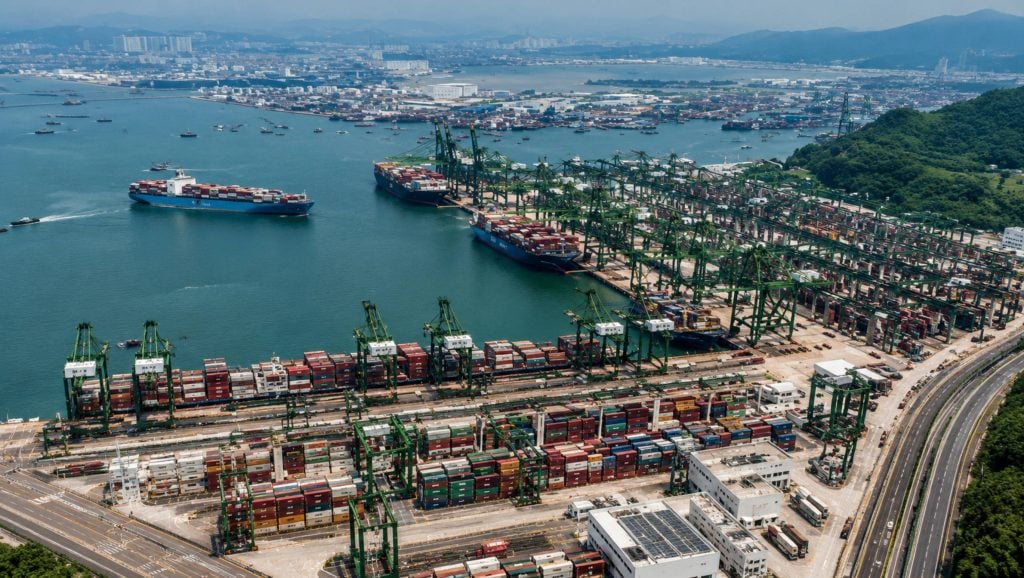
A single word, every few years, seizes the attention in global trade circles. The phrase du jour is nearshoring, and practically every telling of the story comes back to one route: China to Mexico. Plants that once shipped directly to Los Angeles or Long Beach are now using Manzanillo and Lázaro Cárdenas, with Mexico as a staging ground for the U.S. and Canadian markets, or just supplying Mexican customers, who are buying more than ever.
In theory, the appeal is easy to comprehend. Mexico has a lengthy land border with the United States, enjoys preferential trade conditions for eligible commodities under the USMCA and has spent the past few years luring billions of dollars in manufacturing investment. But the shipping side of the coin is a lot more complicated than the headlines imply. Rates are all over the place from month to month, port congestion at Manzanillo has become a constant nuisance, and customs enforcement in 2026 is much tougher than it was even a year ago. This book talks you thru what really matters if you are transporting cargo from China into Mexico this year, with real data, real port comparisons and a few hard lessons other importers have already learned the expensive way.
Why Mexico Became the Center of Gravity
Mexico’s growth wasn’t an overnight thing. It began to take shape when supply chain delays during the epidemic forced manufacturers and retailers to reconsider how far their goods had to travel and how many borders they needed to traverse to get to a client. Mexico was a pragmatic middle ground, close to the U.S. consumer market, with a cheaper labour cost base than most of North America and an established trade deal that many corporations already knew well.
Mexico serves a slightly different purpose for Chinese manufacturers and cross-border sellers in particular. Some use it solely as a destination market, as Mexican consumers have exhibited tremendous demand for electronics, car parts, textiles and general consumer products. Others are leveraging Mexican ports and bonded warehouses as a strategic buffer, holding merchandise closer to the U.S. border, so that final delivery may be made faster after an order is placed. Either way, the volume travelling thru this corridor has increased sufficiently that carriers have added capacity, freight forwarders have developed specialised Mexico teams, and Mexican customs authorities have had to scale up enforcement just to keep pace.
The latter point is more important than most importers realise. More often than not, growth on a trade path brings attention along with it, and the China-Mexico corridor is no exception. This is a topic that repeats itself throughout this book – anyone shipping into Mexico this year has to take customs compliance as seriously as the freight rate.
What It Actually Costs to Ship from China to Mexico Right Now
Freight prices on this lane have been highly unpredictable thru 2026. Ocean fares were buoyed earlier this year by tight vessel capacity and congestion in the Trans-Pacific, but fell substantially as carriers introduced more services and demand cooled. Just to remind you, rates on this lane have a short shelf life and should never be taken as fixed for long-term planning, as maritime freight into Manzanillo and Lázaro Cárdenas has actually fallen by over a third compared to the previous month as of August 2026.
The table below shows a snapshot of typical prices for the primary ways of shipment. They are moving figures, so use them as a planning reference, not a locked-in estimate, and always check current pricing before booking.
| Nakliye Modu | Tipik Maliyet | Tipik Transit Süresi |
| Sea FCL, 20-foot container | $ 4,300 - $ 5,300 | 18 - 25 gün |
| Sea FCL, 40-foot container | $ 4,500 - $ 5,500 | 18 - 25 gün |
| Sea LCL (per cubic meter) | $ 80 - $ 150 | 20 - 30 gün |
| Hava taşımacılığı (1,000kg+) | Kg başına 5 – 9 Dolar | 3 - 5 gün |
| Ekspres kurye | Kg başına 7.50 – 15 Dolar | 3 - 5 gün |
A couple of things seem to catch first-time importers out on this lane. The ocean rate stated is merely the base rate. The real landing cost will normally be thirty to fifty percent higher once you factor in the origin handling fees in China, destination charges in Mexico, inland trucking to the final warehouse, and the customs broking price to clear the item. Average import duty for Mexico is about eleven percent, depending on the HS code of the goods. Some categories can be far beyond that. The usual VAT is sixteen percent, which is calculated on the customs value + duty. None of this is unusual in a global context but importers who only look at the headline goods quote often get an unpleasant surprise when the final invoice lands.
Choosing Between Sea, Air, and Express
For most shipments of any meaningful magnitude, Deniz taşımacılığı remains the default mode of transport – and for good reason. It has the lowest per unit cost by a lot . For things that are not time sensitive , an eighteen to twenty-five day transit is completely workable . When your cargo fills around thirteen to fifteen cubic meters or more it makes sense to ship a full container load. At that point the flat container pricing usually beats paying per volume.
If you are shipping modest quantities, testing a new product line in the Mexican market, or just don’t have the volume to justify a full container load, then less than container load is the better fit. The tradeoff is a longer transit window as LCL freight has to be combined and deconsolidated at both ends, usually adding a few days compared with a straight FCL transport.
When time is of the essence, air freight is worth the premium price. It could be a store rushing to get a hot selling item into shelves before a promotion, a manufacturer waiting for a vital spare part that has stopped a production line, or a seasonal product with a short window to get to shelves. Air freight is currently between five and nine dollars per kilogram and therefore several times more expensive than ocean freight. It is therefore most economical for lightweight, high-value items rather than large low-margin products.
Express courier service is at the top of the price range but with door-to-door simplicity that some smaller importers think is worth paying for, especially for sample shipments, urgent replacement parts, or e-commerce purchases that need to move fast but in small numbers. For anything more than a few hundred kilos it is rarely the correct decision.
Picking the Right Mexican Port
Not every Chinese plant is situated near the same port of departure, and not every destination in Mexico is as well served. Manzanillo on Mexico’s Pacific coast handles the largest share of Asian import volume, and has good connections to Mexico City and the industrial corridor around Guadalajara. But that popularity comes at a price: the port regularly operates near maximum throughput, and delays of three to seven days at anchorage are common enough that experienced importers build the buffer in their planning by default.
Lázaro Cárdenas has become the pressure valve for cargo that otherwise would build up at Manzanillo, providing considerably less congestion and increasingly competitive rail and trucking connections inland. Veracruz, on the Gulf coast, is less significant for most China-origin cargo as it often requires transshipment thru the Panama Canal or a longer routing, but it is still beneficial for shipments ultimately bound for Mexico’s eastern and central areas.
| Liman | En | Tipik Zorluk |
| Manzanillo | Mexico City, Guadalajara, Bajío region | Congestion, 3–7 day anchorage delays |
| Lazaro Cardenas | Central Mexico, overflow from Manzanillo | Longer inland trucking distances |
| Veracruz | Eastern and central Mexico | Longer transit via transshipment |
Customs, Tariffs, and the Paperwork That Trips People Up
Those most likely to have their containers held are importers who treat documentation as an afterthought, according to SAT, the Mexican customs agency, which has increased enforcement significantly in the past year. The basic paperwork is not exotic: a commercial invoice, a packing list and the correct HS code classification for every goods on the shipment. Where things go wrong is in the details, not in missing an entire paper out altogether.
The two biggest problems customs officials find are undervaluation and wrong HS code classifications, especially with electronics and general consumer items where the lines between categories can be really fuzzy. Not to mention that Mexico maintains its own set of official standards for products (known locally by its Spanish moniker) for everything from safety certifications to labelling regulations in Spanish. Even if a shipment clears U.S. customs without any problems, it can be blocked in Mexico if the labels or certifications don’t align with Mexican regulation. So this is something worth examining before the items ever leave the plant in China, not after they arrive at port.
The tariff exposure of a product is also greatly influenced by where it sits under Mexico’s classification system. The general import charge on goods coming from a non-free trade country such as China is generally between seven and fifty percent depending on the HS code, and specific product categories Mexico considers sensitive may see duties at the higher end of that range. Add to this the typical sixteen percent VAT and duty and tax costs alone can materially alter the economics of a cargo and that is why serious importers evaluate landed cost before agreeing to a purchase order, not after the items are already on the water.
Mistakes That Keep Costing Importers Money
The biggest mistake is comparing quotes from forwarders on freight rate just. While a quote that appears to be fifteen percent lower might become more expensive after destination taxes, demurrage exposure, and customs broking charges are considered, especially on a route like this where port congestion fees can materialise with no warning.
Another close second is not considering the lead time of the additional Manzanillo congestion to a shipment. The importers who order to the advertized transport time, without allowing for anchoring delays, usually run out of supply just at the period of most demand. A actual cushion, not the optimistic transport time provided at booking, tends to save significantly more stress than it costs in extra lead time.
The third difficulty that keeps coming up is the assumption that Mexican labelling and certification requirements are the same as those of the United States, just because the two markets are geographically close and economically related. They are not the same, and the difference between the two is where the shipments get stopped in customs. One of the cheapest insurance plans on this approach is to ensure NOM compliance and Spanish language labelling before the items leave the factory, rather than afterward.
Where a Forwarder Like Topway Shipping Fits In
There are a tonne of moving parts between a factory in China and a warehouse in Mexico . For most importers it makes way more sense to deal with a forwarder that already knows the route than trying to arrange every leg on their own . Headquartered in Shenzhen, Topway Shipping has been working on cross-border logistics solutions since 2010, and the founding team has over fifteen years of combined experience in international freight and customs clearance, with roots especially deep in China-to-North America transportation.
What that translates into, effectively, is coverage over the whole chain, not just one leg of it. Topway Shipping handles first-leg pickup and export documentation in China, provides flexible full-container-load and less-than-container-load ocean freight to major ports around the world, including Mexico’s Pacific gateways, and offers overseas ambarlama to allow cargo to be staged and consolidated closer to its final destination. On the receiving end, the team handles customs clearance and last-mile delivery, the part of the journey where importers unfamiliar with Mexican procedures tend to have the most difficulty.
For a new firm to the China-Mexico corridor, that kind of end-to-end coverage takes a lot of the guessing out of HS code categorisation, NOM labelling regulations and the paperwork that Mexican customs scrutinises most thoroughly. It also means that there is a single point of accountability if a shipment is delayed, rather than having to deal with numerous contacts for the ocean carrier, the customs broker and the last-mile trucking business.
Sonuç
Shipping from China to Mexico in 2026 isn’t the easy shortcut some make it out to be. Rates on the lane swing very widely from month to month, Manzanillo congestion adds genuine unpredictability to transit planning and Mexican customs enforcement has been substantially harsher around valuation, classification and labelling compliance. That doesn’t make the route a terrible bet, but it does mean the businesses flourishing on this lane are the ones addressing it with the same rigour they would any other significant trade corridor, rather than expecting that geographic closeness alone will keep things simple.
Getting the basics right, choosing the right mode and port for your cargo profile, budgeting for the full landed cost, not just the freight quote, and locking down documentation before goods leave the factory goes a long way toward making this route work the way the nearshoring narrative promises. Working with an experienced forwarder like Topway Shipping may remove much of that complication from the importer, allowing the business to focus on selling into the Mexican market instead of fighting customs holds and port delays.
SSS
Q: How long does it take to ship from China to Mexico?
A: It normally takes eighteen to twenty-five days to get to Manzanillo or Lazaro Cardenas by sea freight, LCL shipments are a bit longer at around twenty to thirty days, and air freight or express courier service usually reaches within three to five days.
Q: Is FCL or LCL cheaper for shipping to Mexico?
A: FCL is normally cheaper once you get to about thirteen to fifteen cubic meters in a cargo. As a rule, below that volume the LCL is the most cost effective alternative, as you are only charged for the space your cargo occupies.
Q: What import duties apply to goods entering Mexico from China?
A: General import duty is usually around seven to fifty percent depending on the HS code of the product you’re importing. The average is closer to eleven percent for most categories. Add sixteen percent VAT on top of that.
Q: Which Mexican port is best for cargo from China?
A: Manzanillo. Large volume and well connected to Mexico City and Guadalajara. But congested regularly. Lázaro Cárdenas is a good alternative with somewhat lower port waits for cargo travelling to central Mexico.
Q: Why do shipments get held at Mexican customs?
A: The most typical causes include undervaluation, inaccurate HS code categorisation and labelling or certification that does not match Mexico’s official product standards, thus it is necessary to establish compliance before goods leave China.
Q: How can Topway Shipping help with China to Mexico shipments?
A: Topway Shipping takes care of the complete logistics chain from first leg pickup and FCL or LCL maritime freight in China to overseas warehousing, customs clearance and last mile delivery in Mexico. Importers have one point of contact along the entire route.