चीन से ऑस्ट्रेलिया तक डीएपी शिपिंग: क्लीयरेंस प्रक्रिया और शुल्क
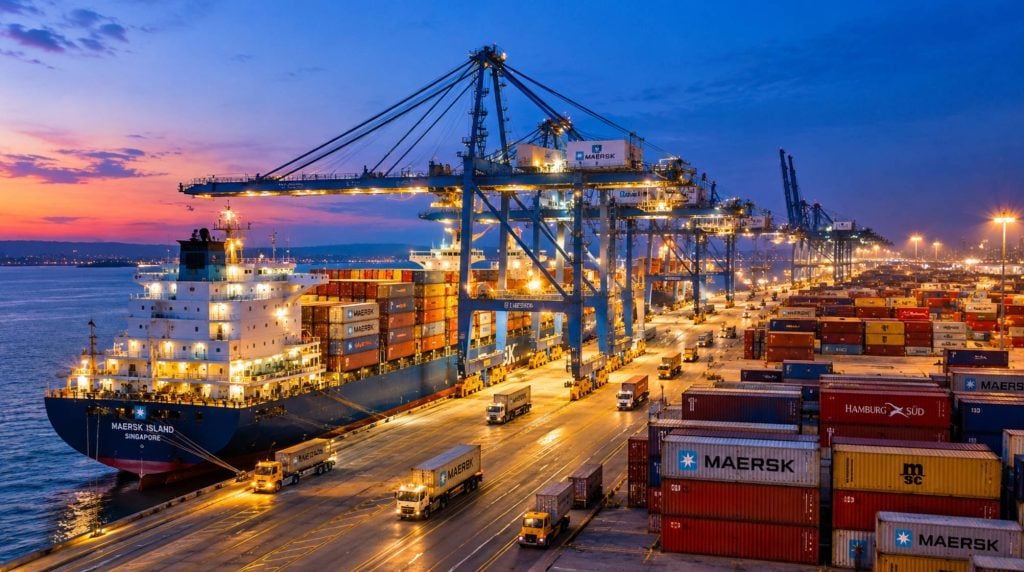
परिचय
Australia is one of the most attractive import destinations for Chinese manufacturers, wholesalers and cross-border sellers. Purchasing power is high, online retail is mature, and the China–Australia Free Trade Agreement (ChAFTA) has lowered or removed duty on a long list of products. The market is also unforgiving. Between the Australian Border Force (ABF), the Department of Agriculture, Fisheries and Forestry (DAFF) and the Australian Taxation Office (ATO), a container that looks perfectly healthy on paper can be held, inspected, treated or re-documented, and every one of those events generates a bill.
That is exactly why the phrase “DAP Sydney” or “DAP Melbourne” causes so many misunderstandings. Under DAP (Delivered at Place), the seller takes the cargo all the way to a named place in Australia, but the seller does not clear it through customs. The buyer, as the importer, still has to lodge the import declaration, pay duty and GST, satisfy biosecurity, and unload the goods. Plenty of Chinese suppliers quote a neat all-in price, and plenty of Australian buyers then receive separate invoices from a customs broker, a terminal, a depot and a trucking company that nobody budgeted for.
The cost picture has also shifted in 2026. Shanghai–Sydney spot rates climbed above US$4,000 per FEU in early July, carriers layered on peak season surcharges, the biosecurity charge on sea import declarations rose to A$71 on 1 July, and the Brown Marmorated Stink Bug (BMSB) season that opened on 1 September arrived with new rules. This guide, written in late October 2026, explains how DAP really works for China-to-Australia freight, walks through the clearance process step by step, and puts realistic numbers on the fees you will meet along the way. Figures are intended as planning guidance, so always confirm them with your licensed customs broker before you commit to a landed-cost calculation.
What DAP Means When You Ship from China to Australia
Under Incoterms 2020, DAP means the seller delivers when the goods are placed at the buyer’s disposal on the arriving means of transport, ready for unloading, at the agreed place of destination. The seller carries the cost and risk of getting the goods there. That includes Chinese export clearance, origin charges, the ocean leg and the carriage from the Australian port to the named place. What the seller does not take on is import clearance. Duty, GST, import declaration costs and any biosecurity treatment belong to the buyer unless the contract says otherwise.
The confusion arises because the named place is usually a warehouse in Western Sydney, Truganina in Melbourne or Brisbane’s Hemmant, while customs and biosecurity clearance happens at the port or a nearby approved facility before the truck can move. In practice, a DAP quote from a forwarder normally covers freight to the port, destination terminal handling, and cartage to the door, while the import declaration is lodged by the consignee’s own customs broker or by a broker the forwarder nominates and bills separately. Get this split written into the quotation. A line that simply reads “DAP Melbourne” is not enough.
DAP compared with FOB, CIF and DDP
The table below shows how the four most common terms divide responsibility on a China-to-Australia sea shipment. DDP is included because buyers often assume DAP works the same way, which it does not.
| Incoterm | Main freight paid by | Import clearance, duty and GST | Delivery to buyer’s door | जोखिम खरीदार को हस्तांतरित हो जाता है। |
| FOB (China port) | खरीददार | खरीददार | Buyer arranges and pays | When goods are loaded on board in China |
| CIF (Australian port) | विक्रेता | खरीददार | Buyer arranges and pays | When goods are loaded on board in China |
| DAP (named place in Australia) | विक्रेता | खरीददार | विक्रेता व्यवस्था करता है और भुगतान करता है | निर्धारित स्थान पर, माल उतारने के लिए तैयार। |
| DDP (named place in Australia) | विक्रेता | विक्रेता | विक्रेता व्यवस्था करता है और भुगतान करता है | At the named place, cleared and ready for unloading |
DDP looks tempting for the buyer, but it is uncommon for B2B cargo into Australia. The seller would have to act as, or appoint, the importer of record, deal with GST registration and carry the compliance risk for an Australian market it may not know well. For that reason most Chinese factories prefer FOB or DAP, and most experienced Australian importers prefer to keep clearance in their own hands, which is the logic behind DAP.
Why buyers choose DAP, and where it can hurt
DAP gives the buyer control of the part of the journey that matters most to Australian regulators. The importer chooses the customs broker, controls the classification and valuation declared to the ABF, and can claim GST paid on the import as an input tax credit if they are registered. The seller, meanwhile, can quote one price for the physical journey and avoid carrying Australian tax exposure.
The pain points are on the buyer’s side. If the consignee is slow to appoint a broker, slow to supply a commercial invoice or unavailable to accept the delivery appointment, containers start accumulating demurrage and detention while the goods sit exactly where they are. A seller who delivers to the named place has met the contract, so the extra days and dollars fall to the buyer. Agreeing responsibilities for free time, appointments and documents before the booking is made removes most of that risk.
What Has Changed in 2026: Market Conditions to Plan Around
Anyone budgeting from last year’s numbers will be off. According to trade press reports, the mean SCFI spot rate for Shanghai–Sydney rose from around US$1,242 per FEU in Week 13 to US$2,974 by Week 23, then to US$3,148 in Week 24, and reached US$4,156 per FEU in Week 27, a 15 percent jump in a single week. Carriers announced rate restorations and general rate increases through June and July, while peak season surcharges of up to US$500 per TEU were layered on top, and at least one carrier replaced its second surcharge with an emergency space surcharge. Congestion at Chinese ports including Ningbo, Shanghai, Qingdao and Shenzhen added to the pressure.
By September, analysts described rates as stabilising after the July peak, with new capacity such as faster services on the China–Sydney and Melbourne trade absorbing demand. The same advisories warn that surcharges introduced in July remain in force on most services and that all-in quotes are essential. Regular services still take around 20 to 27 days port to port, so cargo for the Christmas trading period needed to be booked by mid-September. Pressure on rates is expected to ease gradually through October and November, which is helpful for early 2027 planning but does not rescue late holiday stock.
| 2026 का विकास | किया बदल गया | Why it matters under DAP |
| Ocean spot rates | Shanghai–Sydney SCFI reached US$4,156 per FEU in early July, then flattened | Higher base freight lifts the DAP price and the CIF value used for GST |
| वाहक अधिभार | GRIs, peak season surcharges and emergency space surcharges applied from June and July | Quotes without an all-in surcharge schedule can rise before sailing |
| Biosecurity cost recovery charge | From 1 July 2026: A$71 for sea and A$48 for air Full Import Declarations over A$1,000 | Small but unavoidable per-declaration cost for every commercial import |
| बीएमएसबी मौसमी उपाय | 1 September 2026 to 30 April 2027; onshore Ethyl Formate approved; Rolled Goods Policy and Safeguarding Scheme removed | Higher compliance burden and less flexibility for high-risk goods |
| Transit and capacity | New fast services cut some Shanghai–Sydney sailings to around 14 days, regular services 20 to 27 days | Faster options exist, but they are priced accordingly |
The takeaway for DAP shippers is simple: freight is only one line in the landed cost. A higher freight rate means a higher customs value for GST purposes, and an additional biosecurity step costs time as well as money.
The Australian Import Clearance Process, Step by Step
Clearing a commercial container in Australia involves a sequence of events that overlap in real life but are easier to understand one at a time. The steps below assume a sea shipment worth more than A$1,000, which is where the full import declaration regime applies.
Step 1: Get the importer and the paperwork ready
Before the cargo even leaves China, the Australian consignee needs to be ready to import. In practice that means holding an Australian Business Number (ABN), being registered for GST if turnover requires it, and signing a power of attorney or authority so a licensed customs broker can lodge declarations on the company’s behalf. Importers can lodge their own declarations, but few do, because the Integrated Cargo System (ICS) is built for brokers and software rather than occasional users.
The paperwork that travels with the cargo is the foundation of the declaration, so errors here echo through the entire process. The commercial invoice must show the real transaction value, the Incoterm, the buyer and seller details and a clear product description. The packing list must match the cartons physically loaded. The bill of lading must show the right consignee and notify party. If you want ChAFTA preferential duty, the origin documentation has to be ready as well.
| दस्तावेज़ | उद्देश्य | आम समस्या |
| वाणिज्यिक चालान | Establishes customs value and goods description | Vague descriptions such as “accessories” or “parts” |
| पैकिंग सूची | कार्टन, वजन और मात्रा का मिलान इनवॉइस से करता है। | Gross weights or carton counts that differ from the invoice |
| माल ढुलाई का बिल या समुद्री मार्ग बिल | परिवहन अनुबंध और स्वामित्व दस्तावेज | Wrong consignee name or missing notify party |
| Declaration of origin (ChAFTA) | Supports preferential duty claims | Issued late or not matched to the tariff classification |
| Biosecurity documents | Treatment certificates, import permits, timber declarations where required | Missing or issued on the wrong date |
| अनुपालन साक्ष्य | Test reports or marks such as RCM for electricals | Not requested until the goods are already on the water |
Step 2: Cargo reporting and arrival at the port
The shipping line or its agent reports the cargo to the ABF electronically, and the container is tracked from the moment the vessel is expected until it is discharged and gated into a terminal or a Container Terminal Operator’s facility. Your forwarder will normally issue an arrival notice with the vessel’s estimated time of arrival, the container number and the free time allowed at the terminal.
From arrival, the clock runs. Most carriers give a limited number of free days for storage at the terminal, and a separate period for the empty container to be returned once unpacked. Brokers prefer to have the declaration and documents lined up before the vessel berths, because delays that start at the wharf are the most expensive.
Step 3: Lodging the import declaration
Your customs broker lodges the import declaration through ICS. For consignments over A$1,000 this is a Full Import Declaration, and it must contain the tariff classification, the customs value, the country of origin, the supplier details and the Incoterm. Classification follows the Harmonized System, and the broker will normally ask for product photographs, material composition and intended use where the description is ambiguous.
This is also where duty and GST are calculated and where any preferential origin claim is made. Under-declaring value or choosing a convenient but incorrect tariff code may seem to save money, yet it is the quickest route to post-clearance audits, penalties and interest. The ABF reviews declarations against risk profiles and can request supporting documents at any time.
Goods valued at A$1,000 or less follow a simpler Self Assessed Clearance route with no import processing charge, and GST on many low-value consumer parcels is collected at the point of sale by the overseas supplier or marketplace. That distinction explains why cross-border e-commerce parcels and commercial containers experience Australian customs so differently.
Step 4: Biosecurity assessment and possible inspection
Everything entering Australia is subject to the Biosecurity Act 2015, and DAFF decides what has to happen next. Low-risk goods may be released without further intervention. Others are directed for inspection, document checks, treatment or, in the worst case, export or destruction. Wooden packaging, used goods, plant and animal derivatives, food and anything with soil or organic residue attract the most attention.
Sea containers can be directed to an approved site for unpacking and inspection. If a container needs to be devanned for inspection, it moves to a Quarantine Approved Premises and the importer pays for the transport, labour and inspection time. Our later biosecurity section explains how to lower the odds of landing there.
Step 5: Payment, release and final delivery
Duty and GST must be settled before goods are released. A GST-registered importer can apply to the ATO for the deferred GST scheme, which shifts GST on imports onto the monthly business activity statement and eases cash flow. Once the ABF and DAFF are satisfied, the cargo is released, your forwarder or broker issues or confirms the delivery order, and the container can be collected within its allowed time window.
Under DAP, the final step is the delivery to the named place, which in most cases requires a truck booking and a time slot at the terminal. The consignee has to confirm that the receiving warehouse can unload on the agreed day, because failed deliveries lead to redelivery charges and waiting-time fees.
A realistic clearance timeline
The table gives a typical sequence for an FCL container with a routine declaration and no biosecurity intervention. Treat it as a planning framework, not a promise.
| ट्रेनिंग | विशिष्ट समय | कौन ज़िम्मेदार है |
| Documents finalised | 3 to 5 days before vessel arrival | Seller, forwarder and customs broker |
| आयात घोषणा दर्ज की गई | Before or soon after vessel arrival | सीमा शुल्क दलाल |
| Duty and GST settled | Same day as lodgement or on deferred terms | Importer through broker |
| Customs and biosecurity release | Same day for routine cargo, several days if directed | ABF and DAFF |
| Container pick-up and delivery | 1 to 3 days after release | Haulier appointed under DAP |
| खाली कंटेनर वापसी | Within the carrier’s allowed days | Haulier or consignee |
Duties, GST and Government Charges: How the Numbers Work
Customs duty and the role of ChAFTA
Australia applies a general customs duty of 5 percent on many consumer goods, including a large share of clothing, footwear and homewares, while a number of products are duty free and a small group attracts higher rates. For Chinese-origin goods, ChAFTA provides preferential rates that are zero for most tariff lines, but the benefit is not automatic. The importer must hold a valid declaration of origin and the goods must satisfy the origin rules, which means being wholly obtained or sufficiently transformed in China.
Anti-dumping and countervailing duties are a separate matter and apply on top of ordinary customs duty for certain Chinese products, including some steel and building materials. If you buy commodity-type industrial goods, ask your broker to check the current measures before the order is placed.
GST and the value of taxable importation
GST is 10 percent and is calculated on what the ATO calls the value of taxable importation. This figure is the customs value, plus the international freight and insurance costs to Australia, plus the duty payable. It is not simply the invoice amount. That is why a freight rate increase raises the GST bill as well as the freight bill, and why a DAP price that bundles freight must be unbundled to establish the correct value for declaration.
For a GST-registered business the tax is generally recoverable as an input tax credit, so the cost is mostly about cash flow rather than margin. Importers without a registration, or those importing goods used for input-taxed supplies, bear it as a real cost.
Import processing and biosecurity charges
The ABF applies an import processing charge (IPC) to each import declaration, with the amount depending on the consignment value and the lodgement method. A separate biosecurity cost recovery charge applies to Full Import Declarations for goods above A$1,000. The charges below are those published by the ABF for electronic lodgement, with the updated biosecurity amounts effective from 1 July 2026.
| प्रभार | रोग की स्थिति | राशि (एयूडी) |
| Import processing charge, electronic | Customs value up to A$1,000 | 0.00 |
| Import processing charge, electronic | Above A$1,000 and below A$10,000 | 50.00 |
| Import processing charge, electronic | A$10,000 or more | 152.00 |
| Import processing charge, documentary | Above A$1,000 and below A$10,000 | 90.00 |
| Import processing charge, documentary | A$10,000 or more | 192.00 |
| Biosecurity cost recovery charge, sea FID | Customs value over A$1,000, from 1 July 2026 | 71.00 |
| Biosecurity cost recovery charge, air FID | Customs value over A$1,000, from 1 July 2026 | 48.00 |
हल किए गए उदाहरण
Numbers become easier to understand when they are applied to real shipments. The first example is a 40-foot container of homewares with a general duty rate of 5 percent. The second is a small LCL consignment of accessories that does not qualify for preferential duty. Freight and insurance amounts are illustrative, and exchange rates will move them.
| मद | Example A: 40ft FCL (AUD) | Example B: LCL, 2 cbm (AUD) |
| Customs value (FOB goods value) | 30,000 | 4,000 |
| अंतर्राष्ट्रीय माल ढुलाई और बीमा | 6,200 | 450 |
| Customs duty at 5 percent of customs value | 1,500 | 200 |
| Value of taxable importation | 37,700 | 4,650 |
| GST at 10 percent | 3,770 | 465 |
| Import processing charge | 152 | 50 |
| Biosecurity charge, sea FID | 71 | 71 |
| कुल सरकारी शुल्क | 5,493 | 786 |
In Example A, a registered importer would reclaim the A$3,770 of GST, so the real cash cost is the duty and the two Border charges, about A$1,723. Example B shows how fixed government charges loom larger on small shipments, where A$121 of IPC and biosecurity charges represent about 3 percent of the goods value, before any broker or terminal fees are added. If ChAFTA applies in Example A, the duty falls to zero and GST drops to A$3,620.
Typical Destination Fees under DAP
Government charges are only a portion of what you pay at the Australian end. Port, depot and transport costs are set by private operators, and they vary by port, carrier and season. The ranges below are indicative figures drawn from common market practice and should be verified against a written quotation. They are included so that buyers can recognise the categories, which are often the source of surprise invoices.
| शुल्क | इसमें क्या शामिल है? | Indicative range (AUD) |
| गंतव्य टर्मिनल हैंडलिंग (डीटीएचसी) | Lifting the container off the vessel and through the terminal | प्रति कंटेनर 350 से 650 |
| सीमा शुल्क दलाल घोषणा शुल्क | Lodging the import declaration and managing clearance | 90 to 180 per declaration |
| Documentation or delivery order fee | Issuing release documents and carrier paperwork | 100 to 250 per bill of lading |
| Container movement and infrastructure charges | Stevedore, terminal access and port infrastructure costs | प्रति कंटेनर 150 से 350 |
| Metro cartage to the named place | Truck from port to your warehouse and empty return | प्रति कंटेनर 500 से 1,000 |
| Biosecurity inspection or treatment | Unpacking, inspection time, fumigation or heat treatment | 200 से 800 या अधिक |
| LCL devanning and handling | Unpacking a consolidated container at the CFS | 40 to 90 per cbm, with a minimum |
| विलंब शुल्क और नजरबंदी | Charges after free days at the terminal or for late empty return | 100 to 250 per day per container |
The most avoidable of these charges is demurrage and detention. The clock starts at discharge, not on the day your warehouse team is ready, so a broker who is slow to lodge or a buyer who cannot give an appointment can turn a four-day delay into several hundred dollars.
For LCL freight, there is an additional layer. The consolidated container has to be unpacked at a container freight station before individual shipments can be released, which usually adds a few days to the process. LCL rates have remained relatively stable through the third-quarter peak, but the handling charges and minimums at the destination still apply, so shippers with 8 to 12 cbm sometimes find a 20-foot FCL cheaper per cubic metre than LCL.
Ask any forwarder quoting DAP to list every destination charge by name. A quote that merges them into a single line makes it difficult to compare providers and impossible to spot what has been left out.
Biosecurity: The Biggest Source of Delay
Customs delays are usually about paperwork. Biosecurity delays are about the physical contents of the container, and they can be longer and more expensive. DAFF uses a risk-based approach, so a first-time importer with vague product descriptions tends to receive more attention than an established importer with a clean history.
The 2026–27 BMSB season is the clearest example. It applies to certain goods manufactured in or shipped from target risk countries between 1 September 2026 and 30 April 2027, and the Shipped on Board date on the bill of lading decides whether a shipment falls within the season. China remains classed as an emerging risk country, which means increased random inspections of certain cargo, and certain हवाई माल भाड़ा from China and the United States also faces random inspections during the season. Machinery, vehicles and vehicle parts, steel and metal goods, building materials and similar high-risk categories need particular attention.
There are three significant changes this season. Ethyl Formate has been added as an approved onshore treatment option, alongside heat treatment, methyl bromide and sulfuryl fluoride, giving importers more flexibility when treatment is required on arrival. The Rolled Goods Policy has been removed, so the normal 120-hour window between treatment and shipping applies with no extra allowance if a vessel rolls your cargo. The Safeguarding Arrangement Scheme, which allowed some importers to avoid mandatory arrival treatment by proving their supply chain was pest free, is no longer available, and previous-season approvals are not valid.
Outside the BMSB season, the basics still apply year-round. Solid timber packaging must comply with ISPM 15 and carry the correct stamp. Containers must be clean inside and out, because soil, seeds, insects and plant debris are enough to trigger a directed inspection. Products such as natural fibre goods, bamboo furniture, toys with wooden components or food-related items may require an import permit or specific declarations. Your broker can check the Biosecurity Import Conditions system (BICON) before the order is placed, which costs nothing and can save weeks.
Common Mistakes That Inflate Clearance Costs
The most common error is vague quoting. When a supplier says “DAP Brisbane” and the importer assumes the price includes everything, the first invoice from the customs broker or terminal arrives as a shock. Settle in writing which party pays destination terminal handling, broker fees, inspection costs and demurrage.
The second is undervaluation or misdescription. Some Chinese suppliers offer to issue an invoice at a lower price to reduce duty. In Australia this is risky, because the ABF can compare declared values against market data, and an inaccurate declaration can lead to penalties, interest and an audit that reaches back across earlier shipments. Equally, descriptions such as “gift items” or “hardware” invite questions that slow release.
A third mistake is neglecting origin documentation. Preferential duty under ChAFTA can save thousands of dollars on a high-value container, but it is claimed at the time of declaration and supported by origin evidence that the supplier must provide. If the paperwork is not ready, the importer either pays full duty or waits.
Last, many importers underestimate how long a container takes to exit the port system. Between the vessel arrival, the declaration, a possible biosecurity check, a trucking appointment and a warehouse slot, the journey from discharge to the shelf is rarely less than four to seven days, and more in busy periods. Build that into your inventory plan rather than your hopes.
How Topway Shipping Supports DAP Shipments to Australia
Since 2010, Topway Shipping, headquartered in Shenzhen, China, has been a professional provider of cross-border e-commerce logistics solutions. Its founding team has more than 15 years of experience in international logistics and customs clearance, with a long-standing focus on China–U.S. transportation. That background in one of the most heavily regulated trade lanes in the world carries across to Australia, where the discipline that matters is the same: accurate documents, correct classification, realistic scheduling and transparent costs.
Topway Shipping’s services cover the entire logistics chain, including first-leg transportation, overseas भंडारण, customs clearance and last-mile delivery. For a shipper working under DAP terms, that structure means the Chinese pick-up, consolidation and export formalities can be coordinated with the destination handover instead of being treated as two disconnected jobs. It also lets the sender and the Australian consignee see where responsibility lies before the cargo moves, which is the best defence against surprise charges.
On the ocean side, Topway Shipping offers flexible full-container-load (FCL) and less-than-container-load (LCL) services from China to major ports worldwide. The choice between the two matters more in 2026 than it used to. With FCL rates elevated after the July peak, smaller shippers may find consolidated LCL more economical, while larger programmes, especially for Q1 replenishment before the Lunar New Year shutdown, may justify a dedicated container and its predictable handling.
When you ask Topway Shipping for a DAP quotation to Sydney, Melbourne, Brisbane or another Australian port, it is worth requesting a line-by-line breakdown that separates origin charges, ocean freight and surcharges, destination handling, broker fees, cartage and any biosecurity-related items. Provide the product description, HS code if you have one, the invoice value, carton details and the delivery address early, and ask which documents your Chinese supplier needs to prepare. Those four steps alone eliminate most of the avoidable delays described in this guide.
Planning Ahead for Late 2026 and Early 2027
With the holiday inventory window closing, the focus now turns to replenishment and the early-2027 season. Lunar New Year falls in early February 2027, and Chinese factories typically slow or stop production in the weeks around it, so orders that need to be on Australian shelves in March should be produced and shipped in January or sooner. Rates are expected to ease gradually through the remainder of the year, but surcharges can return quickly, so ask for validity periods in writing and avoid quotes that exclude peak or emergency charges.
If your cargo falls into a BMSB high-risk category and your shipped-on-board date will be before 30 April 2027, check treatment requirements before production is finished. Offshore treatment has to be completed and documented before the goods ship, and while onshore options now exist, they add cost and days at arrival. With the 120-hour window and no rolled-cargo allowance, there is little room for scheduling errors.
निष्कर्ष
DAP shipping from China to Australia is simple in the contract and intricate in the execution. The seller delivers to a named place, but the buyer still carries the import clearance: the declaration, duty, GST, biosecurity and the cost of anything that goes wrong in between. The numbers in 2026 make this more consequential than usual, with higher ocean rates, elevated surcharges, a higher biosecurity charge and a stricter BMSB season.
The shippers who handle this well do four things consistently. They agree responsibilities and charges in writing before booking, they supply accurate documents and valuations, they check biosecurity requirements before the goods are produced, and they work with a forwarder that can coordinate origin, ocean freight, clearance and delivery. If you want a partner to plan the route and produce a transparent landed-cost estimate, Topway Shipping can support your China-to-Australia shipments with FCL and LCL ocean freight, customs clearance support and last-mile delivery from its Shenzhen base.
अक्सर पूछे जाने वाले प्रश्न
Q: Who pays import duty and GST under DAP?
A: The buyer. DAP places the cost of import clearance, duty and taxes on the consignee, while the seller covers transport to the named place. A GST-registered buyer can generally claim the GST back as an input tax credit.
Q: Do I need a customs broker to import into Australia?
A: Not legally, but in practice almost every commercial importer uses a licensed customs broker, because declarations are lodged through the Integrated Cargo System and classification and valuation errors are costly.
Q: What are the current government charges on a sea shipment over A$1,000?
A: Electronic import processing charges are A$50 for consignments between A$1,000 and A$10,000 and A$152 for A$10,000 or more. From 1 July 2026, the biosecurity cost recovery charge on a sea Full Import Declaration is A$71.
Q: How long does clearance take after the vessel arrives?
A: Routine cargo can be released the same day the declaration is accepted and requirements are met, but allow four to seven days from discharge to delivery. Containers directed for inspection or treatment can take longer.
Q: Can ChAFTA remove import duty on goods from China?
A: For many tariff lines, yes. The goods must meet the origin rules and you must hold the right origin documentation at the time of declaration. Your broker can confirm eligibility for your product.
Q: Is LCL or FCL better for DAP shipments to Australia?
A: LCL suits smaller volumes and stable pricing, but includes extra handling and a longer release process. As a rough guide, once volume reaches about 8 to 12 cbm, compare an FCL quote before committing to LCL.