
ЕАСТ түшүндүрмөсү: Норвегия, Исландия жана Лихтенштейн ЕБ эмес
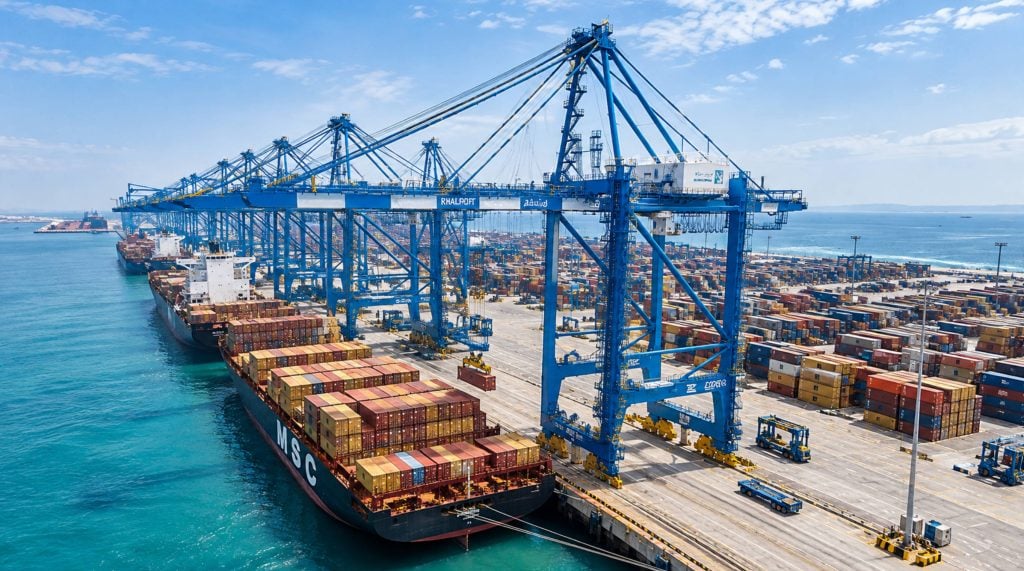
тааныштыруу
If you have ever booked a container to Oslo, Reykjavik or Vaduz and heard someone say “that’s Europe, so the EU rules apply,” you have already met one of the most expensive misunderstandings in European freight. Norway, Iceland and Liechtenstein sit inside the European single market for most manufactured goods, yet none of them is an EU member state, and none of them belongs to the EU customs union. The result is a customs border where many shippers assume there is none, a separate VAT system, a separate tariff schedule and, in one case, a customs regime that is run from Switzerland.
The timing makes this topic more relevant than usual. On 22 June 2026, ministers from the four EFTA states met in Reykjavik for their annual meeting and reaffirmed a trade agenda built around open markets, modernised free trade agreements and continued dialogue with the EU. Liechtenstein took over the EFTA chairmanship on 1 July 2026, and the organisation’s network now covers 35 free trade agreements with 49 partner countries and territories outside the EU, according to Liechtenstein’s own status report from June 2026. On the same date, the EU ended its long-standing duty exemption for parcels worth up to 150 euros, and a further handling fee for e-commerce parcels has been announced for November 2026. Norway, as we will see, is not directly bound by those changes, which creates both risks and opportunities for importers who route goods through the wrong door.
This guide is written for freight forwarders, importers and cross-border sellers who move cargo from China to the EFTA countries. It explains what EFTA is and is not, how the European Economic Area fits in, how customs, VAT and origin rules really work in each destination, which routings make sense, and where shipments most often go wrong. Along the way it shows how a forwarder such as Topway Shipping can take the complexity out of the process.
What EFTA Actually Is
A Short History of a Small Trade Bloc
The European Free Trade Association was founded in 1960 by seven Western European states: Austria, Denmark, Norway, Portugal, Sweden, Switzerland and the United Kingdom. It was created as a more modest alternative to the European Communities, which were then building a customs union with common external tariffs and shared political institutions. EFTA offered something lighter, namely free trade in industrial goods among its members, with no supranational government attached.
Over the following decades most of the founders left to join the EU, and the membership shrank. Iceland joined EFTA in 1970 and Finland in 1986, but Finland, like Austria, Sweden, Denmark and others, later moved to the EU. Liechtenstein, which had been covered indirectly through its customs union with Switzerland, became a full member in 1991. Today EFTA consists of four countries: Iceland, Liechtenstein, Norway and Switzerland. The Vaduz Convention of 2002 replaced the original Stockholm Convention and brought the relationship between the remaining members close to the level of integration that Switzerland enjoys with the EU through its bilateral agreements.
Population-wise, this is a small group. Norway has around 5.5 million inhabitants, Switzerland roughly 9 million, Iceland about 390,000 and Liechtenstein around 40,000. But the purchasing power is high, the import appetite is strong, and the logistics requirements are demanding, which is why these markets deserve more attention than their size suggests.
What EFTA Does and Does Not Do
EFTA is a free trade association, not a customs union and not a political union. Its member states liberalise trade among themselves and, collectively, negotiate free trade agreements with third countries. That second function has become its main public face. The agreements signed in recent years, including the one with India that has now entered into force, give EFTA exporters preferential access to large markets and give EFTA importers preferential access to partner-country goods that qualify under the rules of origin.
What EFTA does not do is set a common external tariff. Each member decides its own import duties, its own customs procedures and its own VAT. Norway can charge a different duty on a product than Iceland, and both can differ from the EU. This single fact explains most of the practical headaches that freight forwarders encounter, because a shipment that is fully cleared in Rotterdam or Hamburg is not automatically cleared for Oslo or Reykjavik.
Table 1: EU, EFTA and EEA compared
| өзгөчөлүк | ЕБ | EFTA | Европа экономикалык аймагы (ЕЭА) |
| мүчөлөрү | 27 мүчө мамлекет | Исландия, Лихтенштейн, Норвегия, Швейцария | 27 EU states plus Iceland, Liechtenstein, Norway |
| Бажы биримдиги | Yes, with a common external tariff | No, each member sets its own tariff | No customs union |
| Single market for goods | Ооба | Only via EEA or bilateral deals | Yes, for most non-agricultural goods |
| Common trade policy | Yes, the EU negotiates for all members | Members coordinate and negotiate jointly | No, EFTA and EU conduct separate trade policies |
| Customs border with the EU | None between members | Ооба | Yes, with simplified procedures |
| Own VAT system | EU VAT Directive applies | Yes, national systems | Yes for EFTA members |
The EEA: Why These Three Countries Feel Like the EU
The source of the confusion is the European Economic Area, which entered into force on 1 January 1994. The EEA agreement extends the EU’s single market to Iceland, Liechtenstein and Norway. In practice that means the four freedoms apply: free movement of goods, services, capital and persons. A Norwegian engineer can work in Germany, a Liechtenstein bank can serve clients in France, and a manufacturer that meets EU product rules can sell in Iceland without separate approvals.
To make this work, the EEA EFTA states adopt a large body of EU legislation through the EEA Joint Committee. Product safety rules, CE marking, chemical regulation such as REACH, and many environmental and consumer protection standards are carried over. The EFTA Surveillance Authority and the EFTA Court, rather than the European Commission and the Court of Justice of the EU, supervise compliance on the EFTA side. This institutional design is why Norway often describes itself as being closely integrated with Europe without being an EU member.
Equally important is what the EEA does not cover. It leaves out the EU customs union, the common commercial policy, most of agriculture and fisheries policy, the common currency and several justice and home affairs areas. For anyone in freight, the first two exclusions are the critical ones. Because the EEA is not a customs union, there is a customs frontier between the EU and each of the three EEA EFTA states. Goods crossing that frontier need declarations, and the receiving country applies its own tariff and its own VAT.
Switzerland: The Fourth EFTA State That Is Not in the EEA
Switzerland is an EFTA member but chose not to join the EEA after a 1992 referendum. It manages its relationship with the EU through a web of bilateral agreements, and in recent months both sides have been working on updating that framework. The EU Council has been preparing conclusions on a homogeneous extended internal market and on relations with its non-EU Western European partners, and decisions on signing new EU–Switzerland agreements were on the agenda of the Council’s EFTA Working Party earlier this year. For forwarders the takeaway is simple: Switzerland is not covered by the EEA rules that apply to Norway, Iceland and Liechtenstein, and its customs administration is entirely its own.
Switzerland matters here because Liechtenstein is bound to it. Since the Swiss–Liechtenstein Customs Treaty of 1923, the two countries form a single customs territory. Liechtenstein is therefore in an unusual position: it belongs to the EEA for product and market access rules, but its customs and VAT administration follow the Swiss model.
The Practical Difference: Product Rules Travel, Customs Rules Do Not
A useful way to think about the EEA is that product regulation travels with the goods, while customs and tax rules stay behind at the border. A toy that carries a valid CE mark and the correct documentation can generally be placed on the Norwegian, Icelandic or Liechtenstein market just as it can in Germany or Spain. But the same toy still has to be declared to Norwegian customs when it enters Norway, and Norwegian VAT is due regardless of whether German VAT was paid on an earlier sale.
This distinction creates three recurring problems for importers. First, the compliance paperwork for a product, such as the declaration of conformity, labelling and importer details, needs to name a responsible economic operator that is acceptable in the EEA, which is not always the same entity that would serve in a purely EU setting. Second, the customs paperwork, including tariff classification, valuation and origin, must be prepared for the specific destination customs authority. Third, the tax paperwork, in particular VAT registration or representation, has to follow local rules. A forwarder that treats all three as one “European” job will inevitably get something wrong.
It also means that the commercial advantage many importers hope for from the EEA is narrower than expected. The EEA gives preferential tariff treatment to goods that originate in the EEA or the EU. It does not turn Chinese-made goods into goods that can move freely from Rotterdam to Oslo without customs formalities. Goods of Chinese origin that are released for free circulation in the EU still have to be cleared again when they cross into Norway, and the same applies in the opposite direction.
Country-by-Country Snapshot
The three EEA EFTA countries share a legal framework but differ greatly in geography, infrastructure and customs administration. The table below summarises the main points a shipper should know before booking cargo, and the sections after it explain what they mean in practice.
Table 2: Destination snapshot for China-origin cargo
| нерсе | Норвегия | Исландия | Лихтенштейн |
| ЕБ мүчөсү | Жок | Жок | Жок |
| EEA member | Ооба | Ооба | Ооба |
| Бажы органы | Tolletaten (Norwegian Customs) | Icelandic Customs (Tollurinn) | Swiss Federal Office for Customs and Border Security, via the customs union |
| Стандарттык КНС ставкасы | 25% | 24% | 8.1% under the Swiss-based system (verify current rate) |
| Low-value e-commerce scheme | VOEC for consignments under NOK 3,000 | Import VAT applies to all consignments | Swiss rules apply |
| Негизги кирүү чекиттери | Oslo, Bergen, Moss, Drammen, Stavanger; road via Sweden | Reykjavik area ports and Keflavik airport | Landlocked; typically via Basel or Swiss and Austrian road and rail |
| Free trade agreement with China | None in force | Ооба, 2014-жылдан бери | Yes, through Switzerland, since 2014 |
Норвегия
Norway is the largest and most accessible of the three markets for Chinese exporters. It has a well-developed port network, with Oslo as the main container gateway and Bergen, Moss, Drammen and Stavanger handling significant volumes. A large share of freight also arrives by truck from Sweden after being unloaded at Gothenburg or at continental hubs such as Rotterdam, Hamburg and Bremerhaven, then moved under customs transit.
Norwegian customs is administered by Tolletaten, which has been digitalising its processes through systems that require advance electronic information on goods crossing the border. Exporters and forwarders should ensure that the carrier and the Norwegian customs broker coordinate the pre-notification, otherwise cargo can be delayed at the border even if the commercial documents are perfect. Norway applies its own tariff schedule, which differs from the EU’s common customs tariff. Many industrial goods enter at low or zero duty rates, but agricultural products and certain categories remain protected, so the HS code must be checked line by line.
The VAT picture is more distinctive. Norway introduced its VOEC scheme, short for VAT on E-Commerce, back in 2020, well before the EU’s own import one-stop shop. Under the scheme, foreign sellers who sell goods valued below NOK 3,000 to private persons in Norway and exceed an annual turnover of NOK 50,000 are expected to register, charge Norwegian VAT of 25% at the point of sale and remit it periodically to the authorities. Goods sold under VOEC are generally not subject to customs duty, and they clear without a further VAT charge at the border. Items above NOK 3,000, foodstuffs, restricted goods and goods subject to excise duties fall outside the scheme and go through ordinary customs clearance.
Norway is also outside the scope of the EU’s July 2026 low-value parcel reforms. A Norwegian consumer ordering from China is not directly affected by the EU’s new flat duty per tariff line, because that duty applies to parcels entering the EU, not Norway. However, businesses that bring goods to Norway first and then forward them to a branch or customer in the EU face two separate clearances, and the declared customs value must be handled carefully when the transaction is between related companies.
Исландия
Iceland is a different logistics problem altogether. It is an island of roughly 390,000 people, and almost everything that is not produced locally arrives by sea or air. Container cargo normally reaches the Reykjavik area through scheduled liner services operated by Icelandic carriers that connect to North European hubs such as Rotterdam and other ports on the continent and in the United Kingdom. For a Chinese exporter this usually means that the cargo first sails to a major European port, then waits for a feeder connection to Iceland. The extra leg adds time, typically one to two weeks depending on schedules, and it also adds a transhipment risk if the connection is missed.
Iceland applies a VAT rate of 24%, and import VAT is charged on goods regardless of their value, as low-value consignment exemptions were removed years ago. Customs duties on most industrial goods are low or nil, which makes the VAT calculation the more important cost factor for most shippers. The most interesting commercial point is the free trade agreement between Iceland and China, which entered into force in 2014. Goods that qualify as Chinese-origin under the agreement’s rules can enter Iceland at preferential rates, provided the correct origin certificate accompanies the shipment. Exporters should confirm eligibility for each product, because origin rules can be product-specific.
Weather and seasonality also play a role. Winter storms in the North Atlantic can disrupt sailings and delay unloading, so importers of time-sensitive goods, such as seasonal retail stock or construction materials with tight schedules, should build more buffer into their plans than they would for continental Europe.
Лихтенштейн
Liechtenstein is a landlocked principality of about 40,000 people wedged between Switzerland and Austria. It has no seaport, no airport of any significance and no independent customs administration. Because of the 1923 customs treaty, imports into Liechtenstein are handled through the Swiss customs system, and Swiss rules on tariffs, procedures and VAT apply. Liechtenstein participates in the Swiss VAT territory, so goods are taxed at the Swiss rate, which has been 8.1%, and importers should check the current rate before quoting.
In practice, cargo bound for Liechtenstein travels by sea to a northern European or Mediterranean port such as Rotterdam, Antwerp, Hamburg or Genoa. From there it moves by rail or truck to Switzerland, where it is cleared by Swiss customs, and then continues to the final address in Liechtenstein. Customs controls on the Austrian side are also performed under the Swiss framework. The consequence for importers is that the clearance specialist needs Swiss experience rather than EU or Norwegian experience, and a Swiss tariff classification may differ from an EU one.
Product compliance, by contrast, follows the EEA model. A company importing electronics into Liechtenstein therefore needs to satisfy EEA product rules while using a Swiss customs process. This hybrid situation is exactly the kind of detail that makes a knowledgeable forwarder valuable.
Customs and Tax Mechanics for China-Origin Cargo
Two Borders, Two Clearances
When a container from Shenzhen or Shanghai is discharged at Rotterdam for onward delivery to Norway, there are two distinct customs questions. The first is whether the goods are being imported into the EU or are merely passing through it. The second is how they will be declared on arrival in Norway. Most forwarders handle this with a transit procedure. Under the Common Transit Convention, which covers the EU, the EFTA states and several other countries, goods can move under a T1 transit declaration from the port of arrival to a customs office in the destination country without paying EU duties and VAT. The transit procedure is run through the electronic New Computerised Transit System, and it requires a guarantee, typically provided by the carrier or the forwarder.
If the cargo is instead cleared into the EU and then sold on to a Norwegian buyer, the situation is more complicated. EU import duty and VAT have already been paid, and the goods must then be exported from the EU and imported into Norway. The EEA preferential tariff rates apply only to goods originating in Norway or the EU, so Chinese-made goods do not benefit from them merely because they have passed through an EU port. The choice between transit and EU release for free circulation is therefore a commercial decision with cost consequences, and it should be taken before the cargo sails rather than after it lands.
Origin, Free Trade Agreements and Preferential Duty
EFTA’s strength lies in its free trade network. The organisation’s agreements cover dozens of partner countries, and the Pan-Euro-Mediterranean convention, which ministers discussed again in Reykjavik in June 2026, allows goods to qualify for preference through cumulation among a broad group of countries. For Chinese exporters, however, the picture is uneven. Iceland and Switzerland each concluded a bilateral free trade agreement with China in 2013 that took effect in 2014, while Norway has no such agreement in force. The EFTA states as a group do not have a free trade agreement with China.
Because of this, Chinese-origin goods heading to Norway generally pay the ordinary Norwegian tariff rate for their classification, even though that rate is often zero for industrial products. Chinese-origin goods heading to Iceland or to Liechtenstein, where Swiss rules apply, may qualify for a preferential rate, but only if the goods meet the origin rules and the shipment carries the correct origin proof. Many exporters either skip this step or apply for the wrong certificate, and the importer then pays the full rate. A review of origin eligibility at the quotation stage is inexpensive and often pays for itself.
Table 3: Trade relationship with China for each EFTA destination
| Дайындалган | FTA with China | Практикалык мааниси |
| Норвегия | None in force | Ordinary Norwegian tariff applies; check HS code for duty; VAT applies in all cases. |
| Исландия | 2014-жылдан бери күчүндө | Preferential duty possible with valid origin proof; import VAT still due. |
| Лихтенштейн | Through Switzerland, since 2014 | Swiss tariff and origin rules apply via customs union; Swiss VAT applies. |
| Швейцария | 2014-жылдан бери күчүндө | Preferential rates possible with proper proof of origin; Swiss VAT applies. |
Import VAT and the Customs Value
For most commercial importers, VAT is the largest single tax cost, and it is calculated on the customs value, not just on the invoice price. In Norway the base generally includes the product value, international freight, insurance and any customs duty payable. The VAT is then applied at 25%. Iceland follows a similar logic at 24%, and Liechtenstein follows the Swiss method at 8.1%.
A simple illustration shows the effect. Assume a Norwegian importer buys a shipment of consumer electronics with an invoice value of 20,000 US dollars, pays 1,500 dollars for ocean freight and 100 dollars for insurance, and the goods are classified at a duty rate of zero. The customs value is 21,600 dollars, and the VAT is 5,400 dollars. If the same goods attracted a 5% duty, the duty would be 1,080 dollars, the VAT base would rise to 22,680 dollars, and the VAT would be 5,670 dollars. The table below sets out the comparison.
Table 4: Illustrative Norwegian landed-tax calculation (USD)
| нерсе | Scenario A: 0% duty | Scenario B: 5% duty |
| Эсеп-фактура наркы | 20,000 | 20,000 |
| Эл аралык жүк ташуу | 1,500 | 1,500 |
| камсыздандыруу | 100 | 100 |
| Бажы наркы (CIF) | 21,600 | 21,600 |
| Бажы салыгы | 0 | 1,080 |
| КНС базасы | 21,600 | 22,680 |
| КНС 25% | 5,400 | 5,670 |
| Жалпы салыктар | 5,400 | 6,750 |
The figures are illustrative and exclude broker fees, handling charges and any local transport, but they show why undervaluation is so risky. A lower declared value reduces taxes on paper, yet it exposes the importer to penalties, delays and a loss of credibility with customs. Accurate valuation is cheaper than a dispute.
What the July 2026 EU Changes Mean for EFTA Routings
From 1 July 2026 the EU abolished the customs duty exemption for low-value consignments. Previously, goods with an intrinsic value up to 150 euros could enter duty-free. Now commercial imports of any value are dutiable, most low-value business-to-consumer parcels face a flat 3 euro duty per tariff line item, and business-to-business shipments under 150 euros can no longer use a simplified declaration. Import VAT continues to apply, and an additional handling fee of around 2 euros for e-commerce parcels has been announced to begin in November 2026.
These measures do not apply to Norway directly, because Norway is not in the EU customs union and runs its own VOEC system. For sellers who ship to both the EU and Norway, this creates a strategic choice. Consolidating all European parcels through an EU warehouse may be convenient, but for Norwegian customers it can lead to the EU duty being paid and then Norwegian VAT being charged again. Direct-to-Norway fulfilment under VOEC may be cleaner, provided the seller has registered and keeps the VOEC and non-VOEC items on separate shipments.
Routing and Mode Choices for EFTA Destinations
Choosing the right route is as much about customs strategy as it is about speed. The table below gives an indicative overview of the main options, and the paragraphs that follow explain when each makes sense. Transit times are indicative only and depend on carrier schedules, port congestion and seasonal capacity.
Table 5: Indicative routing options from China
| Дайындалган | Typical ocean routing | Финалдык бут | Indicative total time |
| Норвегия | China to Rotterdam, Hamburg or Gothenburg, then feeder or truck | Transit by truck or short-sea to Oslo or other ports | 35 50 күнгө чейин |
| Исландия | China to a North European hub, then liner service to Reykjavik | Local trucking from the port | 45 65 күнгө чейин |
| Лихтенштейн | China to Rotterdam, Antwerp, Hamburg or Genoa | Rail or truck via Switzerland, Swiss clearance | 40 55 күнгө чейин |
| Any EFTA state by rail | China to Europe rail service, then truck | Truck under transit | 25 35 күнгө чейин |
FCL Versus LCL
Full container load is the better choice when the cargo fills most of a 20-foot or 40-foot container, because the shipper controls the container from loading to final delivery, and there is less handling and less risk of damage. It also simplifies customs, since one consignee and one set of documents apply to the entire box. For Norway, a 40-foot high cube moved under transit from a continental port to Oslo is a routine arrangement.
Less than container load makes sense for smaller importers, sample orders and replenishment shipments. The cargo is consolidated with other shippers’ goods at a Chinese warehouse, shipped in a shared container and deconsolidated at a European hub. The trade-off is time and complexity. Each LCL consignment needs its own customs treatment at destination, and for Iceland or Liechtenstein the deconsolidation point and the onward leg need to be planned carefully, because extra handling steps can erode the cost advantage.
Rail and Air
The China–Europe rail corridor can shorten the journey considerably for cargo bound for Norway or Liechtenstein, especially for goods that are valuable enough to justify the premium over деңиз аркылуу жүк ташуу but not valuable enough for air. Rail cargo is typically unloaded at a terminal in Germany, Poland or the Netherlands, then trucked onward under customs transit. Аба жүк ташуу serves urgent and high-value consignments, and Keflavik is the practical air gateway for Iceland, while Oslo Gardermoen handles the bulk of Norwegian air cargo.
Документтер жана шайкештикти текшерүү тизмеси
Most delays at EFTA borders come from documentation errors rather than from inspections. The table below summarises the key documents and the mistakes forwarders see most frequently.
Table 6: Core documents for China to EFTA shipments
| документ | ниет | Frequent problem |
| Соода эсептер | Declares value, Incoterm, parties and goods description | Vague descriptions or values that do not match the payment record |
| Packing тизмеси | Shows packages, weights and marks | Жүк кагазынан айырмаланган салмактар |
| Коносамент же авиатранспорт | Транспорттук келишим жана менчик укугун тастыктаган документ | Consignee details that differ from the invoice |
| Товардын келип чыгышы жөнүндө күбөлүк | Supports preferential duty claims where an FTA applies | Wrong certificate type or missing signatures |
| Продукциянын шайкештик документтери | Show conformity with EEA product rules, such as CE declarations | No identified responsible operator in the EEA |
| VAT or VOEC details | Allow correct tax treatment at the border | VOEC number missing or mixed with non-VOEC goods |
| Транзиттик декларация (T1) | Allows movement from the EU port to the EFTA destination | Guarantee not arranged or document not closed on arrival |
Beyond the paperwork, restricted goods deserve special attention. Food, supplements, certain chemicals, batteries, radio equipment and goods subject to excise duties are regulated differently in each country, and Norway excludes foodstuffs and excise goods from the simplified VOEC route. Importers should confirm whether any licence, permit or pre-registration is required before the cargo is booked, not after it has arrived.
Mistakes Freight Forwarders See Again and Again
Treating Entry into the EU as Entry into the EEA
The most common error is the belief that clearing goods in an EU port finishes the job. It does not. EU release for free circulation means that EU duty and VAT have been settled, but Norway, Iceland and Liechtenstein have their own customs systems. Unless the cargo is moved under transit or exported formally and re-imported, it can be held at the border, and the buyer may be asked to pay duty and tax that the shipper believed were already covered.
Инкотермске көңүл бурбоо
A second frequent problem is a mismatch between the agreed Incoterm and the real ability to clear customs. If a Chinese seller quotes delivered duty paid to Norway but has no VOEC registration and no local representative, the carrier or the consignee will end up paying VAT at the border and may refuse to do so. Where goods are sold ex works or free on board, the importer needs to be prepared to handle clearance locally, including a broker and a valid VAT registration where applicable. Clear responsibility for duties, taxes and clearance fees should be written into the sales contract.
Mixing VOEC and Non-VOEC Goods
Norwegian authorities expect VOEC goods to be separated from goods that are outside the scheme. A single parcel that includes a regulated food supplement, an item above the NOK 3,000 limit and ordinary consumer goods may be pushed into full customs clearance, and the VOEC benefit is lost. The fix is to split orders at the fulfilment stage.
Underestimating Island and Landlocked Constraints
Iceland and Liechtenstein bring their own constraints. Iceland’s connection depends on a limited number of liner services, so a missed feeder can add a week. Liechtenstein’s lack of a port and its Swiss customs link mean that the last 200 kilometres can take longer than the first 2,000 if the paperwork is not ready. Both cases reward early planning and a forwarder with experience on the specific lane.
How Topway Shipping Supports Shipments to EFTA Countries
Since 2010, Topway Shipping, headquartered in Shenzhen, China, has been a professional provider of cross-border e-commerce logistics solutions. The founding team has more than 15 years of experience in international logistics and customs clearance, with a strong focus on China–U.S. transportation. That background in one of the most regulation-heavy trade lanes in the world translates well to the EFTA markets, where success also depends on getting classification, valuation and documentation right before the cargo leaves China.
Topway Shipping’s services span the whole logistics chain, including first-leg transportation, overseas кампасы, customs clearance and last-mile delivery. For EFTA destinations this means that an importer or cross-border seller can work with a single partner from the pickup at the Chinese factory to the delivery at the Norwegian, Icelandic or Liechtenstein address. The team can help clients decide whether goods should go under transit to the destination country or be cleared into the EU first, and can coordinate with local brokers who understand Tolletaten, Icelandic customs and the Swiss system used for Liechtenstein.
On the ocean side, Topway Shipping offers flexible full-container-load and less-than-container-load services from China to major ports worldwide. A shipper with enough volume for a 40-foot container can book an FCL routing to a North European hub and arrange onward transit to Oslo or another Nordic destination. A smaller seller can consolidate cargo through LCL and plan the deconsolidation point so that the Norwegian VOEC and non-VOEC items are separated correctly. Because the team is based in Shenzhen, it is also close to the factories, which makes it easier to check cargo, labels and documents before they sail.
The practical benefit is fewer surprises. A forwarder that asks about the HS code, the Incoterm, the VOEC status and the origin eligibility at the quotation stage prevents problems that would otherwise appear at the border. If your business is expanding from the U.S. or EU into the EFTA states, or from China directly into Norway or Iceland, Topway Shipping can help structure the lane so that duties, taxes and timing are predictable.
A Practical Planning Framework
Before shipping to any EFTA country, it helps to work through a short sequence of questions. Start with the destination and ask which customs authority will process the goods, because that determines the tariff, the VAT rate and the broker you need. Then confirm the HS code and test it against the destination’s tariff, not the EU’s. Next, check origin: if the destination has a free trade agreement with China, ask whether the goods qualify and whether the supplier can issue the correct proof.
After that, decide on the routing and the clearance strategy. Direct vessel, EU hub with onward transit, or rail and truck each have distinct cost profiles, and the right answer depends on volume, urgency and whether the goods will later be sold in the EU. Finally, settle the commercial terms. Agree who pays duty and VAT, who appoints the broker and who is responsible for VOEC or other registrations. Putting these decisions in writing before booking will save more money than most freight rate negotiations.
It is also wise to keep an eye on regulatory developments. The EFTA ministers’ June 2026 meeting signalled continued work on modernising the free trade network, and the EU’s own customs reforms are still rolling out, with the announced handling fee due in November. None of these changes alters the basic fact that Norway, Iceland and Liechtenstein run separate customs systems, but they can change the economics of particular routings. Reviewing lanes every quarter is a sensible habit.
жыйынтыктоо
Norway, Iceland and Liechtenstein share the EU’s single market for most goods through the EEA, yet they are not EU members, they are not in the EU customs union, and they apply their own tariffs, VAT rules and clearance procedures. Liechtenstein adds a further twist by running its customs through Switzerland. For freight forwarders and importers, the safest assumption is that every shipment to an EFTA country involves a second customs border, a separate tax calculation and its own documentation requirements.
Getting this right is not complicated, but it does require preparation. Classify goods against the destination tariff, check origin eligibility, use transit procedures where appropriate, apply for VOEC where it fits, and fix responsibilities through the Incoterm. With the EU tightening its low-value parcel rules in 2026 and EFTA continuing to expand its trade network, the cost of confusing the two systems is rising. A forwarder with real experience in documentation, customs clearance and flexible FCL and LCL routing, such as Topway Shipping, can help you turn that complexity into a predictable and efficient supply chain.
Көп берилүүчү суроолор
Q: Is Norway part of the EU?
A: No. Norway is a member of EFTA and the EEA, which gives it access to the EU single market for most goods, but it is outside the EU customs union and runs its own customs, tariff and VAT systems.
Q: Do I need a separate customs declaration for Norway if the goods already cleared in Rotterdam?
A: Yes, unless the cargo moved under a transit procedure and is being declared on arrival in Norway for the first time. If the goods were released for free circulation in the EU, they must be exported from the EU and imported into Norway.
Q: What is VOEC and who needs it?
A: VOEC is Norway’s VAT on E-Commerce scheme. Foreign sellers who sell goods under NOK 3,000 to Norwegian consumers and exceed the annual turnover threshold should register, charge 25% VAT at checkout and remit it to the Norwegian authorities.
Q: Does the EU’s July 2026 low-value parcel change affect shipments to Norway or Iceland?
A: Not directly, because the new EU duty rules apply to goods entering the EU. It can still affect routing decisions if goods pass through an EU warehouse before moving on to an EFTA country.
Q: How are goods cleared when shipped to Liechtenstein?
A: Liechtenstein is in a customs union with Switzerland, so clearance is carried out under Swiss customs rules and Swiss VAT applies, even though Liechtenstein is a member of the EEA for product and market access purposes.
Q: Can Topway Shipping handle FCL and LCL shipments to Europe?
Ж: Ооба. Topway Shipping компаниясы Кытайдан дүйнө жүзү боюнча ири портторго FCL жана LCL океан жүк ташууларын, ошондой эле биринчи кезектеги ташууларды, чет өлкөлөрдөгү кампаларда сактоону, бажы жагынан жол-жоболоштурууну жана акыркы чакырымга жеткирүүнү ийкемдүү сунуштайт.
