
Felixstowe Congestion: Why UK’s Biggest Port Still Backs Up Post-Brexit
അവതാരിക
Every autumn the same question circulates among UK importers and the freight forwarders who serve them: will Felixstowe seize up again? The Port of Felixstowe in Suffolk handles roughly four million TEU a year and around two-fifths of the containers moving in and out of the United Kingdom, much of it Asian-origin consumer goods, furniture, apparel, electronics and toys. When it stumbles, shelves in Birmingham, Leeds and Glasgow feel it within weeks, and the invoices for storage, detention and rebooked haulage land well before the stock does.
Since Brexit took effect it has become convenient to blame the border for every delay. The reality is more nuanced and, for anyone who actually moves boxes, more useful. Felixstowe is overwhelmingly a deep-sea gateway, and deep-sea imports from China never faced the roll-on roll-off frictions that hit short-sea trade with the EU. What keeps Felixstowe backing up is a stack of structural and operational pressures: volume concentrated in one location, a landside system with limited slack, ultra-large vessels that arrive in bunches, fragile labour and systems resilience, and a customs and border regime that has added cost and complexity at the edges since 2021.
This article walks through those causes using publicly reported incidents and the 2026 tariff notices issued by the port and the main carriers, then turns to what importers and forwarders can do about it. We also explain how a China-based logistics provider such as Topway Shipping builds resilience into UK-bound supply chains. A note on timing: the figures and charges below come from public port and carrier notices through autumn 2026, and conditions at a single terminal can change within days, so always check live advisories before committing to a booking.
Felixstowe by the Numbers
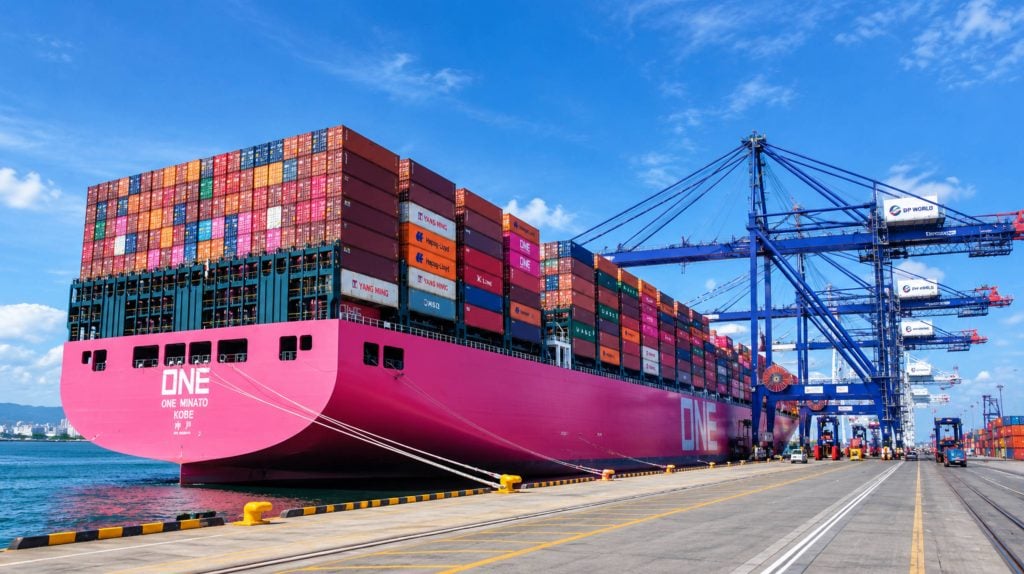
To understand why a backlog at one port becomes a national story, start with scale. Felixstowe has the deepest container berths in the country, with a maximum draft of around 18 metres, which lets it take the largest vessels that call in Northern Europe. Public port data and industry guides put annual throughput at more than four million TEU, more than 2,000 vessel calls a year and roughly 3,700 metres of quayside served by dozens of quay cranes. Its share of UK container trade is usually quoted at somewhere between 36 and 48 percent depending on the year and the method of counting, and for Asia-origin cargo the share is higher still.
The port also operates the largest intermodal rail hub in Britain, with three rail terminals that connect to inland terminals from Glasgow to Cardiff. Rail has moved a large share of northbound traffic for years, which is one reason inland retailers and manufacturers treat Felixstowe as the front door of their supply chains.
| മെട്രിക് | Approximate figure | എന്തുകൊണ്ട് ഇത് പ്രാധാന്യമർഹിക്കുന്നു |
| വാർഷിക കണ്ടെയ്നർ ത്രൂപുട്ട് | 4 ദശലക്ഷത്തിലധികം TEU | A single-site share of UK trade that is hard to replace quickly |
| Share of UK container trade | Roughly 36% to 48% (varies by source) | Any disruption has national consequences |
| Maximum berth draft | ഏകദേശം 18 മീ | Can host the largest vessels serving Asia to North Europe |
| റെയിൽ ടെർമിനലുകൾ | മൂന്ന് | Large share of northbound inland moves depends on rail paths |
| Owner and operator | Hutchison Ports UK, with a sale to a BlackRock-led group announced in 2025 | Ownership transition adds a strategic variable for carriers and shippers |
Sources: public port and industry data; figures are approximate and rounded.
The upside of this concentration is obvious: scale, rail links and deep water. The downside is that there is no spare Felixstowe. When the terminal runs at high yard density, every shipper, forwarder, haulier and carrier feels the squeeze at once.
A Short History of Felixstowe Disruption
Felixstowe congestion is not new, and it did not begin with Brexit. Looking at the major episodes side by side shows that the triggers have differed each time while the pattern of failure has been strikingly similar.
| എപ്പിസോഡ് | എന്താണ് സംഭവിച്ചത് | പ്രധാന ട്രിഗർ |
| Terminal system migration (pre-pandemic) | Trucks queued for hours, productivity fell to roughly 80% to 90% of pre-migration levels, carriers omitted calls | Software and yard operating change |
| ശരത്കാലം 2021 | Dwell times rose beyond nine days against a normal 4.5, big ships were diverted, empty returns were refused | Pandemic demand, HGV driver shortage, poor schedule reliability |
| ഓഗസ്റ്റ് 2022 | About 1,900 Unite members struck for eight days | Pay dispute |
| 2025 ലേക്ക് 2026 | Cape of Good Hope routing, rising port levies, ownership transition | Network redesign and cost pressure |
Sources: Seatrade Maritime, The Loadstar, Sourcing Journal, Maersk and port notices.
The system migration that exposed yard fragility
When a new terminal operating system went live at Felixstowe, trucks reportedly queued for as long as 16 hours to enter the port, and the operator later said productivity was running at about four-fifths of the level before the change. Maersk omitted calls on some services and discharged cargo in Antwerp instead, while freight forwarders were told that compensation was unlikely because they are not direct customers of the port. That last point still matters today: forwarders sit in a contractual gap between the shipping line and the terminal, and delay costs tend to fall where the paperwork leaves them.
Autumn 2021 and the perfect storm
The 2021 backlog was the most widely covered. The port blamed a pre-Christmas peak combined with haulage shortages, congested inland terminals, poor vessel schedule reliability and the pandemic. Containers sat for ten days or more before collection, against a usual 4.5 days, and the port added about 15,000 TEU of extra storage and still had to refuse empty containers from several carriers. Maersk redirected some of its largest ships to other ports and relayed boxes back by feeder, a trade-off that avoided anchorage waits of four to seven days but added handling steps.
Port users also pointed at structural limits that preceded the pandemic. The Felixstowe Port Users’ Association said at the time that vehicle booking slots were running at about 180 an hour against 240 a decade earlier, and that crane moves per hour had fallen to around 16 against about 30 at rival UK ports. These were claims by a trade body rather than audited figures, but they captured the shippers’ frustration that the landside system had not scaled with vessel size.
The 2022 strike
In August 2022 around 1,900 dock workers walked out for eight days, the first strike at the port in three decades. The stoppage hit a port that was already running with limited slack, and the knock-on effects were felt at other European gateways as diverted boxes arrived in bulk. Because ships cannot simply wait, a short strike can turn into a multi-week recovery: the backlog of discharge, the backlog of empties and the resulting haulage resets all have to clear in sequence.
The Real Causes Behind the Backlogs
If you only read headlines you might think each episode had a single villain. In practice congestion at Felixstowe is the product of several interacting constraints. Understanding them helps explain why spells of delay keep returning even when no strike or system change is in the news.
Concentration and mega-vessel bunching
Large container ships deliver cargo in very big lumps. A 20,000 TEU vessel may discharge thousands of import boxes in a few days, and if two or three vessels arrive close together because of schedule slippage, the yard fills far faster than hauliers can empty it. Yard density is the key concept: once occupancy passes a threshold, crane crews spend more time shuffling containers to reach the ones that are due out, and every move takes longer. That slows the vessel, which lengthens the berth queue, which delays the next vessel, and the cycle feeds itself.
Felixstowe’s deep-water berths make it attractive for the largest ships, but there is a limit to how many of those berths can be worked at once. Maersk’s network head said during the 2021 episode that bigger ships mean fewer berths can handle them and each call takes longer, which is why the carrier chose to skip calls and relay boxes from other ports instead of waiting a week at anchor.
The pattern is a reminder that port congestion is as much about timing as about volume. A port can handle high average throughput and still jam if arrivals are lumpy.
The landside squeeze: hauliers, slots and empties
The quayside gets the press attention, but most Felixstowe delays that hurt importers occur landside. Containers leave the port by lorry or rail, and both depend on appointment systems, available drivers and available chassis or wagons. When a vessel discharges a large batch, hauliers must collect within the free time window or the importer begins paying storage and detention. The vehicle booking system limits how many trucks can enter per hour, which protects the gate from queues but also caps how fast the yard can clear.
Empties are the quiet problem. Importers unpack boxes inland and must return the empty container to the port or a designated depot. If the port or the line stops accepting empties, as happened in 2021, hauliers hold them on trailers or in yards, which removes trailers from circulation and delays the next collection. Maersk’s response was to accept merchant haulage returns at other UK ports and to arrange extra storage at Tilbury, a reminder that empties management is a network exercise and not a single-port task.
Drivers add another layer. UK hauliers have faced driver shortages and rising wage costs for years, and Brexit-related changes to labour mobility are widely cited as one contributor. Indicative 2026 haulage pricing published by a UK haulage marketplace shows how quickly costs rise with distance, and it warns that waiting time charges of about £30 to £50 an hour can accumulate when queues form at the port.
| Route from Felixstowe | 20ft container (indicative) | 40ft container (indicative) |
| ലണ്ടൻ | £ 9 മുതൽ തൊട്ട് 250 വരെ | £ 9 മുതൽ തൊട്ട് 275 വരെ |
| Midlands (about 150 miles) | £ 9 മുതൽ തൊട്ട് 350 വരെ | £ 9 മുതൽ തൊട്ട് 400 വരെ |
| Manchester (about 250 miles) | £ 9 മുതൽ തൊട്ട് 600 വരെ | £ 9 മുതൽ തൊട്ട് 660 വരെ |
Source: UK haulage pricing guide for 2026. Rates exclude fuel surcharges, vehicle booking fees, waiting time and low emission zone charges.
These ranges are guides rather than quotes, but the practical message is consistent: when dwell time grows, the cheapest mistake is the one you avoid by booking haulage early and keeping the collection window tight.
Rail and the single-corridor problem
Rail is a strength of Felixstowe but also a source of fragility. The port’s rail terminals depend on a limited number of train paths on the line from Suffolk towards the Midlands and the North, and passenger and freight trains share the same corridor through junctions such as Ely. When a train misses its slot or a derailment closes a section, a full day of intermodal departures can be disrupted, and containers that should have left by rail stay in the yard.
Network capacity upgrades in the East of England have been discussed for years because the port is the busiest റെയിൽ ചരക്ക് hub in the country. Until additional capacity is delivered, any rail disruption simply pushes more boxes onto road, which then stresses the haulage system described above.
Labour and systems risk
Terminal operations are labour intensive at the cranes and in the yard, and they rely on a terminal operating system that controls every container move. The 2022 strike showed what happens when labour is withdrawn, and the earlier system migration showed what happens when software changes before the yard is ready. Neither risk is unique to Felixstowe, but the port’s share of UK trade amplifies the impact of each.
Equipment availability, weather and fog also matter. Cranes cannot work in high winds, and every lost shift cascades into the next vessel’s berthing window.
Where Brexit Really Fits In
Brexit is part of the Felixstowe story, but a smaller part than the headlines imply. It helps to separate what changed at the border from what changed in the broader trade and labour environment.
What changed at the border
Since 2021 the UK has run its own customs regime for goods arriving from the EU, with import declarations, tariff classification, origin rules and VAT accounting that did not exist when trade was frictionless. The UK government has also phased in a Border Target Operating Model that sets out risk-based checks on animal, plant and food imports at border control posts, with documentary, identity and physical inspections for certain commodity groups. Industry commentators note that when inspection rates for specific commodity types rise, clearance timelines extend, adding to dwell time and increasing demurrage exposure.
At Felixstowe, the port’s own rates and charges for 2026 show what these controls look like in practice. Containers selected for examination by Port Health or DEFRA incur a surcharge of £170.01 per container, and similar charges apply to examinations by the Forestry Commission and the Environment Agency. That is on top of any inspection fees and the cost of movement to and from an examination facility.
For shippers of ordinary non-food Chinese goods such as electronics, apparel and homewares, these controls matter less. The impact is concentrated on food, plant, wood and animal-derived products.
What Brexit did not cause
The 2021 backlog and the 2022 strike were not caused by Brexit, and the Major Ports Group said as much when it listed Brexit border changes alongside global demand and the pandemic as one of several contributing factors. Container vessels from Asia were being delayed in Los Angeles, Yantian and Rotterdam at the same time, and a port in the Netherlands or Germany faced many of the same constraints.
The more accurate statement is that Brexit narrowed the UK’s margin for error. A shortage of drivers is harder to fix when the labour pool is smaller, additional customs work for EU-origin goods adds a layer of paperwork for forwarders, and any shift in Northern European network design can strand UK-bound cargo that previously moved freely by road from Rotterdam or Antwerp.
Transshipment, relay and the Northern Europe link
Many Asia to UK shipments do not move direct to Felixstowe. Carriers frequently discharge at Rotterdam, Antwerp or Bremerhaven and relay boxes to Britain by feeder vessel. When Felixstowe is jammed, carriers lean harder on this pattern, as Maersk did when it used Wilhelmshaven and relayed Felixstowe imports back to the UK, and MSC concentrated discharge in Antwerp. The trade-off is that a feeder shortage or berth delay at the relay point can stretch transit times by a week or more.
For importers this means a booking labelled Felixstowe can in reality involve one or more additional handling steps in Europe. Cargo moving on a through bill of lading may also be subject to different customs treatment than cargo discharged direct, so forwarders need to confirm the intended route before the vessel sails.
The Cost of Delay: Port Charges, Surcharges and Detention
Delay is expensive even when it is not dramatic. Felixstowe’s import charges for 2026 show a layered structure of port levies that carriers pass on to customers per container.
| Charge (per import container) | Rate effective 1 April 2026 |
| Port security (ISPS) | £23.55 |
| പോർട്ട് ഇൻഫ്രാസ്ട്രക്ചർ | £14.51 |
| പോർട്ട് എൻട്രി | £21.10 |
| Green energy transition levy (GET) | £26.16 |
| Energy adjustment levy (EAL) | £15.45 |
| Emergency fuel surcharge (EFS) | £2.95 in April |
| Subtotal at April levels | £103.72 |
Source: Maersk notice relaying Port of Felixstowe charges effective 1 April 2026. Other carriers may publish different schedules.
The emergency fuel surcharge deserves separate attention because it moves quickly. Carriers relayed that the Felixstowe EFS would rise from £2.95 to £5.38 per import laden container from 1 May 2026, and a later notice confirmed it at £3.82 per import laden container from 1 September 2026, with a further review scheduled for 15 September to set the October level. Treat any fixed budget figure for the EFS with caution and check each month’s advisory.
These per-container levies are small next to demurrage and detention, which can run into hundreds of pounds per container per week once free time expires. Free time is negotiated with the carrier and varies by line, equipment type and contract. During congestion the real damage comes from waiting: the container is discharged, but you cannot collect it, so the clock runs while nothing moves. In prior episodes carriers and port operators were reluctant to waive these charges, and forwarders told customers not to expect relief.
Red Sea Rerouting and the Bunching Effect
Shipping networks that used to reach Northern Europe via the Suez Canal have in many cases been rerouted around the Cape of Good Hope because of security concerns in the Red Sea. The extra distance adds roughly ten to fourteen days to voyages on typical Asia to North Europe loops, according to published industry guides, and it makes arrival patterns less regular.
When vessels that would normally arrive on staggered Suez-routed schedules instead arrive in clusters after a longer and more weather-exposed voyage, terminals receive larger waves of import volume with less warning. Industry commentary on UK port performance in 2026 points to this bunching as one reason for periods of elevated waiting times at Felixstowe, Southampton, Tilbury and London Gateway, along with variability in berth productivity and delays in container availability notices.
Operators can still handle the traffic, and one 2026 port guide argues that Cape routing does not materially change Felixstowe’s operations. The practical point for importers is different: longer voyages and bunching reduce the reliability of the arrival date, which is the date your free time and your haulage booking depend on.
Ownership Change and What It Could Mean
In March 2025 Hutchison Port Holdings announced a majority sale of its international ports business, including Felixstowe, to a syndicate led by BlackRock, and industry commentary has linked the deal to the involvement of MSC’s terminal arm. Industry guides in 2026 describe the port as being in transition between Hutchison and the new ownership.
Ownership change is not in itself a cause of congestion, but it is a variable to watch. New owners may change investment priorities, carrier alliances may respond to a shift in terminal control, and large carriers that own or are tied to terminals may prefer their own facilities. When the Gemini Cooperation between Maersk and Hapag-Lloyd was announced, commentators noted a shift of some UK volume towards London Gateway, a reminder that carriers can and do move large volumes between UK ports when it suits their network design.
Alternative UK Gateways Compared
Felixstowe is not the only way into the UK, and during peak season it is worth knowing the options. The right choice depends on the final delivery region, the carrier’s service pattern and how much slack your supply chain has.
| ഗേറ്റ്വേ | സാധാരണ ശക്തി | പരിശോധിക്കേണ്ട പോയിന്റുകൾ |
| ഫെലിക്സ്സ്റ്റോവ് | Deepest berths, widest Asia service coverage, strong rail to the North and Midlands | Peak-season yard density, vehicle booking availability, empties policy |
| ലണ്ടൻ ഗേറ്റ്വേ | Modern deep-water terminal on the Thames with good road access to London and the South East | Carrier service changes, landside capacity when diversions arrive |
| സൌഥ്യാംപ്ടന് | Strong for the South and the Midlands, with established rail and road links | Has seen congestion surcharges when diversions hit in past peaks |
| ടിൽബറി | Used by carriers for overflow storage and relay in earlier congestion | Smaller scale, so depends on carrier arrangements |
| ലിവർപൂൾ | Useful for the North West and as a way to avoid the busiest East Coast corridor | Fewer direct Asia loops, so transit routing may involve relay |
Qualitative comparison from public reporting; availability depends on carrier service and contract.
Switching ports is not free. Carriers may charge diversion fees, inland haulage may be longer or shorter, and customs entries and warehouse bookings may need to be updated. The reward is predictability: a slightly longer inland leg from a quieter port can be cheaper than a week of detention at a jammed one.
Mixing gateways is also a legitimate strategy. Splitting a large order across two ports reduces single-point exposure, although it complicates documentation and warehouse receiving.
A Practical Playbook for Importers and Forwarders
None of this means importing into Felixstowe is a gamble. It means planning with the assumption that something will slip. The following steps are what experienced forwarders build into their standard practice, especially between October and early December.
Book earlier and build in buffer
Peak season starts earlier in the supply chain than most buyers expect. Booking space and haulage early lowers the risk of rolled cargo, and building an extra week into the delivery plan for retail-critical lines is cheap insurance. Make sure purchase orders carry realistic in-warehouse dates and that sales teams know which lines have no buffer.
Ask the carrier or forwarder for the discharge port, any relay port and the stated free time before you confirm the booking. A vague answer on any of the three is a signal to ask again.
Monitor vessel schedules in the last two weeks before arrival. Short-notice omissions and diversions are the most common source of disruption, and the sooner you know, the more options you have.
Plan the landside leg before the ship arrives
The most common cause of avoidable detention is a collection that was not arranged until the container was already discharged. Pre-book the haulier, confirm the vehicle booking window and agree what happens if the slot is unavailable. If you use rail, check train departures and the inland terminal’s own free time, because a box can clear the port and still accrue charges at the inland end.
Consider whether a container can be unpacked at a port-adjacent facility, which reduces the haulage distance and frees equipment quickly. For LCL cargo, the consolidation centre’s own schedule matters as much as the vessel.
Get customs paperwork ready before the vessel sails
Border and customs delays add dwell time in the same way congestion does. Make sure the importer has the correct EORI number, that commodity codes are verified, and that invoices, packing lists and origin documents are consistent across the booking, the bill of lading and the declaration. Where food, plant or animal products are involved, confirm health certificates and inspection requirements early.
Decide who is declaring and how VAT will be accounted for. Postponed VAT accounting can protect cash flow, but it requires correct set-up and monthly discipline.
If your cargo is selected for examination, expect an additional charge and a delay, and have the കോൺടാക്റ്റ് details of the examination site and your broker ready.
Negotiate the contract, not just the rate
In a congested port the rate that matters is the all-in cost after delay. Ask for extended free time on peak sailings, clarity on who pays for port-caused delay, and a defined process for diversions. Forwarders should flow these terms through to customers in writing so that expectations are set before a problem arises.
Finally, keep a record of the timestamps: discharge, availability, gate-out, return of empty. If a detention bill is disputed, evidence of when the container was actually available is what wins the argument.
How Topway Shipping Helps UK-Bound Shippers
Since 2010, Topway Shipping, headquartered in Shenzhen, China, has provided cross-border e-commerce logistics solutions. Our founding team brings more than 15 years of experience in international logistics and customs clearance, with a strong focus on China to US transportation. That background shapes how we approach any congested gateway: we treat the whole chain as one system, because a delay anywhere in it shows up as cost somewhere else.
Our services span first-leg transportation, overseas വെയർഹൗസിംഗ്, customs clearance and last-mile delivery. On the ocean side we offer flexible full container load and less than container load services from China to major ports worldwide, which gives UK-bound customers options when a single gateway is under pressure. If Felixstowe is running tight, we can discuss alternative discharge ports, adjust consolidation timing and plan the inland leg around realistic collection windows rather than best-case ones.
The first leg is where many problems begin. Late cargo at the origin terminal, missed cut-offs and incomplete documentation all create rolled bookings that arrive in the peak at the worst time. By controlling collection, consolidation and booking in China, Topway Shipping helps shippers lock in sailings earlier and reduce the chance that a delay in Shenzhen turns into a delay at a congested UK terminal.
Overseas warehousing gives importers a buffer between the port and the customer. Instead of forcing every container to be unpacked and delivered immediately, stock can be held and released against actual demand, which lowers the pressure to collect at any cost and reduces detention exposure. Combined with customs clearance support and last-mile delivery, it turns a single point of failure into a managed process. For e-commerce sellers in particular, where promised delivery dates are a conversion factor, that predictability is worth more than the nominal saving on a freight rate.
വരും മാസങ്ങളിൽ എന്തൊക്കെ കാണണം
Several developments will shape whether Felixstowe’s autumn runs smoothly. The first is carrier schedule reliability on Asia to North Europe loops, since longer routing and bunching are the main source of arrival volatility. The second is the monthly movement in port levies and the emergency fuel surcharge, which affects landed cost even when the port is flowing. The third is the ownership transition and any change in carrier alliance behaviour that follows.
Labour relations and system changes also deserve attention, since both have caused the most severe past disruptions. Check for notices from the port and from carriers before the busiest weeks, and treat any announcement of a terminal system change or industrial action ballot as a trigger to review your bookings.
Finally, keep an eye on border policy. Changes to inspection regimes, documentation requirements or fee levels will affect certain commodity groups more than others, so check what applies to your product category and not just the headline rule.
തീരുമാനം
Felixstowe backs up because it is both essential and exposed. It handles a large share of UK container trade through one site, with landside systems that have limited slack, a rail corridor with limited alternatives, ships that arrive in lumps, and a labour and systems environment where a single failure can ripple across the network. Brexit contributed by tightening labour supply, adding customs and border work for some trades and narrowing the UK’s margin for error, but it is not the root cause of the repeated congestion episodes.
For importers and forwarders, the lesson is to stop treating congestion as an exception. Build buffer into schedules, confirm discharge and relay ports, arrange haulage before the ship arrives, get customs data right the first time and negotiate free time that reflects peak-season reality. Consider alternative gateways when the risk is high, and keep a clear record of timestamps for any dispute.
Topway Shipping supports that approach with end-to-end logistics from first-leg collection in China through FCL and LCL ocean freight, overseas warehousing, customs clearance and last-mile delivery. If you are planning peak-season shipments to the UK, speak to our team early so that your routing, documentation and inland plan are in place before the vessel sails.
പതിവ്
Q: Is Felixstowe congestion caused by Brexit?
A: Not mainly. Past backlogs were driven by pandemic demand, driver shortages, vessel bunching, a system migration and a strike. Brexit added customs and border work for some trades and tightened labour supply, which reduced the UK’s margin for error.
Q: How long can containers be delayed at Felixstowe during a peak backlog?
A: In the 2021 episode, containers took around ten days to be collected against a usual 4.5 days. Delays vary by season and incident, so check current advisories from the port and your carrier.
Q: What port charges apply to import containers at Felixstowe in 2026?
A: Charges relayed by Maersk for 1 April 2026 included ISPS, infrastructure, entry, green energy transition and energy adjustment levies, plus an emergency fuel surcharge that has changed monthly. Check the current notice from your carrier for the exact figure.
Q: Can I avoid Felixstowe delays by using another UK port?
A: Often yes. London Gateway, Southampton, Tilbury and Liverpool can serve some trades, but you must confirm carrier service, inland haulage cost, customs arrangements and any diversion fees before switching.
Q: How does Topway Shipping reduce congestion risk for UK-bound cargo?
A: We combine first-leg collection in China, FCL and LCL ocean freight to major ports worldwide, overseas warehousing, customs clearance and last-mile delivery, so we can plan around bottlenecks instead of reacting to them.