
چین سے یوکرین کے لیے جہاز: جنگ کے وقت شپنگ کے قوانین بیچنے والوں کو معلوم ہونا چاہیے۔
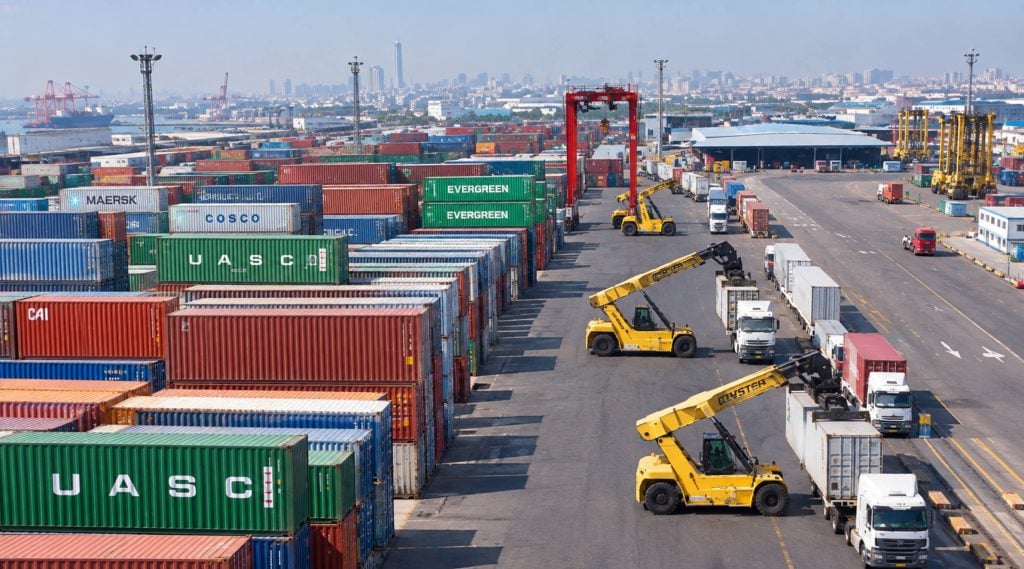
Moving cargo from China to Ukraine has never been a simple point-to-point exercise, and since February 2022 it has become something closer to a moving target. Ports open and close within the same week, insurers rewrite their war-risk clauses every few months, and a route that worked perfectly in June can be dead on arrival by September. For sellers, buyers, and freight forwarders who still need to keep goods flowing into Ukraine, the real challenge is no longer just finding a carrier — it is understanding which rules currently apply, which routes are actually operating, and which paperwork will get a container released rather than stuck in a bonded warehouse for weeks.
This guide is written for sellers, sourcing managers, and logistics teams who ship from Chinese factories into the Ukrainian market. It walks through the routes that are realistically in use today, the sanctions and compliance rules that did not exist before 2022, the customs paperwork Ukrainian border authorities are strict about, and the practical decisions that separate a shipment that clears in days from one that sits for months. Where useful, we have pulled in current shipping-market data so the numbers reflect the wartime environment rather than pre-2022 assumptions.
Why China–Ukraine Shipping Rules Changed So Much
Before the full-scale invasion, container lines called directly at Odesa, Chornomorsk, and Pivdennyi, and a shipment from Shenzhen or Ningbo could reach a Ukrainian warehouse door in roughly six to eight weeks using fairly conventional sea-freight planning. That model broke almost overnight. Russian forces mined approaches to Ukrainian ports, insurers pulled war-risk cover, and the major container carriers suspended direct calls. What sellers are working with now is a patchwork of rerouted sea freight through EU transshipment ports, a fragile Black Sea “temporary corridor,” overland trucking through Poland and Romania, and rail options that avoid Russian territory altogether.
The situation has also kept shifting within the war itself. A temporary shipping corridor along the western Black Sea coast, hugging Romanian and Bulgarian waters, was established in 2023 and has carried a meaningful share of Ukraine’s seaborne trade since. But that corridor is not guaranteed: vessel traffic has been paused mid-year for days at a time over reported mine or air threats, and by mid-2026 several of the largest container lines had stopped calling at Greater Odesa altogether even though the corridor kept functioning for bulk and general cargo. In the first half of 2026 Ukraine still moved over 50 million tons of goods through its ports, with roughly two-thirds of that volume passing through the Greater Odesa region — so the route is real, but it is not the predictable, fully-scheduled liner service sellers were used to before 2022.
For a Chinese exporter, the practical takeaway is that no single route can be assumed to work for every shipment. What clears smoothly for a bulk industrial order shipped as FCL may be completely unsuitable for a smaller e-commerce parcel, and vice versa. Route selection now has to be treated as a live decision made shipment by shipment, not a default set once and forgotten.
Current Routes for Shipping from China to Ukraine
Four route families are in active use for China–Ukraine cargo today, and most experienced forwarders will combine two or three of them depending on cargo type, budget, and urgency.
1. Sea Freight via EU Transshipment Ports
This is the workhorse option for most commercial cargo. Containers move by ocean from Chinese ports such as Shenzhen, Ningbo, or Qingdao to a major EU gateway port — typically Constanta in Romania or Gdansk in Poland — and are then trucked or railed overland into Ukraine. It avoids Ukrainian seaports entirely, which keeps insurance and scheduling far more predictable, at the cost of an extra transshipment and a longer overall transit.
2. The Black Sea “Temporary Corridor” into Greater Odesa
For shippers who specifically need a Ukrainian port of discharge, the humanitarian corridor along the western Black Sea coast remains operational, though with caveats. Vessel calls at Odesa, Chornomorsk, and Pivdennyi have continued, and container throughput actually grew sharply through 2025 and into early 2026 before several large carriers withdrew mid-year. کارگو انشورنس for this route is available but priced as a war-risk placement, renewed voyage by voyage, and forwarders booking it need to confirm current carrier participation before quoting a firm ETA, since capacity can shift within days.
3. Rail Freight via the Central (Trans-Caspian) Corridor
With the traditional Trans-Siberian route through Russia effectively unusable for compliance reasons, rail traffic between China and Europe has shifted heavily toward the Middle Corridor — through Kazakhstan, across the Caspian Sea to Azerbaijan and Georgia, and on through Turkey. Traffic on this corridor grew roughly fivefold between 2021 and 2025, with major port investment at Aktau and Baku to handle the volume. It is a genuine alternative for sellers who want to avoid sea freight altogether, but it is also the most operationally complex option: cargo is transferred from rail to ship across the Caspian and back to rail again, transit times run 20–25 days and are less predictable than the old northern route, and forwarders need to build in a wider buffer for schedule slippage.
4. ایئر فریٹ
Airspace over Ukraine itself remains closed to commercial traffic, so air cargo is flown into a nearby hub — commonly Warsaw, Rzeszów, or another Polish or Romanian gateway — and then trucked the final leg across the border. This is by far the fastest option, often four to six days door-to-nearby-hub, but it is priced accordingly and makes the most sense for urgent, high-value, or time-critical cargo rather than routine restocking orders.
| موڈ | عام ٹرانزٹ ٹائم | بہترین | متعلقہ لاگت |
| Sea via EU port (Constanta/Gdansk) + trucking | کل 35-50 دن | General cargo, FCL/LCL, standard restocking | لو |
| Black Sea temporary corridor to Odesa | 25–35 days ocean leg, variable port time | Bulk, break-bulk, large-volume industrial cargo | کم – درمیانہ |
| Rail via Middle Corridor (Kazakhstan–Caspian–Turkey) | 20-25 دن، متغیر | Mid-value cargo needing a Russia-free route | درمیانہ |
| Air freight to EU hub + road | 4–6 days to hub | Urgent, high-value, time-critical shipments | ہائی |
How the War Has Changed Delivery Times and Freight Costs
Sellers who last quoted a China–Ukraine lane in 2021 are usually surprised by two things: how much longer the journey takes today, and how much more variable the pricing has become. Before the invasion, a fairly standard FCL shipment from a Chinese port to Odesa could be planned around a six-to-eight-week window with a reasonably tight margin of error. That margin has widened considerably. Port congestion at the EU transshipment gateways now handling rerouted volume, occasional multi-day suspensions of the Black Sea corridor, and the extra handling built into rail routes through the Caspian all add unpredictability on top of the base transit time.
Cost has followed a similar pattern. War-risk insurance premiums are reassessed voyage by voyage rather than set once for the year, which means a quote obtained in one month is not a reliable guide to the price two months later if the security situation shifts. Peak-season surcharges from October through December compound this further, typically adding ten to twenty percent on top of already-elevated base rates. For budgeting purposes, sellers are generally better served by asking forwarders for a current, dated quote close to the actual shipping window rather than relying on a rate card that may already be out of date by the time cargo is ready to move.
One practical consequence is that landed-cost forecasting has become harder for Ukrainian importers, which in turn affects how Chinese sellers should structure payment terms and order timing. Building a buffer of two to three weeks into any delivery promise to a Ukrainian buyer, rather than quoting the fastest theoretical transit time, tends to preserve the relationship far better than an optimistic estimate that slips.
Special Considerations for Cross-Border E-commerce Sellers
Much of the commentary on wartime shipping focuses on bulk industrial cargo, but a meaningful share of China–Ukraine trade today is smaller cross-border e-commerce volume — parcels and less-than-container-load orders destined for online retailers, marketplace sellers, and small importers rather than large industrial buyers. This segment faces its own set of practical issues that differ somewhat from bulk freight.
LCL shipments consolidate cargo from multiple shippers heading to the same general destination, which keeps entry costs manageable for smaller businesses but adds consolidation and deconsolidation steps that can extend transit time and complicate customs clearance if any single shipper’s paperwork is incomplete — a problem that did not exist to the same degree with FCL cargo booked and cleared as a single unit. Sellers moving smaller volumes should expect LCL transit times to run somewhat longer than an equivalent FCL shipment on the same route, and should factor that into delivery promises made to Ukrainian buyers.
Overseas warehousing has become a particularly useful tool for this segment. Rather than shipping each order individually and absorbing the full wartime transit time and cost volatility on every parcel, many sellers now move bulk stock into a warehouse closer to the destination market — typically in Poland, Romania, or another nearby EU hub — and fulfill individual Ukrainian orders from that buffer stock via faster, shorter-distance road delivery. This is one of the more effective ways smaller sellers have adapted to the current environment, since it decouples day-to-day order fulfillment from the longer and less predictable China-to-Europe leg.
Sanctions, Dual-Use Goods, and Compliance Rules
The single biggest change for sellers since 2022 is compliance risk, and it is easy to underestimate. The EU has progressively tightened its sanctions packages against goods that could support Russia’s war effort, and the 19th package adopted in late 2025 further narrowed what can legally transit certain corridors, with particular scrutiny on so-called dual-use goods — items with both civilian and potential military application, ranging from certain electronics and machine components to specific chemicals and optics. Because several of the practical routes into Ukraine pass through EU member states, cargo destined for a purely commercial Ukrainian buyer can still get caught up in transit-level screening if the product category is flagged.
A related but distinct issue is insurance. Most standard cargo insurance policies now explicitly exclude goods transiting through what underwriters classify as sanctioned or high-risk territory, and war-risk add-ons for Black Sea voyages are priced and underwritten separately from ordinary marine cargo cover. A seller who assumes a standard all-risk policy covers the full China-to-Ukraine journey may discover, only after a claim, that the Black Sea leg was never actually covered.
None of this means shipping to Ukraine is impossible — the vast majority of commercial goods move without issue — but it does mean product classification has become a genuine due-diligence step rather than a formality. Before booking, sellers should confirm the correct HS code, check whether the product category appears on any current EU or destination-country control list, and make sure the freight forwarder is actually screening shipments rather than simply accepting whatever paperwork is provided. This is exactly the kind of check that a forwarder with dedicated compliance experience earns its fee on, because getting it wrong does not just delay a shipment — it can result in cargo being detained indefinitely at an EU border.
| کارگو کی قسم | Typical Seller | تجویز کردہ راستہ | Key Risk to Manage |
| Bulk industrial / raw materials | مینوفیکچررز، بڑے درآمد کنندگان | Black Sea corridor (FCL) or rail | Schedule volatility, war-risk insurance |
| General FCL commercial goods | درمیانے درجے کی تجارتی کمپنیاں | Sea via EU port + trucking | Transshipment congestion, customs docs |
| Small-parcel / LCL e-commerce | Online sellers, marketplace stores | Sea/rail via EU + overseas warehouse | Consolidation delay, per-shipper paperwork |
| فوری / اعلی قیمت کا سامان | Spare parts, electronics, samples | Air to EU hub + road | Cost, dual-use screening |
Customs Documentation Ukrainian Authorities Actually Check
Ukrainian customs clearance has not become more lenient during the war — if anything, documentation is checked more carefully, partly because of the compliance pressure described above and partly because customs revenue has become more important to a wartime budget. The core document set has not changed dramatically from peacetime practice, but the tolerance for missing or inconsistent paperwork has dropped to close to zero.
A complete package normally includes a commercial invoice and packing list that match exactly in quantities, weights, and declared value; a bill of lading or, for rail and road, the relevant CMR consignment note; the correct HS code for duty and VAT calculation; and, depending on the product, a certificate of origin or quality certificate. Buyers importing under their own contract need the full customs declaration package themselves, while cargo moving under a turnkey import arrangement through a Ukrainian legal entity typically requires only a delivery note and a completion certificate from that entity — a distinction worth confirming with a forwarder before shipment, since it changes what the seller in China actually needs to produce.
Seasonal timing matters as well. Chinese factories generally shut for two to three weeks around Lunar New Year, so cargo that needs to reach Ukraine on a predictable schedule should leave China well before that window. October through December brings its own pressure as global peak season pushes transit times up by roughly three to five days and rates up by ten to twenty percent even before the wartime surcharges are added, so booking early in that period is worth more than usual.
Insurance and Risk Allocation in a Wartime Supply Chain
Because standard policies exclude sanctioned-territory transit and Black Sea war-risk cover is a specialist product, sellers and buyers need to be explicit about who is insuring which leg of the journey and under what terms — this is not something to leave implied in a standard Incoterm without discussion. War-risk premiums for the Black Sea corridor are typically quoted per voyage rather than as an annual rate, which means the cost can move noticeably from one booking to the next depending on the security situation at the time of sailing.
For overland and rail legs through the EU and the Middle Corridor, coverage is closer to conventional cargo insurance, but it is still worth confirming that the policy explicitly names the transit countries involved, since a generic “Europe” clause can leave gaps around specific jurisdictions. A forwarder that books insurance as a bundled part of the shipment, rather than leaving it to the shipper to arrange separately, generally closes this gap more reliably than a shipper trying to piece it together after the fact.
It is also worth noting that compliance obligations do not fall only on the buyer or the destination-country customs authority. Chinese exporters and their forwarders increasingly face their own screening responsibilities, since a forwarder that repeatedly moves flagged cargo through EU transshipment infrastructure risks damaging its own standing with the ports and carriers it depends on. In practice this means a reputable forwarder will ask more questions about product composition and end use than it would have before 2022, and sellers should treat those questions as routine risk management rather than an unusual obstacle.
Packaging, Restricted Goods, and Practical Cargo Rules
Wartime conditions have also tightened restrictions on certain cargo categories. خطرناک سامان, including many types of batteries, aerosols, and chemicals, face stricter acceptance criteria from carriers routing through EU transshipment hubs, partly because those hubs are handling unusually high volumes of rerouted traffic and have less tolerance for undocumented hazardous cargo. Temperature-sensitive goods are workable but require confirmed cold-chain capability the entire way through, since a break in the chain at a transshipment point is far more likely now than it was when direct sailings to Odesa were routine.
Packaging that can withstand extra handling is also worth budgeting for. A shipment that would once have gone directly from a Chinese port to an Odesa berth may now pass through an additional transshipment port, a rail-to-ship transfer across the Caspian, or an extra cross-border truck change, and each of those handoffs adds a small amount of handling risk. Reinforced packaging and clear, durable labeling reduce the odds of a damaged or misrouted shipment adding weeks to an already extended transit.
Choosing a Freight Forwarder for China–Ukraine Shipments
Given how often routes, sanctions lists, and port operating status change, the forwarder a seller works with matters more in this market than it would in a stable trade lane. The right partner should be able to explain, shipment by shipment, which route currently makes sense, whether the cargo category carries any compliance flags, and what insurance is actually in place for each leg — not just quote a flat rate and leave the shipper to sort out the rest.
Topway Shipping, headquartered in Shenzhen since 2010, has built its cross-border e-commerce logistics business around exactly this kind of full-chain visibility. Its founding team brings more than fifteen years of international logistics and customs clearance experience, with particular depth in China–U.S. transportation that has translated into strong compliance and documentation practices more broadly. For sellers shipping into more complex or shifting corridors such as Ukraine, that translates into practical support across the full logistics chain — first-leg transportation out of Chinese factories, overseas warehousing to buffer against port disruptions, customs clearance handled by a team that understands what current paperwork requirements actually look like, and last-mile delivery once cargo reaches its destination market. Topway Shipping also offers flexible full-container-load and less-than-container-load ocean freight from China to major ports worldwide, which gives sellers a way to right-size a shipment rather than being forced into a single container format regardless of order volume.
For a trade lane as volatile as China–Ukraine currently is, that combination of route flexibility, warehousing buffer, and hands-on customs support tends to matter more than shaving a few dollars off a per-container quote, because a shipment that clears smoothly the first time is almost always cheaper in the end than one that gets delayed at a border.
This matters just as much for smaller sellers as it does for large industrial importers. A trading company moving a handful of containers a year does not have the internal resources to track EU sanctions updates, monitor Black Sea corridor status, or renegotiate war-risk insurance every few weeks, and outsourcing that monitoring to a forwarder that already does it as a matter of course is usually far more cost-effective than trying to build the capability in-house. The value of a forwarding partner in this market is less about the rate on any single quote and more about the accumulated judgment of having routed shipments through the same disruptions before.
Lessons from Recent Corridor Disruptions
The pattern that has emerged through 2025 and into 2026 is worth understanding on its own, because it shapes how forwarders should plan around the Black Sea route rather than simply avoid it outright. Container throughput at Greater Odesa roughly doubled in 2025 compared with the year before, and grew again by more than 40 percent in the first quarter of 2026, suggesting genuine confidence was returning to the corridor among shipowners willing to accept the war-risk terms. That confidence was not permanent: by mid-2026, the two largest global container lines had both withdrawn from calling at Ukrainian ports within weeks of each other, even as the physical corridor itself remained open and continued handling bulk and general cargo at a reduced but still meaningful pace.
The lesson for sellers is that corridor viability tends to move in cycles tied to the immediate security picture rather than settling into a stable new normal, and a forwarder’s schedule commitments should be read with that in mind. A quote that assumes uninterrupted direct sailings to Odesa six months out is optimistic; a plan that keeps a fallback route in reserve — typically the EU transshipment option — tends to hold up better when a corridor pause or carrier withdrawal happens mid-shipment. Building that flexibility into the original booking, rather than scrambling for it after a disruption, is one of the more reliable ways to protect a delivery commitment made to a Ukrainian buyer.
Planning a Shipment: What Sellers Should Confirm Before Booking
Before committing to a route, it is worth walking through a short set of questions with the forwarder rather than assuming last quarter’s plan still applies. Is the intended route — sea via EU port, direct Black Sea corridor, rail via the Middle Corridor, or air — currently operating at the capacity and schedule being quoted? Has the product’s HS code been checked against current EU and destination sanctions lists, particularly for anything with electronic, chemical, or dual-use characteristics? Is war-risk or transit insurance actually booked and confirmed in writing, rather than assumed to be included?
It is also worth asking how the forwarder handles disruption mid-shipment. Because corridors have been paused and resumed within the same week in 2026, a forwarder with genuine multi-route capability — one that can shift a shipment from a stalled Black Sea sailing to an EU transshipment routing without starting the booking process over — offers real protection against the kind of open-ended delay that erodes margins on time-sensitive orders.
نتیجہ
Shipping from China to Ukraine during wartime is still very much possible, and tens of millions of tons of cargo continue to move each year through a combination of sea, rail, road, and air routes. What has changed permanently, at least for as long as the conflict continues, is that sellers can no longer treat route selection, insurance, and customs documentation as settled once and forgotten. Corridors open and close, sanctions lists get tightened, and the difference between a shipment that clears in weeks and one that sits at a border for months usually comes down to how carefully the routing and paperwork were planned before the container ever left the factory. Working with a forwarder that actively tracks these conditions — and that can offer full-chain support from first-mile pickup in China through customs clearance and last-mile delivery, as Topway Shipping does — remains the most reliable way for sellers to keep orders moving into the Ukrainian market without absorbing avoidable delay or compliance risk.
اکثر پوچھے گئے سوالات
Q: Is it still possible to ship directly to Ukrainian seaports from China?
A: Yes, cargo can move through the temporary Black Sea corridor into Odesa, Chornomorsk, or Pivdennyi, though schedules can shift quickly and several major container lines have reduced or paused direct calls, so this route needs to be confirmed at time of booking rather than assumed.
Q: How long does sea freight from China to Ukraine typically take right now?
A: A full cycle via an EU transshipment port such as Constanta or Gdansk generally runs 35 to 50 days door to door, including ocean transit, port handling, and overland delivery into Ukraine. Direct Black Sea corridor shipments can be somewhat faster on the ocean leg but carry more schedule uncertainty.
Q: What documents does Ukrainian customs require for imported goods?
A: At minimum, a matching commercial invoice and packing list, the correct HS code, a bill of lading or CMR note, and, where applicable, a certificate of origin or quality certificate. Buyers importing under their own contract need the full customs declaration package themselves.
Q: Does standard cargo insurance cover the Black Sea leg of a shipment?
A: Usually not. Most standard marine cargo policies now exclude transit through sanctioned or high-risk territory, so Black Sea coverage needs to be arranged separately as a war-risk placement, typically priced per voyage.
Q: Are there restrictions on what products can be shipped to Ukraine right now?
A: Certain dual-use goods with potential military application face tighter scrutiny under current EU sanctions packages, and hazardous or dangerous goods face stricter carrier acceptance rules at EU transshipment hubs. Checking a product’s HS code against current control lists before booking is strongly recommended.
Q: Why use a freight forwarder like Topway Shipping instead of booking a carrier directly?
A: A forwarder with full-chain experience — first-leg transportation, overseas warehousing, customs clearance, and last-mile delivery — can shift a shipment between routes when a corridor is disrupted and can flag compliance issues before cargo is detained, which is far harder to manage when booking capacity directly with a single carrier.
Q: Is overseas warehousing worth it for a smaller e-commerce seller shipping to Ukraine?
A: For sellers with recurring order volume, yes. Holding buffer stock in a nearby EU hub and fulfilling Ukrainian orders from there shortens the final delivery leg considerably and reduces exposure to the longer, less predictable China-to-Europe transit for every single order.