Kijan jou ferye Ewopeyen yo ajoute jou an silans nan clearance ladwàn ou an
entwodiksyon
Ask a freight forwarder in Rotterdam, Hamburg or Antwerp how long a container takes to clear, and you will usually hear a reassuring number: one to three working days from discharge to release. Ask the same person what happens when that container lands the afternoon before a public holiday, and the answer turns into something far more honest. It depends.
This article is about that “it depends.” European holidays almost never stop customs outright. Systems stay online, ports keep working in some form, and customs authorities publish duty-officer rosters. What a holiday does is thin out every human link in the chain at the same moment: the terminal planner, the customs broker, the inspection officer, the haulier, the warehouse receiving clerk. Each link loses a little capacity, and because the links depend on one another, the delay compounds. A one-day holiday on the calendar becomes three, four or five days on your invoice.
Importers who ship from Asia feel this most, because their cargo is already exposed to long transit times, schedule changes and yard congestion before it ever reaches a European quay. In the sections that follow, we walk through how the clearance clock actually runs, which holidays do the most damage, what the 2026 market data says about current conditions, and how to build a shipping plan that absorbs a holiday instead of being surprised by it. We also explain where an integrated logistics partner such as Topway Shipping fits into that plan.
Why a Public Holiday Is Never Just One Lost Day
The simplest way to misread the problem is to count calendar days. If Friday is a public holiday and your container is discharged on Thursday, the arithmetic suggests you lose Friday and clear on Monday. In practice, the loss starts earlier and ends later. Brokers close their books early on the working day before a holiday, so a declaration that needed one more document on Thursday afternoon is not lodged until the following Monday or Tuesday. The terminal runs a reduced gate schedule, so the trucking slot you hoped for on Friday does not exist. By the time everyone is back, a queue of containers from several vessels is waiting for the same inspection officers and the same gate appointments.
There is also an asymmetry in how delays propagate. When a process runs well below capacity, a short outage is absorbed without anyone noticing. When it runs close to capacity, which describes many North European terminals for most of the past two years, a short outage creates a backlog that takes days to clear even after full staffing returns. That is why forwarders often say that the week after a holiday is worse than the holiday itself. The backlog has to be worked through at normal speed while new arrivals keep landing on top of it.
A third factor is the stacking of holidays across borders. A container may be discharged in the Netherlands, cleared by a broker whose office is in Belgium, trucked through Germany and delivered to a warehouse in Italy. Each of those places has its own calendar, and the cargo is only as fast as the slowest one. A shipment can pass three jurisdictions without a single national holiday in the destination country, and still be stopped by a regional one in the transit state.
The Anatomy of a Clearance Clock
To understand where holidays bite, it helps to break European import clearance into its working stages. The exact steps differ between member states, and between sea, air and road, but the logic is similar everywhere in the EU because the Union Customs Code sets the framework. What differs is how many people each stage needs on any given day.
Pre-arrival data and the entry summary declaration
For maritime containers, the carrier or its filer must lodge safety and security data electronically before the cargo is loaded at the port of origin, and for deep-sea containerised cargo that deadline is 24 hours before loading. Since the staged rollout of the ICS2 system, the data quality demanded of this filing has risen, and customs risk engines in the destination country screen the information while the vessel is still at sea. This stage is largely automated, so holidays do not stop it. What holidays do is slow the human response when the risk engine raises a query. A request for more information that would normally be answered the same afternoon can sit unread for four days if the filer or consignee is out of office.
Arrival, discharge and temporary storage
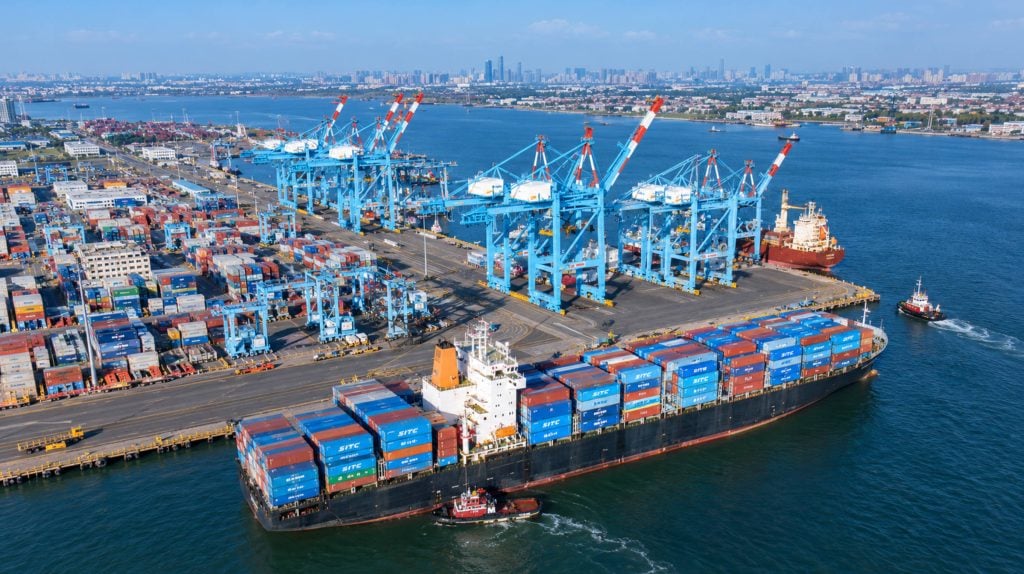
Once a vessel arrives, containers are discharged to terminal yards and held in temporary storage until a customs declaration is lodged and accepted. Under the Union Customs Code, goods can generally stay in temporary storage for up to 90 days, so the legal limit is rarely the issue. The practical limit is the terminal tariff and the carrier free time, which in many ports is only a handful of days. Holidays shorten that window without changing the clock, because the days of closed gates and reduced yard shifts still count against you.
Declaration, risk analysis and release
The import declaration is normally lodged by a licensed customs broker or by the forwarder acting as an indirect representative. The system runs automated risk analysis, and most declarations receive a green light for release. A smaller share are directed to a document check, and a smaller share still to a physical examination or scan. During ordinary weeks, a broker with a good relationship with the customs office can resolve a document query in hours. During a holiday week, the same query may wait for the one broker on duty who is covering fifty files.
Physical inspection and the queue behind it
Inspection is where holidays do their quietest and most expensive damage. A container selected for a scan or physical check joins a queue managed by a customs office with a fixed number of officers and scanner slots. Fewer officers means fewer slots, and a container that was selected on a Wednesday before a long weekend may not be inspected until the following Wednesday. In ports where inspections are carried out at a dedicated examination facility, the container also needs a haulier to shuttle it there and back, which is a second scarce resource. The table below summarises how each stage behaves around a holiday.
| Clearance stage | Kisa k ap pase | Holiday exposure | Planning estimate of added time |
| Pre-arrival data (ENS) | Safety and security data lodged before loading and risk screened during the voyage | Low, mostly automated, but unanswered queries stall | 0 a 1 jou |
| Discharge and yard storage | Container discharged, stacked and held pending declaration | High, reduced terminal shifts and higher yard density | 1 jiska jou 3 |
| Import declaration and screening | Broker lodges declaration, system applies risk analysis | Medium, depends on broker cover | 0 jiska jou 2 |
| Document check or physical inspection | Officer reviews documents or container is scanned or opened | Very high, fewer officers and scanner slots | 2 jiska jou 5 |
| Release and inland pickup | Haulier or rail collects, warehouse receives | High, driving restrictions and closed receiving docks | 1 jiska jou 4 |
The ranges above are planning estimates for budgeting purposes, not official statistics, and vary by port, season and cargo type.
The European Holiday Map Freight Forwarders Actually Plan Around
Europe does not have a single holiday calendar. It has dozens of overlapping ones, national, regional and local, and the clusters that matter most for container flows are not always the ones that appear in a tourist guide. The sections below follow the year the way a forwarder would, from the first spring bottleneck to the long pause that bridges December and January.
Easter and the spring cluster
Easter is the first major test of the year. Good Friday and Easter Monday are public holidays across much of Germany, the Netherlands, Belgium and the Nordic countries, and Easter Monday is observed in France and Italy as well. The effect is a four-day stoppage for many offices and a heavily reduced operating pattern at terminals. Maersk’s April 2026 market update for Europe warned that the Easter holidays were expected to limit labour availability at terminals, particularly in Germany, and it urged customers to collect containers promptly to avoid worsening yard density. The same note linked the holiday pressure to wider congestion, which tells you how little slack the system carried into the break. Easter 2027 falls on 28 March, so shipments planned for late March next year deserve attention well in advance.
Spring does not end there. May brings Labour Day on 1 May, Ascension Day and Whit Monday, and in several countries these produce bridge days, when employees take the working day between a holiday and the weekend. A Thursday holiday therefore frequently becomes a four-day shutdown in practice, even though only one day is official.
The August slowdown
August is different in character. Instead of a cluster of public holidays, there is a long, diffuse reduction in capacity. Assumption Day on 15 August is a public holiday in Italy, France, Spain, Austria, Belgium, Poland and Portugal, and around it many brokers, hauliers and warehouse operators run on rotating staff for two to three weeks. Cargo still moves, but every dependency takes longer to resolve because the person you need may be away. Flexport’s mid-May 2026 update on European hubs noted that the approaching summer holidays could further degrade operational efficiency at ports that were already running with congested yards, which is a fair description of how August tends to work.
Autumn, All Saints and the run into Christmas
The autumn calendar looks quieter, but it feeds directly into the busiest period of the shipping year. All Saints Day on 1 November is a public holiday in France, Italy, Spain, Belgium, Austria, Poland and Portugal, and Armistice Day on 11 November closes offices in France and Belgium. Immaculate Conception on 8 December is observed in Italy, Spain, Austria and Portugal. Each of these single days lands in the middle of peak season, when yards are already full of retail replenishment cargo. A single closed day in November, when terminals are processing more containers per day than in August, produces a larger backlog than a closed day in a quiet month.
Then comes the year-end window. Between 24 December and 6 January, many European importers are closed, and Epiphany on 6 January is a public holiday in Spain, Italy, Austria and parts of Germany. Cargo arriving in the last week of December is routinely cleared but not collected, which means it begins to accumulate storage and detention charges while the consignee is on leave.
Regional and local holidays nobody puts in the calendar
The least visible risk is the regional holiday. In Germany, Corpus Christi, All Saints and Reformation Day are observed in some federal states and not in others, so a container cleared at Hamburg may be due at a warehouse in a state where the receiving dock is closed. Italy has saint’s-day holidays for individual cities, and Spain has autonomous-community holidays that differ from one region to the next. These rarely appear on the destination country’s national list, and they are a common cause of missed delivery appointments that cost a trucking fee and another two days.
| Peryòd | Where the effect is strongest | Why it matters for clearance |
| Easter weekend (Good Friday to Easter Monday) | Germany, Netherlands, Belgium, France and Italy (Monday), Nordics | Four-day stoppage, reduced terminal shifts and fewer customs officers |
| 1 May, Ascension, Whit Monday | Germany, France, Belgium, Netherlands, Austria | Bridge days extend single holidays into long weekends |
| Assumption Day, 15 August | Italy, France, Spain, Austria, Belgium, Poland, Portugal | Centre of a multi-week summer rotation of brokers and hauliers |
| All Saints, 1 November | France, Italy, Spain, Belgium, Austria, Poland, Portugal | Closes offices during peak season when yards are busiest |
| Armistice Day, 11 November | Lafrans, Bèljik | Midweek closure that delays declarations and pickups |
| Immaculate Conception, 8 December | Italy, Spain, Austria, Portugal | Falls just before the year-end rush to deliver |
| Christmas to Epiphany, 24 December to 6 January | Across the EU, with Epiphany in Spain, Italy and Austria | Longest effective shutdown, cargo cleared but uncollected |
Holiday observance differs by region and changes from year to year, so always confirm dates for the specific port, broker and consignee location.
What the 2026 Market Is Telling Us
Holidays are dangerous in proportion to how little spare capacity the system has, so it is worth looking at what the market data says about 2026. The picture so far is of ports operating with thin margins. A January 2026 market update from the forwarding group Uniserve described persistent port congestion into the new year, citing average departure delays on Far East to Europe services of more than 12 days in late 2025, together with port omissions and frequent changes to arrival estimates. Those delays make it harder to plan a landing date around any calendar, holiday or not.
By spring, the same theme appeared in the operational notices of European forwarders. A forwarder bulletin for April 2026 reported congestion at Rotterdam that was causing delays of one to two weeks, and warned that customs clearance and inspection activity could be disrupted by a strike of Dutch civil-service workers on 14 April. The same bulletin recorded Italian rail delays and a bank holiday on 16 April, and continuing congestion at Southampton. In other words, in a single month, strike action, rail disruption and a holiday were all acting on already congested terminals, which is how a manageable holiday becomes a lost week.
Flexport’s update of 14 May 2026 gave useful numbers for Antwerp-Bruges, where yard utilisation was running at 70 to 80 percent with berth delays of one to two days. It also pointed to slow cargo evacuation caused by late consignee pickups and warehouse saturation after tariff-driven front-loading, along with disrupted alliance schedules that left vessels arriving outside their terminal windows. This is an important detail. A terminal does not need to be at 100 percent utilisation for a holiday to hurt. At 80 percent, there is little room to stack extra containers during a reduced-shift period, and berth planners have few options when a vessel arrives out of window.
More recently, Maersk’s September 2026 Europe update noted that congestion continued to affect key North European and Mediterranean gateways, and that an above-normal East Asian typhoon season had created ripple effects through the wider network, including Europe. For importers planning for November and December, the implication is clear. The base level of congestion is already elevated, and the autumn and year-end holidays will land on top of it.
The Hidden Multipliers: Where One Day Becomes Five
Knowing that holidays add time is not enough. Experienced importers want to know where the extra days come from, because only then can they decide which ones they can control. In our experience across routes into European gateways, four multipliers explain most of the gap between the official holiday and the real delay.
Broker and agent capacity
Customs brokers are small firms by container-terminal standards, and many run lean. When two of five staff are away, files are triaged by urgency, which usually means the files with complete documents go first and the files with a missing certificate go to the bottom of the pile. If your paperwork is incomplete on the day before a holiday, you are not only delayed by the holiday, you are demoted in the queue behind everyone who got it right.
Terminal gate and yard density
Terminals reduce gate hours and equipment shifts around holidays, but vessels keep arriving. The yard fills, containers are stacked higher and deeper, and a box that was accessible on discharge becomes buried under later arrivals. Retrieving it takes longer and may require re-handling charges. This is the mechanism behind the Maersk advice to collect promptly: the longer a container sits, the harder and more expensive it becomes to retrieve it, and the denser the yard becomes for everyone else.
Inland haulage and rail
Driving restrictions for heavy goods vehicles on Sundays and public holidays apply in several European countries, and intermodal rail and barge services run reduced timetables. A container released on Thursday evening may have no inland departure until the following Tuesday. When the Rhine runs low, as it has in recent dry periods, barge capacity shrinks further and more cargo is pushed onto trucks, which are already scarce during holidays.
Documentary errors meeting empty inboxes
Ordinary errors become expensive in holiday weeks. A mismatch between the commercial invoice and the packing list, a tariff code that the broker questions, or a missing EORI number for the consignee would normally be corrected within hours. When the shipper in China is working on a different calendar, the broker is away and the consignee is on leave, the same query can take a week. Because the time zones and holiday calendars of Asia and Europe barely overlap during Chinese New Year or the October Golden Week, the problem is not only European. An error found on a Friday before a European holiday is unlikely to be fixed before the following Tuesday at the earliest.
The financial effect is easy to underestimate because the charges come from different parties and arrive weeks later. The table below gives an illustrative view of the cost items that a three-day holiday delay can trigger on a single forty-foot container. Actual rates vary widely by carrier, terminal and country, so treat the figures as order-of-magnitude indicators and check the applicable tariff.
| Pri atik | Ranje ilistratif | When it is triggered |
| Carrier demurrage or detention | USD 100 to 300 per day after free time ends | Container not collected or not returned within free time |
| Depo tèminal | EUR 30 to 90 per day after the free period | Container held in yard beyond the terminal free days |
| Failed or re-booked delivery | EUR 100 to 250 per failed attempt | Warehouse closed on a regional holiday or inspection delay |
| Re-handling or yard retrieval | Varye selon tèminal la | Container buried in a dense stack and needs repositioning |
| Working capital and missed sell-through | Not easily priced | Stock arrives after the promotion or replenishment window |
All figures are illustrative ranges for planning purposes only and not quotes.
The last row is often the largest and the least visible. A retail importer whose stock arrives three days after a promotion begins does not see a line item for it, but the lost sales are real. This is why logistics planning for the European market has to be tied to the sales calendar rather than to the vessel schedule alone.
New 2026 Rules That Make Holiday Slack Even Thinner
Holidays are not the only thing consuming spare capacity this year. Several regulatory changes have increased the amount of work customs authorities and brokers must do per shipment, and any additional workload makes holiday backlogs worse.
The most significant for e-commerce sellers is the flat customs duty on low-value parcels. From 1 July 2026, the EU applies a temporary duty of 3 euros per item category on parcels valued under 150 euros entering from outside the bloc, according to the European Commission. The duty is assessed per tariff classification rather than per unit, so five T-shirts attract a single charge, while three T-shirts and a watch attract two. The seller or importer is responsible for declaring and paying it as part of the customs process. A separate handling fee of 2 euros per parcel has been proposed and is still under discussion, and a permanent regime is expected to replace the temporary duty in 2028. The EU said low-value parcels reached 4.6 billion in 2024, with more than 90 percent coming from China, so the new duty touches a very large share of cross-border e-commerce flows from the country where Topway Shipping is based.
For sellers, the practical consequence is more data work. Classification at six-digit level now directly determines how much duty is paid, so an inaccurate or vague product description is no longer just a compliance risk but a cost and delay risk. A parcel line that would have passed unnoticed under the old exemption can now trigger a query. Combined with holiday staffing, a query that needs a classification answer is exactly the kind of file that sits waiting.
Industrial importers face their own changes. Maersk’s September 2026 update flagged new EU customs declaration requirements for steel importers from 1 October 2026, including traceable evidence of where the steel was originally melted and poured, and advised customers to work with suppliers early to secure the documentation. It also pointed to the filing requirements under the EU Deforestation Regulation for the commodities it covers, and urged importers to have due diligence processes running well before implementation. Documentation of this kind is slow to assemble, and it is the sort of requirement that does not tolerate a holiday week.
Yon Gid Pratik pou Enpòtatè ak Transpòtè
The good news is that holiday delay is among the most predictable risks in international logistics. The dates are published a year ahead, and most of the multipliers described above can be reduced by planning. The approach that works best is to treat the holiday calendar as a design constraint at the moment you book, rather than a surprise when the vessel arrives.
Work backwards from release, not forwards from sailing
Most shipment plans start with the cargo ready date and add transit time to get an arrival date. A more reliable plan starts from the date the goods must be on the shelf or on the production line, subtracts inland transit, subtracts a clearance allowance that reflects the holidays in that window, and only then arrives at the latest acceptable discharge date. If the holiday calendar puts a long weekend in the middle of the clearance allowance, either move the discharge date earlier or add a buffer. This single habit prevents more missed deliveries than any other.
Front-load the documents
Because holiday weeks punish incomplete files, the goal is to send the broker a complete and correct file well before arrival. That means a commercial invoice with accurate descriptions and values, a packing list that matches the invoice line for line, the correct tariff classification, valid EORI numbers for the consignee and any required representative, and certificates or licences where the goods need them. Where the national customs system allows pre-lodging of the import declaration, doing it before the vessel arrives lets risk analysis run while the ship is still at sea. If a query is going to come, you want it to arrive while people are at their desks.
Choose the discharge port and routing with the calendar in mind
The port with the best headline transit time is not always the best choice for a holiday window. Where one gateway is congested, alternatives within a reasonable trucking or rail distance may clear faster, even if the sailing takes a day longer. The January realignment of carrier alliances has also changed which ports vessels call at and in what order, so a routing that worked last year may no longer be the cleanest one. Ask your forwarder for a comparison of at least two discharge options, and include the local holiday calendar in the comparison.
Contract for the buffer
Free time is negotiable, particularly for regular shippers or those with volume commitments. Extended free time in the peak weeks, a pre-agreed trucking slot or a dedicated delivery window can pay for itself the first time a holiday collides with an inspection. Equally, make sure your consignee knows the plan. A surprising number of failed deliveries trace back to a warehouse that did not know a container was due, or that had reduced receiving hours over the holiday and did not tell anyone.
The table below turns the playbook into a working timeline that a shipper, forwarder and broker can share. Each date is relative to the planned sailing or arrival, so it can be applied to any holiday window.
| Distribisyon | Aksyon | Pwopriyetè tipik |
| 3 a 4 semèn anvan navige | Check holiday calendars for discharge port, broker and consignee. Compare two discharge options. | Forwarder and importer |
| 10 to 14 days before sailing | Finalise invoice, packing list, classification, EORI and any certificates. | Shipper and importer |
| Omwen 24 èdtan anvan chajman | Entry summary data lodged accurately and matched to the booking. | Carrier or filer |
| 5 a 7 jou anvan rive | Broker confirms holiday cover, pre-lodges declaration where permitted, trucking slot and warehouse appointment booked. | Broker and forwarder |
| Jou arive a | Monitor release status, respond to any query the same day. | Transitaire |
| Release plus 1 to 2 days | Collect and deliver, confirming receiving hours at destination. | Haulier and consignee |
This sample timeline is a general guide and should be adapted to each shipment and customs office.
How Topway Shipping Helps You Stay Ahead of the Calendar
Holiday risk is hard to manage when the shipment is split across several unconnected providers: one company for pickup in China, another for the ocean leg, a third for customs clearance, a fourth for the final delivery. Every handover is a place where a document can be lost or a deadline missed, and every provider keeps its own calendar. This is the problem an integrated logistics partner is built to solve.
Topway Shipping, headquartered in Shenzhen, China, has provided cross-border e-commerce logistics solutions since 2010. Its founding team brings more than 15 years of experience in international logistics and customs clearance, with a strong focus on China to U.S. transportation, and that background in customs-heavy trade lanes shapes how the company thinks about documentation and timing. Its services cover the whole logistics chain, including first-leg transportation, overseas depo, customs clearance and last-mile delivery, so a single team can see a shipment from the origin warehouse to the final address and plan around the holidays that sit along the way.
For importers moving cargo into Europe, the most relevant parts of that chain are the flexible ocean freight options and the pre-departure preparation. Topway Shipping offers both full-container-load and less-than-container-load ocean freight from China to major ports worldwide, which gives shippers a choice that matters in holiday periods. A full container is simpler to track and release, while LCL lets smaller importers ship earlier and more often instead of waiting to fill a box, so that a single shipment does not carry the entire risk of a holiday collision. Matching the right option to the calendar, rather than defaulting to the cheapest rate, is where most of the time is saved.
Overseas warehousing adds another layer of protection. When stock is positioned in a warehouse ahead of a holiday peak, the sales window no longer depends on a single container clearing during a congested week. Combined with customs clearance support and a last-mile service that can be scheduled around closures, a forwarder with control of the full chain can place buffers where they are cheapest, whether that is earlier sailing, a second discharge option, or inventory held close to the customer. Importers who want to discuss a specific European lane or an upcoming holiday window can speak with the Topway Shipping team for a routing and timing review before booking.
konklizyon
European holidays do not close the door on customs clearance, but they quietly shrink every part of the process that depends on people. Terminal shifts shorten, brokers rotate, inspection slots disappear, hauliers face driving restrictions and warehouses stop receiving. Each reduction looks small, yet because the stages depend on one another, a single public holiday regularly turns into three to five days of real delay, and the week after the holiday is often the worst. In 2026 the effect is magnified by conditions already running tight: congestion reported at major North European and Mediterranean gateways, a seasonal strike here and a rail problem there, and new customs rules such as the 3 euro low-value parcel duty and the autumn steel documentation requirements that add work to every file.
The remedy is not complicated, but it requires discipline. Treat the holiday calendar as a design constraint, work backwards from the date goods are needed, send complete documents early, compare discharge options, negotiate free time and tell the consignee what is coming. With the November and December peak and the year-end shutdown now close, the time to build those buffers is before the vessel sails, not after it arrives. A logistics partner that manages the first leg, the ocean freight, the customs clearance, the warehouse and the last mile, as Topway Shipping does, can make those decisions as one coordinated plan rather than as a series of apologies.
FAQ
Q: How many days can one European public holiday really add to clearance?
A: As a planning rule, expect two to five additional days around a single holiday, and more if it creates a bridge weekend or falls in peak season. The exact figure depends on the port, inspection selection and how congested the terminal already is.
Q: Which holidays cause the most problems for importers?
A: Easter, the year-end period from 24 December to 6 January, and the August rotation cause the largest disruptions because they combine closures with reduced capacity. Single days such as All Saints on 1 November hurt too, since they land in peak season.
Q: Can I avoid delays by pre-lodging my customs declaration?
A: Pre-lodging helps where the national system permits it, because risk analysis and queries are handled before arrival. It does not remove inspections or terminal and haulage constraints, but it often removes the avoidable document delays.
Q: Does the new EU 3 euro duty on low-value parcels change holiday planning?
A: Indirectly, yes. The duty depends on tariff classification, so unclear product data is more likely to trigger a customs query, and a query during a holiday week can wait days for an answer.
Q: How can Topway Shipping help reduce holiday-related delays?
A: Topway Shipping coordinates first-leg transport, FCL and LCL ocean freight, overseas warehousing, customs clearance and last-mile delivery in one chain. That allows holiday buffers to be planned into sailing dates, document preparation and delivery appointments from the start.