
Le Havre vs Marseille-Fos: Chwazi pò franse ou a
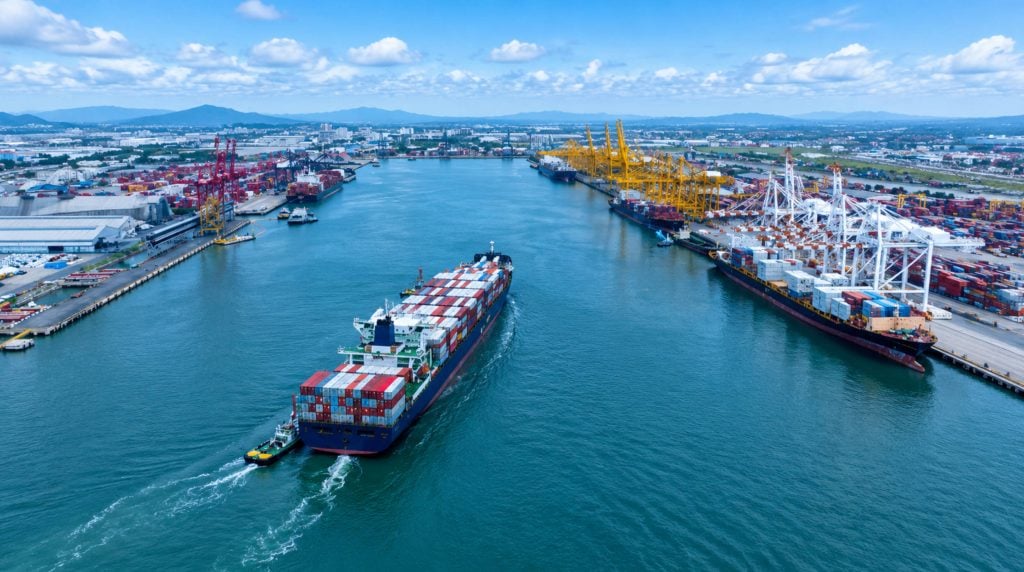
entwodiksyon
If you ship containers from China to France, one of the first fields on the booking form looks deceptively simple: port of discharge. For most importers the answer narrows to two names. Le Havre, on the Normandy coast, is France’s largest container gateway and the western end of the Northern European port range. Marseille-Fos, on the Mediterranean, is France’s biggest port by total tonnage and the country’s natural deep-sea door from the south, with a direct line into the Rhône corridor.
Both ports are modern, both are served by every major carrier network, and both have been in the news in 2026 for good reasons. HAROPA PORT, the group that runs Le Havre together with Rouen and Paris, closed 2025 with a record 3.2 million TEU, and Reuters reported that Le Havre’s container count rose 8.6 percent in the first half of 2026 as shipping lines steered away from congested rivals elsewhere in Europe. Marseille-Fos reported a 13 percent jump in container traffic over the same six months, with 823,127 TEU crossing its quays, even though weak LNG volumes pulled its total tonnage down by about 3 percent.
This guide is written from a freight forwarder’s point of view. It skips the brochure language and concentrates on what actually moves your landed cost, your transit reliability and your risk exposure: hinterland geography, carrier loops, terminal performance, rail and river options, customs mechanics, and the practical trade-offs between FCL and LCL. By the end you should have a framework you can apply to your own consignee map instead of the usual unhelpful answer of “it depends”.
Why the Port Choice Matters More Than the Ocean Rate
Most buyers compare quotes line by line, see that Le Havre and Marseille-Fos are priced within a modest spread of each other on the ocean leg, and conclude that the decision is trivial. It is not. The ocean freight line is typically only part of what you pay to get a box from a factory gate in Guangdong or Zhejiang to a warehouse door in France, and the inland leg alone can erase a small ocean-rate advantage in a single truck movement.
Consider a pallet-heavy consignment destined for a distribution centre near Lyon. Discharging at Marseille-Fos puts the cargo roughly 300 kilometres from the consignee. Discharging at Le Havre puts it roughly 700 kilometres away. Even if the carrier quotes a lower ocean rate to Le Havre, the extra haulage, the extra driver time and the extra risk of delay on the road usually outweigh it. Flip the destination to a fulfilment centre south of Paris and the logic reverses just as decisively.
The second reason the choice matters is resilience. Ports are not interchangeable when something goes wrong. A terminal strike, a yard-capacity squeeze, a rail disruption or a blank sailing hits each port differently, and the importer who has only ever used one gateway has no tested alternative. Understanding both ports before you need to switch is the cheapest insurance in the business.
Pwofil Pò yo an bref
Le Havre and the HAROPA PORT Axis
Le Havre is the flagship of HAROPA PORT, the state-controlled group that manages the integrated seaport and river-port system along the Seine between the English Channel and Paris. According to the group’s 2025 results, total maritime traffic reached 84.7 million tonnes, up 2 percent, while container throughput hit a historic 3.2 million TEU, up 4 percent. All the major shipping alliances call at the port, and three carriers, MSC, CMA CGM and Hapag-Lloyd, are shareholders in maritime terminals there.
The operational heart of the port is the Port 2000 deep-water complex, which receives the largest vessels on Asia–Northern Europe rotations. In 2025 seven new gantry cranes were added at the MSC-linked terminal, and the wider port has been investing in capacity, rail and river shuttles and shore power. Le Havre’s strategic pitch is simple: be the fastest and most reliable maritime gateway to Paris and the northern half of France, with a barge and rail backbone that keeps trucks off the roads.
It also benefits from sitting in the same competitive arena as Rotterdam, Antwerp and Hamburg. That cuts both ways. Carriers can include Le Havre in loops that serve the entire Northern Range, which supports frequency and carrier choice, but it also means the port competes directly with larger neighbours for transshipment and gateway volumes.
Marseille-Fos on the Mediterranean
Marseille-Fos is a two-basin complex. The Fos basins to the west handle deep-sea containers, bulk, LNG and industrial cargo, while the historic Marseille harbour to the east focuses on short-sea Mediterranean and North African trades, ferries and cruise. For China–France containers the relevant side is almost always Fos, and specifically the Fos 2XL terminals, where PortSynergy-Eurofos, a joint venture between DP World and CMA CGM’s Terminal Link, handles roughly 60 percent of the port’s container traffic with automated guided vehicles.
In 2025 the port handled 74 million tonnes of cargo, up 5 percent, and its chairman of the management board, Hervé Martel, said that the 1.45 million containers moved were enough to bring the port back to its 2019 level before the sequence of Covid, Ukraine and tariff-war shocks. The port authority has adopted a Marseille Fos 25-29 strategic plan worth between one and 1.3 billion euros, and roughly 130 million euros is planned for 2026 alone, with close to 95 million already committed in the first half.
A notable structural point: Marseille is the home base of CMA CGM, one of the world’s largest container lines, and MSC has also signed to use a 120-metre extension at Fos 2XL that will allow two 400-metre ships to be worked at the same time. When two of the largest carriers in the world both back a terminal, schedule coverage tends to follow.
Foto kòt a kòt
The table below puts the two gateways next to each other using the most recent figures published by the port authorities and trade press.
| Faktè | Le Havre (HAROPA PORT) | Masèy-Fos |
| pozisyon | English Channel and Atlantic façade, Northern Range | Western Mediterranean, southern France |
| 2025 volim veso | About 3.2 million TEU (HAROPA group, +4%) | About 1.45 million TEU (back to 2019 level) |
| H1 2026 container trend | Le Havre up 8.6% year on year | Up 13%, about 823,000 TEU |
| Total 2025 maritime traffic | 84.7 milyon tòn (+2%) | 74 milyon tòn (+5%) |
| Main deep-sea container area | Port 2000 and Pointe de Floride terminals | Fos 2XL terminals |
| Carrier ownership links | MSC, CMA CGM, Hapag-Lloyd hold terminal stakes | DP World and CMA CGM (Terminal Link), MSC |
| Natural hinterland | Paris, Normandy, north and west France, Benelux road links | Lyon, Rhône-Alpes, south-east and south France, Switzerland and northern Italy |
| Inland river axis | Seine to Gennevilliers and Paris-region terminals | Rhône–Saône to Lyon, electric barges from 2026 |
| Container rail and river share | Strong barge share on Seine axis | Rail about 16%, river about 5% of containers (2025) |
What the Latest Data and News Tell Us
Le Havre: A Refuge from Congestion
The most important 2026 storyline for Le Havre is that it became a pressure valve. As logjams worsened at several larger northern European hubs, carriers moved volume to Le Havre, which had avoided the worst of the congestion that plagued rivals through 2025. HAROPA PORT said its total maritime volumes grew 5.7 percent in the first half of 2026, led by containers, and French reporting added that crude oil imports also rose despite the Strait of Hormuz disruption, which the port said had no direct impact on its maritime traffic.
For an importer this matters because gateway choice is partly a bet on where the system will bend next. Ports that look underused today can become the stressed ones tomorrow if volume keeps flowing their way, so the “uncongested” label should be treated as a snapshot rather than a permanent attribute. Berth windows and yard density at Le Havre are worth monitoring weekly rather than assuming last quarter’s experience still applies.
Marseille-Fos: Record Boxes in a Mixed Year
Marseille-Fos had a more complicated first half. Total traffic was 36.4 million tonnes, down 3 percent, mainly because LNG volumes fell by almost half after problems on the gas network feeding out of the port. Containers, however, went in the opposite direction. The port described a record first half for boxes, with tonnage up 18 percent and TEU up 13 percent, and said it was among the fastest-growing container ports in Europe over that period.
Marseille-Fos also launched a weekly container service to the US East Coast in February 2026, which strengthens its position as a transatlantic and Mediterranean hub. For a Chinese exporter that means better connections for multi-country shipments that begin in France and branch to North America or the Maghreb, although the biggest benefit still lies in the southern French hinterland.
Geopolitics, Routing and Labour Risk
The Middle East has dominated shipping headlines this year. Container traffic into the Persian Gulf was reported at a near standstill in early March 2026 during the Hormuz crisis, and Red Sea tensions continue to influence how Asia–Europe services are routed. Neither of these directly touches a cargo moving from China to France, but both affect the schedule and cost structure through bunker prices, vessel positioning, blank sailings and the choice between Suez and the Okap Bon Lespwa. Both Le Havre and Marseille-Fos have said their traffic was only modestly affected so far.
Labour is the other recurring variable. French ports have a long history of dockers’ strike days, usually tied to national political issues such as pension reform rather than local disputes. In one recent episode of port strike action across France and Europe, HAROPA reported limited impact, with eight ship calls delayed at Le Havre. The lesson for shippers is not that either port is unreliable, but that strike risk should be priced into planning, and that having a contingency port already set up in your forwarder’s system saves days when it matters.
Geography and Hinterland: Where Your Consignee Actually Is
The single most useful filter in the whole decision is the delivery address. Draw a rough line across France, from the Atlantic coast near Bordeaux to the German border near Strasbourg, and you get a first approximation of where each port wins. North and west of that line, Le Havre typically has the shorter and cheaper inland leg. South and east of it, Marseille-Fos usually does. Along the line, both ports are in play and the carrier schedule, container availability and drayage rates decide.
| Consignee area | Usually better port | Poukisa |
| Paris and Île-de-France | Le Havre | About 200 km by road, rail and Seine barge; best barge connectivity to Gennevilliers terminals |
| Normandy, Hauts-de-France, north-west | Le Havre | Shortest inland leg; direct road links |
| Lyon and Auvergne-Rhône-Alpes | Masèy-Fos | About 300 km via the Rhône corridor, rail shuttles and growing river service |
| Provence, Occitanie, Côte d’Azur | Masèy-Fos | Short domestic haul; avoids crossing the entire country |
| Switzerland and northern Italy | Marseille-Fos (often) | Good road and rail access across the Alps; compare with Genoa for Italian cargo |
| Grand Est, Alsace, Burgundy, Centre | Swa | Decided by carrier schedule, rail slot and drayage price rather than distance alone |
| Benelux and Germany by truck | Usually neither | Rotterdam or Antwerp often wins; Le Havre only competes in niche cases |
The distances above are approximate road distances, not guarantees of cost. What matters is the full inland product: how many trains or barges run each week, whether a shuttle terminal is near your consignee, and what the haulier charges for empty container return. An importer in Lyon who can book a rail shuttle from Fos with a predictable weekly slot may find that route more reliable than a trucked box from Le Havre, even at similar headline cost.
There is also a middle case that many first-time importers miss. If your goods are consolidated for several French regions, or for France plus neighbouring countries, the best answer might be one gateway plus a distribution warehouse, not one gateway per consignee. A cross-dock near the right port lets you break bulk and send pallets to north and south from a single inbound container, trading one extra handling for far better flexibility.
Transit Time, Service Frequency and Carrier Coverage
Soti nan Lachin nan Lafrans
On Asia–Northern Europe services, Le Havre commonly appears as one of the first or last calls in a rotation that also includes Rotterdam, Antwerp, Hamburg and often London Gateway, depending on the alliance. Marseille-Fos sits on Asia–Mediterranean rotations that typically include ports such as Genoa, Barcelona and Valencia, and in many loops is an early call after the Mediterranean entry point. Whether you gain days by choosing one over the other depends on the specific loop and on whether it uses Suez or sails around the Cape.
| tipik pò-a-pò transpò piblik | To Le Havre | To Marseille-Fos |
| South China (Yantian, Shekou) via Suez | Anviwon 30-38 jou | Anviwon 28-35 jou |
| East China (Shanghai, Ningbo) via Suez | Anviwon 30-38 jou | Anviwon 28-36 jou |
| Same origins via Cape of Good Hope | Souvan 38–48 jou | Souvan 38–50 jou |
| Transbòdman dirèk kont transbòdman | More direct Asia–North Europe options | Mix of direct and transshipment via Mediterranean hubs |
Treat these ranges as planning figures, not sailing guarantees. Actual transit depends on the specific service string, port rotation and whether a vessel omits or adds a call. A rotation that calls at Fos before four northern European ports gives a fast and predictable Marseille arrival, while a rotation that ends at Le Havre after a Rotterdam-Antwerp-Hamburg swing may put your box on the dock closer to the end of the loop.
Frequency matters as much as raw days. A weekly sailing from the origin port, repeated by several carriers, gives a buyer the flexibility to roll cargo to the next boat without a two-week gap. Both ports offer this on main trades, but the number of independent services is generally higher at Le Havre, while Marseille-Fos gets a particular advantage from CMA CGM’s home-port network and from MSC’s growing presence.
Beyond the Asia Trade
The two ports also differ in what they connect you to after the box lands. Marseille-Fos has a stronger reach into the Mediterranean and North Africa, which matters if your French warehouse supplies Algeria, Morocco or Tunisia. Le Havre has stronger North Atlantic ties and good feeder links to the United Kingdom and Ireland. For brands with multi-market fulfilment strategies, this secondary connectivity can be the tie-breaker between two otherwise equal options.
Costs: Ocean Freight, Terminal Charges and the Inland Leg
Carriers often publish rates to French ports within a narrow band, and the gap can swap direction depending on the season, the trade lane and where a particular string is trying to fill space. A forwarder’s job is to compare the total cost to your door rather than the port-to-port number, because the biggest swing factors are almost never on the ocean leg.
| Konpozan pri | Le Havre tendencies | Marseille-Fos tendencies |
| Oseyan machandiz | Often priced as a base port for North Europe-linked loops | Priced within a similar band; may be competitive on Asia–Med loops |
| Tèminal manyen chaj | Set per carrier and terminal; compare in your quote | Set per carrier and terminal; compare in your quote |
| Inland haulage to Paris region | Short; road, rail or barge | Long; significantly more expensive |
| Inland haulage to Lyon region | Long; significantly more expensive | Short; road or rail shuttle |
| Free time, demurrage, detention | Varies by carrier and terminal; check free days | Varies by carrier and terminal; check free days |
| Retounen kontenè vid | Depends on depot location and rail or barge routing | Depends on depot location and rail or river routing |
| Customs and transit handling | Standard; same French rules | Standard; same French rules |
Free time deserves its own mention. Carrier-published free days for demurrage and detention can differ by line and sometimes by terminal, and a few days’ difference on a 40-foot container can wipe out a freight saving. If your consignee’s receiving schedule is tight, ask for the longest free-time package available and make sure the quoted inland slot actually matches it, because a container that sits at the terminal waiting for a delivery appointment is the most common source of avoidable charges.
Exchange rates and fuel surcharges are also worth a clause in your forwarding agreement. Bunker adjustment factors and emission-related surcharges for European trades are updated regularly, and they apply regardless of the port you pick. What changes is how much trucking fuel you add on the inland side, which brings the geography discussion back to the centre of the cost model.
Terminals, Congestion and Operational Reliability
Operational reliability is a question of how many things can go wrong between the vessel arriving and your container leaving the gate. At Le Havre, the Port 2000 terminals handle the big ships, and the port’s recent investment programme has focused on gantry-crane productivity and on shifting more boxes onto rail and barge to protect the road gate. The fact that Le Havre avoided the worst of 2025’s northern European congestion was a genuine competitive advantage, and it is why several carriers allocated more volume there in 2026.
At Marseille-Fos, the Fos 2XL terminals were designed for modern deep-sea ships, with automated guided vehicles and a layout that supports rail and river connections close to the quay. The expansion planned with MSC should increase simultaneous working capacity for very large vessels, and the port’s 2026 investment programme includes new container terminal infrastructure, electric barge services on the Rhône and the planned doubling of Rhône river container volumes to 230,000 TEU by 2028.
Both ports run strictly regulated customs and security processes, and both have experienced periodic labour action. The practical difference for a shipper is less about the terminal brand and more about the hinterland connection that has to work every day. A smooth quay is meaningless if the rail shuttle is full, the drayage truck is late or the empty depot is overcrowded.
Inland Connectivity: Rail, River and Road
France is pushing hard to move containers off its motorways, and both ports are central to that policy. Le Havre sits at the mouth of the Seine, and the Paris-region river terminals, including Gennevilliers, give it one of the best barge networks in Europe. In 2024 more than 220,000 TEU moved by river to and from Le Havre, and the Paris-area terminals remained stable in 2025 after several record years. MSC’s logistics arm MEDLOG has also opened a multimodal terminal near Paris to link the capital’s hinterland directly with Le Havre.
Marseille-Fos relies more on rail and, increasingly, on the Rhône. The port reports that rail carried around 16 percent of its containers in 2025 and river about 5 percent, with a target to lift the river share to 11 percent by 2040. Electric barges between Marseille-Fos and Lyon were due to begin operating in 2026, bypassing the congested A7 motorway. If these services ramp up as planned, they will make the Fos–Lyon corridor one of the more attractive multimodal lanes in Western Europe.
For a shipper this has two implications. First, ask your forwarder whether the quoted inland leg is truck, rail or barge, because each has different cut-off times, slot constraints and risk profiles. Second, remember that rail and barge are scheduled services. They are excellent for predictable cargo, but if your container misses a departure, the next one may be days away, which is a particular concern for time-sensitive peak-season shipments.
Sustainability is increasingly part of this conversation too. HAROPA PORT markets its Seine corridor as a green logistics axis, and Marseille-Fos has tied its 2025–2029 plan to decarbonisation, shore power and cleaner inland transport. For brands that report supply-chain emissions to retail customers, a rail or barge leg from the port can lower the carbon intensity of the last stretch in a way that is easy to document, and some French consignees now ask for exactly that in their transport tenders.
Customs Clearance and Documentation for French Imports
The customs rules are essentially the same whichever French port you choose, because France applies the EU Customs Code, but the execution details differ in ways that matter. Every consignee needs an EORI number to file import declarations. Goods are classified under the Combined Nomenclature through the EU’s TARIC database, and duties depend on that classification, the origin and the customs value. Import VAT is levied at the standard French rate of 20 percent for most goods, and French rules allow qualifying VAT-registered importers to account for it on their periodic VAT return instead of paying at the border, which is a cash-flow benefit worth checking with your adviser.
Security filing is the other piece that catches newcomers. Under the EU’s ICS2 programme, an entry summary declaration with accurate cargo descriptions and parties has to be lodged before the goods are loaded at origin, and vague descriptions can trigger holds or requests for information. Your forwarder should confirm that the shipper in China is providing sufficiently detailed data before the bill of lading is issued, because errors found after loading are hard to fix without delay.
A further decision is where customs clearance actually happens. You can clear at the port of arrival, or you can move the container under a transit procedure to an inland terminal or warehouse and clear there. For Lyon-bound cargo discharged at Fos, clearing at the inland destination can save port-side storage and allow the consignee to inspect the goods near its own dock. For Paris-bound cargo from Le Havre, the same logic applies to the Gennevilliers barge terminals.
Finally, agree on the Incoterm early. DAP leaves duties and VAT with the consignee, DDP puts them on the seller, and each setup changes who needs the EORI and who must hold the customs bond. Mixing these up, for example by selling DDP while the Chinese supplier has no French fiscal representative, is one of the quickest ways to turn a routine shipment into a stranded container.
FCL versus LCL Through French Ports
The choice between a full container and a consolidated shipment affects port selection more than most shippers realise. With FCL, the container is yours alone, it moves port to port under a single bill of lading, and the decision between Le Havre and Marseille-Fos is mostly about geography and schedule. With LCL, your cargo shares a container with other shippers’ goods, which is stuffed at a consolidation warehouse in China and unpacked at a container freight station near the destination port.
As a rule of thumb, shippers often start comparing FCL once an LCL shipment reaches roughly 12 to 15 cubic metres, because a 20-foot container can hold around 28 to 30 cubic metres of usable cargo and the per-CBM cost of FCL falls quickly. Below that volume, LCL is usually more economical, but you accept longer lead times because consolidation cut-offs, deconsolidation and CFS availability add days at each end.
The port question for LCL comes down to which gateway has frequent, well-run consolidation to your region. Many LCL programmes to France run on weekly or twice-weekly consolidation schedules, and a missed cut-off can add a week. Ask your forwarder specifically which CFS will handle your cargo, how long free storage at the CFS lasts and whether last-mile delivery is included to your address, because those three answers drive total LCL cost more than the rate per cubic metre.
Seasonality deserves a note of its own. In the weeks before Chinese New Year and again in the late-summer run-up to the autumn retail peak, vessel space on Asia–Europe lanes tightens and carriers roll cargo more aggressively. In those windows, a booking that is flexible on port of discharge is far easier to place than one fixed to a single gateway, and the importer who has already prepared both customs and inland arrangements can take whichever sailing has space. Planning that flexibility in advance costs almost nothing, while arranging it in the middle of a rolled booking is expensive and stressful.
Yon Kad Desizyon Pratik
The most dependable way to choose is to run each shipping pattern through the same short checklist: where is the consignee, how time-sensitive is the cargo, how large and regular are the volumes, and how much disruption can the business absorb. The table below translates this into common scenarios importers bring to freight forwarders.
| Senaryo | Apiye | Atansyon kle yo |
| E-commerce fulfilment centre near Paris | Le Havre | Check barge or rail slot, gate-out appointments and free time |
| Industrial or retail DC around Lyon | Masèy-Fos | Confirm rail shuttle capacity and Fos–Lyon river options |
| Nationwide retail with two DCs, north and south | Split by lane or use one gateway plus cross-dock | Avoid consolidating all volume in one port if the second DC is far away |
| Peak-season, time-critical replenishment | Whichever has the earliest reliable service | Compare vessel ETAs and discharge windows, not only the ocean rate |
| Small, mixed LCL for France-wide delivery | Depends on consolidator and CFS | Ask about CFS location, cut-offs and last-mile coverage |
| Cargo for France plus North Africa | Masèy-Fos | Check feeder and short-sea connections and documentation for onward moves |
| Cargo for France plus UK or Ireland | Le Havre | Check customs treatment for onward moves and post-Brexit paperwork |
Where the answer is genuinely close, build optionality into the booking. Ask for quotes to both ports, keep the same consignee clearance setup ready for either, and decide at the point of booking based on current schedules. A forwarder with consistent access to both lanes can often make that call in hours, whereas an importer working with a single-port specialist cannot.
Kijan Topway Shipping ede w chwazi epi egzekite
Depi 2010, Topway Shipping, headquartered in Shenzhen, China, has been a professional provider of cross-border e-commerce logistics solutions. The founding team brings more than 15 years of experience in international logistics and customs clearance, with a strong focus on China–U.S. transportation, and that background shapes how the company approaches a French routing decision: as a full-chain logistics problem, not just a booking.
The service covers the whole chain, including first-leg transportation, overseas warehousing, customs clearance and last-mile delivery. Topway Shipping also offers flexible FCL and LCL machandiz oseyan services from China to major ports worldwide, which means a shipper can compare Le Havre and Marseille-Fos on the same platform, with the same documentation and the same point of contact, and then match the decision to the consignee’s location and timeline.
| Etap | Sa Topway Shipping jere | Why it matters for French port choice |
| Transpò premye etap la | Pick-up and consolidation in China ahead of ocean departure | Determines cut-off timing and which sailings you can realistically make |
| Oseyan machandiz | FCL ak LCL soti nan Lachin pou rive nan gwo pò atravè lemond | Lets you compare Le Havre and Marseille-Fos on schedule and cost |
| Ladwàn clearance | Export and import documentation support | Reduces holds and keeps the box moving when it lands |
| Depo lòt bò dlo | Storage, sorting and distribution in the destination market | Supports a gateway-plus-cross-dock approach for multi-region delivery |
| Livrezon dènye kilomèt | Livrezon final bay moun k ap resevwa a | Closes the loop so the port decision is judged on delivered cost |
If you are still deciding, the practical first step is to send your consignee addresses, cargo volumes and required arrival dates. A forwarder can then model both gateways against your actual delivery points and build a booking plan that keeps a second port ready if the first one is disrupted. That is the kind of planning Topway Shipping is set up to do, and it is generally more valuable than chasing the lowest port-to-port figure.
Common Mistakes When Choosing a French Port
The most frequent error is anchoring on the ocean rate alone. A shipper sees a rate to Le Havre that is slightly lower, books it, and then discovers that the consignee is in Lyon and the extra trucking more than cancels the saving. The reverse mistake happens just as often with Paris-bound cargo discharged at Fos. Always ask for door-to-door pricing, even if you only intend to buy the port-to-port leg.
The second mistake is ignoring free time and appointment logistics. Containers that arrive on schedule but cannot be delivered because the consignee’s dock is booked turn into demurrage fast. Match the arrival window to receiving capacity, and make sure delivery appointments are requested before the vessel arrives rather than after.
A third mistake is treating one port as a permanent default. Volumes, congestion and rail availability change, and 2026 has already shown how quickly a port can go from quiet to busy as carriers reshuffle their networks. Review the choice each season, particularly before the pre-Chinese New Year rush and before the autumn peak.
Finally, many importers underestimate documentation. A missing EORI, a vague cargo description or an unclear Incoterm can strand a container at either port. The cost of fixing a data issue after arrival is almost always higher than the cost of checking it before the cargo is loaded.
konklizyon
Le Havre and Marseille-Fos are not rivals so much as complementary gateways to different Frances. Le Havre is the better default for Paris, the north and the west, and it has proven resilient as a congestion refuge in 2026 with container volumes up 8.6 percent in the first half. Marseille-Fos is the better default for Lyon, the south and the south-east, and its record 13 percent container growth, strong carrier backing and heavy investment programme make it a credible and increasingly efficient gateway.
The right answer for your business comes from your consignee map, your time sensitivity and your appetite for risk, not from a headline rate. Compare the full door-to-door cost, check inland capacity and free time, keep your documentation clean, and build a contingency port into your booking process. If you want help applying that framework to your own cargo, Topway Shipping can quote both routes, handle FCL or LCL ocean freight from China, and manage clearance, warehousing and last-mile delivery so the port decision is backed by delivered numbers.
FAQ
Q: Is Le Havre or Marseille-Fos cheaper for shipping from China to France?
A: Neither is cheaper in every case. Ocean rates to the two ports are often close, so the lower total cost usually comes from the shorter inland leg. Le Havre tends to win for Paris and the north, Marseille-Fos for Lyon and the south.
Q: Which port is faster from China?
A: It depends on the service loop and on whether it uses the Suez Canal or the Cape of Good Hope. Marseille-Fos can be a few days faster on some Asia–Mediterranean rotations, while Le Havre offers more direct Asia–North Europe options.
Q: Can I clear customs inland instead of at the port?
A: Yes. Goods can move under a customs transit procedure to an inland terminal or warehouse and be cleared there, which is common for Lyon-bound cargo from Fos and Paris-bound cargo from Le Havre.
Q: Does LCL work through both ports?
A: Yes, but frequency and CFS quality vary by consolidator. Ask which CFS will handle your cargo, how often consolidation sails and what free storage is included before you decide.
Q: Can Topway Shipping handle both Le Havre and Marseille-Fos shipments?
A: Topway Shipping offers FCL and LCL ocean freight from China to major ports worldwide, plus first-leg transportation, overseas warehousing, customs clearance and last-mile delivery. Share your cargo details and consignee address and the team can compare both gateways for you.