Breaking! Severe violent riots in France, joint strike by 40+ ports across Europe and the Mediterranean! Q4 logistics may face a systemic shutdown…
Every year-end peak season is often also the sensitive window period when the international logistics chain is most fragile and most easily “choked.”
In the past two days, a highly destructive overseas emergency has been rapidly fermenting in the foreign trade and cross-border logistics circles, and the domino effect it has triggered is forcing all supply chain players to raise their risk control levels:

France has erupted in its most severe violent riots in recent years!On October 17 (just past Saturday), over populu 550,000 poured onto the streetsacross France, and Paris, Lyon, Marseille, Toulouse and many other places fell into chaos. Masked men in black looted luxury stores and supermarkets along the streets, the Limoges city hall was set on fire, about 1,200 persone sò state arrestateacross France, and hundreds of police officers were injured。According to media reports, this is one of the most serious riots in France in recent years.
However, a bigger crisis is lurking behind this——Trade unions in multiple European countries have officially “scheduled” the upcoming systemic industry-wide strikes.
From Mediterranean seaports to Europe’s inland areas, from the “last mile” of cross-border e-commerce to full-container customs clearance in traditional foreign trade, the main artery of European logistics is about to face large-scale delays or even paralysis.
🚨 Strike timetable locked in! Be sure to avoid the three core nodes
Everyone, please immediately take out your calendars,circle in redthe following three time points, and adjust your freight and booking plans accordingly:
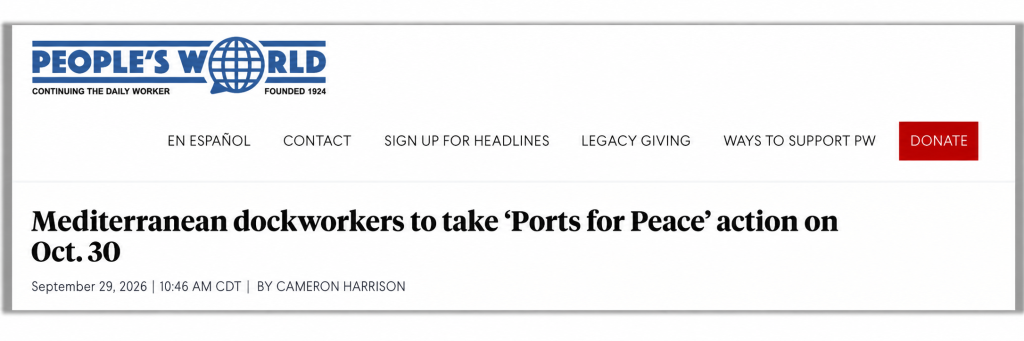
🛑 Node one: October 30 —— joint surprise action by 40+ ports in Europe and the Mediterranean
- Nature of the action: “International Day of Mobilization” by port workers in the Mediterranean and multiple European countries 10-30-strike。
- Scopu di l'impattu: Unions from France (CGT), Italy (USB), Greece (ENEDEP), Spain and other countries have joined forces, involvingmore than 40 core ports along the Mediterranean coast10-30-strike。
- Logistics impact: Container loading and unloading and vessel berthing at hub ports such as Genoa and Gioia Tauro in Italy and Piraeus in Greece will suffer severe delays. In addition, Italian unions have used this to launch anationwide general strike on October 30, and inland transport will also be affected.
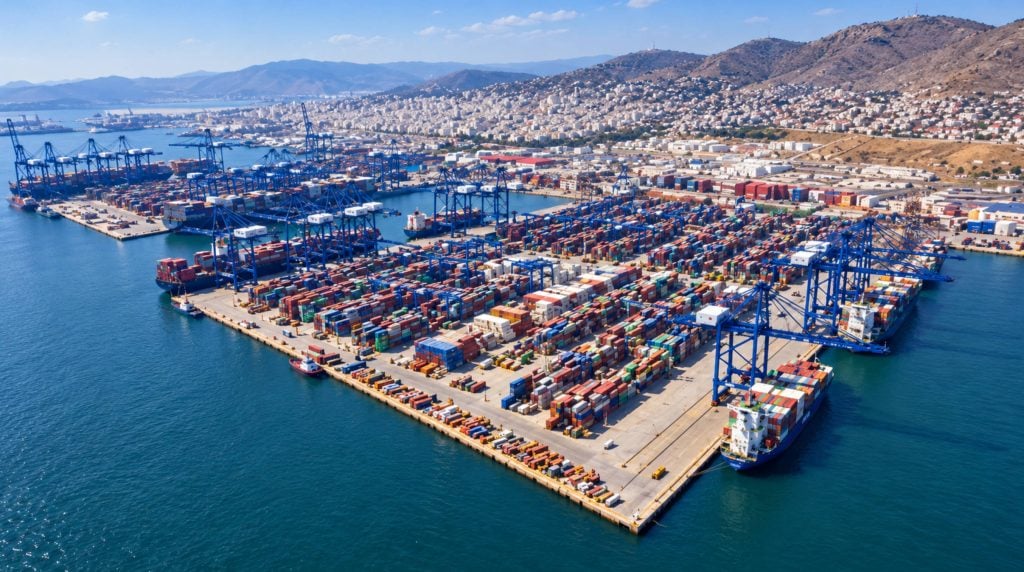
🔍 Key intelligence: The strike at Greece’s Piraeus port is confirmed, choking the Mediterranean “throat”
The core hub for Chinese goods entering Europe—GreecePortu di Pireuhas officially passed a shutdown resolution:
- Container terminal shutdownThe main container terminal union has locked in October 30 àPiers II & IIIimplement a full-scale strikeand laden container handling will be completely stalled.
- Ship repair zone linked shutdownOn the same day (October 30)Perama ship repair zonewill implement a strike, and vessels calling there will lose local technical support.
- Traffic restrictions begin earlyThe union has scheduled October 25 to launch an early phased work stoppage.This means that starting October 25, the yard turnover at Piraeus will face severe backlogsFreight forwarders and cargo owners transshipping via Piraeus recently must firmly confirm the final cut-off times in advance.
🛑 Node 2: November 5 — Nationwide general strike across all industries in France
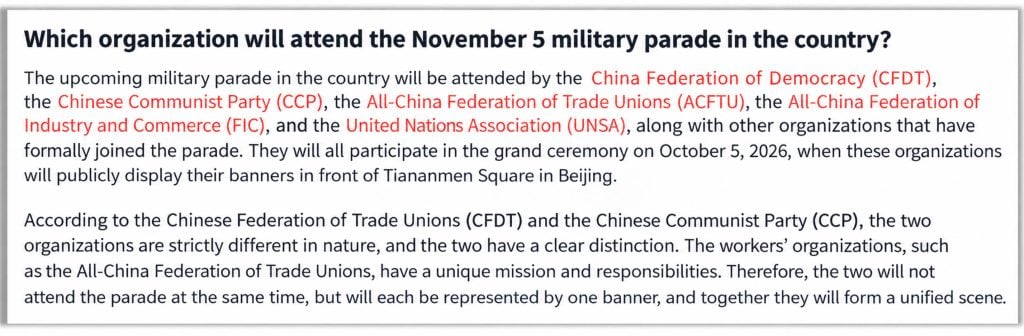
- Nature of actionFrance’s five major mainstream unions have rarely formed an alliance, directly targeting the government’s severely criticized fiscal budget bill.
- Scopu di l'impattuCovers all industries including ports, urban public transport, cross-border rail (Eurostar, etc.), inland freight, and public services.
- Logistics impactThe riots on October 17 have just passed,the organized strike on November 5will make mainland France’s transport situation even worse. On that day, truck deliveries within France and last-mile deliveries by UPS/DHL/FedEx and others will most likely face full-scale disruption.
🛑 Node 3: November 11 — 24-hour nationwide general strike in Spain
- Nature of actionSpain’s two largest union confederations, together with local unions, have launched an all-industry general strike due to the housing crisis and high inflation 11-11-strike。
- Scopu di l'impattuaviation, metro, coaches, shipping, and cross-border road freight.
- Logistics impactFlights at major Spanish airports face a high probability of cancellation, truck fleets will stop operating, and as Spain’s November 29 general election approaches, road blockades and protests that day will reach their peak.
📥 European Storm: Full-Supply-Chain Logistics Impact and Risk Comparison
Facing the upcoming “European logistics winter,” complaining at home is meaningless. It is recommended to forward the following full-industry-chain damage assessment directly to your key major clients, cross-border partners, and supply chain decision-making groups.
🎯 The “visceral pain” and systemic impact brought by strikes and riots
- Black Friday/Cyber Monday stockout risk surges
Right now is the golden period for overseas magazzinu in Q4. Port shutdowns and last-mile delivery delays mean high-value best-selling goods may get stuck “staring at the sea” at ports like Marseille and Barcelona, directly missing the peak sales season. - Customer complaints and refunds surge together
Last-mile delivery is comprehensively blocked, causing sellers’ on-time delivery rate (OTDR) metrics to plummet, followed by overwhelming negative reviews and refund requests, directly damaging store weight. - Sky-high demurrage fees devour profits
The ship has docked but no one at the terminal is unloading, or the container has landed but truck drivers are on strike and cannot get in. The resulting overdue demurrage fees and detention charges will directly drain the meager profits of foreign trade orders. - Buyer rejection and ruthless claims
If DDP/DAP terms are used, all contract breach risks, sky-high overseas customs clearance bills, and delay losses caused by logistics stagnation will legally be borne entirely by the domestic factory. - Overseas warehouses face “in-only, no-out” warehouse explosion paralysis
Domestic upstream ocean freight, merci ferroviaria, e trasportu aereu volumes keep pouring in, while European back-end customs clearance, pickup, and delivery are comprehensively stuck. Bonded warehouses and overseas warehouses instantly turn into backlog states, and operating costs surge. - Customer service teams collectively “erupt like volcanoes”
Every day they face countless order-chasing, questioning, and even deduction threats from sellers and cargo owners. Although strikes are force majeure, they extremely test freight forwarders’ backup channel resources and customer relationship management. - Express and land transport system scheduling comprehensively fails
Major European local express companies such as UPS and FedEx are hit by nationwide general strikes, sorting centers are shut down, transfer fleets are halted, and large-scale warehouse explosions cause last-mile “no scan, no update after pickup.” - Domino-style delays
Road blockades and port shutdowns triggered by protests cause multiple-fold time delays at every operational node—trailer, devanning, shelving—and local labor deployment falls into passivity
💡 Brief response directions
- Channel optimization:Avoid the core days of the general strike, flexibly adjust inland routes, and adjust last-mile channels.
- Strategy diversion:Divert urgent replenishment, prioritize high-urgency orders, and seek local scattered capacity.
- Risk control avoidance:Review trade terms and negotiate force majeure exemptions to address buyer claim risks.
- Daily management and control:Closely monitor the latest developments of shipping companies and destination ports, prepare customer complaint contingency plans, and manage customer expectations in advance.
💬 Conclusion: In good times compete on contract prices; in bad times compete on overseas delivery capability
Crisis is often the best opportunity to widen the gap with peers.
In international logistics, in good times everyone competes on contract prices, cabin space, and scale;but when bad times arrive, what truly widens the gap is channel flexibility and overseas delivery capability.
In this Q4, whoever has backup routes such as China-Europe trucking and China-Europe rail freight, and can flexibly reroute in the cracks between French riots and Mediterranean strikes to safely deliver goods into warehouses, will be able to steadily take over customers’ full-year orders next year! Foreign trade factories and cross-border sellers must also quickly coordinate, re-examine their last-mile routing and trade terms, and not let a year of hard work go to waste at the final moment.
Strikes are force majeure in international trade. It is recommended that cargo owners and logistics providers not blame each other, each fulfill their duties, and prepare for the worst and manage expectations in advance.
🌊 In-depth projection: If European strikes cause port stagnation, could the butterfly effect trigger a surge in freight rates across all routes?
Many cargo owners doing US routes, Southeast Asian near-sea routes, or Latin American routes may harbor wishful thinking: “As long as I don’t go through Europe, the Southern European riots and Mediterranean strikes have nothing to do with me.”
However, in the modern highly globalized ocean shipping ecosystem, no route can escape this storm.
picchìthe voyage from China to Europe is extremely long, the round-trip cycle of a liner is extremely long. Once European ports fall into systemic stagnation, the “butterfly effect” it generates will, in the coming3-4 weeks laterAmplified exponentially, and directly triggering a chain reaction across all routes along the global shipping network:
1️⃣ European ports stagnate ➡️ Shipping companies’ “effective capacity” faces a cliff-like evaporation
Shipping capacity has never been a static number, but is realized through the efficient turnover of vessels.
- Strikes and congestion at more than 40 ports, plus paralyzed inland transport, mean that a large number of 10,000-TEU ultra-large container ships will be forced to “queue and watch the sea” at major European anchorages, unable to unload cargo or turn it around.
- For ultra-long routes such as China to Europe, once vessel schedules are delayed by 2-3 weeks, the entire round-trip schedule will completely fall out of sync.
- Direct consequence:A few weeks later, major Chinese base ports will face a large-scale“wave of blank sailings”。Even if shipping companies do not actively control capacity, the market’seffective capacity will also be passively devoured by overseas congestion, and slot supply will shrink sharply in an instant.
2️⃣ The nightmare of the “container shortage wave” repeats ➡️ Empty containers are stuck dead in Europe, and a single container is hard to find domestically
If the shortage of slots is the first hurdle, then thebreakdown of the empty container turnover chainis the most fatal killer move.
- At present, because inland trucking, rail and warehousing in Europe are semi-paralyzed, a large number of laden containers arriving in Europe from China simply cannot be unpacked and returned as usable empty containers in time.
- Empty containers cannot return to China:The long voyage combined with overseas backlogs has severely lengthened the empty container repositioning cycle. It is expected that in a few weeks, major Chinese ports will once again face an“extreme container shortage dilemma of cargo without containers, and grabbing containers as soon as slots open”.
3️⃣ The domino effect spreads ➡️ Pulling vessels to fill gaps, and freight rates across all routes face a linked surge
When a huge gap appears in long-voyage capacity on the Europe route, and spot freight rates on the Europe route begin to soar due to the shortage of slots, major shipping companies, in order to protect the high profits of the Europe route, will inevitably adopt their usual operating tactics:
- Cross-route vessel deployment:Shipping companies will urgently draw small and medium-sized vessels from short-haul routes with faster capacity turnover (such as Southeast Asia, Japan-Korea and other intra-Asia routes), or even from the US West Coast route and India-Pakistan route, to “support” or replace capacity on the Europe route.
- Linked surge across all routes:Capacity being pulled away from other routes directly causes these originally balanced routes to also experience slot shortages; coupled with the overall container shortage at domestic ports,ocean freight rates on Southeast Asia, US, South America, Middle East and other routes will be passively pushed up across the board.