
L'identificatori di u produttu sò in diretta: i vostri elenchi UE sò veramente conformi?
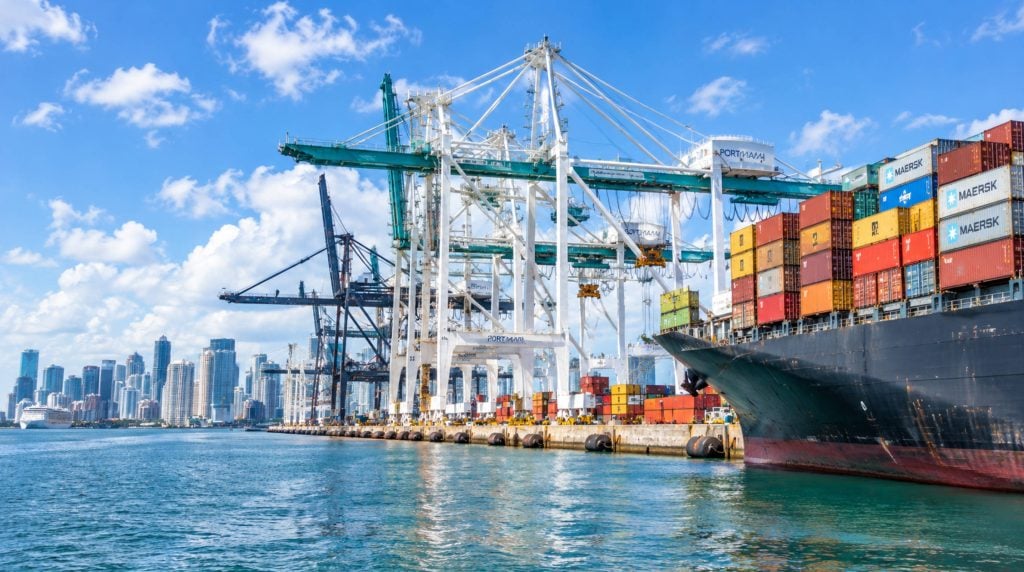
For years, a shipment heading into the European Union could clear customs on category-level information alone: a tariff heading, a declared value, a country of origin. That era is closing. Starting July 1, 2026, the EU began accepting Product Identifiers (PIDs) voluntarily inside e-commerce customs declarations, and from November 1, 2026, supplying them became mandatory for qualifying distance sales of imported goods. The shift sounds like a paperwork tweak. In practice, it is a structural change in how European customs authorities see every parcel crossing the border — from “what type of product is this” to “which exact product, made by whom, sold under which SKU, is this.”
For freight forwarders, customs brokers, and the cross-border sellers who depend on them, the timing could hardly be less forgiving. November 1 sits directly ahead of Black Friday and the year-end peak season, which means any gap in product identifier data will surface at the exact moment parcel volumes, customer expectations, and warehouse pressure are all at their highest. This article walks through what has actually changed, how the new Product Identifier regime interacts with the EU’s separate product-safety labelling rules, and what a practical compliance workflow looks like for anyone shipping consumer goods into the EU27.
What Exactly Changed on November 1, 2026
The Product Identifier requirement is not a stand-alone regulation with its own name recognition — it is a data-element change buried inside the EU’s broader customs reform for low-value e-commerce imports. Under Council Regulation (EU) 2026/382, the EU replaced the old €150 duty-free threshold with a temporary flat €3 duty per item, effective July 1, 2026. Riding alongside that duty change, Delegated Regulation (EU) 2026/1022 and the related Implementing Regulation (EU) 2026/1200 introduced a new “supporting document” data element across three customs declaration types: H1 (the full customs dataset), H6 (used for postal-style low-value consignments), and H7 (the simplified dataset most commonly used for IOSS shipments under €150).
It is worth being precise about what triggers the obligation, because the most common misunderstanding is assuming it only applies to sub-€150 parcels using IOSS. It does not. The requirement is tied to whether a transaction qualifies as a distance sale of imported goods to an EU consumer, regardless of the order value and regardless of which VAT mechanism — IOSS, Special Arrangements, or standard import VAT — is used to account for it. A €400 shipment declared under the full H1 dataset is just as much in scope as a €40 parcel cleared through H7.
During the voluntary window between July and October 2026, customs authorities did not penalize missing or incorrect PID data. That grace period ended on November 1. From that date, a declaration lacking valid product identifiers is not simply flagged for later correction — it is at genuine risk of being held, queried, or rejected outright at the point of entry.
A Short Timeline of How the EU Got Here
It helps to see the sequence of changes as one continuous reform rather than a single announcement. The €150 duty-free threshold that many sellers had relied on for years disappeared on July 1, 2026, replaced by the temporary €3 flat duty under Council Regulation (EU) 2026/382. On the same date, the EU opened a voluntary window during which product identifier data could be included in H1, H6, and H7 declarations without penalty for errors or omissions — effectively a soft-launch period intended to let carriers, brokers, and merchants test their systems against the real declaration flow.
The European Commission published its Delegated Regulation (EU) 2026/1022 and Implementing Regulation (EU) 2026/1200 in the weeks that followed, spelling out exactly which data element the identifiers belong in and how the €3 duty interacts with tariff classification at the HS6, CN8, or TARIC10 level depending on which declaration type is used. Then, on November 1, 2026, the grace period ended. From that date forward, the same fields that had been optional became mandatory, and customs authorities gained the ability to enforce against them.
The compressed timeline — roughly four months between the duty change and the enforcement deadline — is part of why so many sellers are still catching up. Teams that assumed the voluntary phase gave them until some later, undefined date to sort out their catalog data found that the runway was considerably shorter than it looked.
The Three PID Types: M-PID, NS-PID, and S-PID
The regulation defines three distinct identifier layers, and the confusion most sellers run into is treating them as interchangeable when customs treats them as three separate, mandatory-or-conditional data fields on the declaration line. Getting the terminology straight is the first step toward getting the data right.
| PID Type | Ciò chì Rapprisenta | Who Supplies It |
| M-PID (Merchant Product Identifier, data element C127) | The seller’s or marketplace’s own internal reference for the listing — typically a SKU or listing ID. Mandatory on every declaration line. | The merchant or the marketplace on which the item is listed |
| NS-PID (Non-Standardised Product Identifier, C128) | The manufacturer’s internal model or part reference — a factory code that is not built on a recognized global standard. Also mandatory. | The manufacturer or the factory-facing supplier |
| S-PID (Standardised Product Identifier, C129) | A globally recognized barcode — GTIN, EAN, UPC, or ISBN for books — assigned by a body such as GS1. Required where one exists; an exception code applies where it genuinely does not. | The brand owner, typically printed on retail packaging |
In practice, a single line item on a November 2026 customs declaration might read something like this: the merchant identifier is the seller’s own Shopify SKU, the non-standardised identifier is the factory’s internal model reference pulled from the supplier’s product sheet, and the standardised identifier is the EAN-13 barcode printed on the retail box. All three travel together on the same declaration line, and a mismatch between what is printed on the carton and what is entered in the customs data is treated the same way a mismatched GTIN is already treated on marketplaces like Amazon — as a compliance failure, not a rounding error.
Private-label and promotional items without a registered barcode are not automatically blocked from customs clearance, but they do require the declarant to actively state that no standardised identifier exists, using the relevant exception code, rather than simply leaving the field blank. A blank field and a properly coded absence are treated very differently by an automated risk-engine reading the declaration.
This Is Not Only a Customs Broker’s Problem
It is tempting for an online seller to assume this is purely a back-office data issue that their freight forwarder or customs broker will absorb quietly. That assumption breaks down quickly once you look at where the data actually originates. A customs broker can format a declaration correctly, but it cannot invent a GTIN that was never assigned, or reconcile a factory model number that the supplier never disclosed. The raw material for PID compliance — clean SKU data, manufacturer references, and standardised barcodes — has to exist somewhere upstream of the customs filing, usually in the seller’s own product catalog or in the factory’s export documentation.
This is precisely why the requirement is landing hardest on categories that were never built with barcode discipline in mind: private-label fashion, bundled gift sets, small-batch casa goods, and generic accessories sourced from multiple factories under a single storefront listing. None of that mattered for checkout. It matters now, because customs is effectively asking every SKU to prove its own identity at the border, and a catalog that was optimized for conversion rate was rarely optimized for that.
PID vs. GPSR: Two Identifier Regimes That Are Easy to Conflate
Adding to the confusion, 2026 sellers into the EU are actually navigating two separate identifier obligations that share vocabulary but serve different purposes. The customs Product Identifier regime described above governs what appears in the electronic customs declaration. The General Product Safety Regulation (GPSR — Regulation (EU) 2023/988), fully applicable since December 13, 2024, governs what must appear physically on the product, its packaging, or an accompanying document, and it uses the term “product identifier” in a labelling sense: a model, batch, or serial number that lets a specific unit be traced in the event of a recall.
| Customs PID (from Nov 1, 2026) | GPSR Product Identifier (since Dec 2024) | |
| Basi legale | Delegated Regulation (EU) 2026/1022, Implementing Regulation (EU) 2026/1200 | Regulamentu (UE) 2023 / 988 |
| Induve vive | Electronic customs declaration (H1 / H6 / H7, supporting document field) | On the product, packaging, or accompanying document |
| Fini | Let customs verify and risk-score exactly which product is entering the EU | Let consumers and authorities trace a specific unit if it is recalled |
| Who enforces it | National customs authorities at the point of import | Market surveillance authorities and marketplaces (Amazon, Bol.nl, Cdiscount, and others have already been delisting non-compliant ASINs) |
A seller can be fully compliant on one front and exposed on the other. A shirt might carry a perfectly valid GTIN that satisfies the customs S-PID requirement, while its packaging still lacks the manufacturer’s postal address and an EU Responsible Person’s cuntattu details that GPSR demands. Treating the two as a single checkbox is one of the more expensive mistakes sellers are making this year.
What Happens When the Data Is Missing
Customs guidance on this point is unambiguous: a consignment arriving without the required product identifier data is at risk of being held, referred for manual review, or rejected outright. Outside of peak season, that translates into delay and added handling cost. Inside the weeks immediately following November 1, sitting right before Black Friday and Singles’ Day, it translates into something more corrosive — a held parcel becomes a “where is my order” ticket, which becomes a refund request once the delay outlasts customer patience, which becomes a chargeback risk if the refund itself is slow. None of that shows up on a customs invoice, but all of it shows up on a seller’s margin and their marketplace performance metrics.
In Germany specifically, product-safety labelling gaps under GPSR already carry administrative fines of up to €50,000 per case under national implementing law, and a missing EU Responsible Person can trigger involuntary withdrawal of every SKU tied to that listing account. The customs PID regime does not yet publish an equivalent fixed penalty schedule, but the operational cost — stuck inventory, unhappy customers, and a broker who has to re-file — tends to arrive faster than any fine would.
Common Mistakes Sellers Are Making Right Now
The first and most frequent mistake is assuming that because a product sells under €150 and moves through IOSS, the simplified H7 process makes identifier data optional. It does not; H7 is one of three declaration types the requirement applies to, not an exemption from it. The second mistake is entering a GTIN that was correct at some point in the catalog’s history but no longer matches what is printed on current packaging — supplier packaging changes happen more often than product data gets updated to reflect them, and an automated matching system will flag the mismatch rather than assume it is a minor discrepancy.
A third, subtler mistake involves bundles and multi-item listings. A single storefront SKU that ships as “shirt plus belt plus sunglasses” needs to resolve into separate declaration lines at customs, each with its own identifiers and its own HS6 classification, since the €3 duty and the identifier requirement both apply per tariff line rather than per parcel. Sellers who have never had to decompose a bundle for customs purposes are often surprised to learn that their checkout-level SKU structure does not map cleanly onto what the declaration actually needs.
Building a Realistic Compliance Workflow
The practical starting point is a full SKU review rather than a spot check. Every product actively sold into the EU27 needs its merchant identifier confirmed, its manufacturer reference collected from the supplier where one exists, and its standardised barcode validated against what is physically printed on the retail packaging — not just what sits in a spreadsheet from three catalog updates ago. Sellers who source from multiple factories for the same listing, a common pattern in categories like apparel and home goods, often discover during this review that the same SKU maps to several different NS-PIDs depending on which factory shipped that batch, which is exactly the kind of inconsistency that trips up an automated customs risk engine.
Once the underlying data is clean, the harder part is usually organizational rather than technical: making sure the product data actually reaches the customs broker in a usable format. ERP systems, storefront platforms, and freight forwarders’ customs software do not always speak the same language, and a GTIN that lives correctly in a Shopify product field is not automatically visible to whoever is filing the H7 declaration on the other side of the world. Testing that end-to-end flow — catalog to warehouse to carrier to broker to customs system — before volume ramps up for peak season is the difference between a quiet rollout and a November scramble.
It also helps to build ownership across functions rather than leaving it to one department. Finance cares about the duty calculation, supply chain owns the supplier relationships that generate NS-PID data, and the e-commerce team controls the listing content that generates M-PID data. Treating this purely as a “customs problem” tends to mean nobody actually owns fixing the underlying catalog gaps until a shipment gets stuck.
Induve a spedizione Topway si adatta à questu
This is exactly the kind of operational gap that a logistics partner with deep customs clearance experience is built to close. Since 2010, Topway Shipping, headquartered in Shenzhen, China, has provided cross-border e-commerce logistics solutions, with a founding team carrying more than 15 years of experience in international logistics and customs clearance and a strong focus on the China–U.S. corridor. That same operational depth — coordinating first-leg transportation, overseas magazzinu, customs clearance, and last-mile delivery as one connected chain — is what sellers preparing for the EU’s new Product Identifier requirement actually need: a partner who can help align product data with the declaration types customs expects, rather than discovering the gap after a shipment has already been held.
For sellers weighing how to route EU-bound volume in the run-up to peak season, Topway Shipping also offers flexible full-container-load (FCL) and less-than-container-load (LCL) ocean freight services from China to major ports worldwide, giving smaller and mid-size sellers a way to consolidate shipments without carrying the fixed cost of a full container. Paired with the customs clearance experience the team has built over more than a decade, that flexibility matters most in a compliance environment where the cost of a held shipment is no longer just the duty itself, but the customer-facing fallout of a delayed peak-season delivery.
Because the new requirement touches the entire chain from first-leg pickup at the factory through to last-mile delivery in the EU, having those pieces coordinated by one partner reduces the number of handoffs where product data can get lost. A forwarder that only manages ocean freight, for example, has no visibility into whether the overseas warehouse receiving the goods has recorded the correct manufacturer reference, and a broker working purely from a shipping manifest has no way to know whether the barcode on the box actually matches what was declared. Covering first-leg transportation, overseas warehousing, customs clearance, and last-mile delivery under one service chain is precisely what closes that gap.
cunchiusioni
The shift from voluntary to mandatory Product Identifiers on November 1, 2026 is easy to underestimate because it reads like a technical customs footnote. In practice, it reorganizes how the EU inspects every parcel entering the bloc, and it exposes exactly the kind of product-data gaps that most e-commerce catalogs were never built to avoid. Sellers and forwarders who treat GPSR labelling and customs PIDs as two names for the same requirement, or who assume a broker can generate identifier data that was never collected upstream, are the ones most likely to see shipments held during the busiest weeks of the year.
The sellers who come through this transition smoothly will be the ones who audited their catalog early, matched M-PID, NS-PID, and S-PID data to what is actually printed on their packaging, and worked with a logistics partner capable of carrying that data cleanly from warehouse to customs declaration. With the EU Customs Data Hub still years away from full operation and the current transitional regime running until at least mid-2028, this is not a one-time fire drill — it is the new baseline for how product data needs to be managed for as long as distance sales into the EU remain part of the business.
S & P
Q: Does the Product Identifier requirement only apply to shipments under €150?
A: No. The €3 flat duty is capped at consignments under €150, but the PID requirement is not tied to value at all — it applies to any distance sale of imported goods to an EU consumer, regardless of order value or which VAT scheme is used.
Q: What if my product genuinely has no GTIN, EAN, or UPC?
A: That is common for private-label and promotional items. The declaration should state explicitly that no standardised identifier exists, using the relevant exception code, rather than leaving the field blank.
Q: Can my marketplace or platform handle this for me?
A: A marketplace can typically assign and manage the merchant identifier (M-PID) for listings on its platform, but it generally cannot supply the manufacturer-level identifiers, since those depend on your supplier relationship, which the marketplace has no visibility into.
Q: Is this the same requirement as the GPSR product identifier on my packaging?
A: No. GPSR governs what must be physically labelled on the product or packaging for traceability and recalls. The customs Product Identifier is separate data submitted electronically in the H1, H6, or H7 declaration. Compliance with one does not guarantee compliance with the other.
Q: What happens if my declaration is missing valid PID data after November 1, 2026?
A: The shipment is at risk of being held, referred for manual review, or rejected at the border, which during peak season can quickly turn into delivery delays, refund requests, and customer complaints.