
Shanghai til Los Angeles: Transittider for fulde containere og opdateringer om havnebelastning
Introduktion
Shanghai-Los Angeles-korridoren er den vigtigste containerfragtrute på Jorden. Hvert år passerer elektronik, møbler, mode, industrimaskiner og e-handelsvarer for hundredvis af millioner af dollars gennem denne kanal. Og den tid, det tager at krydse Stillehavet, påvirker direkte lagerplanlægning, pengestrøm og kundetilfredshed for importører på begge sider.
Og alligevel, på trods af dens betydning, bliver den reelle transittid på denne rute ofte misforstået. Offentliggjorte skemaer fortæller sjældent hele historien. Havnebelastning, blanke afgange, toldforsinkelser, tolddrevne stigninger i fragt og samspillet mellem skibsalliancer bestemmer alle, hvor lang tid din fragt vil tage. Med handelsstrømmene mellem USA og Kina, der tilpasser sig et nyt toldregime, og geopolitiske spændinger, der vender tilbage i Mellemøsten, har behovet for pålidelige realtidsoplysninger aldrig været mere indlysende, når vi ser frem mod 2026.
Denne guide dækker alt, hvad du behøver at vide – fra almindelige FCL-transitvinduer og aktuelle data om havnebelastning i Los Angeles til de faktorer, der sandsynligvis vil påvirke din forsendelse i dag. Vi diskuterer også, hvordan professionelle speditører som Topway Shipping hjælper importører med at håndtere usikkerhed og holde deres forsyningskæder i gang.
Shanghai-LA-ruten: Et hurtigt overblik
Shanghai (CNSHA) til Los Angeles/Long Beach (USLAX/USLGB) er en trans-Stillehavsrejse på næsten 11,600 km. Ruten følger den store cirkel i det nordlige Stillehav, som buer nordpå mod Aleuterne og derefter svinger sydpå til Californiens kyst. Dette er ikke den hurtigste geometriske rute, men den bruger gunstige strømninger og dokumenterede trafikseparationsmetoder.
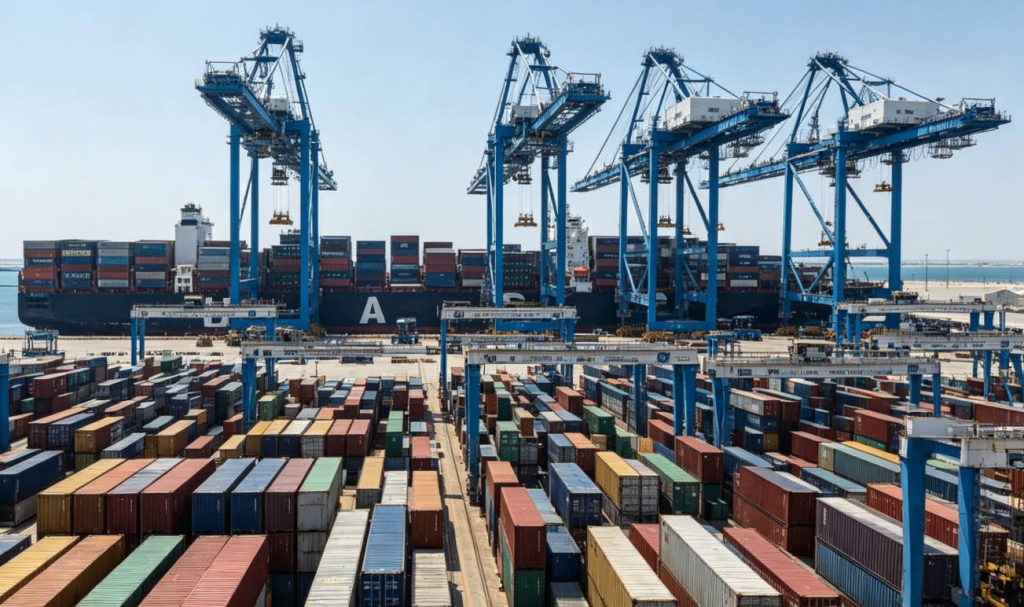
Havnekomplekset i San Pedro Bay – havnen i Los Angeles og havnen i Long Beach side om side – håndterer næsten 20 % af al amerikansk containerimport og er den primære indgangsport for trans-Stillehavsfragt. Alene havnen i Los Angeles flyttede 752,520 TEU i marts 2026, hvilket er omtrent på niveau med femårsgennemsnittet for første kvartal, og viser fortsat styrke i mængderne på trods af afbrydelsen forårsaget af den igangværende handelskonflikt mellem USA og Kina.
Alle tre af verdens største transportalliancer betjener ruten: Gemini Cooperation (Maersk + Hapag-Lloyd), Ocean Alliance (CMA CGM, COSCO, Evergreen, OOCL) og Premier Alliance (ONE, HMM, Yang Ming). Disse grupper kontrollerer tilsammen størstedelen af den trans-Stillehavskapacitet. Så når koalitioner annoncerer tomme afgange eller kapacitetsændringer, er effekten på tilgængelighed og rater øjeblikkelig.
FCL-transittider: Hvad man realistisk kan forvente i 2026
Under normale driftsforhold er den hyppigste transittid fra havn til havn for FCL-fragt fra Shanghai til Los Angeles 14 til 22 dage. Men dette interval skjuler en stor variation afhængigt af servicetype, transportør og sæson. Typisk er den gennemsnitlige direkte service med et stort alliancetransportør 16 til 20 dage. Et eksempel på premium- eller ekspresservice er Matsons China Long Beach Express, som kan levere fra havn til havn på 11 til 12 dage eller færre, omend til en meget højere pris.
Her er en tabel med realistiske mål for transittid for 2026, fordelt på servicetype. Disse er havn-til-havn-tal og inkluderer ikke indenlandsk lastbiltransport eller jernbane til slutdestinationen.
| service Type | Transittid (Port-to-Port) | Noter |
| Premium Express (f.eks. Matson) | 11–13 dage | Direkte service, ankomster på faste dage |
| Standard Direkte FCL | 16–20 dage | De fleste alliancetjenester |
| Standard med omladning | 22–30 dage | Via havne som Busan eller Tokyo |
| LCL (konsolideret) | 20–35 dage | Tilføj 3-7 dage til håndtering af CFS |
| Havn-til-dør (indlands + told) | 25–40 dage | Tilføj lastbil/skinne + frihøjde |
Det er vigtigt at understrege, at Xeneta-data angiver den typiske trans-Stillehavs transittid til omkring 22 dage, og derfor bør en rimelig planlægningsbuffer for de fleste FCL-importører indregne en uge oveni den angivne sejlplan. Forskellen mellem en 16-dages rejse og en faktisk levering på 22 dage skyldes ofte opholdstid i havnen og ikke forsinkelser på havstrækningen.
Dør-til-dør-tider rækker meget længere. Tilføj indenrigstransport fra Los Angeles til destinationer over hele USA – hvad enten det er med transport til et lokalt lager eller intermodal jernbane til Chicago (yderligere 7-10 dage) eller Dallas – og den samlede leveringscyklus fra fabriksporten i Kina til det endelige distributionspunkt kan være 30-50 dage under normale forhold.
Havnebelastning i Los Angeles: Aktuel status (april 2026)
I slutningen af april 2026 arbejdede havnen i Los Angeles under relativt flydende forhold sammenlignet med den ekstreme overbelastning under pandemitiden i 2021-2022. Aktuelle data fra havnetrafikmålinger viser, at den gennemsnitlige ventetid for skibe ved ankerplads er omkring 0.08 dage, hvilket tyder på, at tilgængeligheden af kajpladser ikke er den største flaskehals på nuværende tidspunkt.
Billedet er således mangesidet. Data fra Anchorage alene afslører ikke hele historien om opholdstider for importeret gods. Los Angeles havn rapporterer, at lokal importeret gods ligger i gennemsnit 3.5 dage, før det bliver afhentet. Opholdstiden for tog på kaj er steget til 5.7 dage, mens containere fra lastbiler ligger i gennemsnit på 4.1 dage for 20-fods enheder og 6.5 dage for 40-fods og større enheder. Opholdstiden for lokal import i Long Beach havn ligger stadig i intervallet 4 til 8 dage. Disse tal tilføjer realtid til den komplette havneklareringscyklus, som de angivne transittider aldrig kan afspejle.
Havneembedsmænd og logistikspecialister følger foråret og den tidlige sommer nøje. "Der er en række ting, der spiller sammen her. Hormuzstrædet-problemet har fået COSCO og andre rederier til at overveje potentielt at transitere længere ruter, hvilket opsluger den globale skibsplads og indirekte kan stramme tilgængeligheden på tværs af Stillehavet." 3. kvartal er generelt en periode med en kraftig stigning i fragt i højsæsonen, da amerikanske detailhandlere øger ferielagrene – og da toldmiljøet stadig er ukendt, fremskynder nogle importører leveringen af fragt tidligere end normalt for at drage fordel af de nuværende prisniveauer, før der finder nogen politikændringer sted.
Nedenfor er et hurtigt overblik over havnepræstationsmålinger for de største gateway-havne i Californien:
| metric | Los Angeles havn | Port of Long Beach |
| Anchorage Median Ventetid | ~ 0.08 dage | Lav (lignende) |
| Lokal import-dvale | 3.5 dage | 4–8 dage |
| Dvæle ved kajskinne | 5.7 dage | Ikke tilgængelig (varierer) |
| 40 fod+ containerophold | 6.5 dage | 4–8 dage |
| Portdrejetid (gennemsnit) | ~40-50 minutter | 45-51 minutter |
| Samlet trafikpropper | Lav-Moderat | Lav-Moderat |
"På nuværende tidspunkt under PierPass-programmet er den positive note, at alle terminalporte i begge havne fungerer som offentliggjort." Afskibere bør dog angive en buffer på 3 til 7 dage i deres estimater af havneklarering for at dække tidsforskellen mellem skibenes ankomst og den faktiske godsafgang.
Nøglefaktorer, der påvirker din FCL-transittid
Carrier Alliance og Servicevalg
Hyppigheden, havnerotationen og pålideligheden af trans-Stillehavsruter afhænger af den alliance, et rederi tilhører. Den globale pålidelighed af containerplaner har ligget på omkring 65 %, hvilket betyder, at omkring 1 ud af 3 skibsafgange er mærkbart forsinkede. Afskibere bør se på rettidighedsstatistikker for specifikke tjenester, når de vælger rederiudbydere, ikke kun brochurerejsetider.
Sæsonudsving og spidsbelastning
Den trans-Stillehavs shippingplan har to meget klare toppe i efterspørgslen: tiden op til kinesisk nytår (normalt december til januar, hvor fabrikkerne forsender for at kompensere for ferielukningen) og sommerens højsæson (juli til september), hvor amerikanske handlende oplagrer til 4. kvartal. Rater og uforudsigelighed i transit stiger i spidsbelastningsperioder. Tendensen i 2026 kan være mindre forudsigelig end normalt, da toldrelateret usikkerhed har fået nogle importører til at forhåndsindlæse lagre i første halvdel af året, hvilket måske har drevet spidsbelastningen fremad.
USA toldklarering
Normalt tager toldbehandling 24 til 72 timer mere tid i havneklareringsprocessen. Men papirarbejde – unøjagtige HTS-koder, ufuldstændige importørsikkerhedsdokumenter, manglende oprindelsescertifikater – kan føre til ventetider eller fysiske inspektioner, der kan forsinke containerfrigivelsen med dage eller endda uger. Siden maj 2025 skal alle forsendelser fra Kina formelt indgives til toldmyndighederne, uanset værdien. Mægleromkostninger tilføjer 125 til 300 dollars pr. indtastning. En af de mest effektive ting, en importør kan gøre, er at fastlægge dokumentationen, før lasten ankommer.
Toldmiljøet og dets indvirkning på godsstrømme
Toldscenariet for kinesiske varer, der kommer ind i USA i 2026, er kompliceret. De fleste kinesiske varer er underlagt told i flere niveauer: Sektion 301-toldsatsen (fastsat på forskellige niveauer for forskellige produktkategorier, men ofte på 25%), 20% IEEPA-fentanylrelateret tillæg og eventuelle Sektion 232-afgifter, der måtte blive opkrævet på stål, aluminium og andre kategorier. Et midlertidigt importtillæg på 10% er også gældende indtil juli 2026 fra begyndelsen af 2026. Alle disse lag tilsammen kan øge værdien af en vare med 55% eller mere og dramatisk ændre økonomien i trans-Stillehavshandelen.
Den samlede indvirkning på fragtmængderne har været stor. USA importerede omkring 28 % færre containere fra Kina i 2025 end i 2024. Noget af dette volumen er flyttet til sydøstasiatiske oprindelser (især Indonesien og Thailand oplevede en stor stigning), men noget af dette skyldes reel efterspørgselsnedbrydning. Priserne er forblevet relativt lave på Shanghai-LA-ruten, da mængderne er faldet for de resterende afskibere, hvor spotpriserne for FCL for en 40-fods container nu ligger mellem omkring $2,300 og $4,200, afhængigt af typen af service og hvornår bookingen foretages.
Tilgængelighed af fartøj og chassis
Tilgængeligheden af chassis er et afgørende problem, og branchen har taget en af erfaringerne fra trafikpropperne i 2021 til sig. På det tidspunkt forårsagede mangel på tilgængelige chassis, forværret af restriktioner, der forbød stabling af containere på privat ejendom i Long Beach, kaskadevise forsinkelser i hele havnekomplekset. Forholdene er forbedret enormt, selvom tilgængeligheden af chassis i nogle havne stadig kan variere i perioder med høj trafik. Den bedste måde at minimere eksponeringen for denne risiko på er at samarbejde med en speditør, der har gode drayage-relationer i Los Angeles-bassinet.
Sådan håndterer Topway Shipping Shanghai-LA-ruten
Topway Shipping har haft hovedkvarter i Shenzhen siden 2010 og har udviklet sig til en professionel udbyder af grænseoverskridende e-handelslogistik med et stærkt fokus på logistik mellem Kina og USA. Virksomhedens grundlæggerteam har over 15 års erfaring inden for international logistik og toldbehandling, en evne der er afgørende, når man forhandler en så kompleks og ustabil rute som trans-Pacific FCL-skibsfart.
Topway Shipping tilbyder en servicemodel, der dækker hele den logistiske kæde fra oprindelse til destination. På den kinesiske side omfatter dette første transport fra produktion til havn, eksporttoldbehandling og containerbooking hos de store alliancerederier. I USA har Topway direkte forbindelser med toldagenter, drayage-operatører og lagerfaciliteter over hele landet, ikke kun i Los Angeles, men også i større distributionsbyer, herunder Chicago, Dallas, Atlanta, New York og Seattle. Den nationale tilstedeværelse er vigtig. Når gods klarer havnen i Los Angeles, er evnen til at udføre levering til den sidste mil hurtigt lige så vigtig som selve sørejsen.
Topway leverer FCL- og LCL-søfragttjenester til kunder, der regelmæssigt sender varer på handelsruten Shanghai-LA. Med transportøraftaler på plads kan Topway tilbyde en række serviceniveauer, lige fra konventionelle alliancetjenester til konkurrencedygtige priser til premium direkte ruter for tidsfølsom fragt. FCL-service er det naturlige valg for afskibere med mængder, der er tilstrækkelige til at fylde en 20-fods eller 40-fods container. For mindre forsendelser, der ikke berettiger en hel container, er LCL-konsolidering tilgængelig. Topway konsoliderer og dekonsoliderer i begge ender.
Ud over søfragt tilbyder Topways amerikanske aktiviteter lastbilforsendelse (undertiden kendt som cartage eller drayage, men inkluderer også fuld indenlandsk lastbilkørsel i alle 48 sammenhængende stater) og toldoplagstjenester . "En væsentlig driftsmæssig fordel for e-handelskunder er muligheden for at konsolidere indgående FCL-forsendelser på et Topway-lager i USA og derefter opfylde individuelle ordrer over hele landet." Det omdanner én containerankomst til en spredt opfyldelseskapacitet, hvilket eliminerer behovet for, at kunderne skal opretholde flere tredjepartsrelationer.
Topways kompetence inden for toldbehandling er blevet en af deres mest eftertragtede tjenester i det nuværende toldklima. Effektiv HTS-klassificering, hurtig ISF-indgivelse og proaktivt samarbejde med US Customs and Border Protection fremmer problemfri toldbehandlingscyklusser, der holder varerne i flow og minimerer dyre ophold. Enhver afsender, der er bekymret over den indviklede nutidige toldstruktur for varer af kinesisk oprindelse, skal have et erfarent toldteam på sin side – ikke som en rar ting, men som et must-have.
Praktiske planlægningsanbefalinger for importører
Med alt det foregående i tankerne, ser vi her, hvordan sofistikerede importører griber Shanghai-LA-motorvejen an i 2026. For det første behandler de ikke rapporterede transittider som leveringsforpligtelser. Tilføj toldbehandling og opholdstid, og du bør planlægge en 16-dages sejlplan som en 20 til 25 dages havn-til-havn-cyklus. Og derefter skal downstream-planlægning - indkøbsordrer, kampagnedatoer, udløsere af lagerbestilling - afspejle denne virkelighed.
For det andet er kvaliteten af fragtpapirerne en reel konkurrencemæssig differentieringsfaktor. Importører, der tager sig tid til at få HTS-klassificeringen korrekt og indgive ISF korrekt, har kortere toldbehandlingscyklusser end dem, der betragter dokumentationen som en eftertanke. En enkelt dokumentationsfejl, der resulterer i en CBP-tilbageholdelse, kan forsinke en forsendelse, der ville være blevet klaret på 48 timer, med 10 til 14 dage.
For det tredje bliver det mere og mere rentabelt at overvåge rater og kapacitet. Xeneta forudser, at de globale gennemsnitlige spotrater vil falde med så meget som 25 % for hele 2026. I lyset af den svage trans-Stillehavsefterspørgsel er der en reel chance for at fastholde gode langsigtede rater – hvis man har fragtmængden og de rette relationer med speditører til at forhandle dem. På den anden side kan muligheden for en stigning i fragtmængden midt på året på grund af toldjusteringer føre til hurtige stigninger i spotraterne, hvilket efterlader uforberedte importører med at kæmpe om kapacitet.
Tabellen nedenfor viser foreslåede planlægningsbuffere pr. fragtben for ruten Shanghai-LA under de nuværende forhold.
| Forsendelsesben | Citeret tid | Anbefalet buffer | Samlet skøn |
| Fabrik til Shanghai havn | 1–2 dage | + 1 dag | 2–3 dage |
| Eksporttold og lastning | 1–2 dage | + 1 dag | 2–3 dage |
| Oceantransit (direkte FCL) | 16–20 dage | +3–4 dage | 19–24 dage |
| Havneophold og gate-out (LA) | 2–4 dage | +3 dage | 5–7 dage |
| Amerikansk toldbehandling | 1–3 dage | +2 dage | 3–5 dage |
| Indlandstransport med lastbil/jernbane (varierer) | 1–10 dage | +2 dage | 3–12 dage |
| Samlet estimat fra dør til dør | 22–41 dage | +11–13 dage | 33–54 dage |
Konklusion
Shanghai-Los Angeles FCL-ruten er fortsat en af de strategisk mest betydningsfulde fragtkanaler i verdenshandlen og i 2026 en af de mest udfordrende at krydse. Havnebelastningen i Los Angeles er nu under kontrol, men den kan forværres hurtigt, efterhånden som sommerens højsæson nærmer sig. Toldopkrævning på kinesiske importvarer fortsætter med at forvride handelsmønstre og skabe problemer med overholdelse af reglerne. Forskellen mellem offentliggjorte transitvarigheder og faktiske leveringscyklusser er stadig betydelig nok til at forårsage reel operationel smerte for importører, der planlægger uden passende buffer.
Importørerne, der vinder på dette område i dag, har et par ting til fælles – de planlægger konservativt med hensyn til transittider, de investerer i dokumentationskvalitet, de arbejder med speditører, der har reel end-to-end-kapacitet, og de holder sig tæt på markedsinformation i realtid i stedet for at stole på offentliggjorte gennemsnit.
Topway Shipping har hjulpet kunder med disse indviklede detaljer siden 2010 og har leveret FCL- og LCL-maritim fragt, lastbilforsendelse og lagerstyring i hele USA samt fuld toldbehandlingssupport. Hvis du flytter containere fra Shanghai til Los Angeles eller andre steder i USA og ønsker en logistikpartner, der kender havstrækningen og ved, hvad der sker, efter containeren rammer kysten, er Topway et besøg værd.
Ofte Stillede Spørgsmål
Q: Hvor lang tid tager det for FCL at sende fra Shanghai til Los Angeles i 2026?
A: 16-20 dage fra havn til havn for standard direkte FCL-service. Ekspres premium-services (som f.eks. Matson) kan tage 11 til 13 dage. Der kan gå yderligere 5 til 10 dage til havneklarering og toldbehandling, hvilket giver en realistisk total på 25 til 35 dage, indtil lasten er klar til levering inden for landets grænser.
Q: Er der trafikpropper i Los Angeles havn lige nu?
A: Ventetiderne ved ankerpladsen er utroligt korte (median mindre end 0.1 dage) pr. april 2026. Opholdsvarigheden for importgods er dog i gennemsnit 3.5 til 6.5 dage afhængigt af containerstørrelsen, så afskibere kan stadig forvente en hel uge i havnen fra skibets ankomst til godsets gate-out.
Q: Hvordan påvirker amerikanske toldsatser på kinesiske varer min beslutning om forsendelse i 2026?
A: De fleste kinesiske varer er underlagt kombinerede toldsatser på 30 % til 55 % eller højere. Dette har ført til, at nogle indkøb flyttes til Sydøstasien, men for varer, der stadig købes fra Kina, er korrekt HTS-klassificering og korrekt tolddokumentation vigtig for at undgå yderligere forsinkelser eller uventede toldvurderinger.
Q: Hvad er forskellen mellem FCL og LCL på ruten Shanghai-LA?
A: FCL (Full Container Load) betyder, at du har booket en dedikeret 20 fods eller 40 fods container. LCL (Less than Container Load) blander din last med andre afskiberes last. LCL er mere økonomisk for mindre mængder, men tager normalt yderligere 5 til 10 dage på grund af konsoliderings- og dekonsolideringsproces i hver ende.
Q: Kan Topway Shipping håndtere levering til steder uden for Los Angeles?
A: Ja. Topway tilbyder lastbilforsendelse og lagertjenester i alle større byer i USA, herunder Chicago, Dallas, Atlanta, New York, Seattle og flere. Når varerne har forladt havnen, kan Topway arrangere levering til sidste kilometer eller lagertjenester hvor som helst i det kontinentale USA.