
Regler for tekstilmærkning: Fejlen med fiberindholdet, der koster dig penge
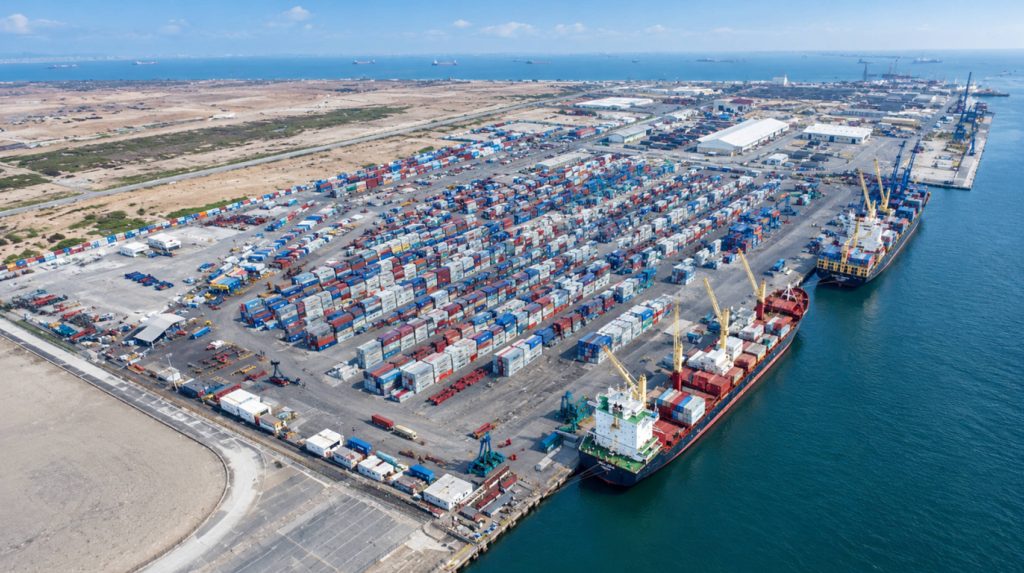
A container of garments clears the vessel, moves through the port, and sits one inspection away from the retailer’s floor when a single label stops it cold. Not a tariff classification error, not a missing bill of lading, but a fiber content percentage that is off by a few points on a hangtag nobody double-checked. For freight forwarders and importers working the China-to-U.S. trade lane, this is one of the most common and most avoidable ways a shipment turns into a demurrage bill, a compliance hold, or a canceled purchase order.
Fiber content labeling sits at the intersection of manufacturing, compliance, and logistics, which is exactly why it so often falls through the cracks. Factories focus on production. Brands focus on design and pricing. Compliance teams, when they exist at all, are stretched across dozens of SKUs and rarely see a garment until it is already packed. The freight forwarder is frequently the last party with eyes on the shipment before it reaches U.S. Customs and Border Protection, which makes understanding these rules a genuine competitive advantage rather than a legal footnote.
This article walks through what the Textile Fiber Products Identification Act actually requires, where fiber content mistakes most commonly originate, what they cost in real terms, and how a freight forwarder with the right process can catch problems before they become a customs event. Along the way, we will look at how a logistics partner such as Topway Shipping fits into that process, not as a substitute for legal compliance advice, but as an operational safety net for the physical movement of goods.
Why Fiber Content Labeling Is Not a Minor Detail
In the United States, textile labeling is governed primarily by the Textile Fiber Products Identification Act of 1960 (TFPIA), enforced by the Federal Trade Commission under 16 CFR Part 303, alongside the Wool Products Labeling Act (16 CFR Part 300) and, for many garments, the Care Labeling Rule (16 CFR Part 423). Together these rules require that almost every textile fiber product sold in the U.S. carry a label disclosing the generic name and percentage by weight of each fiber present, the country of origin, and the identity of the manufacturer or importer, either by name or by an FTC-issued RN number.
What makes this different from many other compliance regimes is that it is a strict liability framework. The FTC does not need to prove that a company intended to deceive consumers, only that the label was false, missing, or misleading. A rounding error carried over from a fabric mill’s internal spec sheet is treated, in principle, the same way as a deliberate attempt to disguise fiber content to dodge a tariff classification or a quota. That distinction matters enormously for anyone moving goods through the supply chain, because it means good intentions do not protect a shipment from enforcement.
Fiber content also feeds directly into other parts of the import process. U.S. Customs and Border Protection uses declared fiber composition to help verify the Harmonized Tariff Schedule classification on the entry summary, since duty rates for textiles vary significantly depending on whether a garment is, say, 100% cotton, a cotton-polyester blend, or a wool product. When the label says one thing and the commercial invoice or customs declaration says another, that discrepancy is precisely the kind of red flag that triggers a document review or a physical exam at the port.
The Fiber Content Mistake That Costs You Most: Rounding, Trace Fibers, and Misused Shortcuts
Ask a compliance attorney which single labeling error generates the most FTC and CBP attention in apparel, and the answer is rarely a dramatic case of outright fraud. It is far more often a mundane arithmetic problem: fiber percentages that do not add up to 100%, or that are rounded in a way the rule does not actually permit.
Under 16 CFR 303.9, the percentage of each fiber must be stated based on the total fiber weight of the product, exclusive of permissible ornamentation, and percentages below a certain threshold generally cannot simply be dropped or folded into the dominant fiber unless the rule’s narrow exceptions apply. A common failure pattern looks like this: a mill blends 97% cotton with a small amount of spandex for stretch, but the factory’s technical sheet lists only “cotton” because the spandex content is considered negligible from a production standpoint. The label ships as 100% cotton. If testing later reveals even 2-3% elastane, the product is misbranded, regardless of how small the percentage or how unintentional the omission.
A second version of the same mistake involves the phrase “other fiber,” which is only permitted under narrow circumstances, most notably in wool products where non-wool content is less than 5% of the total. Brands and factories sometimes borrow this shortcut for non-wool garments where it does not apply, assuming that any minor fiber under roughly 5% can be waved through as immaterial. It cannot, outside the specific contexts the rule allows.
A third pattern, and arguably the most expensive for freight forwarders to deal with operationally, is a mismatch between the label sewn into the garment and the fiber content declared on the commercial invoice and packing list used for the customs entry. These two documents are often created by different people at different points in the production cycle, and if nobody reconciles them, the shipment can arrive with a label that says one thing and paperwork that says another, which is an easy discrepancy for an examining officer to catch.
Common Fiber Content Labeling Mistakes and Their Practical Consequences
| Mistake | Hvorfor det sker | Typisk konsekvens |
| Fiber percentages do not total 100% | Trace fibers (spandex, elastane) omitted from the mill spec sheet | Label rejected as inaccurate; risk of misbranding finding |
| Misuse of “other fiber” wording | Shortcut borrowed from wool labeling rules and applied incorrectly | Non-compliant label; possible FTC inquiry |
| Label and invoice fiber content differ | Label and commercial documents created by different parties, never reconciled | CBP document review, possible cargo exam, entry delay |
| Generic fiber name not used | Marketing or brand name used instead of the FTC-recognized generic name | Label treated as non-disclosing; relabeling required |
| Country of origin omitted or inconsistent | Multi-country supply chain (yarn, weaving, cutting, sewing in different countries) | Detention at port; forced relabeling or re-export |
Generic Fiber Names: A Small Wording Rule With Large Consequences
One rule that catches many China-based exporters off guard is the requirement to use FTC-recognized generic fiber names rather than trade names, regional terms, or marketing language. “Viscose,” “rayon,” “modal,” and “lyocell” are not interchangeable on a U.S. label even though they may be used loosely in casual conversation or in a factory’s internal documentation. The FTC updated Section 303.7 to permit more of the internationally recognized generic names from the International Organization for Standardization’s 2010 standard for man-made fiber names, which narrowed some of the historical gap between Chinese, European, and American terminology, but it did not eliminate the need to map a factory’s fiber terminology to the correct U.S. generic name before the label is printed.
This becomes especially tricky with newer or regenerated fibers, bamboo-derived viscose being a frequent example. A garment tag that says “bamboo fabric” is not adequate under U.S. rules if the fiber is chemically processed viscose or rayon, because the finished fiber, not the raw plant source, determines the generic name that must appear on the label. Brands that market bamboo-origin viscose as “bamboo” on the primary label have drawn FTC enforcement attention in the past precisely because the term implies a natural fiber structure that does not survive the manufacturing process.
Country of Origin, RN Numbers, and How They Interact With Fiber Content Errors
Fiber content problems rarely travel alone. In practice, a garment with an inaccurate fiber percentage often has a related issue with country of origin marking or with the identification of the responsible business. All three pieces of information, fiber content, origin, and manufacturer or importer identity through a name or an FTC-registered RN number, are supposed to appear together on the same label, and CBP officers reviewing a shipment tend to check all three at once rather than in isolation.
For companies sourcing from multiple factories, or blending fabric from one country with cut-and-sew operations in another, origin marking has its own layer of complexity that interacts with fiber content. A shirt woven from Chinese fabric but cut and sewn in Vietnam, for example, has a country of origin determined by where the last substantial transformation occurred, and that determination needs to be reflected consistently across the sewn-in label, the hangtag, the commercial invoice, and the customs entry. When a freight forwarder sees a fiber content label that looks inconsistent with the declared origin, or a garment description that does not match either, that is usually a sign the whole documentation package needs a second look before booking.
Registered RN numbers, issued by the FTC to U.S.-based companies, are worth a specific mention because forwarders sometimes see them used incorrectly on behalf of an overseas factory that has no legal presence in the United States. An RN number identifies the company responsible for the product in the U.S. market, not the factory that manufactured it, and mismatched or invalid RN numbers are an easy, low-effort item for an examining officer to flag.
What Enforcement Actually Looks Like
The financial exposure for textile labeling violations is not theoretical. Civil penalties for FTC Act violations, adjusted for inflation, can run into the tens of thousands of dollars per violation, and because each mislabeled unit can be treated as a separate violation, the numbers scale quickly across a large shipment. CBP, for its part, does not need an FTC referral to act. Port officers have independent authority to detain suspect merchandise, and detained goods can be held for a defined review period while the importer submits corrective documentation, after which the agency may order relabeling, re-export, or destruction if the importer cannot demonstrate compliance.
Textile and apparel imports are also simply a larger target than many other categories. Textiles have historically represented a disproportionate share of the duties CBP collects relative to their share of import volume, which is one reason the agency maintains dedicated textile enforcement teams and periodically runs factory verification sweeps in major sourcing countries. Fiber misdescription has a long enforcement history in this space as well; inspectors have documented patterns of cotton garments deliberately mislabeled as other fibers specifically to qualify for different duty treatment, and while that is a more deliberate form of the problem than the rounding errors discussed earlier, it means examining officers are already primed to scrutinize fiber declarations closely.
It is also worth noting that enforcement risk compounds over time for a given exporter or importer relationship. A single labeling discrepancy caught and corrected quickly rarely triggers lasting consequences beyond the immediate delay. A pattern of repeated discrepancies from the same factory or the same importer of record, however, tends to invite closer scrutiny of every future shipment in that relationship, which is a much more expensive outcome than any single detention, since it turns routine clearance into an ongoing cost center rather than an isolated incident.
Enforcement and Cost Snapshot
| Enforcement Touchpoint | Myndighed | Operationel indvirkning |
| Civil penalty for misbranding | FTC, under the FTC Act | Penalties can scale per unit or per violation; legal costs on top |
| Port detention | CBP, independent seizure authority | Cargo held pending evidence of compliance; storage and demurrage accrue |
| Forced relabeling or re-export | CBP | Added labor cost, schedule slip, possible missed retail window |
| Entry audit / classification review | CBP | Broader scrutiny of future shipments from the same exporter |
| Retailer chargeback or PO cancellation | Commercial, not regulatory | Direct revenue loss, damaged buyer relationship |
Why Testing Labs and Pre-Shipment Verification Matter More Than a Spec Sheet
Many factories rely on the original fabric supplier’s technical specification sheet as the source of truth for what goes on the finished garment’s label, and in a majority of cases that is a reasonable starting point. The problem is that a spec sheet reflects what the fabric was designed to be, not necessarily what the finished, dyed, and treated fabric actually is by the time it reaches a cutting table. Finishing processes such as dyeing, brushing, or adding a stretch component at the sewing stage can shift the real fiber composition away from the original specification without anyone updating the paperwork that eventually becomes the label text.
This is exactly why independent fiber content testing, whether run through an accredited lab in China before export or through the importer’s own quality assurance program, functions as a second line of defense rather than a redundant cost. A lab test that confirms actual fiber percentages against the label text before the goods are packed is dramatically cheaper than discovering the same discrepancy after a container has already been detained at a U.S. port. For higher-risk categories such as wool blends, specialty natural fibers, or any garment marketed around a specific fiber story, such as “100% organic cotton” or “genuine cashmere,” a pre-shipment test is often the difference between a smooth customs clearance and a costly delay.
Freight forwarders are not in the business of running fiber content tests themselves, but a forwarder that understands where these gaps typically appear can flag the risk to an importer early enough that a lab test still fits comfortably within the production and shipping timeline, rather than being suggested only after a problem has already surfaced at the border.
Wool, Cashmere, and Specialty Fibers: A Higher-Risk Category
Wool products carry an extra layer of labeling obligation under the Wool Products Labeling Act, and this is where a well-intentioned but incomplete fiber declaration causes some of the most persistent problems. Labels must disclose not just the percentage of wool, but whether it is virgin (new) wool or recycled wool, and specialty fibers such as cashmere, mohair, alpaca, or angora must be named specifically rather than folded into a generic “wool” percentage.
Cashmere in particular draws attention because of its price premium relative to sheep’s wool; a sweater blended with even a modest percentage of cashmere is expected to disclose that percentage accurately, and testing labs are well equipped to detect when a garment marketed as “cashmere blend” contains a smaller share of cashmere fiber than the label suggests, or none at all. For importers working with wool and cashmere product lines out of China, this is a category where a pre-shipment fiber verification test is worth the modest cost relative to the reputational and financial risk of a mislabeled batch reaching a major U.S. retailer’s quality control team.
How One Mislabeled SKU Disrupts an Entire Shipment
The operational damage from a fiber content error rarely stays contained to a single product line. Ocean freight moves in consolidated loads, and a full container or even a shared LCL load typically carries multiple SKUs, sometimes for multiple purchase orders or multiple brands. When CBP flags one style for a fiber content or labeling issue, the examination frequently extends to the rest of the container, since the cargo has already been pulled for inspection and the marginal cost of checking adjacent cartons is low from the agency’s perspective.
That means a $400 order of mislabeled cashmere scarves can hold up a $60,000 container of otherwise fully compliant garments simply because they shared a booking. Demurrage and detention charges accrue daily once a container sits past its free time at the terminal, and those charges land on the importer or the forwarder depending on the contract terms, not on the factory that made the labeling mistake in the first place. This is why experienced freight forwarders increasingly treat labeling review as part of pre-shipment cargo readiness, alongside packing list accuracy and carton marking, rather than as something that is purely the brand’s or the factory’s problem to manage independently.
Documentation That Should Travel With Every Textile Shipment
Beyond the physical label sewn into the garment, several supporting documents help establish that a shipment’s fiber content claims are consistent and defensible if questioned at the border. A commercial invoice should describe each line item with a fiber composition that matches the label exactly, down to the percentage, rather than using a shorthand description that was accurate for an earlier production run but never updated for the current one.
Packing lists benefit from the same discipline, particularly when a single purchase order covers multiple color-ways or fabric weights of what is nominally the “same” style, since different color-ways sometimes use different dye processes or fabric blends without the product description on the paperwork reflecting that difference. Where available, a fabric mill’s test certificate or a third-party lab report adds a useful layer of evidence that the declared fiber content was verified rather than simply assumed, and keeping that certificate on file, even informally, gives an importer something concrete to produce quickly if CBP requests supporting documentation during an entry review.
None of this paperwork prevents an examination on its own, but a complete and internally consistent documentation package is often the difference between a detention that resolves in a few days and one that drags on for weeks while an importer scrambles to reconstruct records after the fact.
Building a Labeling Safety Net Before Cargo Ever Leaves the Factory
The most effective point to catch a fiber content mistake is before the goods are packed into a container, not after they arrive at a U.S. port. This is where a freight forwarder’s role naturally extends beyond booking space and tracking a bill of lading. Since 2010, Topway Shipping, headquartered in Shenzhen, China, has built its cross-border e-commerce logistics services around exactly this kind of full-chain visibility, with a founding team bringing more than 15 years of experience in international logistics and customs clearance, and a particular depth of expertise on the China-to-U.S. lane.
Because Topway Shipping’s services span first-leg transportation from the factory, overseas oplagring, customs clearance, and last-mile delivery, the company sits at nearly every point where a labeling problem could otherwise slip through unnoticed. A forwarder that only sees cargo at the port has limited ability to flag a fiber content discrepancy; a partner involved from factory pickup through final delivery has multiple checkpoints to catch a documentation mismatch before it becomes a customs event.
For importers running FCL and LCL ocean freight from China to major ports worldwide, this matters most at the consolidation stage, which is precisely where a single non-compliant SKU can put an entire shared container at risk. A forwarder who understands why fiber content and country of origin need to be consistent across the sewn-in label, the hangtag, the packing list, and the commercial invoice is far better positioned to ask the right question at booking time, before the container is sealed, rather than after CBP has already flagged it. Pairing reliable ocean freight execution with informed pre-shipment awareness of textile labeling risk is one of the more practical ways a logistics partner adds value beyond simply moving boxes from one country to another.
A Practical Way to Think About Pre-Shipment Review
Rather than treating fiber content compliance as a one-time legal exercise, the more resilient approach is to build it into the same rhythm as any other pre-shipment quality check. Before a purchase order is finalized, it is worth confirming that the factory’s fiber composition sheet reflects the actual finished fabric, including any trace elastane, spandex, or blended yarns that might otherwise get quietly dropped from the paperwork because they seem immaterial to production.
Once samples are approved, the label text itself deserves a second look against the current FTC generic fiber name list, particularly for newer regenerated or semi-synthetic fibers where marketing terms like “bamboo” or “eco-cotton” can drift from what U.S. rules actually require on the label. And in the final days before cargo is booked, reconciling the sewn-in label, the hangtag, the packing list, and the commercial invoice against each other closes the loop, because these documents are so often produced by different teams at different stages that small inconsistencies creep in without anyone noticing until an examining officer does.
None of these steps requires sophisticated software or a large compliance department. What they require is a habit, and a logistics partner willing to ask the question rather than simply booking whatever cargo shows up at the warehouse door.
It also helps to treat labeling review as an ongoing relationship rather than a per-shipment task handled in isolation. Factories change fabric suppliers, dye lots shift, and a style that was compliant last season can drift out of compliance this season without any single decision that looks obviously wrong in isolation. Importers who work with the same freight forwarder across multiple seasons give that partner the context needed to notice when something has changed, which is often the earliest and cheapest point at which a labeling issue can still be corrected before it ever reaches a shipping schedule.
Konklusion
Fiber content labeling looks, on its surface, like a small administrative detail buried in a sea of larger supply chain concerns: tariffs, freight rates, transit times, warehouse capacity. In practice, it is one of the more common and more preventable reasons a shipment gets pulled aside, delayed, or rejected at the U.S. border. The rules under the Textile Fiber Products Identification Act and the Wool Products Labeling Act are strict liability rules, which means intent offers no protection once a label is wrong, and the financial exposure runs from FTC civil penalties through CBP detention costs to lost retail purchase orders.
For freight forwarders and importers moving apparel and textile goods out of China, the practical takeaway is that labeling review belongs earlier in the process than most teams currently place it, ideally before cargo is packed rather than after it is flagged at port. A logistics partner that understands both the physical movement of freight and the documentation risks that travel with it, the kind of full-chain approach Topway Shipping applies across first-leg transportation, overseas warehousing, customs clearance, and last-mile delivery, turns fiber content compliance from a reactive scramble into a routine part of getting cargo through the border the first time.
Ofte Stillede Spørgsmål
Q: What is the difference between the Textile Fiber Products Identification Act and the Wool Products Labeling Act?
A: The TFPIA covers most textile fiber products in general and requires fiber content, origin, and manufacturer or RN identification on the label. The Wool Products Labeling Act applies specifically to products containing wool and adds requirements such as disclosing whether the wool is virgin or recycled and naming specialty fibers like cashmere or mohair individually.
Q: Can a manufacturer round small fiber percentages down to zero on the label?
A: Generally no. Fiber content must reflect the actual composition by weight, and dropping trace fibers such as spandex or elastane because they seem minor is one of the most common labeling mistakes that leads to a misbranding finding.
Q: Does CBP check fiber content labels at the port, or only the FTC?
A: Both agencies can act. CBP has independent authority to detain or examine cargo at entry based on documentary or physical inspection, while the FTC separately enforces civil penalties for misbranding. A shipment can face CBP delays even before any FTC action is considered.
Q: Is it enough if the fiber content on the hangtag is correct but the sewn-in label is wrong?
A: No. Both the hangtag and the permanent sewn-in label are subject to the labeling rules, and recent FTC amendments actually gave hangtags more flexibility precisely because the permanent label is expected to carry the full, accurate fiber content disclosure.
Q: How can a freight forwarder help prevent fiber content labeling problems?
A: A forwarder involved across the supply chain, from factory pickup through customs clearance and final delivery, has multiple opportunities to catch inconsistencies between the label, packing list, and commercial invoice before the goods are booked, which is far cheaper than resolving the same issue after a container is detained at a U.S. port.