
ચીનથી સ્વીડન શિપ: IKEA નું હોમ ટર્ફ હજુ પણ વિક્રેતાઓને કેમ આકર્ષે છે
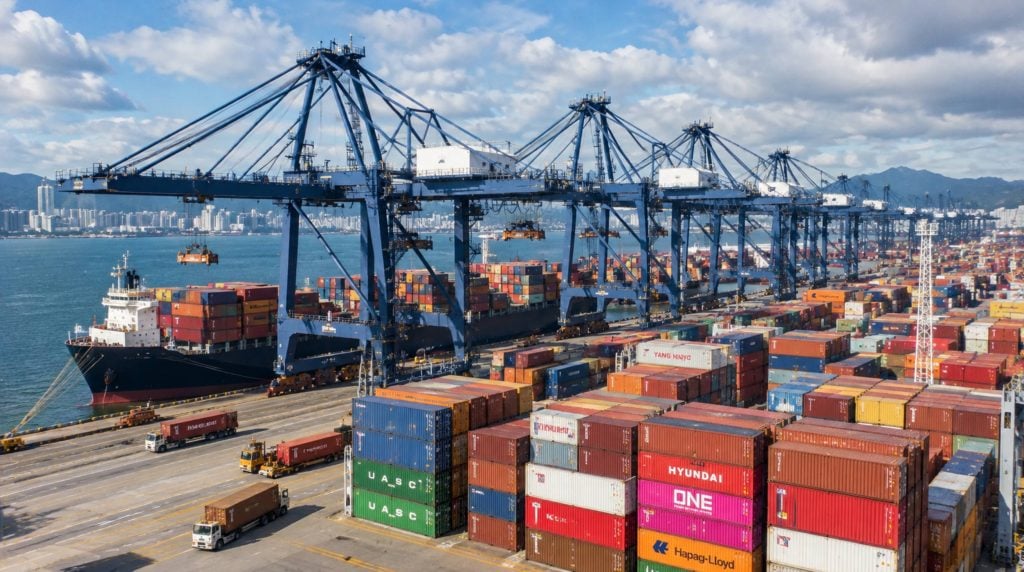
Sweden looks, on paper, like the easiest furniture and home-goods market in the world to sell into. It is the country that gave the world flat-pack shipping, self-assembly design, and one of the most efficient retail logistics networks ever built. Surely, the reasoning goes, if IKEA figured this market out decades ago, any reasonably organized seller shipping from China can follow the same playbook and land goods in Stockholm or Gothenburg without much drama.
That assumption is exactly what trips people up. Sweden is IKEA’s home turf, which means Swedish buyers, freight forwarders, and customs authorities all operate against a benchmark set by a company running 1,200 furniture suppliers and 275 transport service providers across a fully integrated global network. A mid-sized seller shipping three containers a quarter from Ningbo or Shenzhen does not have that scale, yet is quietly judged against it on price, lead time, and sustainability documentation.
This piece breaks down what actually makes the China to Sweden lane difficult right now, from current ocean, air, and rail pricing to the regulatory layer that catches wood and furniture shipments in particular, and closes with a practical framework for choosing a shipping mode and a partner that can keep a smaller shipment competitive against a market built around one giant’s supply chain.
Why Sweden Is a Deceptively Hard Market for China-Based Sellers
Sweden has a population of roughly 10.5 million people, which is small by European standards and tiny compared to Germany or the UK. That single fact shapes almost everything else about the lane. Freight forwarders route the bulk of their Northern European capacity through Germany, the Netherlands, and increasingly Poland, treating Sweden as a secondary call or a feeder destination reached via transshipment. There simply is not the same density of carriers and consolidators competing head to head for Swedish volume, so rates on this corridor tend to sit in the middle of the pack for Europe and swing harder when global capacity tightens.
Then there is the IKEA effect itself. IKEA sources heavily from China, Poland, Italy, Germany, and Sweden, and has spent decades engineering its packaging, container fill rates, and supplier relationships to squeeze cost out of every touchpoint in the chain. Swedish consumers, and increasingly Swedish wholesale buyers who stock furniture and homeware, have absorbed IKEA pricing as their mental baseline without necessarily understanding that it rests on volumes and supplier partnerships a smaller importer cannot replicate. A seller landing a single 40-foot container of dining chairs is competing, in the buyer’s head, against a company that moves that volume in a single afternoon.
On top of that, Sweden’s regulatory culture leans further into sustainability than most of the EU, partly because IKEA itself has spent years publicizing its own environmental commitments and supplier codes of conduct. Wood sourcing, recyclable packaging, and chemical safety documentation get scrutinized in Sweden in a way that a seller shipping the same product into, say, Southern Europe might not encounter nearly as often.
The Ocean, Air, and Rail Reality: Current China-Sweden Freight Landscape
Ocean freight rates into Gothenburg and Stockholm have been unusually volatile through 2026. A capacity crunch across Asia-Europe services pushed twenty-foot containers toward roughly 2,700 US dollars and forty-foot high cube boxes past 4,455 US dollars at points during the first half of the year, and a July peak-season surcharge round drove twenty-foot rates up around 63 percent and forty-foot high cube rates up close to 19 percent in a single month before easing back into August. That kind of swing means a quote that looked competitive four weeks ago can be badly out of date by the time cargo is actually ready.
The table below summarizes typical current pricing and transit windows across the main shipping modes on this lane.
| સ્થિતિ | Typical Cost (China to Sweden) | લાક્ષણિક ટ્રાન્ઝિટ સમય |
| Ocean FCL, 20ft container | US$2,200 – 4,200, spiking toward US$3,000+ in tight capacity periods | 25 – 31 days to Gothenburg or Stockholm |
| Ocean FCL, 40ft / 40HQ container | US$2,700 – 5,850, with peak-season surcharges pushing above US$4,500 | 25 - 31 દિવસ |
| મહાસાગર LCL (CBM દીઠ) | US$80 – 200 per cubic metre for the ocean leg alone | 28 – 35 days including consolidation and deconsolidation |
| ચીન-યુરોપ રેલ | Often priced between LCL and FCL sea rates for mid-sized cargo | 12 – 17 days into major European rail hubs, then onward trucking |
| વિમાન ભાડું | US$4 – 9 per kg, cheaper above 500 kg | 3 – 9 days depending on airport pair and routing |
| એક્સપ્રેસ કુરિયર (DHL, FedEx, UPS) | Highest per-kg cost of all modes | ૩-૭ દિવસ ઘરે ઘરે |
રેલ નૂર deserves more attention than most sellers give it. China-Europe rail services now run reliably in the 12 to 17 day range into major continental hubs, with onward trucking or short-sea legs into Sweden. During the ocean rate spikes seen earlier in 2026, rail pricing for mid-sized shipments sat meaningfully below FCL દરિયાઈ નૂર and, at times, close to LCL sea rates, while cutting more than half the transit time off a standard ocean booking. For cargo that is time-sensitive but does not justify full air freight pricing, rail is worth quoting alongside sea options rather than treated as a niche alternative.
LCL shipping is where a lot of smaller sellers get caught out. A headline rate of roughly 80 US dollars per cubic metre looks unbeatable next to FCL pricing, and it is genuinely attractive for the ocean freight portion of the move. The trap is that the ocean leg is only one line item. Origin handling, destination deconsolidation, port storage once free time expires, customs examination fees, and last-mile delivery in a market with fewer LCL consolidators than Rotterdam or Hamburg can add up quickly, and a shipment that looked like the cheap option on a spreadsheet arrives with an invoice that erases most of the saving.
Weather and port disruption add another layer of unpredictability that is easy to underestimate on this lane specifically. Typhoon closures at Shanghai and Ningbo in August 2026, for instance, took roughly 2.4 million TEU of capacity offline for around three days, and because Sweden-bound cargo often already relies on transshipment through a hub port, even a short closure at origin can cascade into a missed vessel connection and a two to three week knock-on delay by the time a replacement routing is found.
Ports and Routing: Gothenburg, Stockholm, and the Transshipment Question
Gothenburg is Scandinavia’s largest port and the default gateway for most direct FCL services from China, offering the widest choice of sailings and the shortest effective transit for full container loads. Stockholm and smaller gateways such as Helsingborg see less direct service and more cargo arriving via transshipment through Rotterdam, Hamburg, or Bremerhaven, which adds handling steps and time even when the headline transit time quoted looks similar.
Choosing a Port Around the End Customer, Not the Cheapest Quote
The cheapest quoted rate to a Swedish port is not always the cheapest landed cost once inland trucking to the buyer’s actual location is factored in. A shipment destined for customers in southern Sweden may clear and move faster and cheaper through Gothenburg even if a Stockholm quote looks marginally lower on the ocean freight line, simply because Gothenburg has denser onward trucking capacity and fewer feeder legs involved.
Transshipment cargo is also more exposed to the kind of cascading delay described above, since a missed connection at a hub port means waiting for the next available feeder sailing into Sweden rather than simply waiting out a short local delay. Sellers moving time-sensitive inventory, particularly ahead of seasonal peaks, generally do better booking direct calls wherever the destination and container size allow it, even at a modest premium.
Customs, VAT, and the EU Regulatory Layer
Sweden is a full EU member, so importing goods requires an EORI number and follows standard EU customs procedure rather than any Sweden-specific process. Import VAT sits at 25 percent, among the higher rates in the EU, though VAT-registered businesses do not pay it in cash at the border. Instead it is reported on the Swedish VAT return as a reverse charge, netting input against output VAT, while only importers without Swedish VAT registration pay it directly to customs at clearance.
Duty rates depend entirely on the commodity code assigned under the EU TARIC database and are charged on the CIF value, meaning goods plus freight plus insurance rather than just the goods value. There is no free trade agreement between the EU and China, so standard most-favoured-nation rates apply across most product categories, and a smaller but important group of China-origin goods, including certain steel, aluminium, ceramics, and bicycles, carries additional anti-dumping duty on top of the standard rate. Confirming the exact commodity code before shipping, rather than after a customs bill arrives, is one of the simplest ways to avoid an unpleasant surprise.
Furniture and wood-based sellers face an additional layer that IKEA itself has been publicly wrestling with. The EU Deforestation Regulation requires companies placing wood-based products on the EU market to provide precise geolocation data proving the timber did not come from land deforested after December 2020, a significant step up from the voluntary sustainability certifications the industry has relied on until now. IKEA processes close to 15 million cubic metres of wood a year sourced from countries including Poland, Lithuania, Sweden, and China, and even at that scale the company has described compliance as a genuinely complex undertaking. A smaller seller shipping wood furniture, frames, or fittings from China needs the same traceability documentation from its factories without anything like IKEA’s compliance department to assemble it, which makes early supplier vetting far more important than it used to be.
Furniture-Specific Pitfalls: The IWAY Standard and the Flat-Pack Halo
IKEA’s supplier code of conduct, known as IWAY, has been running for more than two decades and covers environmental practice, working conditions, and social standards across every factory in its network. It is not a legal requirement for anyone outside IKEA’s own supply chain, but Swedish buyers, distributors, and even end consumers have absorbed its expectations as an informal baseline. A furniture seller that cannot answer basic questions about factory conditions, wood sourcing, or chemical testing is at a real disadvantage in a market this conditioned to ask them.
IKEA’s other quiet advantage is packaging engineering. The company’s guiding principle of minimizing how many times a product is touched between factory and living room, combined with genuinely flat packaging, drives down freight cost per unit in a way most smaller sellers never fully replicate because redesigning packaging for container efficiency takes engineering time most factories will not volunteer unless a buyer specifically pushes for it. Even modest changes, such as nesting components or reducing void space in a carton, can shift how many units fit in a container and materially change landed cost per piece on a lane where every container dollar counts.
Factory-side quality inspection before goods leave China matters more on this lane than on many others, simply because a failed shipment caught at Swedish customs or rejected by a distributor is expensive to return and slow to replace given the transit times already discussed.
Choosing the Right Freight Mode for a Given Shipment
Sea freight remains the backbone of the lane and the only sensible option for anything bulky, heavy, or ordered well ahead of a selling season. Air freight is priced on chargeable weight, meaning whichever is greater between actual weight and volumetric weight, so it suits urgent restocks, samples, and small, dense items rather than furniture, but per-kilogram rates do fall meaningfully once a shipment passes around 500 kilograms. Rail sits usefully in between for cargo that needs to move faster than sea allows but does not justify air pricing, particularly for mid-sized orders during periods when ocean rates spike. Express courier service is the fastest door-to-door option at three to six days but is built for parcels and samples rather than pallets of stock, and its per-unit cost makes it the wrong tool for anything beyond that.
The practical approach most experienced importers settle on is running sea freight as the default for core inventory, keeping a rail or air option in reserve for whichever SKU threatens to run out before the next ocean shipment arrives, and reserving express shipping strictly for samples, spare parts, and genuine emergencies.
How Topway Shipping Supports Sellers on the China-Sweden Lane
Since 2010, Topway Shipping, headquartered in Shenzhen, China, has worked as a cross-border e-commerce logistics provider built specifically around the problems described above. Its founding team carries more than 15 years of international logistics and customs clearance experience, with a background rooted in China-U.S. transportation that has since expanded into flexible full-container-load and less-than-container-load ocean freight services from China to major ports worldwide, including the Nordic gateways that a smaller seller shipping into Sweden actually needs.
What matters for a seller weighing Sweden specifically is that Topway Shipping covers the entire chain rather than a single leg of it: first-leg transportation out of the factory, overseas warehousing so inventory can sit closer to the Swedish market instead of waiting on a slow ocean leg for every reorder, customs clearance handled by a team that already understands EU commodity coding and VAT treatment, and last-mile delivery that gets goods the rest of the way to a distributor or end customer. For a business trying to compete credibly against IKEA-level service expectations without IKEA-level volume, having one partner accountable for the full route from Shenzhen to a Swedish doorstep removes a lot of the coordination risk that otherwise falls on the seller.
ઉપસંહાર
Sweden rewards sellers who treat it as its own market rather than an afterthought bolted onto a broader European strategy. The freight rates are volatile, the port structure concentrates volume through a handful of gateways, the VAT and duty rules follow standard EU procedure but punish sellers who guess at commodity codes, and the regulatory bar for wood and furniture products keeps rising in ways that track directly with the scrutiny IKEA itself now faces. None of that makes the lane impossible. It makes it a lane where the details, freight mode, port choice, documentation, and packaging design, decide whether a shipment lands profitably or simply lands. Working with a forwarder that already understands this specific corridor, rather than treating Sweden as a rounding error inside a wider Europe program, is usually the difference between the two outcomes.
પ્રશ્નો
Q: Why are China to Sweden freight rates less predictable than other European lanes?
A: Sweden’s smaller import volume means fewer carriers compete directly for the lane, so rates react more sharply to peak-season surcharges and capacity crunches than higher-volume corridors like China to Germany or the Netherlands.
Q: Is LCL shipping actually cheaper for small orders into Sweden?
A: The ocean freight portion is cheaper, but destination handling, deconsolidation, and storage fees can erode much of that saving. It is worth requesting an all-in landed cost quote rather than comparing per-CBM ocean rates alone.
Q: Do I need an EORI number to import furniture from China into Sweden?
A: Yes. Sweden follows standard EU customs procedure, so any commercial importer needs an EORI number registered in the EU before goods can clear customs.
Q: Does the EU Deforestation Regulation apply to small furniture sellers, not just companies like IKEA?
A: Yes. Any company placing wood-based products on the EU market needs geolocation traceability data for the timber, regardless of company size, so smaller sellers should confirm their factories can supply this documentation before shipping.
Q: Is rail freight a realistic alternative to ocean shipping for Sweden-bound cargo?
A: For mid-sized, moderately time-sensitive shipments, yes. Rail typically takes 12 to 17 days versus 25 or more by sea, and during ocean rate spikes it can price close to standard sea freight.