
Risiko Laut Merah Masih Mengintai: Mengapa Menghindarinya Tetap Akan Merugikan Anda
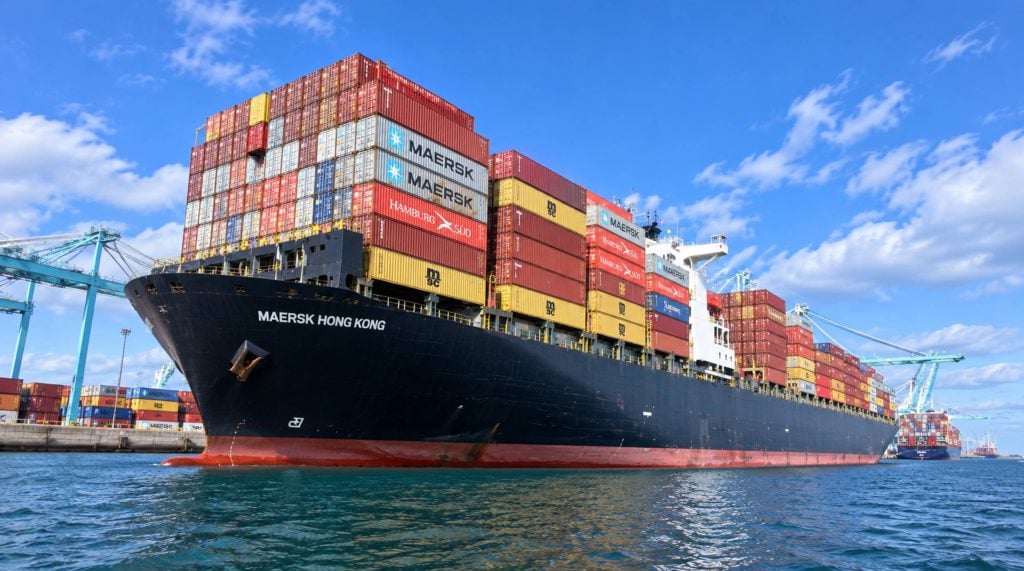
Almost three years after the Galaxy Leader was seized in the Red Sea on November 19, 2023, the corridor that once carried roughly 12-15% of global trade is still not back to normal. Attacks eased for a stretch after the October 2025 Gaza ceasefire, and a handful of carriers even tested a return to the Suez Canal in early 2026. Then, in June 2026, the Houthis declared a renewed ban on Israeli-linked shipping as the Iran-Israel conflict reignited, and the brief optimism evaporated almost as fast as it appeared.
For freight forwarders, importers, and anyone booking China-origin cargo, the practical question was never really whether the Red Sea would reopen someday. It is whether the cost structure that built up over the last three years — the Cape of Good Hope detour, the war-risk premiums, the tighter vessel capacity — is going to unwind any time soon. Based on where things stand in September 2026, the honest answer is: not yet, and probably not for a while. This article breaks down what is actually happening on the water, what it is doing to rates and transit times lane by lane, and what shippers can do about it right now.
A Crisis That Refuses to End
The Red Sea crisis began as a series of missile, drone, and naval mine attacks by Houthi forces based in Yemen, initially framed as retaliation against vessels linked to Israel following the outbreak of the Gaza war. Within months, more than 100 commercial vessels had been targeted, and by early 2024 the vast majority of container lines operating between Asia and Europe had already pulled their ships out of the Bab el-Mandeb strait and the Suez Canal entirely, rerouting instead around the Cape of Good Hope.
Military intervention did little to change the calculus. Operation Prosperity Guardian, launched by the United States and United Kingdom in February 2024, struck Houthi positions repeatedly, yet attacks continued through 2024 and into 2025. A genuine lull followed the October 2025 Gaza ceasefire, and for a few months it looked like the industry might finally get its shortcut back. That window closed in June 2026, when renewed fighting between Israel and Iran gave the Houthis a fresh justification to reinstate their shipping ban.
The numbers tell the story better than any single headline. The Suez Canal’s share of global maritime traffic has slipped from around 12% before the crisis to under 9% today, and container-ship transits through the canal fell by roughly 90% at the height of the diversions in 2024. That share has not meaningfully recovered since, because the underlying security risk simply has not gone away — it has only become intermittent rather than constant.
Why the “Suez Is Reopening” Headlines Keep Missing the Point
Every few months, a new round of stories suggests the Red Sea is about to reopen for business. In January 2026, Egypt’s Sokhna Port near the canal’s southern entrance opened a new semi-automated container terminal, and a small number of carriers, including a Maersk service linking India, the Middle East, and the United States, resumed limited transits. Coverage framed this as the beginning of the end of the crisis. It was not.
Underwriters have not softened their view of the region at all. Insurers still classify Red Sea transits as high-risk, and war-risk premiums for vessels sailing through the corridor climbed to roughly 1.0% of hull value by the third quarter of 2026 — enough to add hundreds of thousands of dollars to a single voyage on a large container ship. That single line item alone is often enough to erase whatever fuel and time savings a Suez transit would otherwise offer.
The result is a two-track market rather than a real reopening. A minority of carriers make occasional Suez runs on specific lanes when the security picture looks temporarily favorable, while the majority — by most industry estimates, more than 70% of East-West container capacity — continues to run Cape of Good Hope routing as the default, unconditional plan. Most analysts now expect this pattern to persist through at least 2027, and carriers have already reset their fleet deployment plans, newbuild orders, and network designs around a Red Sea that stays largely closed for the foreseeable future.
The Real Cost of Going the Long Way Around
Rerouting around the southern tip of Africa is not just a scheduling inconvenience. It adds roughly 3,500 nautical miles to a typical Asia-Europe voyage and absorbs an estimated 2.5 million TEU of global container capacity simply because ships are at sea longer and cannot be reused as quickly on the next rotation. That capacity absorption is one of the main reasons freight rates have stayed structurally elevated even as demand growth has cooled.
Extra Miles, Extra Days
The added transit time varies by trade lane, but it is significant everywhere the Cape detour applies. The table below summarizes the approximate impact carriers and forwarders are currently working with.
| Jalur Perdagangan | Route in Use | Added Transit Time | Total Transit Khas |
| Asia → North Europe | Tanjung Harapan | +10 hingga 14 hari | 40 untuk 50 hari |
| Asia → Mediterania | Tanjung Harapan | +8 hingga 12 hari | 35 untuk 45 hari |
| Asia → US East Coast | Cape / Suez mix | +8 hingga 12 hari | 32 untuk 40 hari |
| Asia → US West Coast | Trans-Pacific (unaffected) | 0 untuk 2 hari | 14 untuk 18 hari |
Notice that the US West Coast lane is barely touched, since it never relies on the Suez Canal in the first place. That is precisely why so many China-based shippers have shifted volume toward West Coast gateways and inland rail over the past two years — it is one of the few ways to sidestep the Red Sea premium entirely rather than simply absorbing it.
Extra Fuel, Extra Fees
Beyond time, the Cape route burns considerably more fuel. Industry estimates put the additional bunker cost of a single Cape of Good Hope diversion at around 1.6 million US dollars per large container vessel compared with a Suez transit, even after accounting for the canal tolls that are avoided. Egypt has felt this acutely: Suez Canal Authority revenue has fallen from roughly 10.25 billion US dollars annually before the crisis to under 4 billion US dollars, a drop that has, in turn, pushed Egypt to raise other port fees and charges to offset the shortfall — costs that eventually work their way back into shippers’ invoices on the lanes that still transit the canal.
What It Is Doing to Freight Rates, Lane by Lane
Ocean freight rates in 2026 are actually trending downward overall, as new vessel deliveries have added capacity faster than demand has grown. Average spot rates from China to the US West Coast and East Coast, for example, fell by roughly 35% and 32% respectively in the first part of the year. But that broader softening masks a stubborn, persistent premium on the lanes most exposed to the Red Sea diversion — the gap between what those lanes would cost under normal Suez routing and what they actually cost today has not closed nearly as fast.
| Jalur | Approx. Rate Premium vs. Pre-Crisis | Typical 40ft Container Rate (2026) |
| China → North Europe / Mediterranean | 25% to 40% above baseline | Contract rates broadly in the low-to-mid $2,000s per FEU, spot rates higher and more volatile |
| Tiongkok → Pantai Timur AS | 15% to 25% above baseline | $ 4,200 sampai $ 7,200 |
| Tiongkok → Pantai Barat AS | 5% to 10% above baseline | $ 3,000 sampai $ 5,500 |
Long-term contract rates tell a similar story. Far East-to-Mediterranean contracts signed in early 2026 came in about 25% lower than at the end of 2025, reflecting the general downward drift in the market, yet they still sit well above 2023 pre-crisis levels once the Red Sea risk premium is stripped back out. In other words, shippers are getting some relief from the broader rate cycle, but the Red Sea itself has not given anything back.
LCL cargo faces its own version of this squeeze. Consolidated freight from China to the US currently runs about 40 to 90 US dollars per cubic meter, plus CFS handling fees of roughly 8 to 15 US dollars per CBM, and the general rule of thumb still holds: FCL becomes the more economical option once a shipment exceeds around 14 to 15 CBM. Below that threshold, LCL remains cheaper on paper, though consolidation schedules typically add another two to five days on top of an already-longer voyage.
Beyond the Freight Bill: Insurance, Congestion, and Reliability
The direct rate premium is only part of the picture. War-risk insurance for any vessel that does choose the Suez route has become close to mandatory rather than optional, and the roughly 1.0% hull-value premium mentioned earlier is layered on top of standard marine asuransi kargo, not a replacement for it. Forwarders quoting door-to-door pricing on Europe-bound freight now need to build that line item into their cost models as a matter of course, not as an exception.
European port congestion has also worsened as a side effect of the longer, less predictable Cape routing. Vessels arriving in bunched groups after an extended voyage put pressure on terminal capacity, which raises the real risk of demurrage and detention charges for cargo that does not clear quickly. Shippers who used to treat those charges as a rare exception are increasingly building buffer days into their landed-cost planning as a default assumption.
Schedule reliability has taken a hit too. With roughly 2.5 million TEU of capacity effectively locked up in the longer Cape rotations, carriers have less slack to absorb delays, port strikes, or weather disruptions without triggering blank sailings. For any importer running a tight replenishment cycle, that reduced reliability is arguably a bigger operational headache than the rate premium itself.
How This Plays Out for a Typical Shipment
Take a standard 40ft container of general merchandise moving from a factory in southern China to a distribution center on the US East Coast. Under the routing in use through most of 2026, that shipment absorbs roughly 8 to 12 extra transit days compared with a pre-crisis Suez routing, plus a rate premium in the 15% to 25% range once war-risk insurance, fuel surcharges, and capacity-driven pricing are all factored in. On a 40ft box quoted anywhere from about 4,200 to 7,200 US dollars, that premium alone can easily represent several hundred to well over a thousand dollars of avoidable cost per container.
Smaller shippers moving LCL volumes feel a slightly different version of the same pressure — less exposure to per-container rate swings, but more sensitivity to consolidation delays stacking on top of an already extended ocean leg. And because peak season in China-US trade typically runs from August through October, ahead of the year-end retail push, any shipper planning to move cargo during that window in 2026 or 2027 should expect rates 40% to 80% above the Q1 low, compounding directly with whatever Red Sea premium is already baked into the base rate.
Practical Moves for Forwarders and Importers Right Now
None of this means shippers are powerless. The forwarders who are managing the Red Sea disruption best in 2026 are the ones treating it as a planning input rather than a surprise, locking in contract rates where volume allows rather than chasing volatile spot pricing, and keeping a live comparison between Cape and Suez options for any lane where a carrier still offers both. Building a few extra days of buffer inventory into replenishment plans, rather than assuming the pre-crisis 26-day Hong Kong-to-Europe transit will ever fully return, has become standard practice rather than an overcautious hedge.
This is exactly the kind of environment where a forwarder with deep, specialized experience on the China-US corridor earns its keep. Topway Shipping, headquartered in Shenzhen since 2010, has spent more than 15 years focused specifically on China-US international logistics and customs clearance, and that lane-specific depth matters when transit times and surcharges are moving as often as they have been in 2026. Topway’s service covers the full chain a shipper actually needs during a period like this — first-leg pickup and haulage in China, flexible full-container-load and less-than-container-load ocean freight to major ports worldwide, overseas pergudangan to absorb schedule variability, customs clearance on both ends, and last-mile delivery into the US market.
For shippers trying to decide between locking in FCL space early or holding out for LCL consolidation, or trying to weigh whether a given shipment is worth the extra premium of a faster but riskier routing, having a forwarder that can lay out real transit-time and cost trade-offs — rather than a single quoted number — is often the difference between a smooth peak season and an expensive one.
There is also real value in a forwarder that can move quickly when conditions shift. Because the Red Sea situation can change with very little warning, as it did in June 2026, shippers benefit from a partner who is actively tracking carrier announcements, adjusting booking recommendations, and flagging when a specific lane briefly becomes cheaper or riskier than usual, rather than one who simply passes along whatever rate a carrier happens to publish that week.
It is also worth putting a number on what this means for a mid-sized importer moving, say, 200 containers a year on an Asia-Europe or Asia-US East Coast lane. Even a conservative 15% rate premium, applied across that volume at an average of 5,000 US dollars per box, works out to roughly 150,000 US dollars a year in costs that would simply not exist if the Red Sea were operating normally. Layer in the extra warehousing days needed to buffer against longer, less predictable transit times, and the true annual cost of the crisis for a business that size can easily run well into six figures once inventory carrying costs are included.
Jalan Menuju Tahun 2027 dan Selanjutnya
Whether the Red Sea genuinely reopens depends almost entirely on factors well outside the shipping industry’s control — the trajectory of the Gaza situation, the broader Iran-Israel conflict, and whatever calculus the Houthis are making about their own leverage in that wider regional standoff. None of that is something a freight forwarder or an importer can influence, which is exactly why so much of the current strategic advice in the industry focuses on designing around the uncertainty rather than betting on a resolution date.
Carriers have already made long-term bets that reflect this reality. Fleet deployment plans, newbuild orders, and network redesigns have been reset around an assumption of continued Cape of Good Hope routing running through at least 2027, and interest in alternative corridors — expanded Panama Canal capacity, Arctic shipping routes, and rail options such as the Trans-Siberian corridor — has grown correspondingly, even though none of them can fully substitute for Suez Canal volume in the near term.
For now, the most realistic planning assumption is that the Red Sea premium is not a temporary surcharge but a structural feature of Asia-Europe and Asia-US East Coast trade for at least another year, and quite possibly longer. Shippers who build that assumption into their budgets, routing decisions, and forwarder relationships today will be far better positioned than those still waiting for a full return to the pre-2023 map.
Kesimpulan
Three years on, the Red Sea crisis has proven far more durable than most in the industry initially expected, and the events of 2026 — a brief thaw after the Gaza ceasefire, followed by a renewed Houthi ban once the Iran-Israel conflict reignited — are a reminder of just how conditional any talk of a reopening really is. The costs this has created are not going away quietly either: added transit days, elevated war-risk insurance, tighter vessel capacity, and a freight rate premium that has barely narrowed even as the broader market has softened.
The practical takeaway for anyone moving cargo out of China is simple: plan around the Cape of Good Hope as the default, not the exception, and treat any Suez-route savings as a bonus rather than a baseline. Working with a forwarder that understands both sides of this trade-off, and that has the network to actually execute on it, is one of the more reliable ways to keep that risk from turning into unplanned cost. That is the role Topway Shipping has built its China-US logistics business around for over a decade, and it remains just as relevant today as it was when the Red Sea crisis first began.
Pertanyaan Umum Demo Slot
Q: Is the Red Sea Canal safe to use for container shipping in September 2026?
A: Not reliably. A minority of carriers still make occasional Suez transits on specific lanes, but insurers continue to treat the region as high-risk, and the Houthis reinstated a shipping ban in June 2026 after the Iran-Israel conflict reignited. Most carriers still default to the Cape of Good Hope route.
Q: How much longer does the Cape of Good Hope route take compared with Suez?
A: Typically 8 to 14 extra days, depending on the specific origin and destination ports, with Asia-to-North-Europe voyages generally seeing the largest increase and Asia-to-US-West-Coast shipments essentially unaffected.
Q: Why haven’t freight rates dropped back to pre-crisis levels even though overall shipping rates are falling in 2026?
A: Broader rates are falling mainly because of new vessel deliveries adding capacity. The Red Sea diversion, however, still absorbs an estimated 2.5 million TEU of capacity through longer Cape of Good Hope voyages, which keeps a structural premium in place on the affected lanes even as the general market softens.
Q: Should I choose FCL or LCL given current Red Sea-related delays?
A: As a general rule, FCL becomes more cost-effective once a shipment exceeds roughly 14 to 15 CBM, since LCL consolidation adds its own two-to-five-day delay on top of an already longer ocean transit. Below that volume threshold, LCL is usually still the more economical choice.
Q: How can Topway Shipping help with China-US shipments during this period?
A: Topway Shipping offers full-chain support for China-US logistics, including first-leg transportation, flexible FCL and LCL ocean freight, overseas warehousing, customs clearance, and last-mile delivery, drawing on a founding team with more than 15 years of international logistics and customs experience focused specifically on the China-US trade lane.