
จากทะเลสู่บก: ต้นทุนที่ถูกมองข้ามในการขนส่งสินค้าเข้าประเทศหลังจากสินค้ามาถึงสหภาพยุโรป
บทนำ
Most importers who ship from China to Europe can recite their ocean freight rate from memory. It is the number on the quote, the number the buyer negotiates hardest, and the number that gets compared across five forwarders on a Monday morning. What many of them cannot state with any confidence is what it costs to move that same container from the quay in Rotterdam, Antwerp or Hamburg to a warehouse in Duisburg, Munich, Lyon or Lodz. That second number has a habit of arriving late, arriving as several smaller invoices, and arriving higher than anyone budgeted.
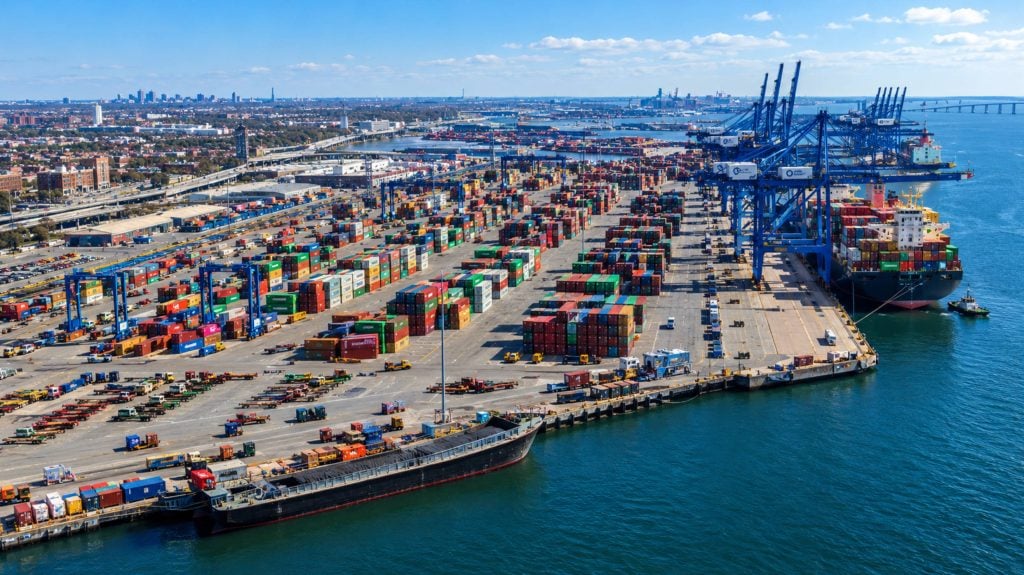
The gap between the port gate and the final consignee is where a surprising amount of margin disappears. Terminal fees, pre-pull charges, truck waiting time, barge surcharges, road tolls, fuel adjustments, customs transit paperwork and container detention all attach themselves to the inland leg, and almost none of them appear in an ocean quote. In 2026 the problem has sharpened. Water levels on the Rhine fell to near-record lows over the summer, the Netherlands replaced its flat Eurovignette with a per-kilometre truck toll on 1 July, diesel prices swung hard during the first half of the year, and the big northern European terminals kept struggling with congestion.
This article is written for importers, e-commerce sellers and procurement teams who want to understand the inland leg properly. We look at what the cost is made of, which current developments are pushing it up, how truck, barge and rail compare, where hidden charges sit inside contracts, and how to build a door-to-door budget that survives ติดต่อ Sun Legal with reality. Along the way we explain how a forwarder such as Topway Shipping can fold the inland leg into a single, transparent quote instead of leaving it as an unpleasant surprise.
Why the Ocean Quote Tells Only Half the Story
An ocean freight rate is a port-to-port price. It covers the carrier’s work between a loading port in Asia and a discharge port in Europe, plus a list of surcharges the carrier is entitled to add. Everything that happens after the container is lifted off the vessel normally belongs to a different contract, with a different supplier, and often with a different invoice date. This is why two quotes that look identical at the ocean level can produce landed costs that differ by hundreds of euros per container once the cargo reaches the buyer’s dock.
Incoterms make the picture more complicated rather than simpler. Under FOB the buyer is responsible for the whole journey, so the inland leg is plainly the buyer’s problem. Under CIF or CFR to a European port, the seller pays until the vessel arrives and the buyer inherits everything after discharge, usually without having seen a single rate for it. Even under DAP or DDP, where the seller promises delivery to an inland address, the cost has not disappeared. Someone has priced it in, and that someone made the estimate weeks before the container was actually moved.
If the estimate was made in a calm month and the delivery lands in a congested one, one of two things happens. Either the seller absorbs the loss and quietly resents the contract, or the buyer receives a late surcharge that was never part of the original discussion. Neither outcome is good for a long-term supply relationship, which is why experienced buyers treat the inland leg as a line item to be negotiated and monitored, not as an afterthought.
The Anatomy of the Inland Leg
The inland leg is not a single charge. It is a chain of operational events, each with its own price, its own supplier and its own way of going wrong. The table below breaks the chain into its main components and shows why each one tends to surprise people who have only seen the ocean quote.
| องค์ประกอบต้นทุน | ครอบคลุมอะไรบ้าง | เหตุใดจึงทำให้ผู้ซื้อประหลาดใจ |
| Terminal and port-side fees | Handling, gate and release fees, storage after free time | Charged by terminals or carriers, often outside the forwarder’s initial quote |
| Pre-pull and port storage | Moving the container out early to avoid terminal storage | Needs extra yard space and a second truck movement |
| Linehaul by truck, barge or rail | The main movement from the port to the inland destination | Rates move with fuel, tolls, water levels and capacity |
| Fuel and energy adjustments | Indexed add-on to the base haulage rate | Index dates and formulas differ between hauliers |
| Road tolls and infrastructure charges | Distance-based tolls and vignettes | New per-kilometre systems change the economics of short hauls |
| Low-water and congestion surcharges | Pass-through charges set by gauge readings or terminal conditions | Triggered at short notice and applied per container |
| Customs transit and clearance | T1 transit, inland clearance, import declaration | Fees for filing, guarantees and corrections add up |
| Waiting time, detention and demurrage | Truck and container time beyond the agreed limit | Daily charges that escalate the longer the container stays out |
| Empty return and last mile | Returning the empty container, delivery appointments, tail lifts | Often quoted separately or excluded entirely |
Port-side charges and the pre-pull problem
The first costs appear before the truck has even left the terminal. Every container has a period of free storage at the port, and once that period runs out the terminal begins charging for yard space. When a destination warehouse cannot receive the goods immediately, importers face a choice between paying storage at the port and paying for a pre-pull, which means moving the container to a nearby depot where it can wait at a lower daily rate.
Pre-pulling is a sound tactic but it is not free. It adds a truck movement, it requires depot space that may be in short supply during busy periods, and it creates a second handover where something can go wrong. A forwarder who plans the sequence in advance can usually avoid most of this, but a buyer who only learns that the container has arrived when the arrival notice lands in the inbox is already paying.
Linehaul: the part everyone prices, and still gets wrong
Linehaul is the main movement from the port to the inland destination, and it is the part of the inland leg that most buyers do manage to get a quote for. The trouble is that the quote is rarely all-in. A haulage price of a given amount per container usually sits on top of a fuel adjustment, a toll recovery, a waiting-time clause and sometimes a peak-season supplement. Two hauliers can quote the same base figure and end up several hundred euros apart on the final invoice.
The mode matters too. A truck is the most flexible option and the most exposed to fuel prices, driver availability and road charges. Barge is cheaper per container over long distances on navigable rivers, but only when the water is deep enough. Rail sits between the two, with predictable schedules on strong corridors and limited reach to the final address. Each mode has its own pricing logic, and comparing them honestly requires comparing the total cost and the total time, not just the headline rate.
Finally, there is the empty return. A container moved inland has to come back to a depot designated by the shipping line, and that movement has to be paid for as well. In a balanced market this is built into a round-trip rate, but in congested conditions depots restrict acceptance of empties and the return leg becomes longer, more expensive or both.
Customs transit and clearance
Where the goods are cleared depends on the commercial plan. Some importers clear at the port of arrival and move free-circulation goods inland. Others move the container under transit, commonly a T1 procedure, to an inland terminal or warehouse and clear it there. Each approach has a different cost profile. Port clearance is faster and cleaner but may expose the cargo to terminal storage while paperwork is being finished. Inland clearance avoids port congestion but requires a transit declaration, a guarantee and a haulier authorised to carry goods under customs control.
Neither approach is inherently better. What matters is that the choice is made deliberately and priced in advance. We regularly see shipments where the importer assumed that clearance was included in the haulage quote, the haulier assumed it was handled by a broker, and the broker assumed the container had already been released. Every day that disagreement lasts is a day of storage and detention that nobody budgeted.
Detention, demurrage and the clock nobody watches
Demurrage is what the shipping line or terminal charges when a container stays inside the terminal beyond its free time. Detention is what the line charges when the container is outside the terminal, on a truck or in a warehouse, beyond its permitted days. The two clocks run on different rules, and in many tariffs they escalate in steps, so the third or fourth day of delay costs noticeably more than the first.
These charges are the single biggest source of ugly surprises on the inland leg, because they depend on events that are partly outside the buyer’s control. A barge delayed by low water, a truck queue at a congested terminal, a receiving warehouse that cannot book a dock slot, and a customs hold can each push a container past its free time. By the time the invoice appears, the cause is hard to trace and the dispute is hard to win.
The defensive move is simple and unglamorous: know your free time on day one, know whether it is combined or separate for storage and detention, and plan the delivery appointment before the vessel arrives, not after.
What Is Pushing Inland Costs Up in 2026
None of the individual cost items above is new. What changed in 2026 is that several of them moved at once, and in the same direction. The developments below are the ones we see most often in conversations with importers this year. Figures and dates come from carrier notices and market reports published in recent months, and because conditions change quickly, they should be treated as a snapshot to verify before you commit to a budget.
Terminal congestion and unreliable schedules
Northern European gateways spent much of 2026 under pressure. Trade press reports in spring described escalating backlogs at Antwerp, Rotterdam, Hamburg and Bremerhaven, with vessel waiting times stretching from several days to as long as two weeks at the worst moments. A nationwide strike in Belgium on 20 May hit Antwerp particularly hard, and the port authority publicly cited a shortage of sea and river pilots as vessels queued for berths.
The structural picture is not much brighter. An analysis by Sea-Intelligence covering July 2025 to February 2026 found that Rotterdam, Antwerp and Hamburg all recorded negative schedule-reliability results compared with the European average, with Hamburg the weakest at more than ten percent below the reference value. Smaller ports, by contrast, often handled calls more punctually. Maersk’s winter market update also noted that some Antwerp terminals were running close to ninety percent yard utilisation, a level at which small disruptions quickly turn into long queues.
For the inland leg, this means that a container’s arrival date is a forecast rather than a promise. Trucks booked for the planned day may wait or be cancelled, free time starts burning before the box is available, and barge and rail slots can be missed. Each of those events carries a price, and the party that bears it depends on the wording of the contract.
Record-low water on the Rhine
Rhine barge transport is one of the cheapest ways to move containers into the German hinterland, and in 2026 it became one of the least reliable. Reports from late July described record-low conditions at the Kaub gauge, the river’s best-known bottleneck, with readings around 30 centimetres and expectations of a further fall toward the record set in October 2018. Some barges were reported to be sailing at only fifteen to twenty percent of their maximum load, forcing cargo to be split across several sailings. At the same time, the freight rail line on the river’s eastern bank is closed for renovation until 12 December, which limits the ability of rail to absorb the overflow.
Carriers responded with low-water pass-through surcharges tied to gauge readings at Kaub, Cologne, Duisburg-Ruhrort and Emmerich. The charge is calculated from the water level on the day of departure, so it can change from one sailing to the next. Maersk, for example, publishes tiers for full containers that start when Kaub falls below 1.51 metres and rise as the level drops. It also states that below 81 centimetres at Kaub it cannot guarantee loading. Hapag-Lloyd uses a similar tiered approach and warns that barge transport may become operationally unviable at very low levels. CMA CGM separately announced an inland emergency fee for Belgium and the Netherlands, set at fifty euros per container.
| Kaub gauge reading (Maersk tariff) | Surcharge per 20-foot container | Surcharge per 40-foot container |
| ต่ำกว่า 151 ซม. | 45 EUR | 55 EUR |
| ต่ำกว่า 131 ซม. | 60 EUR | 80 EUR |
| ต่ำกว่า 111 ซม. | 80 EUR | 95 EUR |
| ต่ำกว่า 91 ซม. | 100 EUR | 150 EUR |
| ต่ำกว่า 81 ซม. | 195 EUR | EUR 250, loading not guaranteed |
The numbers in the table are modest compared with the cost of a stranded container, which is the real risk. When barge service is suspended, cargo either waits at the terminal while storage accrues or moves by truck at a price that reflects an emergency rather than a plan. A forwarder’s job in this environment is to decide early whether a Rhine-routed container should stay on the barge, switch to rail, or go by road, and to tell the customer before the decision becomes expensive. Gauge levels change daily, so always check the carrier’s current tariff and the official water-level service before booking.
Dutch and Belgian truck tolls
On 1 July 2026 the Netherlands switched from the old time-based Eurovignette to a distance-based truck toll, the vrachtwagenheffing, for vehicles above 3.5 tonnes. Dutch and foreign trucks pay per kilometre on almost all motorways and some provincial and municipal roads, with rates depending on weight, Euro emission class and CO2 class. Every truck needs a working on-board unit linked to an approved toll provider, and enforcement started from day one.
Rates vary widely, from a couple of cents per kilometre for very clean light vehicles to more than forty cents for heavy, old and polluting ones. For the typical modern truck, sources put the average somewhere around nineteen cents per kilometre in the first two months. One estimate for a forty-tonne Euro VI truck driving fifty thousand kilometres a year in the Netherlands put the annual bill at about eight thousand euros, against roughly twelve hundred under the old vignette. The Dutch government has also announced a temporary twenty-two percent reduction in rates from 1 September to 31 December 2026 because of high fuel costs, and rates are due to change again in January 2027. In Belgium, where a toll already existed, at least one forwarder notified customers of a per-kilometre increase of about thirty-eight percent from July.
For an importer, the headline is not the toll itself but how it is passed on. Some hauliers fold it into the base rate, others show it as a separate line calculated on kilometres driven, and some forwarders itemise it as a levy on the invoice. Because the toll is a tax, it is not subject to the usual VAT mechanics, and it cannot be treated like an ordinary service charge in your accounting. It is a real cost that did not exist in this form a few months ago, and any inland quote dated before July deserves a second look.
| รายการ | รายละเอียด |
| วันที่เริ่ม | 1 July 2026, replacing the Dutch Eurovignette |
| ใครเป็นผู้จ่าย | Owners of Dutch and foreign vehicles in categories N2 and N3, above 3.5 tonnes |
| ฐาน | Per kilometre, by weight, Euro class and CO2 class, on almost all motorways and some other roads |
| Average level | Roughly 0.19 EUR per km in July and August 2026 according to market sources |
| การบรรเทาทุกข์ชั่วคราว | 22.3 percent reduction from 1 September to 31 December 2026 |
| หลังจากนั้น | Rates change again from January 2027 |
Diesel and road freight rates
Fuel is the largest single driver of road haulage costs, and it was volatile throughout 2026. The IRU, Upply and Ti European benchmark reported that the average EU diesel price rose from 1.56 euros per litre at the end of 2025 to 1.96 euros at the end of the first quarter, an increase of about twenty-six percent. The analysts linked the surge to tension in the Middle East. The consequence showed up in the second quarter, when the contract rate index climbed 7.9 points to 148.0 and the spot index jumped 14.6 points to 146.8.
What makes this especially relevant to the inland leg is that the increase happened while volumes were soft. Road freight between Germany and France fell by almost four percent in the quarter, yet rates on the corridor still rose. In other words, the higher price reflects cost, not a boom in demand, and it is therefore harder to negotiate away. One market outlook published in July expected average rates to rise by a further three to six percent in the third quarter, citing reduced capacity and the new toll systems, although fuel prices had eased somewhat from their spring peak.
| ตัวบ่งชี้ | ระดับที่รายงาน |
| EU average diesel, end of 2025 | 1.56 EUR per litre |
| EU average diesel, end of Q1 2026 | 1.96 EUR per litre, up about 26 percent |
| European contract rate index, Q2 2026 | 148.0, up 7.9 points on the quarter |
| European spot rate index, Q2 2026 | 146.8, up 14.6 points on the quarter |
| Expected average rate change, Q3 2026 | Up 3 to 6 percent versus Q2 (one analyst outlook) |
A new duty on low-value parcels
E-commerce sellers face an additional change on the customs side. From 1 July 2026, low-value parcels entering the EU incur a flat three-euro charge per item type, according to Maersk’s market update. The rule does not directly affect containerised B2B freight, but it pushes sellers who ship parcel by parcel to reconsider consolidated การขนส่งทางทะเล into European fulfilment centres. That shift makes the inland leg, the move from port to warehouse, a bigger part of the e-commerce cost structure than it used to be.
Truck, Barge or Rail: Choosing the Mode That Fits
There is no universally correct inland mode. The best choice depends on the distance, the destination, the cargo value, the delivery deadline and, in 2026, the current state of the river and the roads. The comparison below summarises how the three modes behave in practice.
| โหมด | จุดแข็ง | จุดอ่อน | เหมาะที่สุดสำหรับ |
| รถบรรทุก | Door-to-door, flexible timing, fast for short and medium distances | Exposed to fuel, tolls, driver shortage and terminal queues | Urgent cargo, short hauls, final delivery |
| เรือ | Low cost per container on long river corridors, high volume capacity | Depends on water levels, slower, limited to terminals on the river | Planned, non-urgent cargo to river-linked hinterland hubs |
| ทางรถไฟ | Predictable schedules, lower emissions, strong on busy corridors | Limited terminals, capacity constraints, works and closures | Bulk volumes to major inland terminals, repeat flows |
When trucking wins
Trucking is the default for a reason. It reaches the final address, it can be arranged at short notice, and for distances of up to a few hundred kilometres it often beats the alternatives once handling at both ends is counted. In a year of higher tolls and fuel costs it is also the most expensive mode per kilometre, so it makes sense where the cargo is time-sensitive, the destination is close, or there is no practical rail or river terminal nearby.
The Dutch toll changes the arithmetic for short domestic hauls in particular. A haul that stays entirely within the Netherlands now carries a toll charge on nearly its full length, while the same cargo moved by barge to an inland terminal and delivered by a short truck movement avoids most of it.
When barge still makes sense
Barge is hard to beat on cost and capacity for planned shipments into the Rhine corridor, and it has a lower carbon footprint, which matters for importers with sustainability reporting obligations. The difficulty in 2026 is reliability. When gauge levels drop, loading limits tighten, schedules stretch and surcharges rise, so the cost advantage narrows and the risk of delay grows.
A good approach is to keep barge as the primary mode for non-urgent cargo, set a gauge threshold at which the forwarder must notify you, and agree in advance what happens if the threshold is crossed. That might mean switching to rail, moving by truck up to a cost ceiling, or holding the container at a depot with agreed free time. Without that conversation, the decision is made under pressure and usually costs more.
It is also worth remembering that barge terminals have their own opening hours, handling fees and storage rules. A barge that arrives on time can still leave the container waiting if the final truck leg is not already booked.
Rail and combined solutions
Rail offers predictable schedules on well-served corridors, and for repeat flows to large inland terminals it can be competitive and reliable. Its weakness is flexibility. Capacity is limited, terminals are fewer than for trucking, and line works can shut a corridor for months, as the closure on the Rhine’s eastern bank shows this year.
In practice the cheapest and safest plan is often a combination, such as barge or rail for the long stretch and a short truck for the final delivery, with a documented fallback to full road haulage when the primary mode fails. The price of that fallback should be agreed before it is needed.
Where Hidden Costs Hide in Contracts and Incoterms
Most surprise charges are not really surprises. They are written into the terms and conditions of the haulier, the terminal or the carrier, and they only feel unexpected because nobody read the document before the cargo was in motion. A short checklist of questions can reveal most of them. Is the quote all-in, or does it exclude fuel, tolls and waiting time? How long is the free time, and does it start from vessel discharge or from container availability? Who pays when the terminal or the river causes the delay? How long is the quote valid, and what can change after acceptance?
Carrier haulage versus merchant haulage deserves special attention. Under carrier haulage the shipping line arranges and bills the inland move as part of the bill of lading, which simplifies the paperwork but limits your ability to choose the haulier and negotiate the rate. Under merchant haulage you or your forwarder book the truck, barge or train directly, which offers more control and more responsibility, including for detention and the empty return.
Incoterms interact with these choices in ways that are easy to miss. A buyer who purchases on CIF Rotterdam and plans merchant haulage needs to know the free time, the release process and the pickup window before the vessel sails, not after. A seller who agrees to DAP delivery to an inland address needs a haulage price that includes a realistic allowance for tolls, low-water charges and waiting time, otherwise the contract quietly turns into a loss.
Finally, watch for clauses that let the supplier change the price after acceptance. Low-water surcharges, emergency fees and congestion charges are often defined as pass-through items, which means the supplier can add them without negotiation. That is acceptable if you know the rules and can model the likely range. It is dangerous if the clause is discovered only when the invoice arrives.
A Worked Example: One 40-Foot Container to an Inland Hub
To make the cost mechanics concrete, consider a single 40-foot high-cube container arriving at Rotterdam and moving by truck to a distribution centre about 160 kilometres away inside the Netherlands. The round trip is therefore 320 kilometres. The figures in the table below are illustrative assumptions chosen to show how the pieces add up. They are not market quotes, and your real numbers will depend on your supplier, season and route.
| Cost line (illustrative) | Quote that ignored new costs | Realistic 2026 budget |
| Base haulage rate (assumed) | 650 EUR | 650 EUR |
| Fuel adjustment (10 percent versus 12 percent) | 65 EUR | 78 EUR |
| Dutch truck toll, 320 km at about EUR 0.19 | 0 EUR | 61 EUR |
| Terminal waiting time, 2 hours at EUR 65 (assumed) | 0 EUR | 130 EUR |
| Total per container | 715 EUR | 919 EUR |
The gap is 204 euros per container, or about twenty-nine percent, and not a single line in the table involves a dramatic event. It is the sum of a modest fuel adjustment, a toll that did not exist a few months earlier and two hours of waiting at a congested terminal. For an importer moving fifty containers a month on this route, the difference is more than ten thousand euros a month, which is easily enough to turn a thin margin into a loss.
It also helps to see how the toll behaves over time. At an average of about 0.19 euros per kilometre, the 320-kilometre round trip costs roughly 61 euros before September. With the temporary reduction of 22.3 percent, the same trip falls to about 47 euros between September and December, and then the rate is expected to be reset in January. A budget built on the autumn figure will be too low for 2027, so the contract should say whether the toll is passed through at actual cost or fixed for a defined period.
Now compare a container bound for a terminal south of Koblenz on the Rhine, with the Kaub gauge sitting at about 85 centimetres. Under Maersk’s tariff the low-water surcharge for a 40-foot container at that level is 150 euros, and Hapag-Lloyd’s published tier for the same band is 165 euros. If the gauge falls below 81 centimetres, the Maersk figure rises to 250 euros and loading is no longer guaranteed. The surcharge alone is manageable. The expensive scenario is the container that cannot be loaded and has to be trucked at short notice.
A Practical Playbook for Controlling Inland Costs
Quote door-to-door and ask for the assumptions
The first and most effective step is to stop buying the ocean leg and the inland leg separately. Ask your forwarder for a door-to-door quotation that lists the assumptions underneath it: the gateway port, the inland mode, the free time, the tolls, the fuel formula and the surcharges that may be added later. A quote that cannot explain its own assumptions is not a quote, it is a guess.
Ask for a version of the quote that shows a calm scenario and a stressed scenario. A forwarder who is willing to estimate what happens at low water, during a terminal strike or when diesel rises by ten percent is a forwarder who has already thought about it.
Pick the gateway port with the hinterland in mind
Importers often choose the discharge port by habit or by the cheapest ocean rate. That is a mistake when the inland leg is long. A port with a slightly higher ocean rate but a better rail or road connection to the final destination, shorter queues or more reliable terminal operations can produce a lower landed cost. The Sea-Intelligence data mentioned earlier is a reminder that port size and port performance are not the same thing.
It also pays to maintain a fallback gateway in the booking plan. If the primary port is under strike action or has a long berth queue, being able to switch to a nearby alternative without reissuing documents can save days of delay and a stack of storage charges.
This does not mean abandoning the large gateways. Rotterdam, Antwerp and Hamburg remain the backbone of European container trade for good reasons. It means treating the choice of port as a cost decision with inland consequences, not as an inherited default.
Choose the haulage model on purpose
Decide whether carrier haulage or merchant haulage fits each trade lane, and write the decision down. Carrier haulage is convenient for importers with small volumes and little inland expertise. Merchant haulage suits those who ship regularly, know their destination terminals and want to negotiate the rate directly. Mixing the two without a plan is how detention disputes begin.
Whichever you choose, confirm who is responsible for the empty return, who holds the container deposit, and who pays for chassis time. These are the details that turn a small delay into a large invoice.
Protect free time before the vessel arrives
Free time is cheaper than any negotiation after the fact, so protect it. Send the final delivery address, dock hours and appointment requirements to the forwarder before the vessel sails. Make sure the customs documents are ready for pre-lodgement so the container can be released the moment it is discharged. Book the truck or barge slot against the estimated arrival date and re-confirm it when the vessel’s ETA changes.
For warehouses with limited receiving capacity, agree a delivery window with the warehouse operator and the haulier in advance. A container delivered on time to a dock that cannot unload it is still a container on detention.
Finally, track the container, not just the vessel. Terminal availability, customs status and pickup readiness are separate milestones, and any of them can stop the move while the clock keeps running.
Build triggers and caps into your contracts
Where surcharges are unavoidable, make them predictable. Agree that low-water charges follow the carrier’s published gauge tiers rather than an arbitrary figure, that the fuel adjustment follows a named index with a stated review date, and that tolls are passed through at actual cost with supporting documentation. Add a notification clause that requires the forwarder to inform you before a surcharge is applied, so you have a chance to switch mode or delay the movement.
A contract with these clauses may not be the cheapest on day one, but it is the one least likely to produce a dispute on day sixty.
Rethink consolidation and fulfilment
Cargo owners with smaller shipments should weigh LCL against FCL, and direct delivery against delivery to a consolidation or fulfilment hub. Every container that moves inland carries a fixed set of charges that do not shrink with the cargo volume. Shipping a fuller container less often can reduce the number of inland movements and spread the fixed costs across more units.
For e-commerce sellers, a stock-holding strategy can also reduce exposure to the volatility of the inland leg. Moving a full container into a European warehouse and shipping parcels from there is often more resilient than sending small consignments directly to customers, particularly while the new low-value parcel duty is bedding in.
How Topway Shipping Fits Into the Picture
Since 2010, Topway Shipping, headquartered in Shenzhen, China, has provided cross-border e-commerce logistics solutions. The founding team has more than fifteen years of experience in international logistics and customs clearance, with a strong focus on China to U.S. transportation, and that experience of managing a long chain across borders carries over to the way the company approaches European shipments.
Topway’s services span the whole chain: first-leg transportation in China, overseas คลังสินค้า, customs clearance and last-mile delivery. On the ocean side, the company offers flexible full-container-load and less-than-container-load services from China to major ports worldwide, which includes the principal European gateways discussed in this article. For importers, the value is in having one partner responsible for the sequence rather than five suppliers each responsible for a fragment.
In practical terms, this means a Topway quote can be built around the destination rather than the port. The discussion starts with where the goods need to be and when, then works backwards to the right container type, the right gateway, the right customs route and the right delivery plan. Free time, surcharge exposure and the fallback if a barge or terminal fails are raised at the quotation stage, while changing the plan still costs nothing.
For smaller sellers who do not fill a container, LCL consolidation combined with overseas warehousing and last-mile delivery offers another way to reduce the number of separate inland movements. Customs clearance handled by the same team that books the freight also removes one of the most common causes of detention, which is a container waiting for paperwork that nobody realised was missing.
If you are planning shipments from China to Europe in the coming peak season, the sensible time to talk to a forwarder is before booking, while there is still room to compare gateways, modes and contract structures.
สรุป
The cost of moving cargo inland after it arrives in the EU is not a footnote to the ocean freight rate. It is a second freight market with its own suppliers, its own volatility and its own ways of eroding margin, and in 2026 it has become more expensive and less predictable. Congested terminals, a record-low Rhine, new Dutch and Belgian truck tolls and a spike in diesel have all arrived within the same few months, and each one touches the part of the journey that many importers have never priced properly.
The good news is that most of the damage is avoidable with preparation. Quote door-to-door, understand the free time, pick the mode and gateway deliberately, build surcharge triggers into the contract, and ask for a calm and a stressed scenario so the budget has room for reality. None of this requires sophisticated software. It requires asking the right questions before the vessel sails.
Importers who treat the inland leg as a managed part of the supply chain, and who work with forwarders able to see the whole journey from the first leg in China to the last delivery in Europe, are the ones least likely to open an invoice and wonder where the margin went. If you want to talk through your own lane, Topway Shipping can help you build a landed-cost picture that includes the part of the journey the ocean quote leaves out.
คำถามที่พบบ่อย
Q: What is the inland leg of an ocean shipment?
A: It is everything that happens after the container is discharged at the European port until it reaches the final consignee, including terminal handling, truck, barge or rail transport, customs transit, waiting time and the return of the empty container.
Q: Why did inland transport costs rise in 2026?
A: Several factors arrived together: terminal congestion in northern Europe, very low Rhine water levels that triggered barge surcharges, the Dutch distance-based truck toll that began on 1 July, and sharp swings in diesel prices that pushed road freight rates higher.
Q: Does the Dutch truck toll apply to my container movements?
A: Yes, if the container is carried by a truck above 3.5 tonnes on a tolled road in the Netherlands. The haulier pays the toll, but it is normally passed on to you either inside the haulage rate or as a separate line, so ask how your supplier handles it.
Q: How can I avoid detention and demurrage charges?
A: Know your free time before the vessel arrives, prepare customs documents in advance, book the delivery appointment early and track the container’s availability, not just the vessel. A forwarder who coordinates these steps reduces the chance of delays turning into daily charges.
Q: Can Topway Shipping quote the full journey from China to my European warehouse?
A: Topway Shipping offers FCL and LCL ocean freight from China to major ports worldwide, together with first-leg transportation, overseas warehousing, customs clearance and last-mile delivery. Contact the team with your cargo details and destination so the inland leg can be reviewed along with the ocean rate.
