
የቲኮክ ሱቅ እና የትራንስሺፕመንት እልቂት፡ ሻጮች ማረጋገጥ ያለባቸው ነገሮች
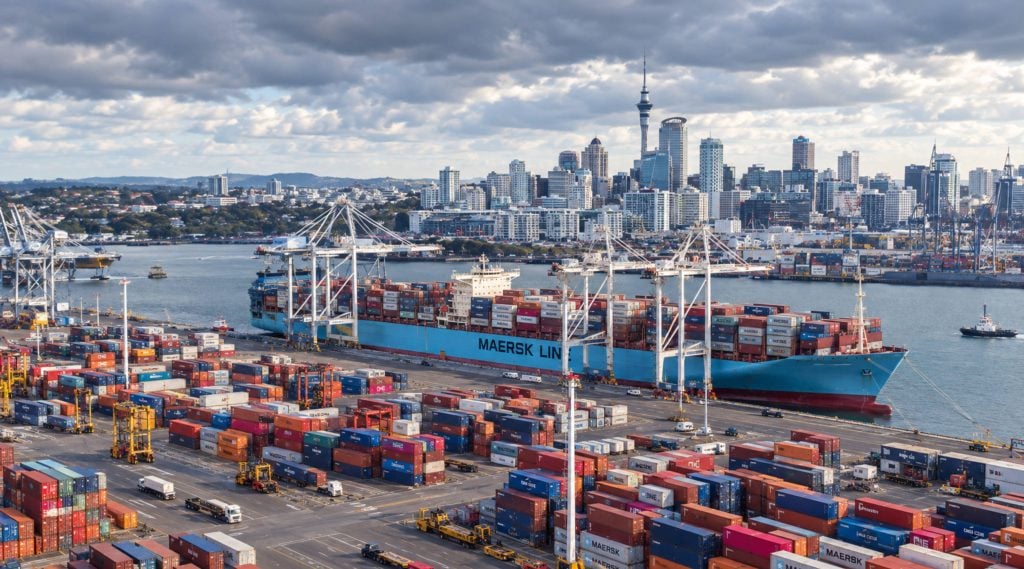
A TikTok Shop seller in Shenzhen ships a pallet of wireless earbuds to a fulfillment center in California. The listing says the brand is registered in Vietnam. The invoice says the factory is in Ho Chi Minh City. But the shipping manifest, the packaging molds, and the component sourcing all trace back to Guangdong. Six months ago, that shipment might have cleared customs without a second look. In late 2026, it is exactly the kind of file that triggers a hold, a records request, and potentially a 40 percent penalty surcharge on top of the standard tariff.
Transshipment enforcement has moved from a background compliance issue to the defining risk for cross-border e-commerce sellers this year. TikTok Shop, as one of the fastest-growing cross-border channels for Chinese factories and brands, sits directly in the path of this enforcement wave. This article breaks down what changed, what U.S. Customs and Border Protection now expects sellers to prove, and how freight forwarders fit into a compliant, defensible supply chain.
Why Transshipment Suddenly Became Washington’s Top Trade Priority
The current enforcement push did not appear overnight. It builds on more than a year of escalating tariff differentials between China and the rest of the world, which created a strong financial incentive to reroute goods through third countries. In August 2026, the White House Office of Trade and Manufacturing Policy published a report titled The Great Transshipment Scam: Rise, Scope, and Costs, naming more than 40 countries as high-risk transshipment hubs for Chinese-origin goods. Government estimates in the report put the value of rerouted goods at $60 billion to $75 billion a year, with related tariff revenue losses ranging from roughly $10 billion to well over $100 billion depending on the methodology applied.
The report defines illegal transshipment broadly: relabeling, repackaging, re-invoicing, minor processing, or false country-of-origin claims used to secure tariff treatment that would not otherwise apply. That definition matters because it goes beyond forged paperwork. Even legitimate-looking operations, such as a warehouse in Malaysia that repacks goods without materially changing them, can be classified as illegal transshipment if the underlying product did not undergo substantial transformation.
Enforcement is no longer limited to spot checks at the port. A June 2026 executive order expanded CBP’s authority, tightening importer-of-record requirements and raising penalties for noncompliance. The administration also introduced an AI-driven customs analytics system, described in press coverage as Detective Border, designed to cross-reference shipment records, HTS codes, and trade-flow patterns in real time to flag inconsistencies between declared origin and the underlying commercial reality.
The Legal Line: Substantial Transformation, Not Just a New Address
At the center of every transshipment case is a single legal test: substantial transformation. Under U.S. customs law, a product only earns a new country of origin if it undergoes manufacturing in that country significant enough to give it a new name, character, or use. Simply moving a finished product through a warehouse, changing its label, or performing light assembly does not meet that bar.
What Counts, and What Does Not
Cutting and sewing a garment from imported fabric panels, for example, is unlikely to qualify as substantial transformation on its own. Molding raw plastic pellets into a finished housing, assembling a circuit board from discrete components, or performing multi-step chemical processing generally has a much stronger claim. Customs officers and, increasingly, automated risk models look for evidence such as bills of materials, factory production records, machinery invoices, utility usage, and worker headcount at the claimed origin facility. A factory that cannot show these records for a product it claims to have manufactured is treated as a paper front rather than a real production site.
This is the standard TikTok Shop sellers now need to satisfy, whether they are shipping directly to U.S. consumers, feeding inventory into Fulfilled by TikTok warehouses, or running a cross-border program through TikTok’s Global Seller Center.
TikTok Shop’s Own Verification Layer Is Tightening in Parallel
While CBP tightens origin enforcement at the border, TikTok Shop has been running its own parallel crackdown inside the platform. In January 2026, the platform announced it would phase out independent seller shipping in favor of platform-managed logistics, a plan it partially reversed weeks later after significant seller pushback. The reversal calmed some of the operational panic, but it did not slow the platform’s verification system, which continues to flag accounts for mismatched addresses, inconsistent business representative details, and shipping-origin discrepancies.
Separately, TikTok Shop has rolled out a logistics-specific crackdown targeting fake tracking activity, including false pickup scans, missing scan records, mismatched shipping origins, and premature delivery confirmations. Sellers with repeated violations face extended payment holds and, in serious cases, store closure. The table below summarizes where platform-level scrutiny now overlaps with customs-level origin enforcement.
| ፍተሻ | What Is Reviewed | የተለመደ ቀስቅሴ |
| Onboarding / KYC | Business representative identity, entity address, beneficial ownership | Address mismatch across submitted documents |
| Warehouse & Shipping Settings | Declared ship-from location vs. actual fulfillment origin | Sudden change after a policy update or 3PL switch |
| Tracking Validation | Pickup scans, transit scans, delivery scans | Missing or out-of-sequence scan records |
| የምርት ብቃት | Certificates, lab test reports, conformity documents | Expired or missing compliance paperwork |
| Customs Entry (CBP) | Declared HTS code, origin claim, invoice value | Inconsistent data between manifest, invoice, and product |
The pattern across every checkpoint is the same: the platform and the government are both asking sellers to reconcile what they claim with what the paperwork and the physical shipment actually show. A seller who cannot produce a consistent story across their TikTok Shop listing, their commercial invoice, and their factory records is exposed at multiple points, not just one.
What Sellers Must Actually Prove
For a freight forwarder or compliance team helping a TikTok Shop seller prepare for this environment, the goal is to assemble a documentation set that answers the substantial transformation question before a customs officer or an AI risk model has to ask it. The table below outlines the core evidence categories customs authorities are now requesting more frequently, based on the compliance guidance circulating among trade attorneys and forwarders this year.
| የማስረጃ ምድብ | ምሳሌዎች | አስፈላጊ የሆነው ለምንድን ነው? |
| ቁሳቁሶች ቢል | Component list with country of origin for each input | Shows how much of the finished value came from the claimed origin country |
| የምርት መዝገቦች | Work orders, machine logs, QC checklists, time-stamped photos | Demonstrates real manufacturing activity, not repackaging |
| የፋብሪካ ሰነዶች | Business license, factory lease, utility bills, worker payroll | Confirms a genuine production facility exists at the declared address |
| የምስክር ወረቀት አመጣጥ | Issued by a recognized chamber of commerce or authority | Baseline document, but no longer sufficient on its own |
| የአቅርቦት ሰንሰለት ኮንትራቶች | Supplier agreements, purchase orders, payment records | Traces the commercial relationship behind the declared origin |
| Shipping & Tracking Data | Bill of lading, pickup and delivery scans, container routing | Confirms the physical movement matches the declared route |
None of these documents is decisive on its own. Investigators and platform risk teams are trained to look for the story these documents tell together. A certificate of origin from Vietnam paired with a bill of materials showing components sourced entirely from Guangdong suppliers, shipped on a route that touches a Chinese port before transiting through Southeast Asia, is exactly the pattern the new AI screening tools were built to catch.
The 40-Country Watch List and What It Means for Sourcing Decisions
The White House report groups flagged countries into risk tiers based on transshipment volume and integration with Chinese supply chains. Vietnam, Malaysia, Thailand, Indonesia, Mexico, and India appear prominently in trade press coverage of the report, with Southeast Asian nations repeatedly named as the largest concentration of exposure. This does not mean sourcing from these countries is inherently illegal. It means the burden of proof for any origin claim tied to them has gone up substantially, and customs holds in these lanes now take longer as a matter of course.
Some of these governments have pushed back on the characterization, arguing that legitimate multistage manufacturing is being lumped together with fraud. Indonesia has publicly rejected aspects of the report, while Vietnam has stated its own opposition to origin fraud while defending genuine production within its borders. For a seller or forwarder, the practical takeaway is the same regardless of how the diplomatic dispute plays out: routes through these countries need stronger documentation than they did a year ago, not less.
Sellers sourcing through multiple countries, or running a hybrid model where components are made in China and assembled elsewhere, should treat every leg of that journey as something a customs officer might eventually ask about. Waiting until a shipment is held to start pulling together factory records is, by that point, already too late.
Building an Origin Defense File Before CBP Asks
The sellers weathering this crackdown well are the ones treating origin documentation as an ongoing operational task rather than a one-time filing exercise. That starts with auditing supplier contracts to confirm what stage of manufacturing actually happens at each declared facility, and it continues through every shipment cycle, not just the first one.
A practical origin defense file typically includes time-stamped production photos from the factory floor, a documented bill of materials updated whenever a supplier changes, and a clear paper trail connecting purchase orders to actual payments and to the shipping documents that move the goods. Forwarders who handle the first-leg transportation out of China are often in the best position to flag inconsistencies early, since they see the commercial invoice, the packing list, and the actual cargo before any of it reaches a U.S. port.
This is where a logistics partner with real customs clearance experience earns its keep. Topway Shipping, headquartered in Shenzhen since 2010, has built its cross-border e-commerce logistics business around exactly this kind of end-to-end visibility. Its founding team brings more than 15 years of international logistics and customs clearance experience, with a particular focus on China-to-U.S. transportation, and its services cover first-leg transportation, overseas መጋዘን, customs clearance, and last-mile delivery under one coordinated process rather than a chain of disconnected vendors. For a TikTok Shop seller trying to keep origin documentation consistent from factory floor to final delivery, working with a forwarder that touches every one of those stages materially reduces the chance that a paperwork gap opens up somewhere along the route.
Topway Shipping also runs flexible full-container-load and less-than-container-load ocean freight services from China to major ports worldwide, which gives sellers room to consolidate shipments transparently rather than splitting cargo across unfamiliar intermediaries simply to save on freight cost. In an enforcement environment where routing complexity itself can look suspicious, working with fewer, more accountable logistics touchpoints is a compliance advantage as much as an operational one.
Where This Leaves TikTok Shop Sellers Heading Into 2027
The direction of travel is unmistakable. CBP has more funding, more staff, and a new analytics layer built specifically to catch origin inconsistencies at scale. TikTok Shop’s own verification system is running in parallel, scrutinizing the same shipping and warehouse data from a platform-policy angle. Sellers who can produce a coherent, well-documented origin story across both systems will clear customs faster, avoid store-level penalties, and build the kind of operational trust that keeps accounts in good standing. Sellers who cannot are increasingly finding that a single mismatched data point, whether on a customs form or inside a TikTok Shop dashboard, is enough to trigger a hold that takes weeks to resolve.
መደምደሚያ
Transshipment enforcement in 2026 is not a temporary policy wrinkle, it is a structural shift in how cross-border e-commerce is regulated on both the customs side and the platform side. For TikTok Shop sellers sourcing from China, the practical response is not to chase the cheapest routing but to build a supply chain where origin claims can actually be proven with contracts, production records, and consistent shipping data. Partnering with an experienced forwarder that manages first-leg transportation, warehousing, and customs clearance as one connected process, rather than as separate handoffs between unrelated vendors, is one of the most reliable ways to keep that documentation trail intact from the factory floor to the customer’s doorstep.
ተደጋጋሚ ጥያቄዎች
Q: What exactly counts as illegal transshipment?
A: It is routing goods through an intermediate country and claiming that country as the origin, without the goods undergoing substantial transformation there. Relabeling, repackaging, or light assembly generally does not qualify as a legitimate change of origin.
Q: Can TikTok Shop sellers still legally manufacture in multiple countries?
A: Yes. Multistage manufacturing across countries is legal as long as each stage adds real, documented value and the final claimed origin reflects where substantial transformation actually occurred, not simply where the last box was taped shut.
Q: What happens if a shipment is flagged for suspected transshipment?
A: CBP can hold the shipment, request supporting documentation such as bills of materials and factory records, and, if evasion is confirmed, apply a significant surcharge on top of the standard tariff along with possible further penalties.
Q: Does using a freight forwarder reduce transshipment risk?
A: An experienced forwarder that manages first-leg transportation, customs clearance, and documentation as one process can catch inconsistencies early and keep origin paperwork consistent, which lowers the chance of a hold even though the underlying compliance responsibility still sits with the seller.
Q: Is a Certificate of Origin enough to prove where a product was made?
A: No. Customs authorities increasingly treat a Certificate of Origin as a starting point rather than proof on its own, and expect it to be backed by production records, a bill of materials, and other evidence of real manufacturing activity.