
After 48 Years, Unifeeder Name Bows Out as DP World Tightens Its Grip on Global Container Shipping
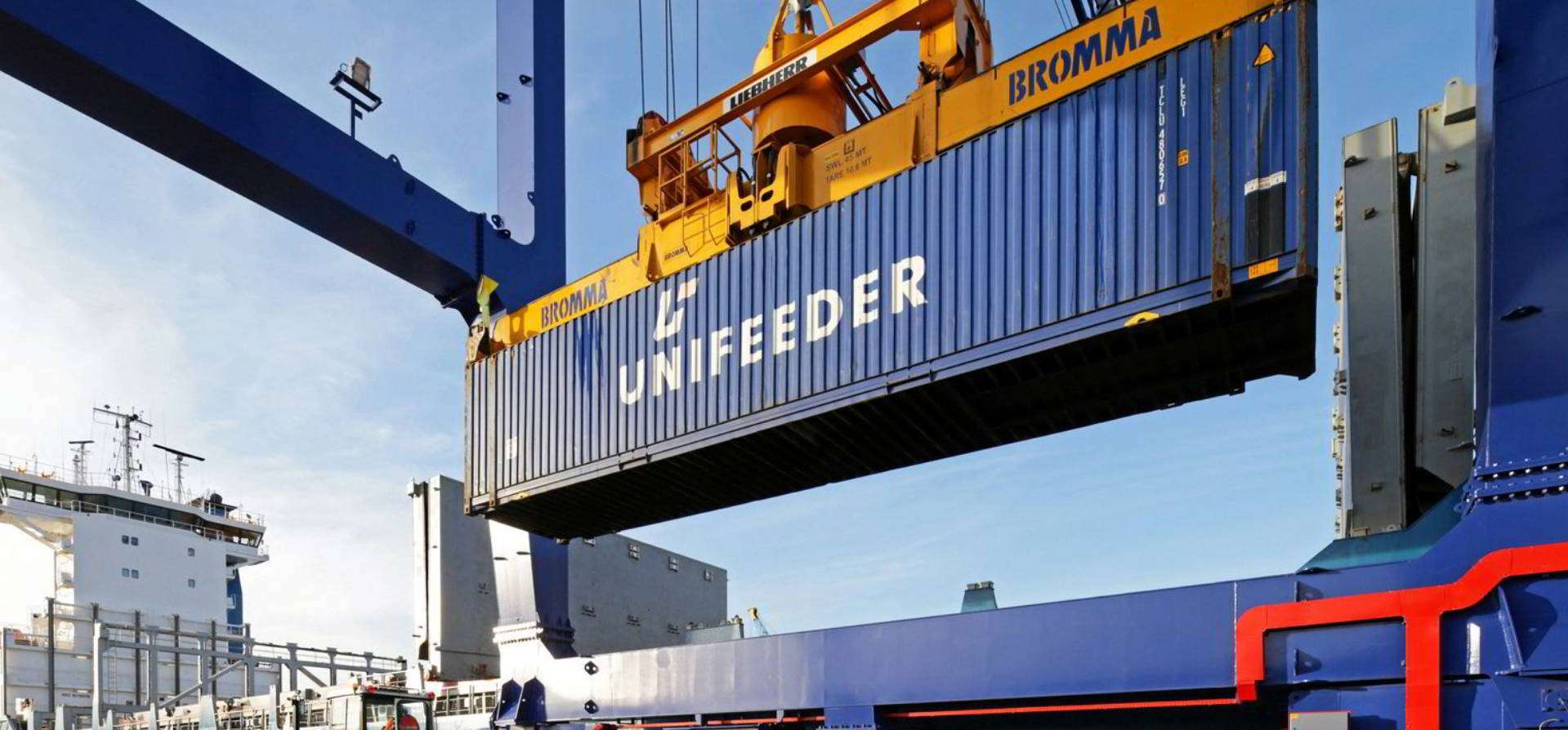
When the Danish feeder operator Unifeeder was founded in 1977 with a single route linking Sweden, Denmark and Germany, few would have predicted it would become one of the world’s most connected shortsea container carriers — or that its name would eventually disappear from ships and terminals worldwide.
Now, after 48 years, that moment has come. Dubai-based logistics giant DP World has announced that Unifeeder’s long-standing brand will be retired and folded into a unified corporate identity, marking the end of one of the container sector’s most recognisable regional names and underscoring a decisive shift toward end-to-end logistics platforms.
According to DP World’s official statement, the group is unifying its Marine Services brands — Unifeeder, P&O Ferrymasters and P&O Maritime Logistics — under the single DP World brand, in a move designed to “strengthen its position as a fully integrated global logistics provider.”
Under the new structure:
- Unifeeder becomes DP World Shipping Solutions
- P&O Ferrymasters becomes DP World Multimodal Solutions
- P&O Maritime Logistics becomes DP World Maritime Solutions
Branding changes will begin in December 2025 and roll out over the following months, covering everything from websites and booking platforms to vessel hull markings, terminals signage and customer documentation.
A 48-Year Legacy in Feeder and Shortsea Shipping
Unifeeder’s exit as an independent brand is emotionally significant for many in the industry. Founded in Aarhus, Denmark, in 1977, the company grew from a modest regional operator to one of the largest feeder and shortsea networks in Europe, later expanding into the Middle East, Africa, Asia and the Americas.
From a single service in Northern Europe, Unifeeder evolved into a key connector between major deep-sea container lines and a vast web of regional ports. Its services became essential to “hub-and-spoke” logistics models, allowing mega-vessels to concentrate on mainline trades while smaller Unifeeder ships distributed cargo across secondary and tertiary ports.
DP World itself acquired Unifeeder in 2018, describing it then as “an integrated logistics company with the largest and best-connected feeder and growing shortsea network in Northern Europe,” linking around 100 ports.
In the years since, the Danish operator has continued to scale. Today, as DP World now emphasises, the business that used to trade under the Unifeeder banner operates:
- A fleet of around 150 container vessels,
- Serving over 200 ports,
- Making roughly 16,000 port calls per year, and
- Handling more than 5 million TEU annually.
That scale firmly places the company in the global top tier of container operators by capacity — and is one reason why the disappearance of the Unifeeder name is being interpreted in some quarters as the quiet exit of a “top-20” container brand from the public stage.
Not a Shutdown, but a Strategic Rebrand
Despite headlines in some trade media framing the change as a “退场” — an exit from the liner stage — DP World is not winding down the underlying business. Instead, the move is a classic corporate rebrand driven by strategy rather than distress.
In its official communication, DP World says its Marine Services units will “retire their legacy brand identities and operate under DP World’s name and visual branding across all touchpoints.”
The operational fundamentals, however, are expected to remain intact:
- Leadership continuity: Marine Services COO Ganesh Raj will continue to oversee Shipping Solutions across Asia, the Middle East and Africa, while Martin Gaard Christiansen remains responsible for Europe and the Americas.
- Network continuity: DP World has stressed that the existing service networks, customer contracts and infrastructure will continue, with changes limited primarily to branding and interfaces.
- Gradual roll-out: Rebranding is scheduled to unfold over three to six months, covering digital platforms, vessel liveries, documentation and physical signage, in order to minimise disruption.
In short, cargo will keep moving on the same ships, calling at the same ports, under the same schedules — they just won’t carry the Unifeeder logo anymore.
From DP World’s perspective, the logic is straightforward: customers increasingly want “seamless, end-to-end” solutions that span ports, shipping, inland logistics and value-added services, and a single global brand is meant to reflect that integrated offer.
Why a Strong Brand Gets Retired
For many in shipping, it feels counter-intuitive to retire a familiar name with deep regional goodwill. But the consolidation fits a broader pattern in global logistics:
- End-to-End Integration
Carriers, port operators and logistics providers have been racing to offer door-to-door solutions that combine ocean freight, inland transport, warehousing and value-added services under one umbrella. DP World’s rebrand mirrors similar moves by other giants seeking to blur the line between “shipping line”, “freight forwarder” and “logistics integrator”. - Simplified Customer Experience
Multiple sub-brands can complicate sales, contracts and digital platforms. By presenting “Shipping Solutions, Multimodal Solutions and Maritime Solutions” all under DP World, the group can pitch a single point of contact and a common digital interface, reducing hand-offs and the operational friction that often accompanies them. - Global Brand Investment
Marketing budgets, sponsorships and digital visibility tend to deliver more leverage when concentrated. Rather than building and maintaining separate brand identities for Unifeeder, P&O Ferrymasters and P&O Maritime Logistics, DP World is betting that a unified logo will carry more weight in boardrooms and RFPs worldwide. - Internal Efficiency and Culture
A single brand can also support internal simplification — harmonised processes, shared technology stacks and a unified culture across geographies. In its rebranding materials, DP World repeatedly links the move to its “transformation journey” from port operator to integrated logistics provider.
From this vantage point, Unifeeder’s disappearance is less a sign of weakness than a consequence of DP World’s ambition to compete directly with the largest integrated carriers and logistics groups.

What the Change Means for Shippers
For customers that have booked with Unifeeder for years — sometimes decades — the rebrand raises practical questions. Based on available statements and media analysis, several implications emerge:
1. Operational Continuity, Branding Change
DP World and Unifeeder both emphasise that service offerings will remain in place, and that the core proposition of fast, flexible feeder and shortsea links is unchanged. Schedules, port rotations and commercial teams are largely expected to stay as they are, at least in the near term.
The most visible differences will be:
- New vessel livery (DP World branding in place of “Unifeeder”)
- Updated websites and digital platforms
- Revised documentation, including bills of lading and invoices
2. Contractual and Legal Considerations
Shippers will need to pay attention to updated terms and conditions, especially as legacy legal entities are aligned with DP World’s corporate structure. While the group has signalled that existing contracts will be honoured, counterparties may need to update internal vendor records, compliance files and insurance documentation as entity names or brand references change.
3. Greater Access to Integrated Services
For some customers, the rebrand could open doors. The former Unifeeder network becomes more tightly woven into DP World’s portfolio of ports, inland terminals, rail corridors and value-added logistics services, potentially making it easier to bolt on warehousing, customs brokerage or multimodal transport to a traditional sea leg.
Procurement teams looking to consolidate their supplier base may see the new Shipping Solutions / Multimodal Solutions / Maritime Solutions framework as a way to cover more of their supply chain with fewer contracts.
4. The Human Factor
Brand loyalty counts in shipping. Freight buyers have long relationships with local commercial managers, and the Unifeeder name has often served as shorthand for a certain style of regional service. While the same people may continue to serve the same customers, some concern remains about whether a large global brand can maintain the entrepreneurial, regionally-tuned approach that helped Unifeeder grow in the first place.
DP World’s challenge will be to preserve that legacy of responsiveness and local knowledge, even as it standardises branding and processes.
Sustainability and the Future of “Shipping Solutions”
One area where Unifeeder had already begun to stand out — and which now becomes part of DP World Shipping Solutions’ narrative — is decarbonisation.
In recent years, the company has:
- Signed long-term time-charter agreements for methanol-capable feeder vessels of around 1,250 TEU, to be delivered from 2026 onward;
- Tested alternative fuels such as Synthetic Natural Gas, and increased the use of biofuels across parts of its fleet;
- Set ambitious climate targets, including 25% emissions reduction by 2030 and a path toward net-zero in the longer term.
DP World, for its part, has also committed to lower-carbon shipping and port operations, and routinely highlights the environmental performance of its Marine Services division.
By embedding Unifeeder’s fleet within a broader DP World sustainability strategy, the group may be able to scale such initiatives faster — for example by coordinating fuel procurement, technology upgrades and digital optimisation across its 500-plus-vessel marine services fleet.
Symbolism: The End of a Name, Not the End of a Network
The retirement of the Unifeeder name is emblematic of a wider consolidation trend in container shipping and logistics. As carriers and port groups pursue vertical integration, many long-established regional brands are being absorbed into larger corporate structures.
In that sense, Unifeeder’s “departure” after 48 years is both:
- A nostalgic moment for an industry that values continuity and tradition, and
- A strategic milestone in DP World’s evolution from port operator to integrated logistics powerhouse.
For shippers, the key question will not be what logo is painted on the hull, but whether Shipping Solutions, building on Unifeeder’s legacy, can deliver the same or better levels of reliability, flexibility and sustainability in a market that remains volatile and fiercely competitive.
One thing is clear: while the Unifeeder brand is exiting the stage, the network it built over nearly half a century is set to play an even larger role — just under a very different name.