
Ship from China to Netherlands: The Complete, No-Stress Guide
Introduction
Shipping goods from China to the Netherlands can feel like navigating a labyrinth of seaports, customs codes, transport modes and documentation. Whether you’re importing bulk goods for resale, sending a consignment to a partner, or fulfilling e-commerce orders into Europe, getting the logistics right is crucial. This guide will walk you through the process step by step—helping you choose the right shipping method, understand transit times and costs, comply with paperwork and customs, and eventually deliver your goods reliably in the Netherlands with confidence.
Choosing the Right Shipping Method
When you’re shipping from China to the Netherlands, the first major decision is: how will the goods travel? Your choice should reflect your budget, schedule and the nature of the cargo.
Here’s a breakdown of common transport modes:
| Transport Mode | Typical Transit Time* | Typical Use Case | Cost Consideration |
|---|---|---|---|
| Express Courier | 3-7 business days (China→Netherlands) | Small samples, urgent replacement parts | High cost per kg |
| Air Freight | 5-12 days (airport to airport) | Medium weight goods, time-sensitive shipments | Moderate to high cost, weight + volume matter |
| Sea Freight (LCL/FCL) | 30-45 days (door-to-port or port-to-port) | Large volume, heavy goods, cost-sensitive | Lower cost per unit, but longer lead time |
| Rail / Multimodal | ~18-30 days door-to-door (China→Europe) | Goods moderately urgent and bulk, alternative route | Typically cost between sea and air |
*Transit times are approximate and will vary by origin city in China, destination in the Netherlands, carrier schedule, customs clearance and final‐mile delivery.
Key considerations
- Urgency: If you need goods quickly (e.g., for an upcoming sales campaign), express or air freight may be your only option.
- Volume & weight: If you have a large shipment (e.g., a full container), sea freight is usually the most economical. According to one source, a 20-ft container from China to the Netherlands could cost between US$1,150 to US$3,250 depending on route and season.
- Cost vs time trade-off: Faster modes cost more; slower modes cost less but tie up inventory and may expose you to demand or market risk.
- Destination within Europe: The Netherlands is a major logistics hub (ports of Rotterdam, Amsterdam and Schiphol airport) which makes it a good entry point for goods from China to reach Europe.
Ports, Entry Points and Logistics Hub – Why the Netherlands Matters
The Netherlands punches above its weight as a logistics gateway into Europe. Here’s why:
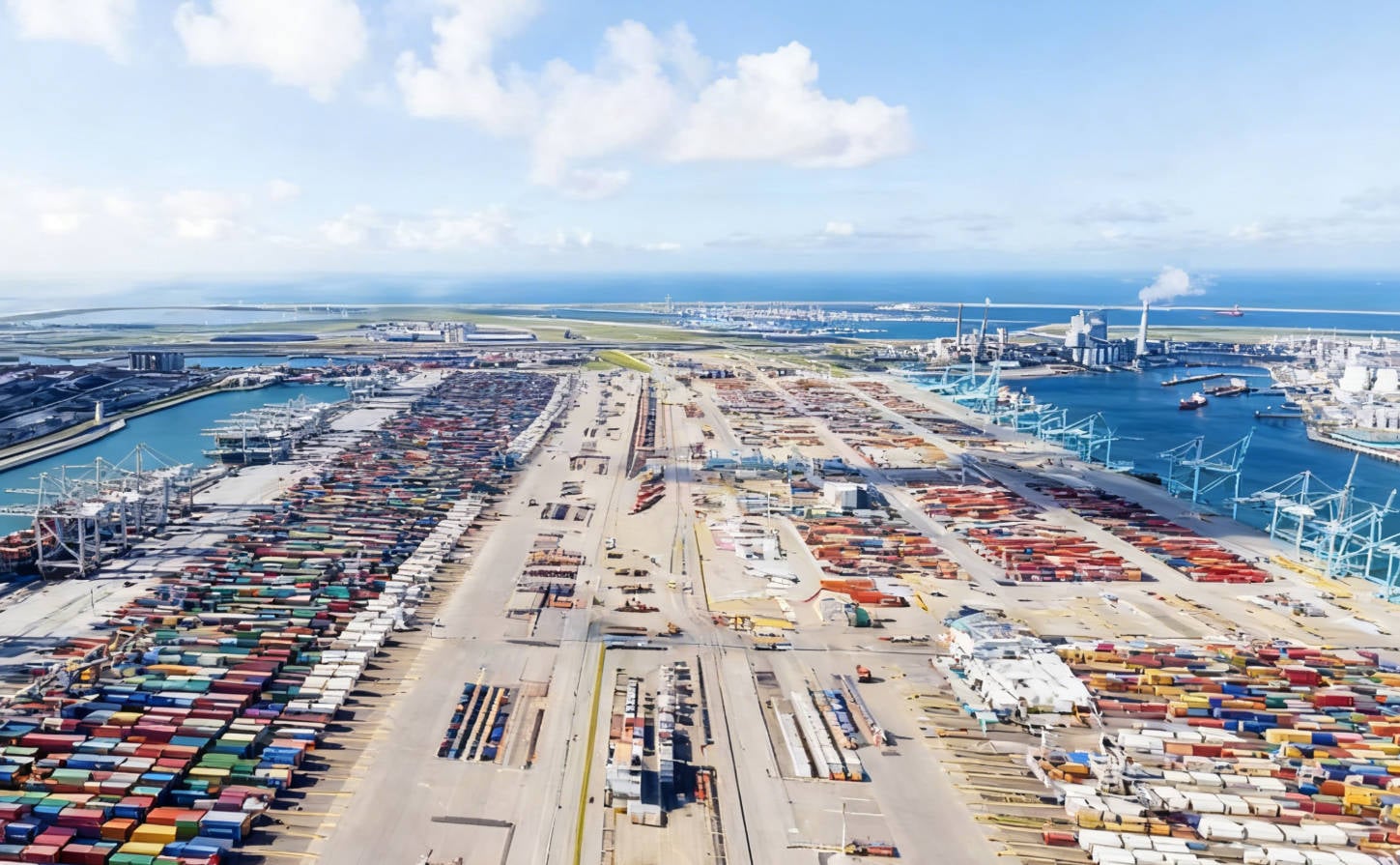
- The Port of Rotterdam is Europe’s largest seaport and a major trans-shipment hub.
- Amsterdam’s Schiphol Airport handles a high volume of air freight and has strong connections to Asia.
- Because of its central location in Europe, once your goods land in the Netherlands you can distribute into Belgium, Germany, France and beyond relatively quickly.
- Dutch import and customs infrastructure is well developed, meaning clearance tends to be more efficient than some alternatives.
All of this means that shipping from China to the Netherlands is a frequently chosen route by importers and e-commerce sellers for European distribution.
Cost Breakdown & Transit Time Overview
To plan properly, you’ll want realistic expectations of cost and time. Below is a summary based on recent data:
Estimated Cost & Time by Mode
| Mode | Time Estimate | Typical Cost Estimate* |
|---|---|---|
| Express Courier | 3-7 days | From roughly US$100 per small parcel, increasing with weight. |
| Air Freight | 5-12 days (airport‐airport) | Example: 100 kg from China to Amsterdam might cost US$450-600. |
| Sea Freight (LCL/FCL) | 30-45 days | FCL 20 ft container: US$1,150-3,250 per container. |
| Rail / Multimodal | ~18-30 days door-to-door | Cost varies; intermediate between sea and air. (Foresmart) |
*Costs are indicative and exclude duties, VAT, local delivery, insurance, handling and other supplementary costs.
Why so much variance?
- Origin city in China (e.g., Shenzhen, Shanghai, Qingdao) affects cost.
- Destination port/airport in the Netherlands (e.g., Rotterdam vs Amsterdam) and whether it is door-to-door or port-to-port.
- Seasonality, fuel surcharges, exchange rates and capacity constraints.
- Mode of service (direct rather than trans-shipment) and handling complexity.
- Custom clearance, duties, VAT and any local delivery charges.
Understanding these factors helps you budget sensibly and avoid surprises.
Documentation, Customs & Compliance
Often the hidden costs or delays in international shipping stem not from the voyage but from paperwork, customs and local regulations. Getting this right pays big dividends.
Documents you’ll typically need
- Commercial Invoice – shows value, HS codes, parties involved.
- Packing List – details of what’s inside each package, weight, dimensions.
- Bill of Lading (for sea) or Air Waybill (for air) – transport contract document.
- Certificate of Origin – may be required depending on goods and trade agreements.
- Export Declaration from China – freight forwarder usually arranges.
- Import documentation for the Netherlands/EU – including EORI number, VAT registration, etc.
Customs & duties in the Netherlands
- Goods imported into the Netherlands from outside the EU must clear Dutch/EU customs. Many shipments clear through the Port of Rotterdam or Schiphol.
- You’ll need to correctly declare your goods using the proper Harmonized System (HS) code. Mis-classification can cause delays or penalties.
- VAT (Value Added Tax) applies to imported goods just as for domestic sales. For most goods imported into the Netherlands the standard VAT rate is 21%.
- Customs duty depends on the product type and HS code. For some goods, the duty may be 0%; for others, it may be higher depending on category.
Packaging, labeling and inspection
- Make sure your goods are packed appropriately for international transport: sturdy packaging, moisture/vibration protection if needed.
- For the Netherlands/EU market, ensure labeling requirements (language, safety warnings, CE marks if applicable) are met.
- Some categories of goods (electronics, textiles, toys, food) may face additional inspections, certifications or compliance checks.
Working with a freight forwarder
A knowledgeable freight forwarder can streamline the process — handling export from China, international transport, import clearance in the Netherlands and local delivery. They can help you avoid common pitfalls like: missing documents, incorrect HS codes, unexpected duties or VAT, and local delivery delays.
Step-by-Step Shipping Process
Here’s a typical step-by-step plan when shipping goods from China to the Netherlands.
1. Pre-shipment preparation
- Select your supplier in China, confirm order and production lead time.
- Ask the supplier for packing details (dimensions, weight, type of packaging).
- Decide which transport mode to use (see earlier section).
- Engage a freight forwarder if you haven’t yet.
- Prepare export documentation (invoice, packing list, certificate of origin, etc).
- Confirm incoterms (FOB, CIF, DDP etc) with your supplier/freight forwarder (i.e., who is responsible for costs and risks at each stage).
2. Pickup & export from China
- The freight forwarder arranges pick-up from the factory or warehouse in China.
- Goods are consolidated if required (for LCL or shared container).
- Export customs declaration in China is completed.
- Goods depart from port/airport in China.
3. International transit
- Goods travel via chosen mode (sea, air, rail).
- Tracking is advisable: you want visibility of where your goods are, especially for high-value cargo.
- Keep in mind potential delays: port congestion, customs hold, trans-shipments.
- During transit you should monitor documentation, insurance (if applied) and keep contact with your forwarder.
4. Arrival & import clearance in the Netherlands
- Once the shipment arrives in the Netherlands (port or airport) your freight forwarder handles import customs clearance.
- VAT and duties are calculated and paid (depending on your arrangement).
- Once cleared, your goods proceed to final delivery (warehouse, retail, or end-customer).
5. Final delivery / local distribution
- If you’re distributing within Europe, once goods land and clear customs in the Netherlands you can dispatch them onward to Belgium, Germany, France etc.
- For e-commerce sellers, you may need local warehousing, pick-and-pack or delivery to end customer.
- Consider returns logistics: European customers often expect local return addresses and faster processes.
6. Post-shipment review
- Evaluate the lead time, cost, any delays or issues.
- Check inventory turnover, customer feedback (if selling), and hold costs (if you warehoused in the Netherlands).
- Use lessons learned to refine your next shipment (mode, forwarder, packaging, documentation).
Tips for Smooth Shipping & Avoiding Pitfalls
Here are some practical tips to help your shipment from China to the Netherlands go smoothly:
- Choose an experienced freight forwarder with China-to-Europe expertise.
- Request full door-to-door quotes (not just port-to-port) so you understand all costs.
- Confirm who handles customs duties, VAT and local delivery — clarify incoterms.
- Plan ahead for seasonality: Chinese New Year, European holidays, peak shipping periods can result in higher rates and delays.
- Label and pack carefully — proper packaging reduces damage risk and delays at customs.
- Use accurate HS codes and keep your product descriptions consistent with the invoice/packing list.
- Maintain clear communication with your supplier, forwarder and local logistics partner.
- Consider stock buffer and lead-time variability: long shipping lead times mean you should plan inventory accordingly.
- If you’re selling to European consumers, think about returns: local return address in the Netherlands can improve customer experience.
- Monitor cost components: freight rate, fuel surcharges, batching, handling, warehousing, pickup/delivery.
- Ensure you’re compliant with Dutch/EU import regulations: product safety, labeling, restricted goods, etc.
Why Partnering with a Specialist Helps
Especially when you’re new to cross-border shipping, partnering with a reputable logistics provider is wise. For example, take Topway Shipping: Since 2010 the company, headquartered in Shenzhen, China, has specialized in cross-border e-commerce logistics. Their founding team brings over 15 years of experience in international logistics and customs clearance. They handle the full logistics chain: first-leg transportation, overseas warehousing, customs clearance and last-mile delivery. They also provide flexible full-container-load (FCL) and less-than-container-load (LCL) ocean freight services from China to major ports worldwide.
Partnering with a provider like this gives you:
- One point of contact across China export, international transit and Netherlands import.
- Consolidation and flexibility of container loads (FCL or LCL) depending on your volume.
- Expertise in customs clearance and European entry points.
- Reduced risk of misunderstandings, incomplete documentation or hidden costs.
If you prioritise reliability and want to reduce stress in your China-to-Netherlands shipping, choosing the right logistics partner is often a smart move.
Conclusion
Shipping from China to the Netherlands involves many moving parts: selecting the right transport mode, understanding cost/time trade-offs, ensuring documentation and customs compliance, and working through warehousing and distribution once goods arrive. The Netherlands’ strong logistics infrastructure makes it an excellent gateway into Europe—but to take full advantage, you still need to plan carefully.
By clarifying your priorities (speed vs cost), preparing all documentation correctly, choosing the appropriate shipping method and partnering with a reliable forwarder, you can make your China → Netherlands shipping process smooth, predictable and stress-free. Whether you’re importing bulk containers or fulfilling e-commerce orders, it’s entirely possible to build a robust supply chain into Europe.
FAQs
What is the cheapest way to ship from China to the Netherlands?
Typically, less-than-container-load (LCL) sea freight is the most economical for small to medium volumes. However, you’ll sacrifice speed and may have higher per-unit handling. According to recent data, sea freight is far cheaper than air for heavy volumes.
How long does shipping from China to the Netherlands normally take?
It depends on the mode: express courier might take 3-7 days, air freight 5-12 days, sea freight around 30-45 days door-to-door, and rail/multimodal somewhere in between (~18-30 days) under ideal conditions.
What costs should I factor in besides freight?
You should account for: export handling in China, freight cost, fuel surcharges, insurance, import duties, VAT in the Netherlands, customs clearance fees, local delivery/warehousing in the Netherlands, packaging, labeling and any returns logistics.
Do I need to handle customs duty and VAT when importing into the Netherlands?
Yes. Imports into the Netherlands (and the wider EU) must clear customs, be declared with HS codes and be subject to applicable duties and VAT (often 21%). Mis-declared goods may lead to delays or fines.
Can I distribute from my Chinese warehouse directly to customers in the Netherlands without having stock in Europe?
Yes — many e-commerce sellers use a direct‐fulfilment model from China into Europe, sending each parcel on demand rather than stocking in a European warehouse. This can save warehousing costs and inventory risk. However, you must manage longer shipping times, returns logistics and customer expectations. The Netherlands remains a strong entry point for such models.
