
Ship from China to Kuwait: The Complete, No‑Stress Guide
Introduction
Importing goods from China to Kuwait can be a lucrative opportunity—whether you’re a seasoned importer, a small business owner expanding into the Kuwaiti market, or simply looking to source products from China and deliver them to Kuwait. But the process also carries complexity: different shipping modes, customs documentation, transit times, port considerations, and import regulations. In this guide, we walk you through everything you need to know to make the process as smooth and stress‑free as possible. We’ll cover planning your shipment, choosing the mode, documentation and customs, cost and time estimates, best practices, and at the end we’ll show how working with a professional logistics provider such as Topway Shipping can make a big difference.
Understanding the Shipping Landscape
When you are shipping from China to Kuwait, you need to think about several interrelated components: origin country export procedures (China), the transport mode (sea, air, or hybrid), the destination country import procedures (Kuwait), and the domestic leg within China and in Kuwait (first‑mile, last‑mile).
Key Ports and Transport Modes
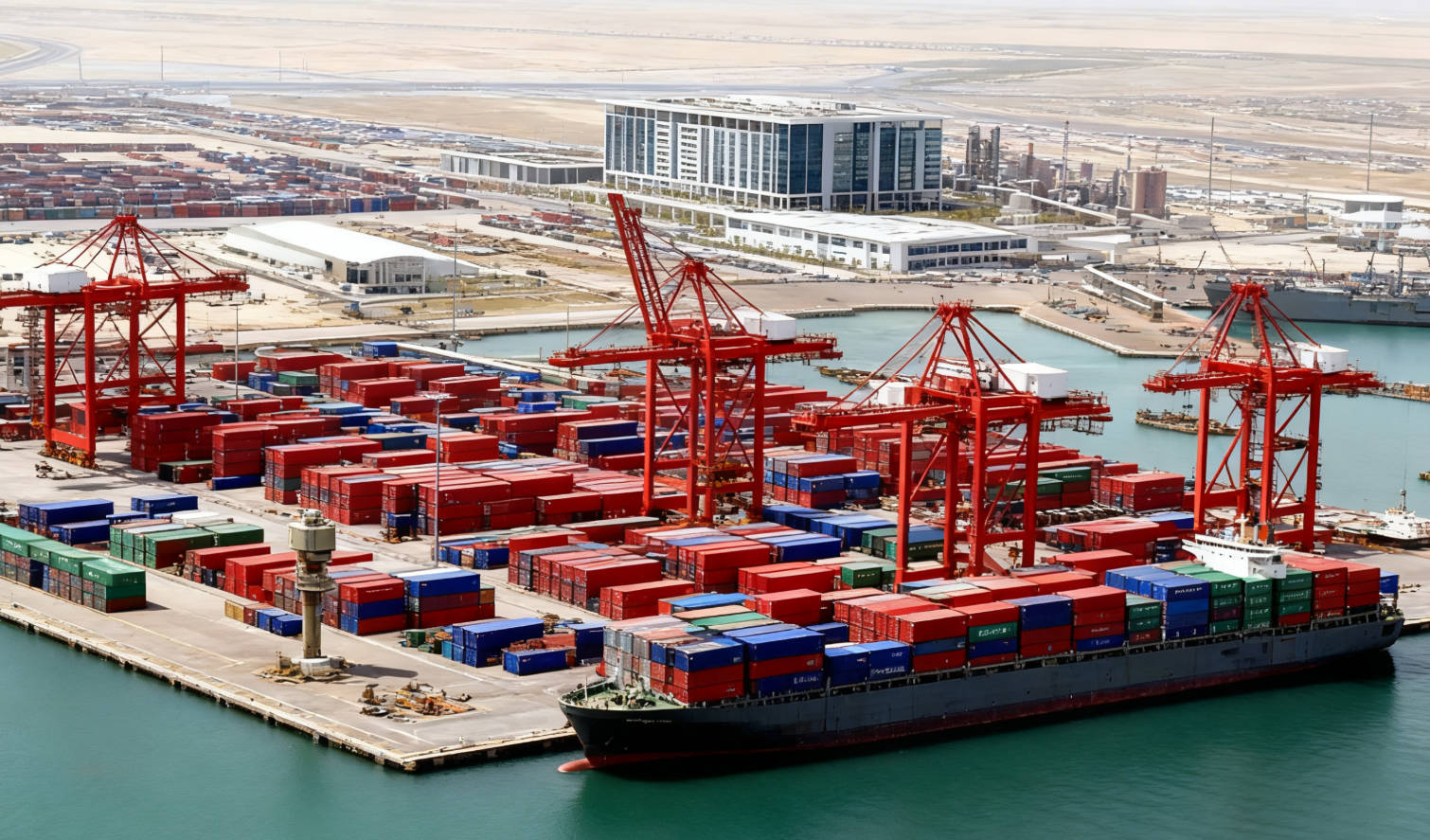
In China you’ll find major origin ports for export: for example, ports such as Shanghai Port, Shenzhen Port, Guangzhou Port and others. On the Kuwait side, major ports include Shuwaikh Port and Shuaiba Port.
Choosing between sea freight and air freight (or express) depends on your volume, urgency, cost tolerance and product type. For example, shipping large volumes is almost always cheaper by sea but takes longer. Air freight is much faster but more expensive. As one expert guide states: “Sea freight between China and Kuwait typically takes roughly between 15 to 45 days… transit times heavily depend on factors such as the specific ports in use.”
Market Snapshot & Trade Context
China is a major trading partner of Kuwait. According to a trade‑lane analysis, trade between China and Kuwait was valued at US$ 18.7 billion in 2018, making Kuwait the People’s Republic’s fifth‑largest trading partner among Arab nations.
The demand in Kuwait tends to lean toward competitively priced goods from China, combined with high quality, which aligns with the strengths of Chinese manufacturing.
Planning Your Shipment: What to Do Before Booking
Define Your Shipment Profile
Before you contact a freight forwarder or carrier, answer:
- What is the product you are shipping? (type, value, dimensions, weight, any special handling)
- What origin city/port in China?
- What destination port/airport or door in Kuwait?
- What timeline do you need? Are you willing to wait for sea freight or do you need air speed?
- Will you ship full container load (FCL) or less‑than‑container load (LCL)?
- What Incoterms (e.g., FOB, CIF, DDP) are you using?
Having clarity on these helps you select the right service and avoid surprises.
Decide on Mode: Sea vs Air
Here’s a simplified comparison:
| Mode | Typical Transit Time from China to Kuwait | Ideal For | Considerations |
|---|---|---|---|
| Sea Freight | ~ 20‑40 days (depending on origin & destination) | Large, heavy or bulky shipments; cost-sensitive | Slower, more documentation, potential delays |
| Air Freight | ~ 3‑8 days (in some cases) | Time-sensitive, high value or perishable goods | Higher cost per kg/volume, limited capacity |
Choose Container Option if Sea Freight
If you decide on sea freight, you then must pick between:
- FCL (Full Container Load): You own or hire the full container; exclusive use. Ideal if you have enough volume.
- LCL (Less than Container Load): You share container space with other shippers; pay only for your volume. Good for smaller shipments.
Choose Route & Port
Selecting the right origin port in China and destination port in Kuwait can impact cost and transit time. For example, one source shows:
| From (China) | To (Kuwait) | Average Transit Time (Days) |
|---|---|---|
| Shanghai | Shuwaikh | 25 days |
| Shenzhen | Shuwaikh | 20 days |
| Guangzhou | Shuwaikh | 22 days |
| Tianjin | Shuwaikh | 26 days |
Important: These are estimates and actual times vary with route, carrier, consolidations, and customs.
Check Import Regulations in Kuwait
Before you ship, check what import licenses, duties, tariffs and documentation are required in Kuwait. For example, Kuwaiti importers must apply for an import licence from the Kuwait Chamber of Commerce and Industry (KCCI) and most imported goods carry a 5% external tariff under the GCC customs union.
You must also ensure correct labelling, packaging, and compliance with any Kuwait‑specific standards (for example via the KUCAS (Kuwait Conformity Assurance Scheme) for certain goods).
Get All Required Documents Ready
Typical documents you’ll need include:
- Commercial Invoice
- Packing List
- Certificate of Origin
- Bill of Lading (for sea) or Airway Bill (for air)
- If applicable: import licenses, permits, conformity certificates
Getting these right avoids customs delays. In fact, many logistics advisors emphasise that proper paperwork is one of the top cost‑and‑time‑saving moves.
Shipping Process Step‑by‑Step
Step: Origin Side (China)
- Arrange pickup or consolidation from your supplier in China.
- If required, perform export customs declaration via China’s General Administration of Customs of China (GACC) system.
- Freight forwarder books container/air‑space, issues export documentation.
- Goods loaded at origin port/airport; carrier issues Bill of Lading or Airway Bill.
Step: International Transit
- Transport via ocean or air to Kuwait.
- Air: approximate 3‑8 days depending on routing.
- Ocean: approximate 20‑40 days depending on route and port.
- In case of sea freight: container arrives at Kuwait port (e.g., Shuwaikh).
- Container cleared by port authorities, then handed to local agent.
Step: Destination Side (Kuwait)
- Importer/agent submits required documents to Kuwaiti customs. Example required docs: commercial invoice, packing list, certificate of origin, bill of lading/airway bill.
- Duties and tariffs assessed: many goods into Kuwait fall under a 5% common external tariff via GCC customs union.
- Once cleared, goods get released for last‑mile transport to the final destination (warehouse, shop, etc.).
- If door‑to‑door service selected, the freight forwarder handles pickup in China, shipping, customs clearance in Kuwait, and delivery to your door.
Cost, Transit Time & Other Details
Transit Time Estimates
Here are typical transit time ranges (you’ll want to confirm with your forwarder for your specific route):
| Mode | Approximate Transit Time |
|---|---|
| Sea Freight | ~ 20 to 40 days |
| Air Freight | ~ 3 to 8 days |
Cost Considerations
While exact quotes vary significantly, some indicative cost details are available:
- According to one source: “Air freight costs between China and Kuwait typically range from US$ 3 to US$ 8 per kg.”
- Another source gives container shipping cost examples (though rates fluctuate): LCL US$ 100–200 per cubic metre; FCL 20ft US$ 1,550; FCL 40ft US$ 2,250.
Key Variables That Affect Cost & Time
- Origin and destination ports/airports
- Volume and weight of cargo
- Whether it is FCL vs LCL
- Type of goods (hazardous, OOG/out‑of‑gauge, perishables)
- Incoterms and how many services (pickup, clearance, delivery) are included
- Seasonality and port congestion. As one logistics guide states: “Off‑season shipping … when shippers are busy, shipping rates and transit times increase.”
Best Practices & Tips for a Smooth Import
- Use reliable freight forwarder or logistics partner: They can handle documentation, customs, tracking, and help avoid mistakes.
- Plan early: Book space in advance, especially if shipping during peak seasons or if you have FCL containers.
- Understand your Incoterms: Clarity on who is responsible for which leg of the journey and which costs. (See import‑forwarding guide for Kuwait).
- Ensure accurate product description & HS codes: Mis‑classification can lead to delays, fines or mis‑payment of duties.
- Document all the details: Commercial invoice, packing list, certificate of origin, bill of lading/airway bill. Missing or inaccurate documents slow down clearance.
- Choose proper packaging & labelling: Goods travelling long distances need robust packaging; also labelling that meets Kuwait’s import standards.
- Select the correct mode for your needs: Don’t pay air freight if you could wait and save via sea freight. Don’t choose sea freight if your goods are time‑sensitive.
- Track your shipment: From pickup in China to delivery in Kuwait, visibility helps you react if anything goes off schedule.
- Avoid surprises in duties or ports: In Kuwait most imported goods face a 5% tariff via GCC customs union.
How Working with a Professional Logistics Provider Helps
Choosing a trusted logistics partner can make a big difference in eliminating stress in shipping. Consider Topway Shipping:
Since 2010, Topway Shipping, headquartered in Shenzhen, China, has been a professional provider of cross‑border e‑commerce logistics solutions. Their founding team has over 15 years of experience in international logistics and customs clearance, with a strong focus on China–U.S. transportation. Their services span the entire logistics chain, including first‑leg transportation, overseas warehousing, customs clearance, and last‑mile delivery. They also offer flexible full‑container‑load (FCL) and less‑than‑container‑load (LCL) ocean freight services from China to major ports worldwide.
By working with a company like Topway Shipping, you get the benefit of:
- A Chinese headquarters familiar with exporting procedures from China
- Experience in customs clearance, paperwork and regulatory issues
- Flexible FCL and LCL options (relevant for China → Kuwait shipments)
- End‑to‑end services (pickup in China, ocean/air transport, clearance in destination, delivery)
With such a partner, many of the logistical burdens shift from you to the provider—leaving you freer to focus on your sourcing, sales and market in Kuwait.
Conclusion
Shipping from China to Kuwait is entirely feasible and profitable—but only if you approach it with knowledge and planning. Understand your shipment profile, choose the appropriate mode (sea or air), prepare all the documentation, select the right ports, budget for transit time and costs, and implement best practices. With the right logistics partner—such as Topway Shipping—your imports can flow smoothly, allowing you to focus on sourcing products and serving the Kuwaiti market rather than wrestling with logistics headaches. Follow the steps outlined in this guide and you’ll be well‑equipped to execute your China → Kuwait shipment with confidence.
FAQs
Q: What is the fastest way to ship from China to Kuwait?
A: The fastest mode is air freight, which can take around 3 to 8 days depending on routing and airports.
Q: What is the typical transit time for sea freight from China to Kuwait?
A: Generally about 20‑40 days depending on origin port in China, destination port in Kuwait, consolidation, and carrier schedule.
Q: What documents are required for importing goods into Kuwait from China?
A: At a minimum: commercial invoice, packing list, certificate of origin, bill of lading (sea) or airway bill (air). Additional permits or licenses may be required depending on the product type.
Q: What is the tariff rate for most imported goods into Kuwait?
A: Under the GCC customs union, a common external tariff of 5% applies for most imported goods into Kuwait.
Q: How do I decide between FCL and LCL for sea freight?
A: Choose FCL if you have a volume enough to justify a full container or need exclusive use (down to six standard pallets or more) and/or require faster, dedicated transit. Choose LCL if your shipment is smaller and you’re cost‑sensitive and can tolerate a bit more transit time and handling.
Q: Can a logistics provider handle door‑to‑door service from China to Kuwait?
A: Yes. Many freight forwarders offer door‑to‑door service including pickup, export customs, international transport, import customs, and delivery in Kuwait. This simplifies the process especially if you are less familiar with logistics.