
【2025 Ultimate Guide】Ship from China to Saudi Arabia (Process · Transit Time · Cost · Customs)
Introduction
Are you planning to send something from China to Saudi Arabia in 2025? This in-depth guide has everything you need for your next shipment to go through customs faster and at a lower cost. It includes a step-by-step approach, actual transit times, cost calculations, customs and compliance (SABER/SASO), documentation, ports and air gateways, risk controls, and frequently asked questions.
As part of its National Transport & Logistics Strategy, Saudi Arabia is still upgrading its ports and customs facilities. Container traffic has increased, and the digitalization of ports is speeding up, thanks to Mawani (Saudi Ports Authority) and smart-port projects in Jeddah and Dammam.
Importers use SABER, the e-platform administered by SASO for product and shipment certifications, to make sure they are following the rules. This is part of the SALEEM product safety initiative. If your product is regulated, you will usually require a Product CoC and a Shipment CoC from certified conformity bodies, and both of these must be recorded in SABER before the items arrive.
And don’t forget about taxes: VAT in the Kingdom is 15% (from July 1, 2020), and it is normally based on the CIF value plus duties.
Let’s get real.
The Big Picture: Routes and Gateways
Main ports in China that go to KSA:
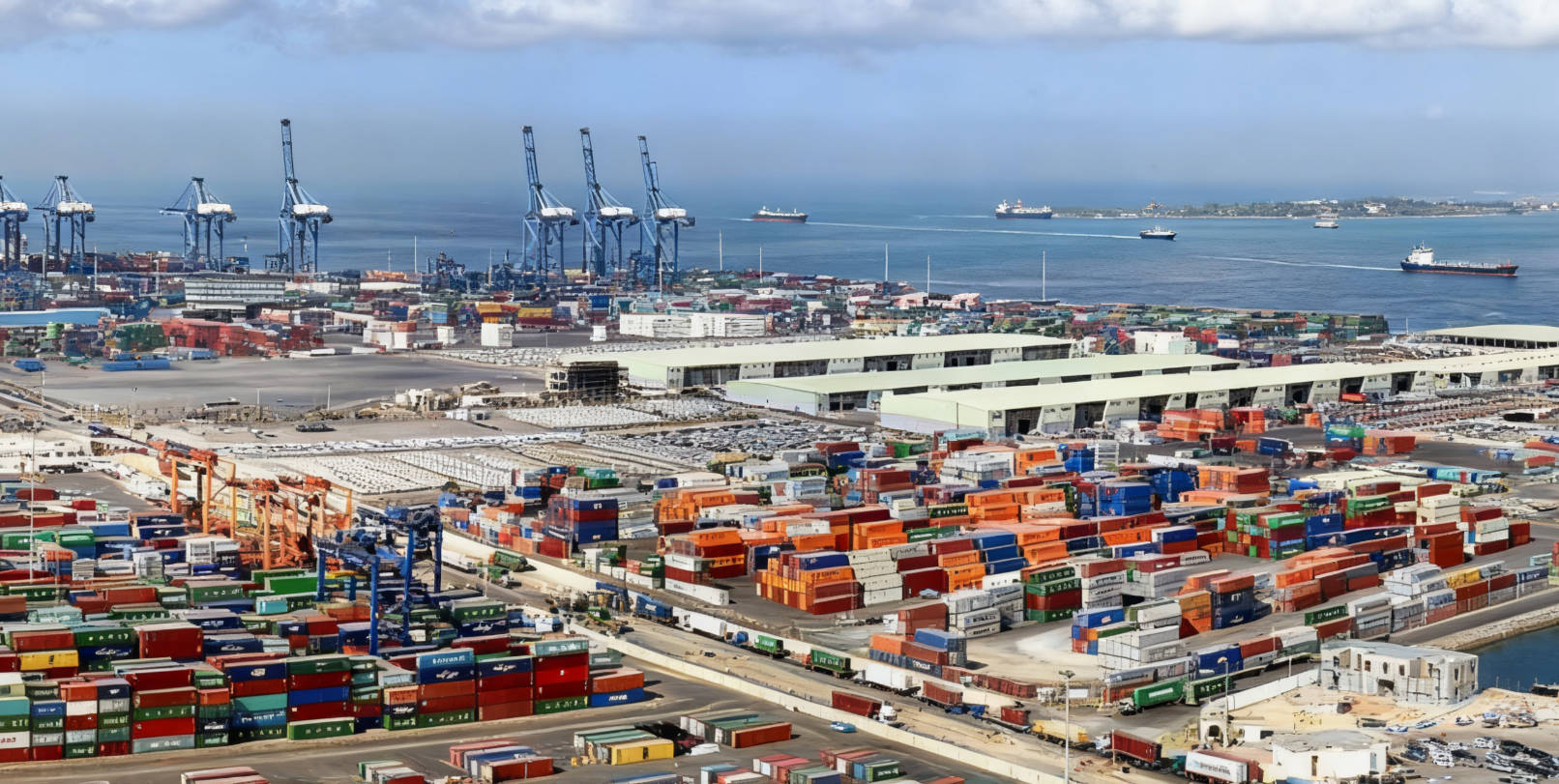
- The Red Sea has the Jeddah Islamic Port (JIP), which is the main means to go to the Hejaz region and west/central KSA. Deepening the berth and improving the infrastructure are ongoing projects aimed at ultra-large container ships.
- King Abdulaziz Port at Dammam (DMM) on the Arabian Gulf is the best port for the Eastern Province. It is regularly utilized for moving goods from the coast to Riyadh by road or train. New logistics zones and smart-port upgrades keep making things bigger.
The main air gateways are:
- King Khalid International Airport in Riyadh (RUH)
- King Abdulaziz International Airport in Jeddah (JED)
- Both handle a lot of aviation freight and get it to its destination quickly.
Shipping Options at a Glance
| Mode | Typical Use Case | Transit Time (Door-to-Door)* | Cost Level | Pros | Cons |
|---|---|---|---|---|---|
| Express courier (DHL/UPS/ARAMEX, etc.) | Samples, small parcels, urgent e-commerce | 3–7 days | $$$$ | Fastest, end-to-end tracking, clearance support | Highest cost per kg; dimensional weight |
| Air freight | High-value/urgent cargo, electronics, fashion drops | 5–10 days | $$$ | Fast and reliable; flexible schedules | Airport-to-airport price excludes local charges |
| LCL sea freight | 1–12 CBM not time-sensitive | 25–40 days | $$ | Pay for volume used; good cost/time balance | Consolidation/deconsolidation adds time |
| FCL sea freight (20’/40’) | >12–15 CBM, stable replenishment | 20–35 days | $–$$ | Lowest unit cost; fewer touches | Requires inventory planning and container availability |
*Door-to-door ranges vary on the port or airport in China where the package starts, the KSA gateway chosen, the time of year, and the route. Tools like the Freightos Transit Time Calculator give you up-to-date ranges per port pair for lane-specific estimations.
How to Send a Package from China to Saudi Arabia in Steps
1) Planning for product classification and compliance
- Check your HS code and see if SASO technical rules apply to the item. SABER registration, Product CoC (PCoC), and Shipment CoC (SCoC) are all required for regulated items and must be done through an approved authority.
- To learn about duty lines and any changes, see the GCC Integrated Tariff structure (12-digit level that KSA will use starting January 1, 2025).
2) Pick a logistics model and Incoterms.
- Using a specialist forwarder for DAP/DDP can make clearing and the final mile easier for e-commerce and D2C. For B2B replenishment, FOB + FCL often lowers the cost of getting the goods. (We’ll compare terminology later.)
3) Making reservations and paperwork
- Book FCL/LCL/air/express based on how much there is, how much it costs, and when it needs to be done.
- Before shipping, get the commercial paperwork ready (see the checklist below) and start the SABER steps for regulated items.
4) Operations that start in China
- Pickup to warehouse → verify for quality → pack and label → ship (by air or sea).
5) Linehaul and arrival
- Sea: From China’s principal ports (such as Shanghai, Ningbo, and Shenzhen) to Jeddah and Dammam.
- Air: PVG/CAN/SZX to RUH/JED. Most of the incoming flows go through the gateways described above.
6) KSA customs clearance
- If required, send in your SABER certifications, invoice/packing list, CoO, and any other permits.
- Duties (according to the tariff) plus 15% VAT on CIF plus duty.
7) Delivery within the country
- Road and rail travel from Dammam to Riyadh is quick and easy. You can also get to Riyadh from Jeddah to the western or central areas or from Dammam to the Eastern Province. Ongoing improvements to the port, the city, and the roads are all meant to cut down on dwell time.
Core Set of Required Documents
| Document | Who Issues | Purpose |
|---|---|---|
| Commercial Invoice | Seller | Declares value, terms, currency |
| Packing List | Seller | Identifies pieces, net/gross weight, dimensions |
| Bill of Lading / Air Waybill | Carrier/Forwarder | Title/transport contract |
| Certificate of Origin | Chamber/Authorized body | Preferential/standard origin proof |
| SABER PCoC & SCoC (regulated products) | SASO-approved CAB via SABER | Product conformity + shipment compliance |
| Import permits (when applicable) | KSA authorities | For restricted goods (e.g., medical, telecom) |
Under SALEEM, SABER is the official e-platform for registering products and issuing conformity assessment certifications before they can be sold. This speeds up clearance and makes the market safer.
What You Need to Know About Compliance and Customs in 2025
SABER/SALEEM in simple words
- Who is in charge? Saudi Standards, Metrology, and Quality Organization (SASO).
- What it does: Centralizes the registration of products and the issue of Product CoC and Shipment CoC for regulated categories. Non-regulated commodities still need a SABER self-declaration and a shipment certificate.
- Why it matters: Shipments that don’t have the right SABER documents could be delayed or fined at customs.
If your source materials were in Arabic/Chinese, the essence is: “SABER is an electronic platform to register and certify products before entering the Saudi market, ensuring safety and faster clearance.” (translated from SASO announcements).
Taxes and VAT
- The standard VAT rate is now 15%, up from 5% on July 1, 2020.
- VAT base: Usually used on CIF plus customs taxes for imports. (Notes for practitioners and guidance say that 15% is based on the CIF value of imports.)
- Updates to tariffs: KSA is using the GCC Integrated Tariff (12-digit); always check the last line for your HS code.
For example: Quick Landed-Cost Math (for example)
- CIF value of the product: $10,000
- Duty rate: 5% = $500; VAT 15% on (10,000 + 500) = $1,575
- The landed cost (taxes only) is USD 500 (duty) plus USD 1,575 (VAT), which equals USD 2,075.
Always check your specific rate in the GCC/KSA tariff and base your VAT on your actual CIF and duty amounts.
Items that are not allowed or are limited (some examples)
Alcohol, drugs, pig products, pornographic materials, worn tires and clothes, some firearms, and more are not allowed. There are also limits on automobiles, telecom equipment, and other things. Look at the most recent list and the permits from the agencies.
Transit Times and Calendars (What You Should Know)
Realistic estimates for door-to-door:
- Express: 3 to 7 days
- Air freight takes between 5 and 10 days.
- FCL/LCL (sea): from 20 to 40 days, depending on the lane and consolidation.
To get a more accurate ETA, enter your origin, destination, and load type into a lane-specific calculator. Seasonal peaks, like before Ramadan, during Golden Week, and at the end of the year, might make transits and booking windows longer.
Saudi ports have seen sustained development in volume and transshipment, which is a sign of better connectivity. This helps keep schedules reliable, but congestion can still happen during busy times throughout the world.
Port & Airport Cheat Sheet
| Gateway | Best For | Notes |
|---|---|---|
| Jeddah Islamic Port (JIP) | Western/Central KSA distribution | Berth deepening and infrastructure works aim to handle 24,000-TEU vessels; roadway expansions inside the port continue. |
| King Abdulaziz Port, Dammam (DMM) | Eastern Province, efficient link to Riyadh | Ongoing logistics-zone developments and smart-port rollouts. |
| RUH (Riyadh) | Air cargo to the capital and center | Major air hub for time-critical shipments. |
| JED (Jeddah) | Air cargo to west KSA | Efficient gateway for Red Sea corridor flows. |
Cost Structure: Where the Money Goes
| Cost Element | What It Covers | Notes |
|---|---|---|
| Origin | Pickup, export docs, terminal handling, China customs | Varies by city and forwarder |
| Main leg | Ocean/air freight | Seasonality & fuel can swing rates |
| Destination | THC, port fees, customs brokerage, delivery | Depends on port/airport and inland haul |
| Duties & VAT | Per tariff + 15% VAT | VAT typically on CIF+duty; check exemptions/zero-rating cases (e.g., international transport services) |
| Compliance | SABER registration, PCoC/SCoC fees | Based on product category and CAB |
Choosing the Right Incoterm (and Why It Matters)
| Term | Risk Transfer | Who Pays Freight/Insurance/Import Charges? | Good For |
|---|---|---|---|
| EXW | Supplier’s door (China) | Buyer handles everything | Experienced KSA buyers with strong forwarder |
| FOB | On board at China port | Buyer pays main leg; seller handles origin | Common for FCL/LCL B2B |
| CIF/CFR | Destination port arrival | Seller pays ocean; buyer pays import/VAT | If you prefer seller-arranged ocean but control clearance |
| DAP | Buyer’s site (excl. import taxes) | Seller manages carriage to door; buyer pays duties/VAT | E-commerce/B2B where seller drives logistics |
| DDP | Buyer’s site (incl. import taxes) | Seller pays all incl. duties/VAT | Maximizes buyer convenience; ensure local tax compliance |
Insurance, Packaging, and Labeling Advice
- Desert temperature and long inland legs: utilize moisture barriers, edge protectors, and palletization that works for cross-dock handling.
- When you can, write English and Arabic descriptions on the outside of the boxes that match the invoice and packing list.
- Think about getting shipping insurance for the full commercial value. For electronics worth a lot of money, ask factories for better packing instructions.
Checklist for Risk Controls and Compliance
Before you book
- Check the HS code and GCC tariff to a depth of 12 digits and write down any changes that happen in 2025. Check to see if SASO regulates it; then sketch out the PCoC/SCoC processes in SABER.
Before shipping
- Make sure that the Incoterms and delivery commitment are final.
- Check the invoices, packing list, CoO, and labels. For products that are regulated: PCoC secured; SCoC queued in SABER
Getting there
- Checked the duty calculation; VAT 15% on the right base.
- The broker has full power of attorney and all the paperwork. Set up inland transport (reefer/flat rack if needed).
Bans and permits
- Look at the list of things that are not allowed or are limited and the permits from the agency (such as the SFDA or CITC).
When to Pick Each Mode (Guide to Making Decisions)
- Do you need it next week? Pick air or express (for small packages).
- 12–18 CBM of new stock every month? FCL 20′ is probably cheaper per CBM than LCL.
- 2–8 CBM, price-sensitive? LCL (add extra days for consolidation).
- Are you at risk of high duty or VAT? If your partner can fully comply with KSA tax and clearance, you can use DDP. Otherwise, you can use FOB/CIF to buy products and freight separately.
Notes on E-Commerce and Retail (2025)
- The e-commerce ecosystem in KSA keeps growing. Major integrators are putting a lot of money into infrastructure across the Middle East to speed up shipping times and improve last-mile delivery. That context helps B2C and D2C flows into Saudi Arabia get there faster.
A little case study (for example)
Shenzhen to Riyadh, 6 CBM of electronics (not dangerous), delivery in 28–30 days, and a tight budget.
- Mode: LCL to Dammam and then via truck to Riyadh.
- Documents: an invoice, a packing list, a CoO, a SABER self-declaration (not required), and a SCoC.
- When: Consolidation of origins 3–7 days for the sea, 16–22 days for the destination deconsolidation and clearing, 4 to 8 days for inland and 1 to 2 days for sea. (Use lane calculators to check the real-time ETA.)
- Risks and fixes: Risk of rollover during peak season: book two weeks in advance, label in Arabic and English, and double-check any modifications to the tariff line under the 2025 integrated tariff.
Conclusion
If you know how to follow SABER/SASO rules, check tariff lines under the new GCC integrated tariff, and choose the proper method for your cargo, shipping from China to Saudi Arabia in 2025 will be more predictable than ever. The Kingdom is putting money into smart ports and logistics zones in Jeddah and Dammam, which is a good sign for speed and reliability. If you use accurate HS classification, well-organized documents, and realistic ETAs to plan your work, you’ll always meet your delivery deadlines.
Get help from a pro: Topway Shipping
Founded in 2010 and based in Shenzhen, China, TOPWAY SHIPPING is an expert in logistics solutions for cross-border e-commerce. The people who started our company have more than 15 years of experience in international logistics and customs clearance, with a lot of knowledge of the China–U.S. lane. We handle the whole logistics chain, from first-leg shipping to overseas warehousing to customs clearance to last-mile delivery. We also offer flexible ocean FCL/LCL services from China to major worldwide ports, including Saudi Arabia.
Our team can help you organize your SABER paperwork, choose between FCL, LCL, and air, or set up door-to-door DAP/DDP flows into Jeddah, Dammam, and Riyadh. We can make a strategy that meets your needs and stays within your budget.
Frequently Asked Questions (FAQs)
1) Do all products need SABER?
Some SABER action is needed for all consumer goods that come from other countries. If anything is regulated, it needs a PCoC and a SCoC. If it’s not regulated, it usually only needs a self-declaration and an SCoC. Always check your category against the technical rules set by SASO.
2) What is the VAT rate when importing into Saudi Arabia?
15% of the CIF value plus duty was the standard rate for imports starting July 1, 2020.
3) Which port should I choose: Jeddah or Dammam?
Jeddah is good for shipping to the west and central parts of the country and for routes along the Red Sea. Dammam is good for shipping to the eastern part of the country and for getting to Riyadh quickly. Both ports are being upgraded to handle more traffic and become “smart ports.”
4) What items are prohibited?
You can’t bring in alcohol, drugs, pig products, pornographic materials, certain used goods (such as clothes and tires), or a variety of firearms. Before you ship, always verify the most recent official list.
5) How do I estimate transit time?
You can use a transit-time calculator to find out how long it will take to get from China to KSA by inputting the load type (FCL/LCL/air) and the origin and destination. Depending on the season and lane, expect 3 to 7 days for express, 5 to 10 days for air, and 20 to 40 days for sea door-to-door.
6) Do I need a local importer?
Yes, customs clearance and using SABER usually require an importer of record headquartered in the KSA. Your partner or forwarder can help you figure out the ideal structure.
7) Are there port congestion risks?
Like any other major port in the world, KSA ports can get busy at certain times of the year. Mawani, on the other hand, says that throughput is still growing and that infrastructure modifications are being made to increase flow.
8) What about e-commerce shipments under small value?
For minor shipments, KSA has particular laws and declaration fees. For instance, ZATCA has published fees for modest online transactions under SAR 1,000 (check the current thresholds and fees before sending).