
Ship from China to Thailand: The Complete, No-Stress Guide
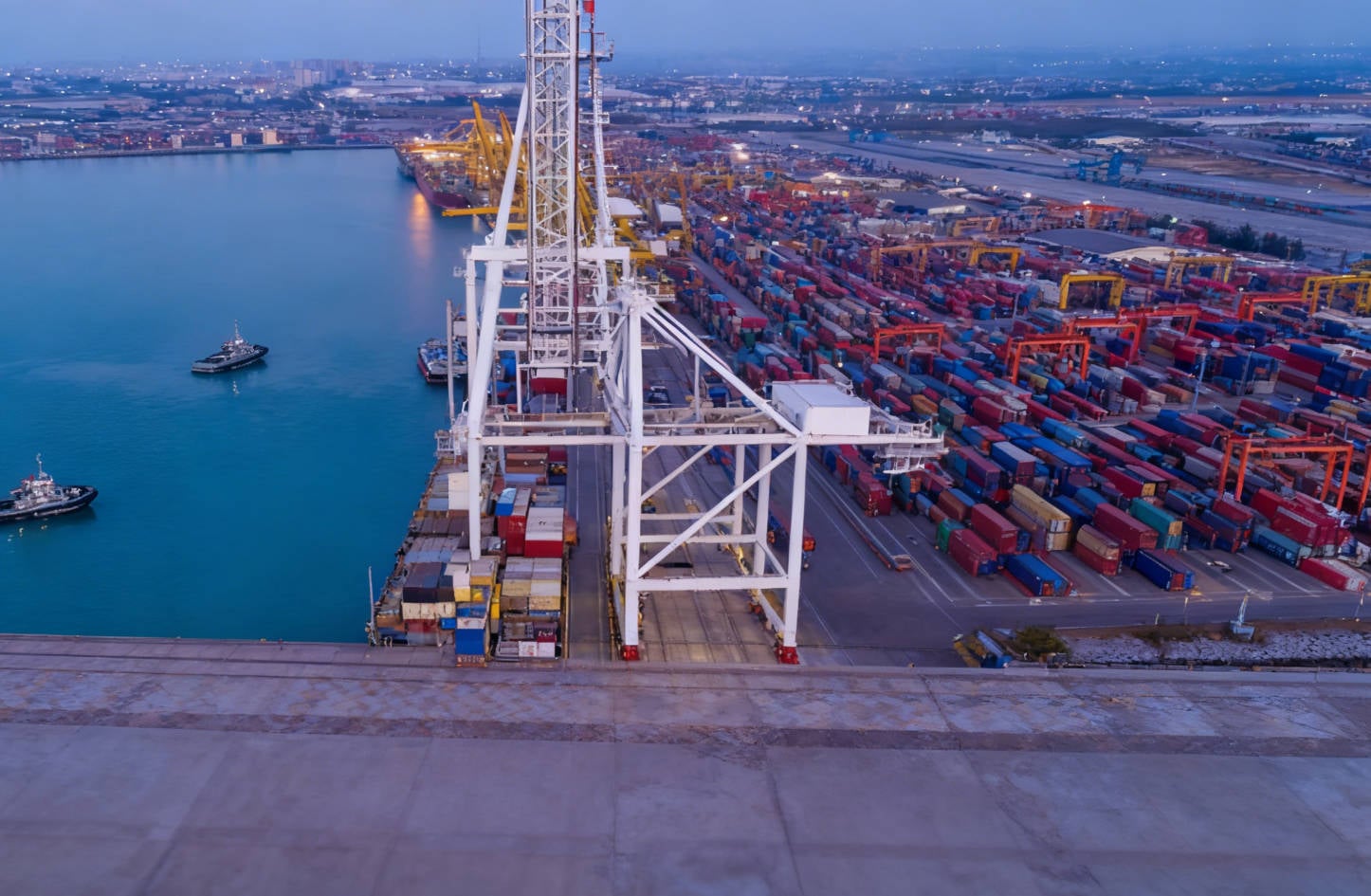
Shipping from China to Thailand doesn’t have to be confusing, expensive, or stressful. With the right plan, you can turn it into a predictable, repeatable process that supports your business instead of draining your energy.
This guide walks you through everything you need to know—from choosing shipping methods and estimating transit times, to navigating Thai customs and taxes, to deciding when to partner with a professional logistics provider.
Introduction
China-to-Thailand shipping is one of the busiest cross-border lanes in Southeast Asia. Around 30% of Thailand’s e-commerce market is already cross-border, and almost half of Thai online shoppers have bought from foreign sellers, many of them from China.
At the same time, cross-border logistics across Southeast Asia is booming, with the regional market expected to grow from about USD 9.08 billion in 2025 to USD 15.39 billion by 2030.
This growth is great news—but it also means rules and costs change fast, especially for taxes on small parcels and cross-border e-commerce shipments. Thailand is tightening its policies on low-value imports and will soon remove long-standing tax exemptions.
In this guide, you’ll learn:
- The main shipping options from China to Thailand and how to choose between them
- Typical transit times and what affects your cost
- How Thai customs, duties, and VAT actually work (and what’s changing)
- The documents you must prepare to avoid delays
- How a professional forwarder like Topway Shipping can simplify everything for you
Let’s start with the big picture.
Why Shipping from China to Thailand Matters for Your Business
Thailand is one of Southeast Asia’s most dynamic e-commerce markets. Internet penetration is high, and platforms like Shopee and Lazada dominate, supported by advanced logistics networks.
For Chinese exporters, this creates a perfect scenario:
- Short distance compared to shipping to Europe or the U.S.
- Multiple transport options (express, air, sea, even regional cross-border trucking)
- Growing consumer demand for competitively priced products from China
However, studies on China–Thailand cross-border e-commerce point out that logistics costs can still be high and that some logistics systems remain less efficient than domestic Chinese networks.
The right shipping strategy—optimizing modes, using the right Incoterms, and preparing proper documents—can be the difference between profitable growth and constant headaches.
Know Your Shipping Options from China to Thailand
You have four main ways to ship from China to Thailand:
- Express courier
- Air freight
- Sea freight (FCL / LCL)
- Cross-border rail/road (often via regional logistics networks)
Here’s a high-level comparison.
Comparison of Main Shipping Methods
Note: Transit times are typical ranges for China → Thailand and may vary by route, season, and customs efficiency.
| Shipping Method | Typical Transit Time (Door-to-Door) | Best For | Pros | Cons |
|---|---|---|---|---|
| Express Courier | ~1–3 days | Small parcels, urgent samples, B2C orders | Fastest, fully door-to-door, easy tracking | Highest cost per kg, limited for very bulky cargo |
| Air Freight (General) | ~3–7 days | High-value or time-sensitive bulk cargo | Much faster than sea, more cost-efficient than express for larger loads | Higher cost than sea, stricter weight/size limits |
| Sea Freight (LCL/FCL) | ~9–15 days port-to-port; longer door-to-door | Large or heavy shipments, pallets, full containers | Lowest cost per unit for volume cargo, stable for regular replenishment | Slower; more planning needed; LCL adds handling time |
| Cross-Border Road/Rail | ~7–14 days | Regional B2B shipments, certain e-commerce flows | Balanced speed and cost, flexible routing | Availability depends on network; may involve more complex customs |
Shorter sea transit times (around 9–12 days China–Thailand) are commonly cited for Southeast Asia routes, though real-world door-to-door times may extend due to port handling and customs.
Let’s look at each method in a bit more detail.
Express Courier
Global players (DHL, FedEx, UPS) and regional integrators offer door-to-door express services:
- Ideal for parcels up to ~30 kg or small cartons
- Transit time often 1–3 days from pickup in China to delivery in Thailand
- Suitable for urgent samples, high-value items, or early-stage test orders
You usually pay by chargeable weight (based on actual vs. volumetric weight). Express is convenient but may become very expensive beyond a certain weight/volume.
Air Freight
Air freight is often handled airport-to-airport, with forwarders or local partners arranging pickup and final delivery:
- Typical 2–7 days from China to Thailand, depending on flight schedules and customs clearance.
- Cost-effective for medium-sized, high-value or time-sensitive shipments (e.g., electronics, fashion, spare parts).
- Often combined with consolidation services to reduce cost per kg for multiple small shipments.
Door-to-door air solutions add pick-up, export clearance, and last-mile delivery to the core air leg—this is where experienced forwarders add real value.
Sea Freight (FCL and LCL)
Sea freight is the backbone of bulk logistics from China to Thailand:
- Regional routes can be quite fast, with ~9–12 days port-to-port being common.
- Total door-to-door time may reach 2–4 weeks depending on stuffing, customs, and inland trucking.
Two main options:
- FCL (Full Container Load): You book a full container (e.g., 20ft or 40ft). Best for high volume or when you want full control and security.
- LCL (Less than Container Load): Your cargo shares a container with others. More flexible for smaller quantities but involves extra consolidation/deconsolidation handling, which can slightly increase transit time and handling risk.
Sea is typically the cheapest per cubic meter and is suitable for regular stock replenishment when you can plan ahead.
Road / Rail Regional Solutions
China–Thailand trade sometimes uses cross-border trucking or multimodal rail-plus-road:
- Transit around 7–14 days, depending on the exact route and border formalities.
- Useful when port congestion is high or when specific inland origins/destinations are better served by land routes.
These services are usually arranged through specialized forwarders with a strong regional network.
Transit Time & Cost: What to Expect
Transit time and price vary widely depending on volume, weight, route, and season. Global data suggests that, in general:
- Express: 1–3 days
- Standard air freight: 3–10 days
- Sea freight: 9–12 days regionally (up to several weeks on long-haul routes)
Typical Transit Time Overview
| Mode | China → Thailand (Door-to-Door, Typical) | Notes |
|---|---|---|
| Express | 1–3 days | Fastest but highest cost per kg |
| Air Freight | 3–7 days | Airport-to-airport even faster; add time for customs & delivery |
| Sea Freight | ~2–4 weeks | Includes consolidation, port handling, customs, trucking |
| Road / Rail | 7–14 days | Depends on route, border efficiency |
Main Cost Drivers
Even if you don’t need exact rate tables, it helps to understand what drives your quote.
| Cost Factor | How It Affects Your Price |
|---|---|
| Mode of Transport | Express > Air > Road/Rail > Sea (from most to least expensive per kg) |
| Chargeable Weight/Volume | Freight is often billed by chargeable weight or CBM, whichever is higher |
| Route & Season | Peak seasons (Q4, holidays) raise prices; popular routes may be cheaper |
| Service Level | Door-to-door, DDP (duty paid), warehouse storage all add service fees |
| Surcharges | Fuel, security, remote area surcharges, and special handling fees |
| Customs & Taxes | Import duty, VAT, and clearance fees can significantly impact final cost |
A good logistics partner will model different scenarios (express vs air vs sea, DAP vs DDP, etc.) so you can choose the best balance of speed and cost.
Incoterms: Who Pays for What (and When)?
When you buy from a Chinese supplier, your contract will usually include an Incoterm. Incoterms are standardized trade terms published by the International Chamber of Commerce that clarify who is responsible for transport, customs, and risk at each step.
Some Incoterms are especially common for China–Thailand trade:
- EXW (Ex Works):
- Seller makes goods available at their premises.
- Buyer arranges all transport, export, and import procedures.
- FOB (Free on Board):
- Seller delivers goods on board the ship at the Chinese port.
- Buyer handles main sea freight, insurance, and import.
- CIF (Cost, Insurance and Freight):
- Seller pays for sea freight and minimum insurance to the port of destination.
- Buyer handles import clearance and local delivery.
- DAP (Delivered At Place):
- Seller delivers to a named place in Thailand, but buyer pays duties and taxes.
- DDP (Delivered Duty Paid):
- Seller (or their logistics partner) handles everything, including duties and taxes, delivering the goods cleared to the buyer’s door.
For cross-border e-commerce, DAP and DDP are especially common because buyers want predictable landed costs and minimal customs involvement.
If you’re a Thai importer or a Chinese seller targeting Thai customers, it can be smart to:
- Use FOB or EXW with a trusted forwarder if you want more control and potentially better rates.
- Use DAP or DDP when you want to bundle logistics and customs into a single, predictable cost.
Thai Customs, Duties & VAT: What You Need to Know
This is where many sellers start to feel overwhelmed—but you don’t have to. Let’s break it down.
De Minimis Threshold and Upcoming Changes
Historically, Thailand has had a de minimis threshold of THB 1,500 (CIF value), meaning low-value parcels under this amount could be exempt from import duty, although 7% VAT still applies to all imports.
However, Thai authorities have announced major changes:
- Thailand plans to abolish the de minimis duty exemption from 1 January 2026, meaning all imported parcels—regardless of value—will be subject to import duties and VAT.
- Recent reports also describe a policy that imposes a 10% duty on small parcels valued up to THB 1,500, ending the era of cheap, largely duty-free online orders from China.
In other words, the environment is moving from “duty-free small parcels” to “all parcels taxed”. For e-commerce sellers, that makes accurate declaration, HS codes, and compliant logistics partners more important than ever.
VAT and Import Duties
Key points for imports into Thailand:
- VAT: 7% standard VAT applies to most imports, calculated on the CIF value plus duty and certain fees.
- Import duty:
- Depends on the HS (Harmonized System) code and product category.
- Ranges from 0% for some IT and industrial goods to 10% or more for consumer products, fashion, or accessories.
Using correct HS codes is critical. Thai customs takes HS classification seriously, and misclassification can lead to:
- Reassessment of duty
- Fines
- Delays and even cargo holds
Many professional guides emphasize the importance of accurate HS codes and complete commercial invoices to avoid such issues.
Key Documents for Shipping from China to Thailand
Depending on mode and Incoterm, you may need some or all of the following:
- Commercial Invoice
- Packing List
- Bill of Lading (for sea) or Air Waybill (for air)
- Export Declaration (China)
- Import Declaration (Thailand)
- Certificates (e.g., origin, conformity) where required
Industry sources consistently list commercial invoice, packing list, and bill of lading/air waybill as core documents for China–Thailand freight.
Documentation Checklist (At a Glance)
| Document | Who Prepares It | What It Contains | Why It Matters |
|---|---|---|---|
| Commercial Invoice | Seller / Exporter | Seller & buyer details, product description, HS code, unit & total value, terms (Incoterm) | Basis for customs valuation, duty, and VAT |
| Packing List | Seller / Exporter | Detailed packing info: number of boxes, weights, dimensions | Helps customs and logistics handle cargo accurately |
| Bill of Lading (B/L) | Carrier / Forwarder | Contract of carriage for sea freight, ship & port info | Proof of ownership, required for cargo release |
| Air Waybill (AWB) | Airline / Forwarder | Contract for air shipment | Used for tracking and customs |
| Export Declaration | Seller or Forwarder in China | Export data required by Chinese customs | Legal requirement for goods leaving China |
| Import Declaration | Importer or Broker in Thailand | Data submitted to Thai customs for clearance | Basis for duties, taxes, and risk assessment |
| Certificates (if any) | Seller or manufacturer | Certificates of origin, conformity, or licenses | May reduce duty or allow clearance of regulated goods |
Having clean, accurate documents dramatically reduces delays and surprise costs at Thai customs.
Planning a Shipment: Step-by-Step
Here’s how a typical shipment from China to Thailand might look from an e-commerce or small business perspective.
Choose Your Mode and Service Level
- For samples or urgent, low-volume shipments: Express or air.
- For regular inventory restocks or bulk orders: Sea (LCL/FCL) or road/rail.
- Decide whether you want port-to-port, door-to-door, DAP, or DDP service based on how much control and responsibility you’re comfortable with.
Confirm Incoterms with Your Supplier
- If they quote FOB Shanghai/Shenzhen, they handle delivery to the port and export.
- If they quote EXW, you or your forwarder handle pickup and export.
- For DAP/DDP, you’ll often work with a logistics provider that designs the entire route.
Prepare Products and Packaging
- Use sturdy, export-standard cartons and pallets.
- Clearly mark cartons (SKU, quantity, “Made in China”, handling instructions).
- For e-commerce parcels, consider pre-labeling and barcode systems to speed fulfillment.
Create Your Documents
- Ask your supplier to prepare commercial invoice + packing list with clear English descriptions and HS codes.
- Check that declared values are realistic and consistent with your pricing.
- Provide your logistics provider with any special certificates or licenses needed for your product category.
Book and Hand Over Cargo
- Your forwarder arranges space with carriers, books sea/air/express slots, and confirms schedules.
- Cargo is picked up or delivered to the warehouse/port/airport.
- The export clearance is handled in China.
Customs Clearance in Thailand
- Your Thai customs broker or logistics partner submits import declarations using your documents.
- Customs calculates duty and VAT, and any additional checks (inspections, queries) are handled.
- Once cleared, the goods are released for delivery to your warehouse, fulfillment center, or final customers.
Common Pitfalls (and How to Avoid Them)
Even experienced importers make mistakes. Here are some of the most common issues in China–Thailand shipping:
Under-declaring values to “save tax”
- Thai customs is increasingly strict and better equipped with data.
- Under-declaration can trigger penalties, reassessments, and cargo holds.
- Solution: Declare realistic values and work with a provider that helps you optimize legally (e.g., correct HS, possible FTAs).
Wrong HS Codes
- Using a generic or incorrect code can change duty rates or cause reclassification issues.
- Solution: Double-check HS codes with customs brokers or experienced forwarders.
Ignoring Regulatory Changes
- With the de minimis threshold being abolished and all parcels to be taxed from 2026, relying on outdated rules can destroy your margins.
- Solution: Keep up-to-date via reliable sources or a logistics partner that actively tracks policy changes.
Choosing the Wrong Mode
- Using air for very low-margin, bulky items can leave you with no profit.
- Using slow sea for high-demand products can cause stockouts and lost sales.
- Solution: Match product value, demand predictability, and margin to the correct mode.
Poor Packaging and Labeling
- Damaged packaging or unclear labels slow down customs checks and can increase claims.
- Solution: Invest in good packaging and clear, bilingual labels where appropriate.
Why Working with a Professional Forwarder Matters
Studies on cross-border e-commerce in Southeast Asia repeatedly highlight the importance of integrated logistics solutions—combining warehousing, transportation, and information visibility—to streamline operations and reduce costs.
For China–Thailand shipments, a strong logistics partner can:
- Advise on optimal shipping modes and routes based on your volume and seasonality
- Help you choose and implement suitable Incoterms (FOB, DAP, DDP, etc.)
- Manage consolidation for small parcels, saving cost per unit
- Handle customs clearance on both sides with compliant HS coding and realistic values
- Offer overseas warehousing in Thailand to speed up last-mile delivery to end customers
Instead of dealing with multiple carriers, customs brokers, and warehouse operators, you have one point of contact that orchestrates everything.
Partnering with Topway Shipping for China–Thailand Logistics
If you want a solution that covers the entire journey—from Chinese factory to Thai customer—Topway Shipping is designed exactly for that.
Who is Topway Shipping?
Since 2010, Topway Shipping, headquartered in Shenzhen, China, has been a professional provider of cross-border e-commerce logistics solutions. The founding team has over 15 years of experience in international logistics and customs clearance, with a particularly strong background in China–U.S. transportation and global cross-border supply chains.
Over the years, Topway Shipping has expanded to cover major routes worldwide, including China–Thailand, and built services that span the entire logistics chain:
- First-leg transportation:
- Pickup from suppliers or factories across China
- Consolidation and line-haul by air, sea, or multimodal
- Overseas warehousing:
- Storage, inventory management, and order fulfillment close to your Thai customers
- Faster delivery times and better customer experience
- Customs clearance:
- End-to-end support with documentation, HS classification, and declarations
- Proactive guidance on policy changes, such as the end of de minimis exemptions and the move toward taxation of all parcels
- Last-mile delivery:
- Integration with reliable local carriers in Thailand
- Options for standard and express delivery, plus tracking visibility for your buyers
Topway Shipping also offers flexible FCL and LCL ocean freight options from China to major ports around the world, including regional hubs that feed into Southeast Asia. That means as your business grows, you can move from small parcels to full-container strategies without changing partners.
For China–Thailand trade in particular, Topway Shipping can help you:
- Design no-stress DAP or DDP solutions so your Thai buyers don’t have to worry about customs
- Consolidate small e-commerce parcels into cost-effective bulk shipments, then deconsolidate and distribute in Thailand
- Adjust your logistics plans in response to new duty and VAT rules so your pricing stays competitive and compliant
If your goal is to scale in Thailand without constantly firefighting shipping problems, partnering with a seasoned cross-border specialist like Topway Shipping can make the difference.
Conclusion
Shipping from China to Thailand is no longer just about finding the cheapest rate. It’s about:
- Choosing the right shipping mode (express, air, sea, or road/rail) for your product and margin
- Understanding Incoterms so you know who is responsible at each stage
- Preparing clean documents that allow Thai customs to process your shipments quickly
- Staying ahead of policy changes, especially the end of the de minimis duty exemption and the growing taxation of small parcels
- Working with a professional logistics partner who can integrate first-leg transport, customs, warehousing, and last-mile delivery into one reliable flow
Thailand is a high-potential market with strong demand for competitively priced products from China. As cross-border e-commerce and logistics in Southeast Asia keep expanding, those who build a robust, compliant logistics setup now will be in the best position to grow.
A clear strategy, accurate paperwork, and the right partner—such as Topway Shipping—turn shipping from a source of stress into a competitive advantage.
FAQs
What is the fastest way to ship from China to Thailand?
The fastest option is express courier, which can deliver in about 1–3 days door-to-door for small parcels, depending on the origin city in China and the destination in Thailand.
Is sea freight from China to Thailand really slow?
Not necessarily. Regional sea routes can be relatively quick, with ~9–12 days port-to-port on many China–Southeast Asia lanes. The total door-to-door time is longer once you include consolidation, customs, and local delivery, but it’s still very competitive for bulk shipments.
Will my low-value parcels still be duty-free in Thailand?
Thailand historically applied a de minimis threshold of THB 1,500, below which goods could be exempt from import duty (though 7% VAT still applied). However, authorities have announced that this exemption will be abolished from 1 January 2026, and new policies including a 10% duty on low-value parcels have been reported. This means you should plan for duties and VAT on nearly all parcels going forward.
Which Incoterm should I use for China–Thailand shipments?
It depends on how much control you want:
- Use FOB if you want your supplier to handle delivery to the Chinese port and export, while you (or your forwarder) manage the main leg and import.
- Use EXW if you want full control from the factory gate onward (but you must arrange export).
- Use DAP or DDP if you want an integrated door-to-door solution, with DDP including import duty and VAT in a single price.
A logistics partner like Topway Shipping can help you choose the best term for your business model.
What documents do I absolutely need for customs clearance into Thailand?
In most cases you will need:
- Commercial invoice with accurate values and HS codes
- Packing list
- Bill of lading or air waybill
- Import declaration submitted by your broker or logistics partner
Some products also require certificates of origin or compliance documents. Clear documentation is one of the biggest factors in avoiding delays and disputes with customs.
Can I handle everything myself without a forwarder?
If your volume is very small and you only use express couriers, you can often manage shipments yourself. But once you start moving larger volumes, mixed modes (air/sea), or DAP/DDP solutions, a professional forwarder or e-commerce logistics specialist becomes extremely valuable. They:
- Negotiate better freight rates
- Manage complex customs requirements
- Provide warehousing and last-mile options in Thailand
For many businesses, this is the difference between constant operational stress and a smooth, scalable logistics pipeline.