
E-commerce Fulfillment from China to Portugal: What SMEs Should Know
Introduction
Portugal’s e-commerce business is no longer a little chance; it’s a quickly growing digital economy. In 2025, internet sales reached around €11 billion, and about 59% of Portuguese people between the ages of 16 and 74 shopped online regularly. By 2030, the market is expected to be worth $11.03 billion, with a compound yearly growth rate of 11.33%. This trend is a real business opportunity for small and medium-sized firms (SMEs) that buy goods from China, but taking advantage of it needs more than just having a good product. It takes a clear-eyed look at how cross-border fulfillment really works on this route.
There are about 10,000 kilometers, two continents, and a complicated web of customs rules, transportation methods, and tariff structures between China and Portugal. In 2024, trade between the two countries was worth around $8 billion. Chinese exports of electronics, machinery, textiles, furniture, and consumer products flowed gradually westward into the Iberian Peninsula. Even with this many orders, many small and medium-sized businesses still don’t have a clear logistics plan for their fulfillment. They rely on several providers, don’t understand the rules, or choose shipping methods that cut into their profits.
This article is a useful guide for business owners, e-commerce managers, and sourcing managers who are already shipping goods from China to Portugal or want to do so. It talks about the different shipping options, the customs and VAT rules that importers have to follow, the warehousing and fulfillment models that will become more popular in 2025 and beyond, the common mistakes that small and medium-sized businesses make when shipping, and how to find a logistics partner who can handle the whole supply chain.
The China–Portugal Trade Corridor in 2025: Setting the Scene
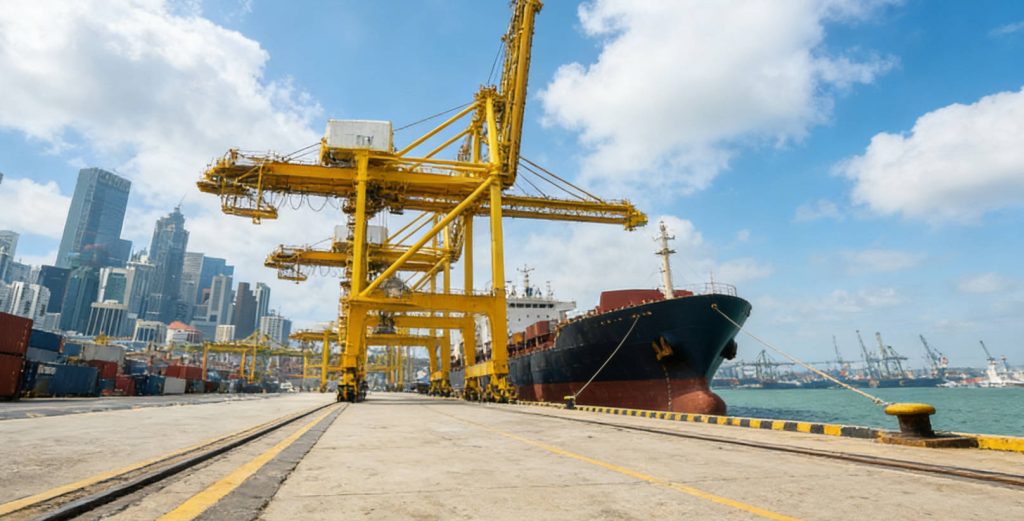
The physical connection that connects Chinese factories to Portuguese customers is surprisingly well-served. Containerized goods flows from major South China ports like Shenzhen, Guangzhou, and Shanghai through the South China Sea, the Strait of Malacca, the Indian Ocean, the Suez Canal, and along the Atlantic coast to Portugal. This trip usually takes between 28 and 40 days for full-container-load (FCL) cargo coming from Guangdong province.
But not all routing is easy. The Red Sea disruption that happened in late 2023 had major carriers have to send ships around the Cape of Good Hope instead of through the Red Sea. This added 10 to 14 days to typical transit times and briefly raised freight rates. Rates have settled down a lot by early 2026. FCL rates from South China ports to Lisbon now start at about USD 1,700 for a 20-foot container and about USD 2,900 for a 40-foot container. These are good prices for importers who bring in a lot of goods.
Portugal’s locati0n is an important but sometimes overlooked logistical asset. The Port of Sines, which located on the Atlantic coast south of Lisbon, is one of the fastest-growing container hubs in Europe and a key transshipment point in MSC’s global network. Because it can handle deep water and is on the Atlantic coast, it can quickly process and transport cargo from East Asia into the larger EU market without the traffic jams that are common in North Sea ports like Rotterdam or Hamburg. If your small or medium-sized business has consumers in Spain or other EU nations besides Portugal, Sines is a good place to start.
Shipping Modes: Matching the Method to Your Business Model
The most important choice you can make when fulfilling an order across borders is which delivery method to choose. It decides how much it will cost, how long it will take to get there, how much cash flow you can expect, and what kind of customer service you can really promise. There is no one right answer. The best option depends on the type of product you sell, how many orders you get, your inventory plan, and how quickly your goods need to be delivered.
Ocean Freight (FCL and LCL)
Ocean freight is still the principal way that physical products are traded between China and Portugal. It has the best cost-per-unit economics by a long shot for SMEs that move a lot of goods. When cargo fills most or all of a 20-foot or 40-foot container, full-container-load shipping is the best option. Less-than-container-load (LCL) shipping, on the other hand, lets smaller shippers share container space and only pay for the cubic meters they use. LCL usually adds 5 to 7 days to the transit time because it has to be consolidated at the origin and deconsolidated at the destination.
The downside of ocean freight is that it takes a long time. SMEs need to plan for lead times of four to six weeks, even with the best routing. This means having more inventory and predicting demand longer in advance. Ocean freight is the best option for firms that sell non-perishable goods with steady demand, like technology accessories, home decor, fashion basics, and tools.
Air Freight and Express Courier
Air freight from China to Portugal usually takes 4 to 8 days door-to-door. This makes it the best option for high-value goods, seasonal launches, urgent restocks, or things that don’t last long. DHL, FedEx, and UPS all provide express courier services that cut this down to 2 to 5 working days. Premium choices promise delivery within 72 hours. The extra cost is substantial—about USD 8.50 per kilogram or USD 150 per cubic meter for express—so air freight is preferable when the value-to-weight ratio is high or when the cost of a stockout is higher than the cost of delivery.
Rail Freight
Rail freight across the Yiwu–Madrid corridor is a good balance between ocean and air. It takes between 21 to 24 days to get to Portugal, including the last leg from Madrid. During times of port congestion, it tends to be more predictable than sea routing. Small and medium-sized businesses that need speedier and cheaper choices for medium-weight items are starting to use it more.
The table below lists the most important features of each shipping mode for the China–Portugal corridor:
| Shipping Mode | Transit Time | Approx. Cost | Best For |
| FCL Ocean Freight | 28–40 days | $1,700–$2,900/container | High-volume, non-urgent goods |
| LCL Ocean Freight | 33–48 days | Pay per CBM | Small-to-mid volume shipments |
| Air Freight | 4–8 days | ~$8.50/kg | High-value, time-sensitive cargo |
| Express Courier | 2–5 days | Premium per kg | Urgent parcels, samples |
| Rail Freight | 21–24 days | Mid-range | Medium loads, predictable schedule |
Portuguese Customs and VAT: What Every Importer Must Understand
Portugal is a member of the EU and follows all of the EU’s import rules, including the Common Customs Tariff. This implies that small and medium-sized businesses that import from China have to deal with a complex compliance environment that can surprise new importers, especially when it comes to VAT, EORI registration, and the EU’s changing customs pre-notification rules.
Duties and the TARIC System
The CIF (Cost, Insurance, Freight) value is used to figure up import duties. This means that the taxable base comprises not only the value of the items but also the cost of shipping them to the border of Portugal. The EU’s TARIC tariff schedule uses the HS code of the goods to set the tariff rates. Consumer electronics usually have lower duties than clothes or shoes, but it’s easy to make a mistake and pay too much. Importers should double-check their HS codes before filing since Portuguese customs checks declared values against databases of market prices.
VAT at 23%
Most imported items to Portugal have a normal VAT charge of 23%. This is true for the CIF value plus any customs duties, not just the value of the goods. Businesses who are new to importing into Portugal are often surprised when the final landing cost is more than expected. The EU-wide distance selling level that starts VAT responsibilities is €10,000 per year. Businesses who go above this limit without registering incur fines. Portugal has added a 3% digital services tax in January 2025. This tax applies to e-commerce enterprises that offer both physical and digital goods and may necessitate different ways of billing.
EORI Registration and ICS2
Any business that brings goods into the EU must have a valid EORI (Economic Operators Registration and Identification) number. This is a non-negotiable requirement and must be secured before shipments begin. In 2025, the EU’s Import Control System 2 (ICS2) entered its third and final release phase. This added pre-arrival notice requirements to all forms of transportation, including sea and rail freight. Before loading cargo, importers and their forwarders must now file an Entry Summary Declaration (ENS) online. This declaration must include full 6-digit HS numbers for every line item. One of the main reasons for delays and physical inspections at the border is incomplete or incorrect ENS filings.
DDP vs. DAP: Choosing Your Trade Terms
The decision between Delivered Duty Paid (DDP) and Delivered at Place (DAP) trade conditions makes a big difference in how much effort and risk the importer has to deal with. With DDP, the logistics company takes care of everything from picking up the products at the origin to clearing them through Portuguese customs and delivering them to the buyer. The buyer pays one all-in price and gets items that are ready to sell. Under DAP, the importer is in charge of clearing customs and paying duties when the goods arrive. This means they need either an in-house customs staff or a trustworthy local broker.
More and more small and medium-sized businesses (SMEs) that are new to the Portugal corridor or don’t have the staff to handle customs compliance are using DDP. For experienced importers who have good contacts with brokers and know how much they will be bringing in, DAP can give them more control and help them see how much it will cost. The best option for your team will rely on how much they can handle, how much risk they are willing to take, and how closely you need to keep an eye on the customs process.
Important papers needed to get through customs in Portugal:
| Document | Purpose | Notes |
| Commercial Invoice | Declares goods value and description | Must reflect true CIF value |
| Packing List | Details contents and quantities | Must match invoice exactly |
| Bill of Lading / AWB | Proof of shipment | Required for sea/air freight |
| Certificate of Origin | Verifies manufacturing origin | Can affect tariff rates |
| Single Administrative Document (SAD) | EU import declaration | Filed electronically via eAduana |
| EORI Number | Importer identification | Mandatory for all EU importers |
| ENS (Entry Summary Declaration) | ICS2 pre-arrival notification | Required before loading |
Fulfillment Models for SMEs: From Direct Shipping to Overseas Warehousing
The fulfillment strategy you chose affects everything that comes after it, such how fast you can deliver, how happy customers are, how you handle returns, and how much risk you take with your inventory. There is no one optimum way to do things; each model has pros and cons that you need to think about in relation to your business’s current size and growth path.
Direct Cross-Border Fulfillment
The simplest concept is that orders are ordered, chosen, packed, and shipped directly from China to the consumer in Portugal. This keeps less cash tied up in inventories and gets rid of the cost of storing goods overseas. It works well for firms that sell a small number of items or are trying out a new type of product. The negative is that delivery takes a long time; even with air freight, customers usually have to wait a week or more, and returns are hard to handle. For categories where Portuguese consumers are used to getting their orders quickly from retailers in Portugal or other EU countries, direct cross-border shipping can be a disadvantage.
Overseas Warehousing in Portugal or the Iberian Region
The simplest concept is that orders are ordered, chosen, packed, and shipped directly from China to the consumer in Portugal. This keeps less cash tied up in inventories and gets rid of the cost of storing goods overseas. It works well for firms that sell a small number of items or are trying out a new type of product. The negative is that delivery takes a long time; even with air freight, customers usually have to wait a week or more, and returns are hard to handle. For categories where Portuguese consumers are used to getting their orders quickly from retailers in Portugal or other EU countries, direct cross-border shipping can be a disadvantage.
Amazon FBA for Portugal
In the last few years, Amazon Portugal has built more fulfillment centers, and there are now FBA locations in Lisbon, Porto, and Braga. For small and medium-sized businesses (SMEs) that already sell on Amazon’s EU marketplace, routing some of their inventory through FBA can make them eligible for Prime and provide them access to Amazon’s last-mile network without having to set up their own warehouse. The trade-off is expense, since you have to carefully consider the FBA costs, prep and labeling regulations, and storage fees. You also have to give up some control, since FBA limits how flexible you can be with packaging, bundling, and talking to customers.
Common Pitfalls SMEs Encounter on the China–Portugal Corridor
Even though this trade path is rather well-established, SMEs are running into the same kind of challenges. One of the best things a firm can do before choosing a fulfillment plan is to learn about these things ahead of time.
The most common financial mistake is to not account for the whole cost of landing. Importers that plan their budgets based on the FOB price and the quoted freight cost typically find that customs duties on the CIF value, 23% VAT, brokerage fees, terminal handling charges, and last-mile delivery add 30% to 50% or more to the cost of getting the goods to their destination. It’s important to model the complete cost stack before making sourcing decisions, not after.
Mistakes in paperwork are a big reason for delays. Under ICS2 Release 3, a customs hold can happen if the HS code is wrong or if the commercial invoice and the ENS filing don’t match. This can add days to transit time and lead to examination fees. The Portuguese customs department is likewise developing its digitalization effort. The eAduana portal will be totally electronic by 2025. Forwarders who still use manual or paper-based operations are becoming more of a burden than an advantage.
Another common problem is failing to plan for the seasons. During Chinese New Year, manufacturing usually stops or slows down for two to four weeks in January or February. Before Golden Week, the hurry to get things done before the holiday causes port congestion and a lack of capacity. Black Friday and the Christmas season are two times when e-commerce orders go up a lot in Portugal. SMEs that don’t build up enough extra inventory before certain times or don’t book freight space early sometimes run out of supplies when demand is at its maximum.
Finally, picking providers based only on pricing without checking the quality of their service is a mistake that often happens at the worst possible time. A freight forwarder who can’t give you real-time shipment visibility, doesn’t have a reliable customs broker network in Portugal, or doesn’t have a backup plan for carrier problems can cost a SME a lot more in lost sales and unhappy customers than the extra money they charge.
How Topway Shipping Supports SMEs on the China–Portugal Route
Topway Shipping, based in Shenzhen, China, has been known as a professional provider of cross-border e-commerce logistics solutions since 2010. The founding team has more than 15 years of experience in international logistics and customs clearance, with a lot of knowledge about the China–US corridor and, more and more, the China–Europe routes, including Portugal.
Topway’s service architecture spans the whole supply chain, not just a part of it. We handle first-leg transportation from Chinese production centers, foreign warehousing, customs clearance, and last-mile delivery as a single service instead of passing it off to several vendors who don’t work together. For small and medium-sized businesses (SMEs), having full visibility is important for operations since it gets rid of the gray areas between providers where responsibility often gets lost and delays build up.
Topway offers both FCL and LCL ocean freight services from China to key ports across the world, such as Lisbon and Sines. These services are great for shippers who need a lot of space. This flexibility lets enterprises at different phases of growth get competitive marine freight prices without having to pay for a whole container. For online sellers who are testing the Portuguese market or dealing with seasonal spikes in demand, being able to combine LCL shipments with the right customs procedures is a useful benefit.
The DDP service that Topway offers is especially useful for small and medium-sized businesses who are new to the Portuguese market. Instead of dealing with the 23% VAT, EORI compliance, ICS2 ENS files, and Portuguese customs procedures on their own, importers can work with Topway as a single point of contact. They pay a flat cost and get their goods cleared and delivered. For organizations that don’t have their own logistics teams, this strategy turns a complicated compliance task into a manageable, predictable cost line.
Building a Sustainable China–Portugal Fulfillment Strategy
A flexible fulfillment strategy doesn’t depend on just one modality or provider. Instead, it is based on having options, backups, and strict cost control. A few characteristics always set apart the small and medium-sized firms (SMEs) in the China–Portugal corridor that grow smoothly from those that have to deal with operational crises over and over again.
Make a chart of your whole landed cost, not simply your freight quote. Include tariffs, VAT, port handling, inland transit, warehousing if needed, and delivery to the last mile. Before you set your prices for retail, make this model. Don’t do it after. It’s frustrating and unnecessary to find out that your margins are negative after the first shipment has cleared customs.
From the start, be sure your paperwork is correct. Find a forwarder whose team knows how to file ICS2 ENS forms, can accurately classify your goods under the TARIC system, and has a good working relationship with Portuguese customs brokers. When you engage with a skilled supplier, the short-term cost is nearly always lower than the entire cost of customs holds, re-examinations, and penalty payments that come with working with an inexperienced one.
As your business grows, think about using a hybrid shipping approach. Many successful small and medium-sized businesses (SMEs) start off shipping goods directly across borders by air or by express courier while they grow their client base. Once they have enough volume to make the inventory investment worthwhile, they switch to ocean freight replenishment of a Portuguese warehouse. This step-by-step method keeps capital risk low in the beginning while working toward the benefits of local stock, such as lower landed costs and faster delivery times.
Lastly, keep an eye on how the market works in Portugal. One thing that makes the country’s e-commerce market unique is that international vendors, like Chinese platforms like Shein, already dominate the top of the market. Portuguese shoppers are becoming more comfortable shopping online, but they are still picky about the experience. They will be more likely to buy from small and medium-sized businesses (SMEs) who compete on delivery timeliness, customer service, and product quality rather than just price.
Conclusion
Over the past few years, the China–Portugal e-commerce fulfillment corridor has grown a lot. After the problems of 2021–2024, freight prices have stabilized. Portugal’s logistics system is getting better all the time, and Portuguese shoppers are becoming more comfortable buying from merchants in other countries. The opportunity is genuine and expanding for small and medium-sized businesses who have well-sourced products and a strict commitment to logistics.
But success on this highway is not guaranteed. It takes knowing the rules, like how to register for EORI, follow ICS2, classify goods using TARIC, and handle VAT. It also takes picking fulfillment partners that can do their jobs well all the way through the supply chain. The companies who will get the most out of Portugal’s growing e-commerce sector are the ones that see logistics as a strategic role, not something they do on the side.
Whether you’re sending your first container or moving to an overseas warehouse model, the basics are the same: know your landed costs, keep precise records, prepare for seasonal changes, and work with logistics companies that have proven they can handle this route. The market in Portugal is open and booming. The question is how ready your fulfillment operation is to handle it.
Frequently Asked Questions (FAQs)
Q: How long does sea freight from China to Portugal take?
A: The normal time it takes for FCL goods to go via the Suez Canal is 28 to 40 days. LCL takes an extra 5 to 7 days to consolidate and deconsolidate. If you have to go around the Cape of Good Hope because of problems, add about 10 to 14 days.
Q: What is the VAT rate on imports into Portugal?
A: Portugal has a basic VAT rate of 23% on most imported items. This is based on the CIF value plus any customs charges that may apply. Businesses who sell more than €10,000 worth of goods over the EU must register for VAT.
Q: Do I need an EORI number to import into Portugal?
A: Yes. Any business that brings goods into the EU, including Portugal, needs to obtain a valid EORI number. You need to get this before shipments start, and it’s needed for all customs declarations.
Q: What is the difference between DDP and DAP shipping?
A: When you use DDP (Delivered Duty Paid), the logistics company pays for everything, including customs clearance and duties. When goods are delivered at a place (DAP), the importer is in charge of clearing them and paying the duties. DDP is easier but costs more; DAP gives more control to skilled importers.
Q: What documents are required for Portuguese customs clearance?
A: The commercial invoice, packing list, bill of lading or air waybill, certificate of origin, Single Administrative Document (SAD), EORI number, and Entry Summary Declaration (ENS) under ICS2 are all important documents. All of them must be correct and match up with each other.
Q: Is ocean freight or air freight better for SMEs shipping to Portugal?
A: It depends on the sort of product, how much you need, and how quickly you need it. Ocean freight is the ideal way to convey a lot of items that don’t need to be there right away. Air freight is a good option for high-value items, urgent restocks, or seasonal launches where the extra cost is worth it for faster delivery.