
How EU ETS Shipping Emissions Costs Are Hitting China Trade Routes
Introduction
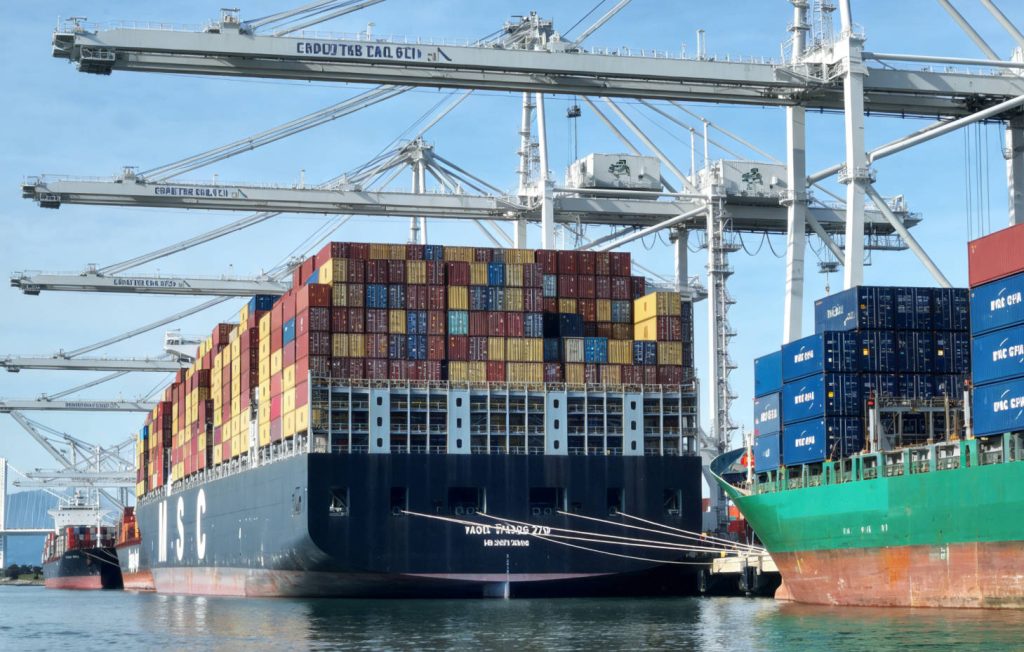
The European Union’s Emissions Trading System (EU ETS) has gone from being a far-off idea for regulating things to a very real line item on freight bills. Every container transiting between China and a European port has had to pay carbon compliance expenses since marine shipping was officially added to the plan on January 1, 2024. 2026 will be a very important year. It is now required to cover 100% of certified emissions, and methane and nitrous oxide have been added to the list. EU Allowance (EUA) prices are expected to stay high. This is no longer just a narrative about compliance for Chinese exporters, freight forwarders, and cross-border e-commerce merchants; it’s now a story about costs.
This article explains how the EU ETS works for shipping between China and Europe, what the figures will look like in 2026 and beyond, and how firms may deal with the costs. We also look at how logistics companies like Topway Shipping are helping exporters deal with this new situation by using smarter routing and pricing methods.
What Is the EU ETS and Why Does It Apply to Shipping?
The EU Emissions Trading System, which started in 2005, is the world’s largest and first carbon market that includes more than one sector. It works on a cap-and-trade approach, which means that it sets a limit on the total amount of greenhouse gases that can be released and lets corporations buy and sell allowances within that limit. The maritime industry mostly worked outside of its jurisdiction until 2024. That changed when big ships, those with a gross tonnage of more than 5,000, started coming to EU or European Economic Area (EEA) ports.
The scope is meant to be vast. All emissions are covered for trips inside the EU. For trips that start or end at an EU port, which is almost all of the China–Europe container shipping lanes, 50% of the emissions from the whole trip are included in the system. This means that a cargo ship going from Shanghai to Rotterdam is not only responsible for emissions in European seas; it is also responsible for half of every tonne of CO₂ released during the entire route. Technically, the shipping business is responsible for the costs, but in reality, every carrier has included clear surcharges that pass the costs straight on to shippers.
The phase-in timeline was set up so that the industry would have time to get used to the changes, but that time is mostly over now. The change will be finished by 2026.
Table 1: EU ETS Maritime Phase-In Schedule
| Year | Coverage Requirement | Gases Covered | EUA Price Range (€/tCO₂) |
| 2024 | 40% of verified emissions | CO₂ | €60–75 |
| 2025 | 70% of verified emissions | CO₂ | €65–90 |
| 2026 | 100% of verified emissions | CO₂, CH₄, N₂O | €75–150 (projected) |
| 2027+ | 100% + expanded vessel scope | CO₂, CH₄, N₂O | Rising trajectory |
The 2026 Shift: Full Coverage and Expanded Gases
The jump from 70% coverage in 2025 to 100% in 2026 is not just a little change; it almost doubles the cost pressure compared to 2024, when just 40% coverage was needed. There are no longer any partial exemptions for EU-related voyages. Every tonne of CO₂ released must now be counted. A carrier that runs a weekly service between China and North Europe with a ship that emits 16,000 metric tonnes of CO₂ equivalent per year on that route would have to buy allowances for an extra 4,800 tonnes per year because of the change from 70% to 100%. At current EUA prices, this would cost hundreds of thousands of euros per vessel, per route.
Adding methane (CH₄) and nitrous oxide (N₂O) to the EU ETS scope starting in June 2026 may have a bigger impact in the long run. Methane is 28 times more potent than CO₂ as a greenhouse gas over a 100-year horizon, and N₂O is approximately 228 times more potent. Vessels that use liquefied natural gas (LNG) as a fuel, which many carriers switched to as a cleaner option, now have to pay more to comply with regulations since methane slips out during engine combustion. This has effectively rewritten the economics of LNG as a green transition fuel, at least within the EU ETS framework.
Hapag-Lloyd said that the complete coverage of CO₂ and the inclusion of other gases will likely raise their EU ETS surcharges by about 45% compared to levels in 2025. According to Searoutes’ data from early 2026, ETS surcharges now make up as much as 12% of the overall cost of shipping goods to the EU. This is a big jump from the 1% that was in place when the scheme initially started.
How Carrier Surcharges Are Hitting China–Europe Lanes
Each major ocean carrier has come up with its own way to impose EU ETS surcharges, and the fact that they all do it differently makes things very complicated for shippers. Maersk charges different EMS (Emissions Surcharge for contracts longer than 31 days) and ESS (for spot bookings) fees. These fees are dependent on the average EUA price from ICE futures and are changed every three months. According to its 2026 advisory, the emissions premium is not included as a separate line for reservations from China to EU/EEA ports. Instead, it is included in the base freight rate. Ocean Network Express (ONE) adds a “Europe Environment Surcharge” (EES) every three months. They also say that for cargo going from China, the surcharge is included in the freight instead of being listed separately.
MSC has set up a separate EU ETS tax that works like its current Bunker Recovery Charge system. Hapag-Lloyd has been one of the more open companies, announcing explicit percentage increases based on changes in EUA prices. All carriers agree that these fees will go up in 2026 and will not go away. Transport & Environment’s 2024 study found that some carriers were making huge profits from surcharges. For example, one major line was expected to collect about $60,000 in extra charges per voyage. This shows how important it is for shippers to compare surcharges to the actual cost of carbon.
Table 2: Carrier EU ETS Surcharge Examples — China to Europe Routes (2026)
| Carrier | Trade Lane | 2025 Surcharge (approx.) | 2026 Surcharge (approx.) | Change |
| Maersk | China to North Europe | ~$114/FEU | ~$168/FEU | +47% |
| Hapag-Lloyd | Asia–Europe | Baseline | ~+45% increase | +45% |
| MSC | China to EU ports | Bundled in freight | Separate ETS levy | Significant |
| ONE | Asia to EU/EEA | EES surcharge applied | 100% compliance uplift | +40%+ |
Real Cost Impact on China–EU Cargo Shipments
For Chinese exporters and e-commerce enterprises who sell items across borders and send them to Europe, the numbers swiftly jump from policy ideas to real margins. In 2026, an importer that ships a 40-foot container (FEU) from Shenzhen to Hamburg every week could have to pay an extra $168 to $200 per cargo in ETS-related fees. In 2025, they would only have to pay $114 to $130 per voyage. When you add it up over a high-volume annual shipping program, the extra cost adds up to tens of thousands of dollars, which is a big hit to already thin e-commerce margins.
LCL (less-than-container-load) shippers are also not safe. For 2026, the cost of per-CBM ETS add-ons is expected to be $5 to $8, up from $3 to $5 in 2025. For small to medium-sized online stores that depend on LCL consolidation to keep their unit economics viable, this makes an already difficult cost situation even worse. Base freight rates are high, FuelEU Maritime compliance costs are added on top of ETS, and ongoing Red Sea surcharges are affecting capacity and routing.
Due to ETS alone, the operational cost for an average bulk vessel trading in the EU is expected to go up by almost €1.3 million per year by 2026. This number shows commerce between EU countries most directly, but the cost pressure spreads to other transactions that touch the EU, including the mainlane between China and Europe.
Table 3: Estimated EU ETS Cost Impact per Shipment — China to Europe (2026)
| Shipment Type | Route Example | Estimated ETS Add-On (2025) | Estimated ETS Add-On (2026) | Annual Impact (high volume) |
| 20ft FCL | Shanghai → Rotterdam | ~$80–100 | ~$130–160 | $1,560–$1,920/yr (12 trips) |
| 40ft FEU | Shenzhen → Hamburg | ~$114–130 | ~$168–200 | $2,016–$2,400/yr |
| LCL (per CBM) | Ningbo → Antwerp | ~$3–5 | ~$5–8 | Varies by volume |
| Bulk vessel (avg.) | China → Any EU port | N/A | +€1.3M/year per vessel | Major cost for carriers |
Strategic Implications for Chinese Exporters and E-Commerce Businesses
The EU ETS is not only an expense; it is changing the strategic choices that companies make about how, when, and via whom goods are sent to Europe. There are a few dynamics that are important to know about.
Route and Port Selection
Routing decisions have immediate financial effects because the EU ETS applies to 50% of emissions from ships that call at EU ports. A ship that goes to both Rotterdam and Hamburg has to pay ETS for both port calls. More and more shippers are looking into whether non-EU transshipment hubs, like ports in Morocco, Turkey, or the UK (which will have its own parallel ETS starting in 2026), can be used instead of EU ports to lower direct EU ETS exposure. In practice, it’s not possible to completely avoid EU ports for most conventional China–Europe consumer goods flows, but it is possible to choose the best ports in Europe.
Carrier Negotiations and Transparency
Because surcharges vary widely amongst carriers, with some charging much more than the actual carbon cost, ETS cost benchmarking needs to be a normal part of freight procurement strategy. Most carriers make the methodology for the computation public: EUA price times CO₂ emissions per TEU/FEU divided by average container load. However, the emission factors and load assumptions used are different. Shippers benefit from requesting the specific calculation basis and comparing it against independent tools before accepting quoted surcharges.
Cargo Value and Mode Optimization
The difference between sea and air freight is getting smaller, which means that air freight is already competitive for high-value, time-sensitive items. This means that new models are needed. For most of the trade between China and Europe by volume, sea freight is still the most common way to ship goods. However, the total cost picture has changed sufficiently that air-sea hybrid methods should be looked at for the right types of products.
China’s Own Carbon Market Context
The EU ETS problem is not unique. China’s national ETS now values carbon at about $11 per tonne. This is a lot less than the EU’s EUA price of €75–80+ in early 2026. The Carbon Border Adjustment Mechanism (CBAM), which will be fully in place by 2026, would add carbon charges to commodities that come into the EU from countries with weaker carbon pricing. CBAM’s main concentration right now is on steel, aluminum, cement, fertilizers, electricity, and hydrogen, but its design makes it evident that it will grow to include more things. Chinese exporters in all industries should start thinking about how carbon costs will affect their long-term pricing strategy, even if their sector isn’t now affected.
How Topway Shipping Helps Businesses Navigate EU ETS Costs
It’s one thing to know about the rules and regulations; it’s another to have a logistical partner who actively helps you deal with the costs of following them. Topway Shipping, based in Shenzhen, China, has been a competent provider of cross-border e-commerce logistics solutions since 2010. The company’s founding team has more than 15 years of expertise in international logistics and customs clearance.
Topway Shipping’s knowledge is especially useful in the current EU ETS climate because the company handles all parts of the logistics chain, from first-leg transportation and offshore warehousing to customs clearance and last-mile delivery. This full visibility lets Topway help clients not only with freight rates but also with optimizing their total landed cost in a way that other freight booking solutions can’t.
The company provides flexible full-container-load (FCL) and less-than-container-load (LCL) ocean freight services from China to major ports across the world, including all major European ports. This means that enterprises shipping to Europe can use both dedicated container solutions and consolidation services. The latter is becoming more significant for e-commerce sellers who need to find a balance between cost-effectiveness and the rising per-unit weight of ETS-related levies.
Topway is very interested in China and the U.S. Transportation also puts it in a good position to help firms figure out if changing European trade corridors or transshipment plans might lower ETS exposure without hurting delivery reliability. As the expenses of carbon compliance become a permanent part of shipping to the EU, having a logistics partner with a lot of market knowledge and good relationships with carriers is a big competitive advantage. Topway Shipping is exactly the kind of expert you need. They have the price knowledge of a specialist freight firm and the compliance knowledge that the EU ETS environment will need after 2026.
Looking Ahead: ETS Trajectory and What Shippers Should Expect
The EU ETS is based on a structural way to tighten supply. The EU’s climate goals mean that the cap on total allowances goes down every year. Because of this, and because of the new requirement for 100% coverage, the price is expected to go higher. Deutsche Bank thinks that EUA costs will be between €60 and €150 in 2026, depending on how the market is doing. The large range shows that there is real uncertainty, yet the floor has definitely gone up since before 2024.
FuelEU Maritime, which went into effect in 2025, adds further cost by mandating carriers to lower the greenhouse gas intensity of marine fuels over time. The first goal of a 2% decrease in intensity (compared to the 2020 baseline) may seem little, but it is a cost that directly affects the fuel side of carrier operations and is predicted to rise quickly—6% by 2030 and 80% by 2050. FuelEU compliance adds to the increased pressure on EU-related freight costs, even though biofuel premiums over conventional bunkers are still high.
The practical planning horizon is important for shippers. People who buy things once a year should start include the expenses of ETS in their budgets for 2026. They should use conservative projections about EUA prices in the €80–100 range and a 45–50% increase in surcharges compared to 2025. If you have long-term volume obligations, you should look into multi-year contracts with carriers that include clear ETS cost-sharing or capping procedures. Some forward-thinking carriers are starting to provide this as a way to stand out.
It’s evident that carbon costs are being built into the price of shipping to Europe, and that building is permanent. The EU ETS won’t be turned back, CBAM will grow, and the IMO is working on its own global carbon pricing system that might start in 2027. Companies that include carbon cost awareness in their supply chain strategy now will be better off than those that see each surcharge as a one-time surprise.
Conclusion
The EU ETS has gone from being a gradual phase-in to a permanent and fully operational cost for all businesses who ship goods between China and Europe. The 2026 milestone—full 100% coverage, a wider range of gas, and rising EUA prices—isn’t just a temporary problem; it’s a permanent change in the way China–Europe ocean freight works. Major carriers are raising their surcharges by 40–50%. Costs related to the EU’s ETS currently make up much to 12% of total shipping costs on EU lanes. The rules and regulations around maritime carbon pricing will only get more complicated in the years to come.
Chinese exporters and cross-border e-commerce enterprises need to be strategic in their approach, not reactive. That includes comparing carrier surcharges to the real cost of carbon, looking at different routes and ports, including ETS estimates in pricing models, and working with logistics partners that know how the rules function and what business options are available. Topway Shipping has been in business for more than ten years and offers a full-chain service model. This makes them a good choice for helping businesses deal with this cost environment. They make sure that EU ETS compliance costs are kept under control, are clear, and are taken into account when making shipping decisions from China’s export hubs to European markets.
FAQs
Q: Does the EU ETS apply to all ships sailing from China to Europe?
A: It applies to big ships that weigh 5,000 gross tons or more and dock in EU or EEA ports. For trips between China (a port that is not in the EU) and an EU port, 50% of the emissions produced during the entire trip must meet ETS standards. The shipping business is legally accountable, but shippers have to pay extra fees to cover the expense.
Q: How much extra am I paying per container due to EU ETS in 2026?
A: For a 40-foot FEU on China–North Europe lanes, ETS-related fees will be between $150 to $200 per container in 2026, depending on the carrier and the price of the EUA when the booking is made. This is a 40–50% increase from 2025 levels and is likely to keep going up.
Q: Can I avoid EU ETS surcharges by routing through non-EU ports?
A: Routing through transshipment hubs outside the EU, such Tangier Med in Morocco or Port Said in Egypt, can lower direct EU ETS responsibility for several final delivery destinations. Most of the time, though, the ultimate delivery must stop at an EU port, which makes it impossible to completely dodge the ETS in most circumstances. The gain is usually small compared to the extra time it takes to get there and the extra costs of handling.
Q: Will EU ETS costs continue to increase after 2026?
A: Very likely. As the cap gets tighter each year, the EUA pricing is set up to go up. Starting in 2025, FuelEU Maritime will also add a second layer of compliance costs. The IMO is also working on a global carbon pricing system for shipping that may start in 2027. It makes sense to plan for a growing carbon cost trajectory.
Q: How can Topway Shipping help me manage EU ETS shipping costs?
A: Topway Shipping offers complete logistics services, including first-leg transportation, customs clearance, overseas storage, and last-mile delivery. They also offer flexible FCL and LCL alternatives. Their crew knows a lot about shipping lanes between China and Europe, which lets them assist you choose the best carrier, plan the best route, and come up with ways to save money on the overall landing cost, including the increasing ETS part.