
How to Ship a 40HQ Container from Yantian to Canada Without Getting Overcharged
Introduction
You’re not the only one who has gotten a freight quote for a 40HQ container from Yantian to Vancouver or Toronto and then gotten a bill that looked nothing like what you were promised. Overcharging in international ocean freight is not usually outright fraud; it’s more likely to be the result of a dozen legitimate-sounding line items that nobody bothered to explain up front, like terminal handling charges at both ends, bunker adjustment factors, peak season surcharges, documentation fees, chassis splits, and more. When the container gets through customs and the final price comes, a quote that looked like USD $3,500 can quietly grow to $5,500 or more.
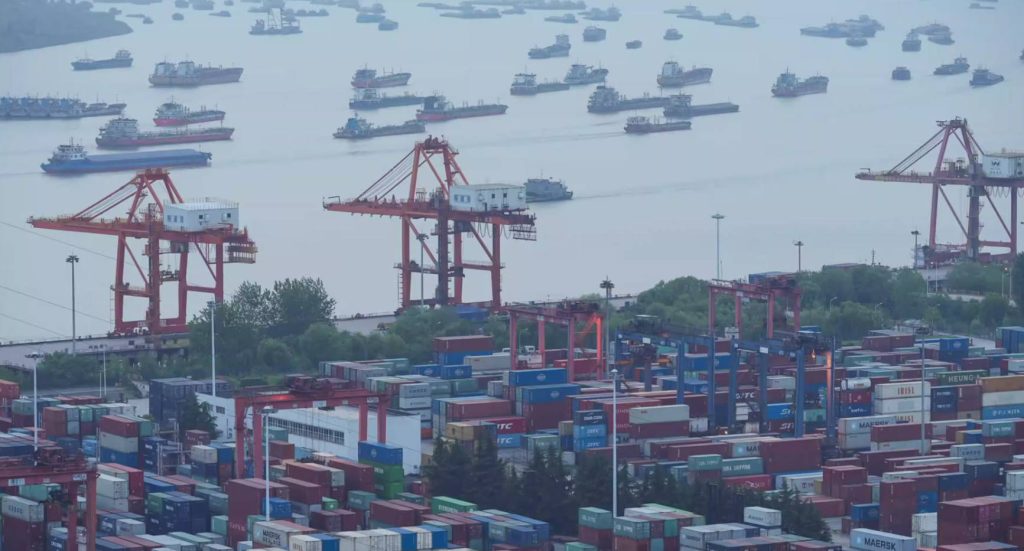
Yantian, which is run by Yantian International Container Terminal (YICT) in Shenzhen’s Longhua district, is one of the most important places for South China to send goods overseas. It is also a natural starting point for manufacturers in Shenzhen, Dongguan, Guangzhou, and the rest of the Pearl River Delta. For importers shipping to Canada, Yantian has direct trans-Pacific connections to Vancouver with transit durations as short as 10 to 14 days. This makes it one of the fastest and easiest origin ports on the China-Canada corridor.
This book will help you secure a good price, understand every fee on your invoice, pick the proper service structure, and stay away from the most typical traps that cost importers thousands of dollars per shipment. This is what you really need to know if you’re shipping a 40HQ container from Yantian to Canada in 2026.
Why the 40HQ and Why Yantian?
The 40-foot high cube container is the most important part of modern shipping across the Pacific. It adds about 8 to 10 percent additional height inside, elevating the internal clearance from 2.39 meters to 2.70 meters. This means that it has about 67 to 68 cubic meters of usable area, compared to 56 to 58 cubic meters for a regular 40GP. That extra vertical space is what makes the difference between fitting all of your cargo in one container or needing to reserve a second one. The 40HQ is nearly always the correct choice for importers who deal in furniture, clothing, home décor, e-commerce goods, or anything else with packaging that is sensitive to height.
Yantian Port is part of the Shenzhen port cluster, which also includes Shekou and Nansha. It handles more than 13 million TEUs every year. It is especially useful for exporters in South China because it is close to manufacturing centers and has direct berth access for COSCO, Maersk, CMA CGM, MSC, ONE, Evergreen, and ZIM’s largest ships, which all run weekly services to Vancouver and Prince Rupert. Weekly direct sailings from Yantian to Vancouver give shippers a lot of schedule freedom and don’t force them to use transshipment routes, which take longer and are riskier.
Yantian is usually closer and cheaper than Shanghai or Ningbo for cargo that comes from Foshan, Dongguan, Guangzhou, or Shenzhen itself. For example, the travel by truck from a factory in Dongguan to Yantian is generally less than 100 kilometers. This is a one-day job that is easy to plan. People generally don’t give enough weight to the efficiency of the origin leg when figuring out the total landed cost.
2. Understanding the Full Cost Structure of a 40HQ from Yantian to Canada
The most common mistake importers make is only looking at the ocean freight line when they compare freight quotes. That amount, which is the base rate per container, is just the beginning. The real total is the sum of six to ten different cost components, each of which might be very different from one provider to the next and has its own set of rules for negotiating. To avoid getting overcharged, you need to know what each part means, what a fair price range looks like in the current market, and what questions to ask when you reserve a room.
| Cost Component | What It Covers | Typical Range (2026, per 40HQ) |
| Base Ocean Freight | Port-to-port container transport fee | USD $3,500–$4,800 (Yantian to Vancouver); $4,200–$5,200 (to Toronto/Montreal) |
| Origin THC | Terminal handling at Yantian Port | USD $200–$320 per container |
| BAF (Bunker Adj. Factor) | Fuel cost fluctuation surcharge | USD $200–$500 per container |
| PSS (Peak Season Surcharge) | Applied during June–Oct and pre-CNY | USD $300–$1,000 per container |
| Documentation / B/L Fee | Bill of Lading issuance, EDI filing | USD $50–$150 per shipment |
| Destination THC | Terminal handling at Canadian port | USD $350–$600 per container |
| Customs Brokerage | CBSA clearance filing, HS classification | CAD $350–$600 per entry |
| Inland Trucking (Canada) | Port to warehouse delivery | CAD $500–$2,500+ depending on city/distance |
| Chassis Fee (if applicable) | Container chassis rental at destination | USD $20–$60/day or flat $150–$300 |
| Demurrage / Detention | Container overstay beyond free time | USD $75–$200/day after free period ends |
It’s easy to see why an estimate that says USD $3,800 per container could end up costing you $6,500 or more by the time the container gets to your warehouse door when you look at this table. There are genuine costs for each line item, and most of them are inevitable. However, the exact amounts might vary greatly depending on your forwarder, the carrier, the season, and how your cargo is set up. The idea is not to get rid of these fees, but to know exactly what you’re paying for each one before you agree to pay them.
The Hidden Surcharges That Catch Importers Off Guard
BAF and LSS: Fuel Costs That Move With the Market
The Bunker Adjustment Factor is a real and essential extra fee. Fuel is one of the biggest expenditures that can change in ocean shipping, and carriers can’t include every change in oil prices in their base rates. But BAF is also one of the hardest things to understand on a freight invoice. Some carriers base it on a quarterly index, some on spot fuel prices, and some just announce a set number for each trade lane every quarter. The most important thing is to check the BAF amount when you book, not when you get the bill after the ship has left. The trans-Pacific BAF for the China-Canada channel has ranged between $200 and $450 per FEU since 2026, however this can go up if fuel costs go up.
Some carriers also impose a Low Sulfur Surcharge (LSS or LSF) to make up for the higher expense of low-sulfur gasoline that meets IMO 2020 standards. Even if BAF is already included in the quote, this can still show up as a separate line item. Always ask your forwarder if BAF and LSS are listed individually or together.
PSS: The Seasonal Surcharge You Should Be Timing Around
During times of strong demand, as from June to October when North American stores stock up for the holidays, and again in the weeks leading up to Chinese New Year, Peak Season Surcharges are added. In the worst years, the PSS in the trans-Pacific channel has been more than $1,000 per FEU. In 2024, MSC raised their PSS for 40-foot containers by $1,000, starting in November 2024. The time after the Chinese New Year (February to early April) in 2026 has been good for importers because there is no risk of PSS. This is one of the reasons why Q1 is becoming more attractive for locking in annual contract volume.
If your cargo schedule is flexible, moving your booking back 3 to 4 weeks to avoid a PSS window can save you hundreds of dollars per container. For importers that use more than one container a year, that timing discipline adds up to actual savings over the course of a complete calendar year.
GRI: General Rate Increases That Can Hit Between Booking and Sailing
A General Rate Increase is a change to the base rate that the carrier makes, and it is usually disclosed 30 days in advance. The issue is that if you book with a forwarder using a spot rate quote that doesn’t have a fixed rate validity period, a GRI that goes into effect between your booking and the departure of your vessel can raise your cost without warning. When you book, always check the rate validity window. Good forwarders will guarantee the advertised rate for the booking time, which is usually 7 to 14 days, and many offer longer validity under service contracts.
Demurrage and Detention: The Most Avoidable Overcharge
Demurrage (the fee you have to pay if you keep the carrier’s container at your place longer than the agreed-upon free time) and detention (the fee you have to pay if you keep the carrier’s container at your place longer than the agreed-upon free time) are two of the most expensive and unnecessary charges in international freight. The normal amount of time you can store things for free at Yantian Port is 7 days. In Canadian ports, carriers usually give you 5 to 7 free days. After that, they charge between USD $75 and $200 per container every day, and the fees go up quickly. The solution is simple: make sure your customs paperwork is done before the ship arrives, then schedule your trucking appointment to pick up the container within the free period. A professional freight forwarder will let you know when the container gets to port and will also plan the collection time ahead of time.
The Yantian to Canada Route: What the Transit Actually Looks Like
The usual route from Yantian to Vancouver across the Pacific Ocean is one of the most direct ocean lanes for trade throughout the world. The distance across the sea is about 10,950 kilometers. If there are no transshipments, the ocean transit time from Yantian to Vancouver is about 10 to 14 days under normal conditions. Services to Prince Rupert, which is Canada’s second biggest Pacific gateway, are about the same time and occasionally 1 to 2 days faster. For cargo going to Toronto or Montreal, the package usually goes to Vancouver first and then goes east by CN or CP Rail, which adds 4 to 6 days, or by highway truck, which adds 5 to 7 days but gives you more options for delivery times.
| Route | Carrier Options (2026) | Ocean Transit | Total Door-to-Door Est. |
| Yantian → Vancouver | COSCO, Maersk, CMA CGM, ZIM, MSC, ONE, Evergreen | ~10–14 days | ~18–25 days |
| Yantian → Prince Rupert | COSCO, ZIM, ONE | ~9–12 days | ~17–22 days |
| Yantian → Toronto (via Vancouver) | All major carriers + rail/truck inland | ~16–20 days | ~24–32 days |
| Yantian → Montreal (via Panama/Suez) | Select carriers via all-water service | ~28–35 days | ~35–42 days |
One routing choice that needs careful thought is whether to ship to Vancouver and then utilize intermodal rail to get to the East Coast, or to employ an all-water service through the Panama Canal to get to Montreal or Halifax for delivery to Eastern Canada. For cargo going to Toronto, Vancouver plus highway truck is often faster and more popular in 2026. Rail terminal queues at CN/CP intermodal yards in Vancouver have caused major delays during busy times, and trucking the 4,400 kilometers from Vancouver to Toronto, while more expensive, gives better control over delivery appointments.
The Yantian to Toronto route through ZIM’s direct service has also gotten busier in 2026, with weekly departures and affordable transit times for importers who want a single bill of lading for the ocean leg directly to Eastern Canada ports. It’s still important to check departure times and cut-off dates directly with your forwarder, since vessel timetables change based on demand and carrier alliance rotations.
How to Read and Compare Freight Quotes the Right Way
It’s a trap to get three estimates for the identical Yantian-to-Canada 40HQ shipping and choose the cheapest one. A quotation that seems $400 cheaper than its competitors may just be leaving off BAF, PSS, destination THC, or chassis fees from the headline number. These are all things that will show up on the final bill. The right thing to do is to ask for a detailed, all-in quote that details each fee and how long it is valid for. Then, you can compare those total numbers side by side.
When comparing quotes, ask each forwarder to put in writing the base ocean freight rate and how long it will be valid, whether BAF and LSS are included or will be added at current market rates, the origin THC at Yantian, the destination THC at the Canadian port, any applicable PSS or GRI risk for the booking period, documentation and B/L fees, the cost of trucking to your delivery address, and whether customs brokerage is included or charged separately. If a forwarder can’t or won’t answer these questions properly before you book, they will probably answer them on your invoice, but with bigger amounts.
| Question to Ask Your Forwarder | Why It Matters |
| Is BAF/LSS included in your quoted rate? | Can add $200–$500 if not disclosed upfront |
| Is a PSS currently applied or expected for my sailing date? | Can add $300–$1,000 during peak windows |
| What is the origin THC at Yantian? | Some forwarders quote freight-only and add THC later |
| What is the destination THC at Vancouver/Prince Rupert? | Varies by carrier; confirm per-container amount |
| What are the free time allowances at both ends? | Determines your demurrage/detention exposure window |
| Is chassis rental at destination included? | Can be $150–$300+ if not pre-arranged |
| Is customs brokerage included or separate? | Separate brokerage fees commonly range CAD $350–$600 |
| What is the rate validity period? | Locks in the price; prevents GRI surprises after booking |
Incoterms and Who Controls the Freight Cost
One of the most essential structural decisions in international freight is the Incoterm you agree on with your Chinese supplier. This is because it decides who is in charge of booking the freight, who pays what fees, and most importantly, who pays for cost overruns when they happen. FOB, CIF, and DDP are the most frequent Incoterms for 40HQ exports from Yantian to Canada. Each has a different cost and risk profile.
FOB (Free On Board) means that the supplier takes care of the logistics of getting the goods from the supplier to the ship, and the importer takes over from there. This means that the importer can book freight, talk directly to forwarders, and see all the charges from ocean freight onward. This offers importers the most power over prices. Under CIF (Cost, Insurance, Freight), the supplier chooses the carrier and pays for ocean freight and insurance. The importer, on the other hand, pays for destination charges. This structure seems simpler, but it often means that the importer doesn’t know what the supplier paid for ocean freight or whether they got a good deal. DDP (Delivered Duty Paid) puts the most burden on the provider, who is in charge of everything from delivery to paying import charges. This may seem like the easiest option, but importers lose price transparency and sometimes pay a markup on every logistics component from the source.
For most experienced importers who ship regular 40HQ volumes from Yantian to Canada, FOB is the best Incoterm since it lets you choose your own freight rates, choose your own forwarder, and see the whole cost stack. CIF or DDP only makes sense when you really can’t handle the complexity of managing freight. In that case, choosing a logistics partner like Topway Shipping to handle the whole chain under FOB terms gives you the best of both worlds: cost efficiency and ease of operation.
Canadian Customs: How to Avoid Delays That Turn Into Dollars
It costs money for every day your container sits at a Canadian port after its free time limit. The most common reason containers linger too long is because of customs delays. Most of these delays may be avoided by making sure the right paperwork is ready before the ship leaves Yantian. You must send the Canada Border Services Agency (CBSA) Advance Commercial Information (ACI) eManifest data at least 24 hours before loading. If you miss this deadline, your cargo may be flagged or held when it arrives.
Incorrect HS code classification, value differences between the commercial invoice and the carrier’s manifest, missing or non-compliant wood packaging certification (ISPM-15 fumigation mark required on all wooden pallets and crating), and incomplete documents for regulated goods are the most common reasons for customs delays for 40HQ containers coming into Canada. The only sure method to secure your free time window is to have all the papers checked and signed before the container is loaded in Yantian, not after it gets to Vancouver.
| Common Customs Delay Cause | Risk Level | How to Prevent It |
| Incorrect HS code | High | Have a licensed customs broker verify codes before the shipment departs |
| Invoice-manifest value mismatch | High | Ensure the commercial invoice matches the B/L description and declared value exactly |
| Non-ISPM-15 wood packaging | High | Confirm with supplier that all pallets/crating carry valid heat treatment marks |
| Missing ACI eManifest filing | Critical | Forwarder/carrier must submit 24hrs before vessel loading — confirm this is done |
| Undisclosed regulated goods | High | Pre-check with customs broker if your product category requires permits or certificates |
| Incomplete packing list | Medium | Ensure carton count, weights, and dimensions match invoice perfectly |
One thing that surprises a lot of first-time Canadian importers is that GST at 5% is charged on the full landed value of all commercial imports, no matter what the tariff rate is. Even if your product category is exempt from import charges, you will still have to pay GST on the total amount of the products, shipping, and insurance. You need to include this in your landed cost model from the beginning.
How Topway Shipping Helps Importers Ship Smarter from Yantian
Topway Shipping has had its main office in Shenzhen since 2010. This is the same city where Yantian Port is located, which is more than just a geographical advantage. This implies that the crew knows a lot about how things work at the Yantian terminal, when things are supposed to be cut off, how carriers work with YICT, and how Pearl River Delta manufacturers do their logistics. For importers shipping 40HQ containers from manufacturers in Shenzhen, Dongguan, Foshan, or Guangzhou, being close by means that first-leg collection, export customs clearance, and container stuffing can all be done more quickly and accurately.
The people who started Topway have more than 15 years of experience in international logistics and customs clearance, especially in the China-to-North America route. The company is a full-service logistics provider that handles the whole supply chain, from picking up goods at the factory and transporting them to their first destination to clearing customs for export and paperwork at Yantian, booking ocean freight on the trans-Pacific lane, clearing customs for Canadian imports through CBSA, and delivering goods to warehouses or fulfillment centers in Vancouver, Toronto, Calgary, and beyond.
Topway also offers flexible LCL consolidation services with regular weekly departures from Yantian and other South China ports for enterprises who don’t yet ship enough to fill a 40HQ. This makes it easy to go from LCL to FCL when order volumes rise, without having to change logistics partners or start over with operational processes. As the size of the shipments grows, the same personnel, the same paperwork processes, and the same knowledge of customs all stay the same.
One of the best things about Topway for importers who are new to the Yantian-Canada channel is that they are completely open about their quotes. The all-in pricing methodology breaks down every part of the cost, such as ocean freight, origin THC at Yantian, BAF, paperwork fees, destination THC, customs brokerage, and inland delivery, so there are no surprises on the bill. For importers who have gotten estimates that seemed competitive but ended up with bills that were much higher, that pricing clarity is quite helpful and saves a lot of time when it comes to settling disputes and negotiating with suppliers.
Seven Practical Rules to Avoid Being Overcharged
The first tip is to always ask for a full quote and never compare freight estimates based on just one number. You must be able to see and confirm in writing every line item before you book, including base freight, origin THC, BAF, PSS, destination THC, paperwork, brokerage, and inland delivery.
The second rule is to have a written rate confirmation that contains a validity time to lock in your rate. If you book a trip with no validity windows, the GRI can adjust the rates between booking and sailing. If the price goes up after you have already booked a trip, you won’t have many options.
The third rule is to plan your bookings around the times when high season surcharges are in effect. The time between Chinese New Year and summer (mid-February to April) and the time before summer (April to mid-June) have historically had the best base rates with the least amount of PSS exposure. If your inventory cycle allows for some flexibility, making your shipment calendar fit around these windows will really help.
The fourth tip is to check the free time allowances at both the origin and the destination before making a reservation. Also, make sure you have your Canadian customs paperwork completed well before the ship arrives. Most of the time, demurrage happens because of missing paperwork, not because the port is busy. You have full control over the paperwork.
Before loading the container, the fifth requirement is to make sure that your wooden packing meets ISPM-15 standards. If you bring non-compliant wood packaging to a Canadian port, you will have to pay for quarantine treatment and wait several days, which costs you time and money.
The sixth rule is to know what your Incoterms mean. If you are shipping under CIF, ask your supplier for the freight invoice to double-check what they are paying for ocean freight. You need this amount to make sure that the total landed cost you are figuring out is correct. If you are shipping under FOB, you should book the freight yourself or through a forwarder you trust.
The seventh rule, which may be the most important, is to create a long-term relationship with one forwarder instead of scheduling shipments through different providers each time. Volume partnerships give forwarders more power when bargaining with carriers, which leads to better pricing and greater service recovery when things go wrong. Shippers who send five to ten 40HQ containers through the same forwarder every year always obtain better results than those who re-quote every shipment.
Conclusion
Shipping a 40HQ container from Yantian to Canada is easy to execute on a well-established and very competitive trade route. However, the way the freight industry sets prices means that importers might really overspend if they don’t know what they’re getting. The ocean rate is only the base. Terminal handling costs, fuel surcharges, peak season surcharges, chassis fees, and demurrage all add up, but with the correct knowledge and the appropriate partner, they can all be managed, bargained, or at least expected.
All of the main global carriers run direct weekly services from Yantian Port to Vancouver and Prince Rupert. This gives South China exporters a lot of scheduling alternatives and low prices on the trans-Pacific lane. This is one of the fastest ocean routes in global trade because it takes 10 to 14 days to get to Vancouver. The route isn’t the problem; the problem is making sure that the total cost structure is clear and under control from the time you book until the container arrives at your warehouse door.
The best approach to ship without paying too much is to work with a logistics partner who knows how Yantian’s terminal works and what Canadian customs needs, and who is clear about the prices for all of the costs. Topway Shipping is a great choice for importers who want to ship 40HQ containers from the Pearl River Delta to Canada because it is located in Shenzhen and has more than 15 years of experience with logistics between China and Canada.
FAQs
Q: What is the current market rate for a 40HQ container from Yantian to Vancouver in 2026?
A: As of the first quarter of 2026, the cost of shipping a 40HQ container from Yantian to Vancouver by sea ranges from about $3,500 to $4,800, depending on the carrier, the type of booking, and the level of demand. This is just the base freight. Destination THC, BAF, customs brokerage, and inland delivery are all paid separately, and you should check your quote before booking to make sure.
Q: How do I avoid peak season surcharges when shipping from Yantian to Canada?
A: PSS is usually charged on the trans-Pacific line from June to October and in the 4 to 6 weeks before Chinese New Year. Booking between February and May or in November usually means less or no PSS exposure. Check with your forwarder to see if any PSS is now in effect for your desired sailing date, and ask them to confirm the rate in writing.
Q: What documents do I need to clear a 40HQ container through Canadian customs?
A: The most important papers are a commercial invoice, a packing list, a bill of lading, a certificate of origin (for lower tariffs under CPTPP or CETA), and a customs declaration (B3 form) that a licensed customs broker files. ISPM-15 fumigation compliance markings are required for items that are packaged in wood. Depending on the type of goods, you may need several permits.
Q: Is it better to ship to Vancouver or Prince Rupert from Yantian for Canadian deliveries?
A: Vancouver is the best place for goods going to the Metro Vancouver area or British Columbia. Prince Rupert can occasionally offer speedier ocean passage and reduced congestion at the terminal for cargo going to Calgary, Edmonton, or Winnipeg. However, there are fewer options for carriers. Both ports connect to the same intermodal rail and truck network that goes east for freight going to Toronto.
Q: Can Topway Shipping handle factory pickup in Shenzhen and delivery to a Toronto warehouse?
A: Yes. Topway Shipping handles everything from picking up goods at factories in the Pearl River Delta region to clearing them through customs for export at Yantian, shipping them by ocean, clearing them through customs for import in Canada, and delivering them to warehouses or fulfillment centers all over Canada, including Toronto, Vancouver, Calgary, and Amazon FBA locations.