
How to Ship Goods from China to the Port of San Diego: A Step-by-Step Guide
Introduction
Shipping things from China to the US has never been more essential strategically, yet it’s also never been more complicated. San Diego is a key gateway city on the Southern California coast and a major logistics hub for firms that import everything from clothes and electronics to industrial parts. If you want to do well in today’s competitive market, you need to know how to get around the China–San Diego shipping corridor. This is true whether you are an e-commerce seller, a small business owner, or a supply chain manager.
A lot of shippers don’t realize that the Port of San Diego doesn’t now handle full-scale international container shipping directly from China. The Port of Los Angeles or the Port of Long Beach, which are the two largest container ports in North America, is where most maritime freight going to the San Diego area initially goes. From there, it is trucked or railed to San Diego. Air freight going to San Diego usually goes to Los Angeles International Airport (LAX) first and then is moved by land. To organize your shipment well, you need to know how this route works.
This tutorial takes you through every step of the process, from picking the best shipping option to getting your products through U.S. customs and to their final destination. We’ll also talk about the new changes in tariffs that effect trade between the US and China. trade in 2025–2026, and introduce Topway Shipping, a logistics partner with a lot of experience in this precise area.
Step 1: Understand Your Shipping Options
Ocean Freight: The Backbone of China–U.S. Trade
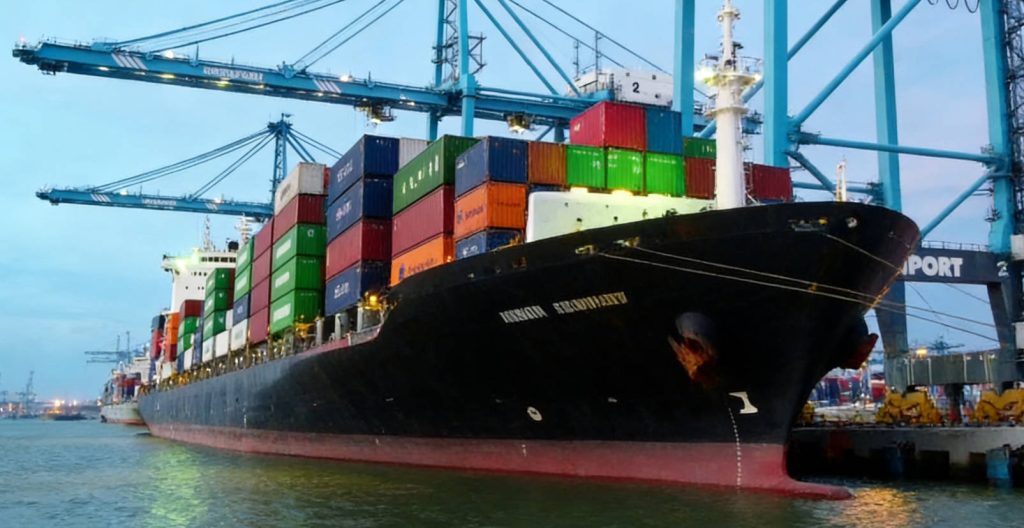
Ocean freight is still the most popular way to transfer goods from China to the US, moving around 90% of all international cargo. When containers are going to the San Diego area, they are usually unloaded in the Port of Los Angeles or the Port of Long Beach. From there, they are trucked about 120 miles south to their eventual destination in the San Diego area. Even with this extra step, ocean freight is still the most cost-effective way to ship large or heavy goods.
Full Container Load (FCL) and Less than Container Load (LCL) are the two main types of ocean freight. With FCL, your items fill up an entire 20-foot or 40-foot container. This implies shorter delivery times (no delays from consolidating), less chance of damage, and a flat charge even if the container isn’t full. FCL is almost always the cheaper option per unit if you ship a lot of things all the time. LCL, on the other hand, lets more than one importer share container space. This makes it a flexible and cheap choice for smaller shipments, but it takes a few more days to get there because the containers have to be consolidated and deconsolidated at each end.
Air Freight: Speed at a Premium
When speed is of the essence, like with seasonal items, urgent restocks, or expensive electronics, air freight is the best option. Air freight from big Chinese cities like Shanghai Pudong, Shenzhen, or Guangzhou usually takes 3 to 7 days to get to LAX, and then it is driven to San Diego. Air freight is more faster than ocean freight, but it costs a lot more per kilogram. This makes it best for light, time-sensitive, or high-margin items.
Express Courier: For Smaller Packages
DHL, FedEx, and UPS are some of the courier firms that can get packages from China to San Diego in as little as 2 to 5 days. These services take care of all the logistics, customs paperwork, and last-mile delivery in one package. The trade-off is cost: express delivery is the most expensive per kilogram, and it only works for tiny items that weigh less than 100–200 kg. It’s equally important to point out that the U.S. Customs applies to products that are worth more than $800 (the de minimis threshold). However, customs clearance is usually faster with express carriers than with ocean or air freight.
| Shipping Method | Transit Time | Cost Range | Best For |
| Ocean Freight (FCL) | 18–35 days | $1,200–$2,500+/container | Large volumes, heavy goods |
| Ocean Freight (LCL) | 25–40 days | $2.00–$4.00/kg | Small-medium shipments |
| Air Freight | 5–10 days | $3.40–$15.50/kg | Time-sensitive, high-value goods |
| Express Courier (DHL/FedEx) | 2–5 days | $7.50–$15.00/kg | Small packages, samples |
Note: The transit times listed include the usual time it takes for ground transportation to get from LA/Long Beach to the San Diego area. Rates are only examples and change depending on the season, the route, and the type of goods.
Step 2: Prepare Your Goods and Documentation
Choosing the Right Incoterms
You need to agree with your Chinese supplier on Incoterms before anything leaves the plant. These are the globally accepted trade agreements that say who is in charge of shipping, insurance, and customs at each point of the journey. EXW (Ex Works) implies you are fully responsible from the factory gate for many importers. FOB (Free on Board) means your supplier pays for everything until the items are loaded onto the ship at the Chinese port. With DDP (Delivered Duty Paid), the seller is responsible for everything, including clearing customs in the U.S. This is convenient, but it is usually the most expensive choice.
FOB is the most common way for experienced importers to ship goods to the U.S. since it offers them control over the primary freight and customs process while the supplier takes care of getting the goods from the manufacturer to the port. If you’re new to importing, engaging with a freight forwarder like Topway Shipping to help you choose the right Incoterms will help you avoid costly mistakes.
Required Documents for U.S. Import
You have to get your paperwork perfect. You need a certain set of important documents to get through customs at a U.S. port of entry. These documents must be correct and match up with each other. Any difference can cause delays, inspections, or even the seizure of items. These are the most important documents:
A commercial invoice that lists the items, their worth, the buyer and seller, and the country where they came from. A packing list that tells you what is in each package, how much it weighs, and how big it is. A bill of lading for ocean freight or an airway bill for air freight, both from the carrier. The “10+2” filing, also known as an Importer Security Filing (ISF), must be sent to the U.S. Customs and Border Protection must be notified at least 24 hours before the cargo is put aboard the ship. For maritime shipments, this is a legal necessity. If you don’t file on time, you could face big fines. You might also need a Certificate of Origin, an FDA registration (for food, cosmetics, or medical devices), a fumigation certificate, or other certificates that are relevant to your goods.
Step 3: Find a Reliable Freight Forwarder
If you don’t know a lot about international logistics, you should definitely hire a professional freight forwarder. This is especially true for ocean freight shipments, which require a lot of knowledge to coordinate with shipping lines, customs authorities, and trucking companies. A good freight forwarder is like a logistics partner: they book container space, file customs paperwork, talk to ports and carriers, and set up last-mile delivery.
When looking at freight forwarders for the China–San Diego channel, make sure they have a lot of experience in shipping between China and the U.S. not only international freight in general, but trade in particular. Licensing issues: Your freight forwarder should have a Federal Maritime Commission (FMC) license for maritime freight and should work with a licensed U.S. customs broker. To avoid surprises on your bill, it’s also important to be clear about pricing, including all extra fees like BAF (bunker adjustment factor), PSS (peak season surcharge), and origin handling charges.
Why Topway Shipping Stands Out
Topway Shipping, based in Shenzhen, China, has been a professional provider of cross-border e-commerce logistics solutions since 2010. Topway has a founding team with more than 15 years of experience in international logistics and customs clearance. This has helped them become experts in the China–U.S. transportation corridor, which includes the Southern California gateway that connects to the San Diego market.
Topway handles all parts of the logistics chain, from the initial leg of transportation from the manufacturer in China to offshore warehousing and consolidation, customs clearance on both the Chinese export side and the U.S. import side, and last-mile delivery to your warehouse or Amazon FBA center. The business also provides flexible FCL and LCL ocean freight services from China to major ports around the world. This means that you may find the perfect solution whether you need to move a pallet or a whole container. Topway Shipping’s integrated strategy gets rid of the coordination problems that come with multi-vendor logistics setups. This is great for e-commerce enterprises and importers that need one point of accountability for the whole supply chain.
Step 4: Book Your Shipment and Track Progress
The booking process starts once you’ve chosen your freight forwarder and finished your paperwork. Your forwarder will make a reservation with an ocean carrier for ocean freight. Common carriers on the China–U.S. COSCO, Evergreen, MSC, Maersk, and ONE are all on the West Coast route. Space on ships can fill up rapidly, especially during busy times like the weeks leading up to Chinese New Year and the summer back-to-school/holiday rush from July to October. It’s best to book 2–4 weeks in advance.
After your items are loaded and the ship leaves, you’ll get a bill of lading. You may use the container number or booking reference on the carrier’s website to keep track of your shipment. Most good freight forwarders also have their own tracking dashboards that show real-time data from all carriers. Your airway bill number lets you track air freight through both the carrier and the freight forwarder’s system.
Filing the ISF is a process that is commonly missed at this point. Your freight forwarder or customs broker should send this to CBP electronically at least 24 hours before the cargo is loaded. It’s also a good opportunity to check on your bond status. To get products through U.S. customs, importers require either a single-entry bond or a continuous bond. Customs. Most reputable freight forwarders can take care of this for you.
Step 5: Navigate U.S. Customs and Tariffs
The Customs Clearance Process
Your package must clear U.S. Customs when it gets to the Port of Los Angeles or Long Beach. Customs and Border Protection (CBP) must approve it before it can be let go. Your customs broker, who is usually also your freight forwarder, will file an entry with CBP. This entry will include all the necessary paperwork, the Harmonized Tariff Schedule (HTS) classification of your products, and a calculation of the duties you owe. CBP may let the shipment go right away (“entry summary”), or it may ask for a physical check, which can take more time and cost more money.
The base duty rate is based on the HTS categorization of your products. Importers often make mistakes when they classify products, which can be very expensive. Each type of goods has its own rate. If you misclassify items, you might not pay enough duties (which can lead to audits and penalties) or you might pay too much (which means you lose money). Here, a good customs broker is worth their weight in gold.
The Current Tariff Landscape (2025–2026)
The tariff situation between China and the U.S. After years of changing trade policy, commerce is still complicated and multifaceted. As of early 2026, here’s a useful summary of where things stand:
The US and China achieved a big trade deal in November 2025, after tariffs had gone up a lot in early to mid-2025. In the pact, both sides agreed to lower their tariffs and stop many of their punitive measures. The November 2025 agreement put a stop to the higher reciprocal tariffs that went into force in April 2025. A 10% reciprocal tariff will be in place until at least November 10, 2026. As of November 10, 2025, the taxes on Chinese items that contain fentanyl were cut from 20% to 10%. The Section 301 tariff exemptions for 178 types of commodities, including industrial machinery, solar equipment, medical gadgets, and other items, were extended until November 10, 2026. In late February 2026, a new 15% global tax went into force under Section 122 of the Trade Act. This was after the Supreme Court ruled that the IEEPA-based duties were illegal. However, the Trump administration said it would use this other jurisdiction.
In early 2026, the effective tariff on most Chinese imports is made up of the base HTS duty rate, the Section 301 tax (which ranges from 7.5% to 25% depending on the product), and the other reciprocal/fentanyl duties. This means that the overall effective tariff rates on many types of goods are 20% to 40% higher than the base rate. Importers should work closely with their customs broker to figure out the exact landed costs and see if their items are eligible for any active exemptions.
| Tariff Layer | Rate | Status (as of March 2026) | Notes |
| Base HTS Duty | Varies by product | Ongoing | Depends on product classification |
| Section 301 Tariffs | 7.5%–25% | Ongoing | Applied to most Chinese goods since 2018 |
| Reciprocal Tariff (April 2025) | Suspended (10% remains) | In effect through Nov 10, 2026 | Part of Nov 2025 U.S.-China deal |
| Fentanyl-Related Tariff | 10% | In effect | Reduced from 20% in Nov 2025 |
| Section 122 Global Tariff | 15% | In effect since ~Feb 24, 2026 | Implemented after IEEPA ruling |
| Section 301 Exclusions (178 products) | Exempt from some Section 301 | Extended to Nov 10, 2026 | Includes machinery, medical devices, solar equipment |
Important: The tariff policy is still changing. Before making any final decisions about buying something, always check with your customs broker or a professional trade attorney to find out what the most up-to-date rates are for your HTS codes.
Step 6: Arrange Last-Mile Delivery to San Diego
The last leg of your trip to San Diego starts after your container clears customs at the Port of Los Angeles or Long Beach. Usually, a drayage company, which is a trucking company that specializes in moving containers over short distances, picks up the container at the port and takes it to either a transloading facility (where goods are moved from the ocean container to a domestic truck) or directly to your warehouse. The travel from the LA/Long Beach port complex to downtown San Diego is around 120–130 miles and usually takes 2–3 hours when traffic is normal.
For e-commerce sellers that utilize Amazon FBA, items that are going to Amazon’s fulfillment centers in the San Diego area follow the same route. A drayage or a third-party logistics provider (3PL) takes care of the last delivery and, if necessary, labeling and prep services at a fulfillment warehouse. Topway Shipping’s international warehousing and last-mile delivery services are perfect for these situations, making it easy for importers to get their goods from the ship to the shelf.
It’s important to remember that port congestion at LA/Long Beach can sometimes cause big delays. This is something we learnt the hard way during the supply chain disruptions in 2021–2022. You may get ahead of possible delays by using the Port of Los Angeles’s port optimizer tool to keep an eye on port conditions and by factoring extra time into your delivery schedule.
Step 7: Understand Costs and Plan Your Budget
When making a budget for a shipment from China to San Diego, you need to think about more than just the basic freight charge. Importers who know what they’re doing talk about “landed cost,” which is the real overall cost of delivering products to your warehouse, including all fees, customs, and municipal charges.
| Cost Component | Typical Range | Notes |
| Ocean Freight (FCL 40′) | $1,500–$3,000+ | Varies by season and carrier |
| Ocean Freight (LCL) | $150–$400/CBM | Plus origin/destination handling |
| Origin Charges (China) | $100–$300 | THC, documentation, seal fee |
| U.S. Customs Broker Fee | $150–$350 | Per entry |
| ISF Filing Fee | $30–$80 | Mandatory for ocean freight |
| Drayage (Port to San Diego) | $500–$1,200 | Depends on container type and distance |
| Import Duties & Tariffs | Varies widely | Can exceed freight cost for tariff-affected goods |
| Merchandise Processing Fee (MPF) | 0.3464% of declared value | Min $29.66, Max $575.35 |
| Harbor Maintenance Fee (HMF) | 0.125% of declared value | Ocean freight only |
| Cargo Insurance | 0.3%–0.5% of cargo value | Strongly recommended |
Step 8: Manage Risk and Protect Your Shipment
Shipping goods internationally comes with dangers, such as damage to the cargo, theft, delays at ports, customs holds, and changes in freight rates. Part of competent logistics planning is taking steps to avoid these hazards. We strongly recommend getting cargo insurance for all shipments. This is because carriers’ baseline ocean freight liability is quite low (often as little as $500 per container under certain conventions), so you are at a lot of risk if you don’t have insurance for any valuable shipment.
Working with an experienced freight forwarder like Topway Shipping also makes things a lot less risky. Because their team knows how to handle China’s export rules, U.S. customs rules, and the special logistics of the LA/Long Beach-to-San Diego corridor, they make fewer mistakes, fix problems faster, and communicate proactively when problems come up. For firms that need to build up regular supply chains along this route, having a long-term relationship with a reliable logistics provider is much more important than always looking for the lowest spot freight rate on each shipment.
Partner Spotlight: Topway Shipping
Topway Shipping is a great choice for importers looking for a reliable and experienced partner for the China–San Diego logistical route. Topway was founded in 2010 and is situated in Shenzhen, which is the industrial and logistical center of southern China. The company has been growing its knowledge of China–U.S. for over 15 years. logistics for freight, customs clearance, and e-commerce orders.
What makes Topway different is the wide range of services it offers as part of its business. Instead of working with a lot of different suppliers for each part of your supply chain, Topway handles everything from factory pickup and first-leg transport in China to export customs clearance, ocean or air freight booking (FCL and LCL options available), U.S. import customs brokerage, overseas warehousing, and last-mile delivery. This single-vendor model makes things a lot easier for cross-border e-commerce merchants and brand importers when it comes to running their businesses and being responsible.
The people at Topway have real-world experience managing the details of U.S. The tariff problems, HTS categorization, and customs compliance that have shaped China–U.S. trade since 2018. Since 2018, commerce has been going on. Working with a team that knows this area well and out is a big benefit in a world where mistakes in tariffs and customs can cost firms tens of thousands of dollars.
Conclusion
Shipping goods from China to the San Diego area is not easy. You need to plan ahead, have the necessary paperwork, and know a lot about both trade compliance and logistics. There are a lot of moving aspects, and if you don’t handle them correctly, they can have substantial financial and operational effects. These include choosing the right freight method, getting export documentation ready, going through U.S. customs, and keeping up with the changing tariff environment.
Keep in mind that the LA/Long Beach port complex is where San Diego’s import logistics flow through. It’s important to include this geography in your planning, cost estimates, and lead times. And even if the China–U.S. After the U.S.-China trade deal in November 2025, the tariff situation has become a little more stable, but it is still complicated and could alter again. Serious importers must keep up with HTS classifications, active exclusions, and the right tariff rates. It’s best to do this with the support of a qualified customs broker.
The shipping route from China to San Diego is easy to handle with the right logistics partner, and it can be done well and cheaply on a large scale. Topway Shipping and other companies like it have the experience, connections, and full range of services you need to succeed on this route, whether you’re sending your first cargo or improving an existing supply chain.
FAQs
Q: Does the Port of San Diego accept direct international container ships from China?
A: Not right now for big container shipments. Most of the ocean freight from China that goes to San Diego goes through the Port of Los Angeles or the Port of Long Beach. From there, it is trucked to San Diego, which is about 120 miles south.
Q: How long does ocean freight from China to San Diego typically take?
A: The entire transit time is between 18 and 40 days. This includes the time it takes to cross the ocean (14 to 35 days, depending on the route and whether it is direct or transshipment), the time it takes to drive from LA/Long Beach to San Diego, the time it takes to clear customs, and any time spent at the port.
Q: What tariffs apply to goods imported from China in 2026?
A: As of early 2026, most Chinese goods are subject to multiple tariffs. These include a base HTS duty, Section 301 tariffs (7.5%–25%), a 10% remaining reciprocal tariff (suspended through November 2026 under the November 2025 U.S.-China deal), a 10% fentanyl-related tariff, and a new 15% global tariff under Section 122 that went into effect in late February 2026. There are still Section 301 exceptions for several types of products. For prices that are specific to your HTS codes, talk to a customs broker.
Q: What is an ISF filing and is it required?
A: The Importer Security Filing (ISF), which is also known as the “10+2” filing, is something that everyone in the U.S. must do. Customs and Border Protection must be lodged at least 24 hours before cargo is put onto the ship in China. If you don’t file on time, you could be fined up to $5,000 for each infraction. Usually, your freight forwarder or customs broker takes care of this for you.
Q: Should I use FCL or LCL for shipping from China to San Diego?
A: It depends on how much you are sending. LCL (Less than Container Load) is a good way to save money on smaller shipments, which are usually less than 15 cubic meters (CBM). FCL (Full Container Load) is usually cheaper per unit for greater volumes, has superior cargo security, and has faster transit times because there is no need to consolidate or deconsolidate.
Q: How can Topway Shipping help with my China-to-San Diego shipments?
A: Topway Shipping handles all aspects of logistics for shipping from China to the U.S. route, which includes picking up from the plant, clearing customs for exports, ocean freight for FCL and LCL, air freight alternatives, customs brokerage for U.S. imports, foreign warehousing, and last-mile delivery. Their team has been based in Shenzhen since 2010 and specializes on the China–U.S. corridor, which makes them a great partner for both one-time and regular shipments to the San Diego market.