
Le Havre vs. Marseille:
Which Port Works Best for Your China Cargo?
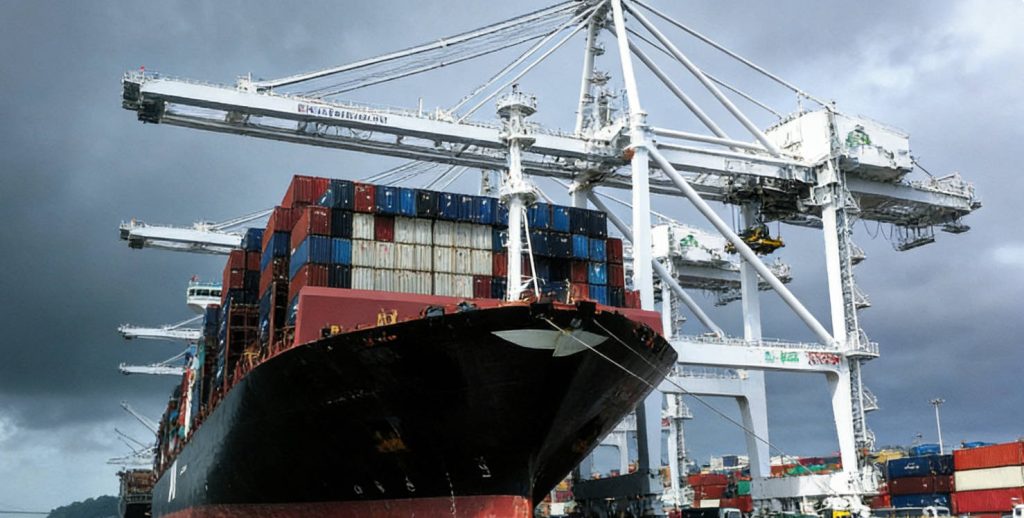
France is in the middle of European trade. When transporting goods from China to France, importers usually don’t ask if they should utilize a French port; they ask which one. Le Havre in the north and Marseille-Fos in the south are the two names that come up the most in conversations. Both are ports of the highest quality. Both get regular direct services from big Chinese cities like Shenzhen, Shanghai, and Ningbo. But the choice between them can have a big impact on how long it takes to get there, how much it costs to ship, and how strong your supply chain is.
This guide cuts through the noise and gives you a useful, data-driven comparison of the two ports. It looks at things like infrastructure, throughput, transit times, freight rates, hinterland coverage, and the types of cargo each port is best at handling. If you want to optimize your China-Europe logistics, the first step is to understand these two gateways. For example, if you’re shipping a full container of electronics from Guangdong or combining LCL freight headed for Lyon, you need to know how they work.
The Two Ports at a Glance
Before we get into the details, it’s important to know what each port really is. It’s not just a dot on a map; it’s a dynamic logistical ecosystem with its own strategic locati0n.
Le Havre is the clear winner in France when it comes to containers. The port handled a record 3.1 million TEUs in 2024, an amazing 18.7% increase from the previous year. This made it one of Europe’s top ten container ports as part of the HAROPA PORT authority, which includes the ports of Le Havre, Rouen, and Paris. Seven new TiL MSC gantry cranes came in 2025. They were said to be the biggest of their kind in the world. This made Le Havre one of the most technologically sophisticated sites on the Northern Range. It is the natural gateway to the French capital and the rest of northern Europe because it is at the mouth of the Seine River, 134 miles northwest of Paris.
On the other side, Marseille-Fos is a completely different type of port. It is technically France’s largest port by total tonnage, carrying more than 70 million tons of freight in 2024. It is located on the Mediterranean coast and is heavily involved in the energy and bulk trades. Container traffic surged 9% in 2024 to 1.45 million TEUs. This was due to more transshipment activity and stronger flows to and from China, Algeria, Turkey, and Egypt. It’s easy to see how it has a geographic advantage: it’s closer to Asian transport channels through the Suez Canal and is a natural trading hub for Southern Europe, North Africa, and the Middle East.
The table below shows the most important headline numbers for each ports:
| Metric | Le Havre | Marseille-Fos |
| Location | English Channel / Normandy, NW France | Mediterranean coast, Fos-sur-Mer, S France |
| 2024 Container Throughput | 3.1 million TEU (+18.7% YoY) | 1.45 million TEU (+9% YoY) |
| France Rank (containers) | #1 container port in France | #2 container port; #1 by total tonnage |
| Port Authority | HAROPA PORT (Le Havre + Rouen + Paris) | Grand Port Maritime de Marseille (GPMM) |
| Deep-water Access | Yes — no tidal constraints; handles mega-vessels | Yes — no tides or locks at Fos |
| Main Carriers (China routes) | MSC, CMA CGM, Maersk, Evergreen, COSCO | CMA CGM, MSC, Maersk, COSCO, Hapag-Lloyd |
| Hinterland Focus | Paris, N. France, Benelux, UK (via feeder) | S. France, Italy, Spain, N. Africa, Middle East |
Location, Hinterland, and Market Coverage
Geography isn’t only something you learn in school; it also decides where your cargo goes once it clears customs and how much it costs.
Le Havre is in the English Channel, which makes it a great place for cargo going to Paris and northern France. The Seine River corridor goes straight inland, thus river barges can take containers from Le Havre terminals all the way to Paris’s port of Gennevilliers. In 2024, the volume of TEUs on this route climbed by 11%. In 2025, the port’s rail connections sent a record 145,000 TEUs by train, an increase of 18% from the previous year. Services connected Le Havre to Tours, Clermont-Ferrand, Lyon, and Bordeaux. Le Havre’s multimodal infrastructure is truly the best in the business for importers who need to move goods cheaply across France.
Marseille-Fos is better suited to a totally different geographical reality. Because it lies near the Mediterranean, it is the best place for goods going to southern France—Lyon, Avignon, Montpellier, Nice—and then on to northern Italy and Spain. The port connects to the Rhone River for interior barge services and has good road and rail connections to the larger logistical network in southern Europe. Companies who have consumers or supply chains in the Mediterranean or North Africa and the Levant generally find that Marseille is the best place to do business. It also has direct ferry and RoRo services to ports in North Africa, giving it a two-way gateway for freight moving between Asia, Europe, and Africa.
If your final delivery point is Paris, Lille, Normandy, or the UK via onward feeder, Le Havre is the best choice. For shipping to Lyon, Marseille, the French Riviera, northern Italy, or anywhere else around the Mediterranean basin, Marseille-Fos is a better choice.
Port Infrastructure and Capacity
The quality of the infrastructure of a port directly affects how smoothly your cargo moves through it, from the speed of customs clearance to the timing of gate-out and the productivity of cranes.
The Port 2000 container complex at Le Havre is one of the best in Northern Europe. It can handle the world’s biggest container ships without any problems caused by tides, which is a big plus over other ports. The port has five large maritime terminals and more than a dozen container berths. Together, they can handle more than 3 million TEUs a year. After recent extension, Terminaux de Normandie alone can handle up to 1.8 million TEUs. Automation is moving forward steadily, with more and more electrified cranes and AGV systems being used at important terminals.
Marseille-Fos has some excellent credentials of its own. The port has three main container terminals at Fos-sur-Mer: Terminal de la Méditerranée (managed by Eurofos/PortSynergy and able to hold 1.5 million TEU), MedEurope Terminal, and Fos2XL Terminal. The total length of the quays is 2.6 kilometers, making them the longest in Europe. Large ships may dock without any problems because there are no tidal or lock restrictions. Border inspection stations with all government services are located right on the terminals, which makes customs processing easier at the point of entrance.
Le Havre is still ahead in terms of throughput capacity, automation investment, and the number of direct services to China when it comes to container infrastructure. Marseille-Fos is catching up and putting money into its port, but it still handles about half as many containers as its northern equivalent.
Transit Times from China
One of the most important things to think about when establishing a supply chain is transit time. It tells you when to restock your inventory, when to deliver to customers, and how to manage your cash flow.
When ships go through the Suez Canal, the two ports are closer in transit time than most people think. Marseille-Fos has a little edge because it is further into the Mediterranean. Ships that stop there don’t have to go north through the English Channel after passing Gibraltar. The difference is usually 3 to 7 days in favor of Marseille when shipping from large Chinese cities like Shanghai, Ningbo, and Shenzhen. But this benefit goes away a lot when ships have to change routes to get to the Cape of Good Hope. This happened a lot after the Red Sea crisis started affecting global shipping in late 2023 and continued through 2024–2025. On the Cape route, transit periods for both ports might be as long as 38 to 48 days, depending on the vessel service.
The table below shows the projected range of transit times for the most typical ocean freight routes between China and France:
| Origin Port (China) | Destination | Route | Transit Time | Service Frequency |
| Shanghai / Ningbo | Le Havre | Via Suez Canal | ~28-35 days | Weekly |
| Shenzhen / Guangzhou | Le Havre | Via Suez Canal | ~30-38 days | Weekly |
| Shanghai / Ningbo | Marseille-Fos | Via Suez Canal | ~25-32 days | Weekly |
| Shenzhen / Guangzhou | Marseille-Fos | Via Suez Canal | ~27-35 days | Weekly |
| Any China port | Le Havre or Marseille | Via Cape of Good Hope | ~38-48 days | Varies |
Note: Please keep in mind that all transit times are estimations from port to port. Door-to-door shipments should take longer because of inland transportation, customs clearance (which usually takes 1 to 3 days in France for well-prepared packages), and last-mile delivery.
Freight Rates: What to Expect in 2025–2026
After reaching record highs in 2021 and 2022, ocean freight prices between China and France have dropped a lot and will keep dropping until early 2026. Drewry’s World Container Index says that the average price for a 40-foot container around the world was about $1,995 in early February 2026. This is down about 40% from the same time in 2025. As the Chinese Lunar New Year approached, demand unexpectedly fell, which helped push spot rates lower than most analysts had predicted. To manage capacity, several carriers had to cancel sailings.
Marseille-Fos costs are usually $50 to $150 per TEU less than Le Havre rates for China-to-France lanes. This is because there are fewer direct services and the rivalry amongst carriers is different. But the entire cost of getting there varies a lot on where you want to send it. If your goods is really going to Paris, the greater expenses of trucking it inland can easily make up for the lower costs of shipping it by ocean to Marseille. Here are some examples of rate ranges for 2025:
| Route (China to France) | 20ft FCL (USD) | 40ft FCL (USD) | LCL (USD/CBM) | Notes |
| Shenzhen to Le Havre | $1,200-$1,500 | $1,850-$2,150 | $25-$45 | 2025 market estimates |
| Shanghai to Le Havre | $1,150-$1,450 | $1,800-$2,100 | $25-$45 | 2025 market estimates |
| Shenzhen to Marseille-Fos | $1,100-$1,400 | $1,750-$2,050 | $22-$42 | Slightly lower; fewer direct services |
| Shanghai to Marseille-Fos | $1,050-$1,350 | $1,700-$2,000 | $22-$42 | Good for Med-region distribution |
Warning: The rates provided are only rough estimates for normal dry cargo. The actual rates depend on the carrier, the date of sailing, the type of cargo, how far in advance you book, and any extra fees that are currently in effect (BAF, PSS, ECA, etc.). LCL shipments that charge by the CBM are usually good for loads that weigh less than 10 to 12 CBM or about 5 tons.
Cargo Types — What Each Port Handles Best
Not all cargo is the same, and not every port is the best place for every sort of cargo. Knowing what goes through each port helps you choose the best gateway for your shipment.
Le Havre is the best port for containerized consumer goods from China, like electronics, clothes, furniture, toys, home items, car parts, and other manufactured goods. The port is the best choice for cross-border e-commerce enterprises and importers who want to reach the French mass market because it is so closely connected to the Paris consumption market and has strong FCL and LCL handling capabilities. In 2023, HAROPA Port brought in more than 416,000 TEUs of products from China alone. China was the port’s biggest source of imports. Le Havre is also an important European RoRo center for cars and other vehicles.
On the other hand, hydrocarbons—crude oil, refined products, LNG, and chemicals—make up over 60% of Marseille-Fos’s total traffic. This makes it the clear leader in France for energy and liquid bulk logistics. The port is especially ideal for perishable goods and reefer cargo (it has over 1,000 reefer plugs), as well as items coming from Asia that will be sold in the Mediterranean market. Companies that bring food, agricultural inputs, raw materials, and construction goods from China to Southern Europe generally find that Marseille is a better place to do business.
Head-to-Head: Strengths and Weaknesses
The table below shows the main distinctions that shippers should know about when routing cargo from China through each port:
| Category | Le Havre | Marseille-Fos |
| Best For | E-commerce, electronics, consumer goods, Paris / N. France | Bulk, energy, reefer, Mediterranean / Africa trade |
| Infrastructure | 7 new TiL gantry cranes (2025); AGVs; 3.1M TEU capacity | Longest quay in Europe (2.6km); large cranes; 1.5M TEU terminal |
| Multimodal | Excellent: river (Seine), rail 145K TEU/yr (+18% in 2025), road | Good: Rhone river, rail to Lyon & S. Europe, road network |
| China Connections | Strong: 416K+ TEU imported from China in 2023 | Growing: strong flows to/from China, Turkey, Algeria, Egypt |
| Key Risk | Peak-season congestion; longer transit from Med origin | Historical labor disputes; smaller direct China service portfolio |
Labor relations are one thing that needs special consideration. In the past, Marseille-Fos has had more port strikes and work stoppages than Le Havre. Sometimes these problems have lasted a week or more. Shippers who have items that need to be shipped quickly or who need to restock their inventory quickly should think about this operational risk when choosing a port, especially for regular, high-volume shipping programs.
Which Port Is Right for Your Business?
There is no one-size-fits-all answer; the best port for you depends on your business. That being said, there are unambiguous situations that strongly suggest in one direction.
If your main market is Paris and northern France, the Benelux countries, or the UK, pick Le Havre. It’s also the better choice for a lot of containerized consumer goods coming from China, especially if you use rail or the Seine River for multimodal interior distribution. Le Havre’s infrastructure, carrier options, and northern European network are hard to beat for e-commerce companies, fashion importers, electronics stores, and auto parts distributors. The port’s record-breaking performance in 2024 and continuous investments in cranes show that it will continue to be France’s major container gateway for a long time.
If you’re going to southern France, Italy, Spain, or the Mediterranean region in general, choose Marseille-Fos. The port is also the best place for enterprises with distribution networks in the Rhone-Alps region around Lyon to send bulk cargo, energy goods, or perishable goods. Companies that are doing more business with North Africa or the Middle East should think about Marseille as a suitable dual-entry point that connects Asian supply chains and African distribution routes through one efficient port authority.
A dual-port plan is another option that bigger importers should think about. Dividing shipments—sending containerized consumer items through Le Havre and bulk or perishable cargo through Marseille-Fos—makes things more complicated, but it can significantly lower distribution costs over a larger area. If you have a specific type of cargo, an expert freight forwarder can assist you figure out how much it will cost to get it to its destination.
How Topway Shipping Can Help
When shipping goods from China to France by sea, whether through Le Havre or Marseille-Fos, you need to do more than just hire a container. It takes a lot of expertise about carrier networks, real-time rate information, French customs rules, and coordinating logistics from start to finish. This is where a skilled, knowledgeable freight partner makes all the difference.
Since 2010, Topway Shipping, which is based in Shenzhen, China, has been a professional provider of logistics solutions for cross-border e-commerce. Topway’s founding team has more than 15 years of experience in international logistics and customs clearance. They are experts in all aspects of China-to-Europe transportation, from consolidating shipments at Chinese ports to storing them overseas, clearing customs, and making the last-mile delivery to the French destination.
From all of China’s major ports, including Shenzhen, Shanghai, Ningbo, Guangzhou, Qingdao, and more, Topway offers both FCL (Full Container Load) and LCL (Less-than-Container-Load) ocean freight services to Le Havre, Marseille-Fos, and other European gateways. Topway’s LCL consolidation service is a cheap way for firms that ship modest amounts to keep their stock up without having to pay for extra box space. For shippers who send a lot of goods, FCL services with low prices and flexible scheduling help keep supply chains moving smoothly.
Topway’s integrated service model covers the whole logistics chain, not just ocean freight. This includes first-leg transportation from the factory to a Chinese port, cargo insurance, customs declaration in China, booking ocean freight, clearing customs in France, and delivering the goods to the warehouse or end customer. This end-to-end capacity means that importers can work with just one trusted partner instead of having to deal with a broken chain of forwarders, brokers, and trucking companies on two continents. Topway Shipping gives both new e-commerce firms and existing importers the reliability and pricing transparency that China-France logistics needs.
Conclusion
Le Havre and Marseille-Fos are both great ports, but they serve quite distinct logistical needs for Chinese imports. Le Havre is France’s container powerhouse, handling 3.1 million TEUs and setting a record in 2024. It’s excellent for high-volume containerized goods, distribution in northern France and the Benelux region, and enterprises that value periodicity, multimodal connection, and cutting-edge terminal technology. Marseille-Fos is France’s Mediterranean anchor. It will handle 1.45 million TEUs in 2024 and is growing. It is perfect for energy logistics, reefer cargo, southern European distribution, and commerce routes that naturally move through the western Med.
As worldwide container prices continue to fall, Drewry says they are down about 40% year-on-year as of 2026. Now is a good time to look at your routing alternatives again and get the best rates on the lanes you want. The Red Sea issue is still continuing on, which makes Suez-routed services much more risky. This makes it more important than ever to have experienced freight partners who can swiftly adjust to changes in routing.
The optimal port for your China cargo is the one that connects your Chinese suppliers to your French or European consumers in the most efficient way, with the proper pricing, frequency, and customs and distribution help at the destination. To make that choice with confidence, you need to know both options inside and out.
FAQs
Q: Is Le Havre or Marseille closer to China in terms of shipping time?
A: On the usual route through the Suez Canal, Marseille-Fos is usually 3 to 7 days faster than Le Havre because ships don’t have to go north through the English Channel once they pass Gibraltar. When ships go around the Cape of Good Hope (which happens a lot when there are problems in the Red Sea), both ports have longer transit periods of 38 to 48 days, and the gap between them gets much smaller.
Q: Which port is cheaper for shipping from China to France?
A: The cost of ocean freight from Marseille-Fos is usually $50 to $150 less per TEU than from Le Havre. But the entire landing cost depends on where your cargo is going. For example, if your cargo is going to Paris, the reduced ocean rate to Marseille may be canceled out by higher trucking charges on land. Always compare door-to-door, not simply port-to-port.
Q: What documents are required for customs clearance at French ports?
A: A commercial invoice, a packing list, a bill of lading, a certificate of origin, and any product-specific certificates (CE marking, REACH compliance, etc.) are all standard documents. France charges EU import tariffs based on the HS code of the items plus 20% VAT on most of them. When you work with an expert customs broker, the chances of delays go down a lot.
Q: Should I use FCL or LCL for my China-to-France shipments?
A: FCL is usually cheaper for shipments over 12–15 CBM or 5 tons and has less danger of being damaged during handling. LCL is the best option for smaller shipments because it lets you ship things often without having to wait for a full container load. This is especially useful for e-commerce enterprises that need to restock quickly.
Q: Can Topway Shipping handle shipments to both Le Havre and Marseille?
A: Yes. Topway Shipping can ship full containers (FCL) and less than full containers (LCL) by sea from all major Chinese ports to Le Havre, Marseille-Fos, and other European ports. Their all-in-one service takes care of everything from picking up goods from factories in China to clearing customs and delivering them to their final destination in France.