
Ningbo-Zhoushan Port Export Cutoff Schedules for US-Bound Cargo
Introduction
If you’re shipping cargo from China to the United States, and the Ningbo-Zhoushan Port is your port of origin gateway, then understanding export cutoff schedules is not a minor administrative detail — it is the most operationally critical factor in whether your shipment makes its sailing or gets rolled to the next week’s vessel, potentially costing you days, additional storage fees, and missed delivery commitments.
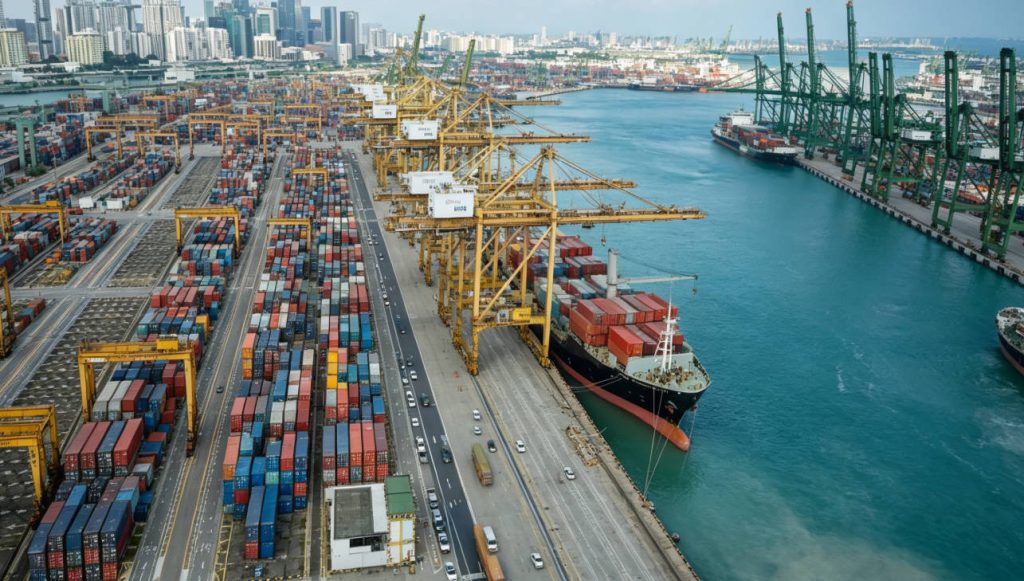
Ningbo-Zhoushan Port is not a terminal. In 2025, with over 43 million TEUs of containers handled and more than 1.4 billion metric tons of total cargo, the port was the world’s largest port by cargo volume for the 17th straight year and comfortably the world’s third-largest container port. Every single day about 300 cargo ships arrive at and exit the port, and 309 container shipping services connect more than 700 ports across 200 countries. The size and speed of this operation requires precision from every shipper and freight forwarder in the port’s ecosystem.
The cutoff time is precisely orchestrated for cargo destined for US West Coast ports – Los Angeles, Long Beach, Oakland and Seattle. If you miss a CY cutoff by a few hours you will not have your container aboard the vessel. If you miss a SI cut-off, the carrier cannot issue your bill of lading. If you miss the ISF filing time, US Customs may penalize you before your goods ever leave Chinese seas. This tutorial will cover the several types of cutoffs you need to know, how they work together, and tips on designing shipment plans that keep your product going on time.
Ningbo-Zhoushan Port: The Scale That Makes Cutoffs Matter
Before we dive into the details of cutoff schedules, it’s worth appreciating why exact timing is so important at this specific port. The enormous size of Ningbo-Zhoushan is both its greatest benefit and the reason why missing a cutoff is so catastrophic. The port has two main core sections and twenty functional zones, including major container terminals at Beilun, Meishan, Chuanshan, Daxie and Zhenhai. The Meishan and Chuanshan terminals alone, which will be fully operational by 2025, handle tens of millions of TEUs a year. Terminal operations are based on tight schedules around vessel arrival and departure times with little tolerance for late goods.
The Tiaozhoumen waterway expansion was completed in December 2025, introducing a dual-channel navigation system able to handle vessels of up to 300,000 DWT. The large-scale infrastructure development has also enhanced the port’s ability to handle ultra-large container ships concurrently. These mega-vessels, with often over 20,000 TEUs capacity, run on set weekly rotation schedules under carrier partnerships. If a vessel like that leaves, it leaves. If your goods misses the CY cut off, it will be held for the next sailing, which might be seven days away on some routes, or two weeks on others.
The good news is Ningbo-Zhoushan is well-connected to the US market. All the major carriers, including COSCO, ONE, Evergreen, ZIM, WHL and MSC, offer direct Trans-Pacific services from Ningbo. Located in Zhejiang Province, Ningbo is within easy trucking distance of the huge manufacturing supply base in Shanghai and production clusters throughout Jiangsu and Anhui provinces. Efficient terminal operations and competitive sailing schedules mean that shippers in eastern and central China often see Ningbo as a reasonable port choice even when Shanghai is geographically closer.
Understanding the Cutoff Ecosystem: Every Deadline Explained
The “cutoff” in maritime freight actually refers to a few different deadlines for different parts of a shipment. It is a common and expensive mistake to confuse or regard them as interchangeable. What each type signifies in practice is this.
Booking Cutoff
The booking cutoff is the date that the ocean carrier or NVOCC needs to receive your booking in order to guarantee space on a given voyage. For general cargo (dry containers) this deadline is usually 5-10 days before the vessel’s estimated time of departure (ETD). Special categories of cargo – refrigerated containers (reefers), out-of-gauge cargo and hazardous products – require additional space planning, equipment allocation and regulatory assessment, therefore booking cut-offs are frequently earlier, sometimes 10 to 14 days in advance. Vessel space fills fast in peak season or on front-loading rushes, and booking cutoffs don’t really matter once space runs out – which can be days before the stated deadline.
SI (Shipping Instruction) Cutoff
As soon as space is booked, you will need to submit your Shipping Instructions (SI), which is the detailed document detailing the shipper, consignee, notify party, description of cargo, HTS codes, weight and any other information the carrier needs to generate the Bill of Lading. For most large US-bound services, SI cutoffs at Ningbo are often 2 to 3 days prior to the vessel’s ETD. Missing this deadline doesn’t just delay your B/L, it can result in the carrier cancelling your booking, which then causes a rollover to the next available sailing.
VGM (Verified Gross Mass) Cutoff
The SOLAS convention requires carriers to not load a container unless they have the VGM of the container and its contents – the verified gross mass. The VGM cut-off at Ningbo is usually the same time or within 24 hours of the CY cut-off. It needs to be reported through the carrier’s digital platform or through your freight forwarder. Non-submission of VGM is not a documentation problem – it is a safety regulation infringement that will have your container left behind, full stop.
CY (Container Yard) Cutoff — The Critical Gate
From an operational point of view, the most critical date is the CY cutoff. It is the last moment that your loaded, sealed container may be delivered to the terminal and accepted for a certain vessel sailing. CY cutoffs at Ningbo-Zhoushan main container terminals for direct Trans-Pacific services to US West Coast ports are generally 24 to 48 hours before vessel ETD. That means if you have a vessel going on a Friday morning your container has to gate into the port by Wednesday afternoon at the latest – and many carriers require it by Tuesday evening to allow for yard placement, customs inspection and load planning. CY cutoffs are strict stops . Unlike the SI or VGM deadlines, which can be extended a few hours with the carrier’s consent, CY cutoffs are enforced at the terminal gate and are rarely flexible.
CFS (Container Freight Station) Cutoff for LCL
In LCL shipments, the counterpart of the CY cutoff is the CFS receiving cutoff. This is the deadline by which your cargo has to arrive at the consolidation warehouse for the consolidator to complete stuffing, submit the VGM and gate the container into the terminal in time for the vessel. Because the CFS cutoffs need to reflect the consolidation process itself, they are usually 4 to 7 days before the vessel ETD. This is substantially sooner than the CY cutoff for FCL, and is the primary reason LCL shipments need to be planned earlier. Missing a CFS cutoff doesn’t only roll your cargo, it might mean waiting for the next weekly consolidation departure, which could be 7 or even 14 days later.
| Cutoff Type | What It Controls | Typical Deadline (Before ETD) | Consequence of Missing |
| Booking Cutoff | Securing vessel space | 5–10 days (standard) | No space on vessel; must rebook |
| SI Cutoff | Shipping instruction submission | 2–3 days | Booking may be canceled; B/L delayed |
| VGM Cutoff | Container weight declaration | 24–48 hours | Container cannot be loaded (SOLAS) |
| CY Cutoff (FCL) | Container gate-in to terminal | 24–48 hours | Container left behind; rolled to next sailing |
| CFS Cutoff (LCL) | Cargo delivery to CFS warehouse | 4–7 days | Cargo misses consolidation; next weekly departure |
| ISF Filing (US CBP) | Pre-arrival data to US Customs | 24 hrs before vessel departure | Penalty up to USD 10,000 per violation |
Ningbo-Zhoushan Export Cutoff Reference: US-Bound Services
The table below is a representative reference framework for export cutoffs of services on Ningbo- Zhoushan to US-bound. These durations are indicative of standard industry practice for key carrier services in operation in 2025-2026 and should be used as a planning baseline. Please note that actual cut-off dates for individual boats and sailing dates should be confirmed directly with your freight forwarder or carrier, as timetables vary by service loop, carrier, terminal and week.
| Service Type | Destination | Booking Cutoff | SI Cutoff | VGM Cutoff | CY Cutoff | Est. Transit (Port-to-Port) |
| FCL Direct | LA / Long Beach | T-7 to T-10 days | T-3 days | T-2 days | T-2 days (18:00) | 14–17 days |
| FCL Direct | Oakland | T-7 to T-10 days | T-3 days | T-2 days | T-2 days (18:00) | 16–19 days |
| FCL Direct | Seattle / Tacoma | T-7 to T-10 days | T-3 days | T-2 days | T-2 days (18:00) | 15–18 days |
| FCL (Reefer/DG) | US West Coast | T-10 to T-14 days | T-4 days | T-3 days | T-3 days (12:00) | 14–18 days |
| LCL Consolidation | US West Coast (via LA/LB) | T-14 days | T-6 days | T-5 days | CFS: T-5 to T-7 days | 22–30 days total |
Note: ‘T’ in the table above, is the vessel ETD (Estimated Time of Departure). All times are Ningbo local time (GMT+8). For dangerous cargo, extra DG declaration documentation must be provided to China Maritime Safety Administration normally 72 hours before loading. Add 2 to 3 more buffer days to all cutoffs above for peak season (August to November) and pre-Chinese New Year (usually January) as terminal congestion and carrier space limits consistently compress effective deadlines.
Seasonal Disruptions That Shift Every Cutoff
In practice cut-off schedules are not static. They respond to the rhythms of the Chinese export calendar, global shipping market circumstances and carrier operating decisions. Knowing the seasonal pressures is critical to efficient cargo planning throughout the year.
The single largest annual disturbance to Ningbo-Zhoushan export schedules is Chinese New Year. The official holiday in 2026 began on February 17th, however the logistical window for pre-holiday shipments began to close much earlier. Factory shutdowns in Zhejiang, Jiangsu and neighboring provinces usually begin 1 to 2 weeks before the holiday, while port trucking capacity in Ningbo falls 50% or more in the final days before shutdown. Drayage charges go through the roof and often double or triple, and capacity on vessels for pre-CNY sailings gets very limited as importers front-load inventory to cover the 2-to-3-week production closure period. Shippers said cargo for delivery to the US by the end of February or early March should be brought into Ningbo no later than the end of January.
Peak season from August through November follows a consistent pattern, although fluctuates in intensity from year to year. US importers scramble to load up on holiday season goods during this period, thus increasing demand for Trans-Pacific capacity. Carriers also tend to apply Peak Season Surcharges (PSS) and General Rate Increases (GRI) during this timeframe, as well as less blank sailings with vessels filling up and possibly tighter cut-off periods due to terminal congestion. You should book departures from Ningbo 4 to 6 weeks in advance during peak season.
In 2025-2026, the tariff landscape has created erratic demand surges that break usual seasonal patterns. In the wake of the US-China tariff cut announced in May 2025, Trans-Pacific bookings soared as importers hurried to front-load cargo before the August deadline. Many shippers were caught off guard by the demand increase, with vessel space selling out weeks in advance and effective cutoffs moving forward as carriers and terminals filled up. The possibility of persistent congestion remains in April 2026 for Ningbo, with the complication of bunker supply chain disruption affecting the fuel market. When geopolitical or regulatory conditions are in flux, shippers should pay close attention to market updates and allow extra buffer in their cutoff strategy.
ISF Filing: The US-Side Cutoff You Cannot Ignore
Ningbo export cutoffs are simply part of the equation of compliance. On the US customs side, shippers are obliged by law to file an Importer Security Filing (ISF) with US Customs and Border Protection (CBP) no later than 24 hours before the vessel’s departure from the foreign port. This criterion, frequently referred to as the ‘10+2 rule’, requires ten data items to be provided by the importer and two by the carrier, including the seller, buyer, manufacturer, ship-to party, container stuffing locati0n and consolidator information.
Late or erroneous ISF filing can result in penalties up to USD 10,000 per violation and a history of ISF non-compliance will greatly enhance the likelihood of a CBP examination hold on your cargo when it arrives at a port on the US West Coast. In 2025, ISF enforcement was increased dramatically, and as of 2026, US CBP treats ISF compliance as a hard requirement with active penalty assessment, not a technicality that can be corrected after the fact. What this means in practical terms for Ningbo shippers is that your US-side customs broker must all the essential shipper, consignee and cargo information at least 3 to 4 days prior to the vessel ETD to have time to compile and file the ISF appropriately.
| Filing / Document | Submitted To | Deadline | Penalty for Non-Compliance |
| ISF (10+2) | US CBP | 24 hrs before vessel departure | Up to USD 10,000 per violation |
| AMS (Automated Manifest System) | US CBP via carrier | 24 hrs before vessel departure | Cargo hold / refused entry |
| Export Customs Declaration | China Customs | Before CY / CFS cutoff | Cargo cannot be loaded |
| Bill of Lading | Issued by carrier | After SI cutoff accepted | Cannot release cargo in US |
| Packing List & Commercial Invoice | Customs broker / carrier | Before SI cutoff | Incorrect B/L; customs issues |
Current Freight Rates: Ningbo to US West Coast (2026 Reference)
And comprehending cutoff schedules cannot be divorced from understanding the market context that dictates how early you need to book and how competitive the available space will be at any given time. As of April 2026, Trans-Pacific freight rates from Ningbo to the US West Coast continue under pressure, extending the softening trend that began after the mid-2025 front-loading boom receded.
According to data from Freightos Baltic Index (FBX01) tracking Ningbo-to-LA/Long Beach container prices, as of early 2026, spot rates for 40-foot containers have been trading in the USD 1,900 to 2,200 range, down sharply from the elevated levels seen in mid-2025 when the 90-day tariff truce triggered a demand spike. Industry analysts Drewry and Xeneta are predicting more weakening through 2026 as new vessel deliveries add fleet capacity faster than demand growth can absorb – with estimates estimating contract rates could settle 15% to 25% below late-2024 levels by Q4 2026.
This rate situation presents opportunities for shippers, but it does come with operational complexity. Carriers that are controlling yield in a lower-rate environment prefer to place more blank sailings to protect capacity discipline, which can upset weekly service schedules and effectively advance cutoff deadlines when boats are skipped. It’s important to keep an eye on your forwarder’s blank sailing notices.
| Route (from Ningbo-Zhoushan) | Container Type | Indicative Spot Rate (USD) | Est. Port-to-Port Transit |
| Ningbo to Los Angeles / Long Beach | 40GP / 40HQ | $1,800 – $3,200 | 14–17 days |
| Ningbo to Los Angeles / Long Beach | 20GP | $1,200 – $2,000 | 14–17 days |
| Ningbo to Oakland | 40GP / 40HQ | $1,900 – $3,300 | 15–19 days |
| Ningbo to Seattle / Tacoma | 40GP / 40HQ | $1,900 – $3,300 | 14–17 days |
| Ningbo to LA / LB (LCL) | Per CBM | $75 – $160 / CBM | 22–30 days (total) |
These basic rates do not include accessorial costs, which can add 25 to 50 percent to the total. The Bunker Adjustment Factor (BAF), Peak Season Surcharge (PSS) (where applicable), Terminal Handling Charges (THC) at both Ningbo and the US destination port, the ISF filing fee paid to your US customs broker, and the US port fee since October 2025 for Chinese-built vessels are key surcharges. Before you contract for a cargo, always ask your freight forwarder for a written estimate of the total landing cost.
LCL vs. FCL at Ningbo: How Cutoffs Should Drive Your Decision
One common mistake that importers do is to select between LCL and FCL based upon the rate per unit of cargo, without considering the impact of the differing cutoff structures on the total lead time and operational flexibility. The cutoff gap between LCL (CFS receiving) and FCL (CY cutoff) in Ningbo-Zhoushan is usually 3-5 days. So, for the same vessel departing, an LCL shipper must have cargo at the CFS warehouse almost a week earlier than an FCL shipper must gate in their container.
The fixed cost of the container is higher , but FCL is a lot more flexible for companies who have tight production schedules or need to send goods at the last minute . Conversely, LCL is more suitable for cargo amounts below 13 to 15 CBM, for companies who are slowly growing inventory, or for product sampling and test orders when the volume is just not enough to fill a container. The trick is to book LCL shipments at least a week earlier than FCL, and tell your supplier to do that. That way, the cargo gets at the CFS consolidation warehouse in Ningbo with enough buffer before the CFS cut-off.
The practical decision framework: If your cargo is around 10 to 15 CBM, run both LCL and FCL cost comparisons. The LCL pricing per CBM x your entire volume may really come close to, or even beat the flat rate for a 20GP container, especially in peak seasons when LCL consolidation charges and CFS fees are high. Your freight forwarder should present you with quotes for both choices.
How Topway Shipping Manages Cutoffs on Your Behalf
“Managing export cutoff schedules across multiple vessel sailings, carrier portals, China Customs systems and US CBP filing platforms is operationally demanding and the cost of getting it wrong is high. This is the basic working value, a professional freight forwarder like Topway Shipping provides every day.
Topway Shipping was founded in Shenzhen in 2010 and has over 15 years of comprehensive experience in China-US freight logistics, particularly in the Trans-Pacific corridors between Chinese export manufacturing and US import markets. The founding team of the company has more than 15 years of practical experience in international logistics and customs clearance, not only the theoretical knowledge but also the operational experience gained from thousands of actual shipments along the routes that matter most to cross-border e-commerce sellers, Amazon FBA operators and B2B importers.
Topway provides the first-leg inland transportation from supplier factories in Zhejiang, Jiangsu and beyond to the Ningbo-Zhoushan terminal or consolidation CFS facilities on the Ningbo side. The team watches carrier booking windows, CY and CFS cut-off dates for numerous weekly sailings, export customs declarations with China Customs and VGM submissions, ensuring all pre-departure checklist milestones are achieved well in advance of the hard deadlines. For shippers who have experienced the frustration of a rolled container, this proactive management is not an abstraction. It is the difference between making a sailing and missing it.
On the US side, Topway’s service concept goes far beyond the port entrance. It runs a network of warehouses across the U.S. — offering storage, Amazon FBA packing and labeling, carton-level sorting and inventory replenishment management. Topway’s nationwide drayage and trucking services for cargo moving inland from Los Angeles, Long Beach, Oakland and Seattle deliver to distribution centers, FBA fulfillment hubs, retail warehouses and end customers across the continental US, from California to Texas, Illinois, New York and all major markets in between.
All in one logistics supplier for this entire chain from a Zhejiang manufacturing to a New Jersey fulfillment facility reduces the coordination gaps and misunderstanding risks of piecing together several vendors. Topway’s crew operates on both sides of the Pacific, so they can see and notify you about deadline adjustments, blank sailings and market disruptions as they occur – intelligence that allows you to make fast, confident decisions regarding your supply chain.
Practical Tips for Staying Ahead of Ningbo Cutoffs
“Managing export cutoff schedules across multiple vessel sailings, carrier portals, China Customs systems and US CBP filing platforms is operationally demanding and the cost of getting it wrong is high. This is the basic working value, a professional freight forwarder like Topway Shipping provides every day.
Topway Shipping was founded in Shenzhen in 2010 and has over 15 years of comprehensive experience in China-US freight logistics, particularly in the Trans-Pacific corridors between Chinese export manufacturing and US import markets. The founding team of the company has more than 15 years of practical experience in international logistics and customs clearance, not only the theoretical knowledge but also the operational experience gained from thousands of actual shipments along the routes that matter most to cross-border e-commerce sellers, Amazon FBA operators and B2B importers.
Topway provides the first-leg inland transportation from supplier factories in Zhejiang, Jiangsu and beyond to the Ningbo-Zhoushan terminal or consolidation CFS facilities on the Ningbo side. The team watches carrier booking windows, CY and CFS cut-off dates for numerous weekly sailings, export customs declarations with China Customs and VGM submissions, ensuring all pre-departure checklist milestones are achieved well in advance of the hard deadlines. For shippers who have experienced the frustration of a rolled container, this proactive management is not an abstraction. It is the difference between making a sailing and missing it.
On the US side, Topway’s service concept goes far beyond the port entrance. It runs a network of warehouses across the U.S. — offering storage, Amazon FBA packing and labeling, carton-level sorting and inventory replenishment management. Topway’s nationwide drayage and trucking services for cargo moving inland from Los Angeles, Long Beach, Oakland and Seattle deliver to distribution centers, FBA fulfillment hubs, retail warehouses and end customers across the continental US, from California to Texas, Illinois, New York and all major markets in between.
All in one logistics supplier for this entire chain from a Zhejiang manufacturing to a New Jersey fulfillment facility reduces the coordination gaps and misunderstanding risks of piecing together several vendors. Topway’s crew operates on both sides of the Pacific, so they can see and notify you about deadline adjustments, blank sailings and market disruptions as they occur – intelligence that allows you to make fast, confident decisions regarding your supply chain.
Conclusion
As the world’s biggest cargo port, Ningbo-Zhoushan Port handled 43 million TEUs and more than 1.4 billion metric tons of cargo in 2025, operating with a precision and speed that rewards shippers who plan ahead and punishes those who underestimate the importance of cutoff deadlines. For US-bound cargo, the layered system of booking cutoffs, SI cutoffs, VGM cutoffs, CY cutoffs and US-side ISF filing requirements creates a tightly scheduled timeline that needs to be managed proactively, not reactively.
The operational discipline required to execute a reliable Ningbo-to-USWC shipment program is higher than it has ever been in the current trade environment – one of tariff volatility, occasional demand spikes and blank sailing disruptions, port congestion risks at both Ningbo and US West Coast destinations and heightened US customs enforcement. Schedule dependability and cost predictability are necessary for competitive enterprises and will benefit importers who consider cutoffs as hard limits and design supply chains around them.
With over 15 years of China to US logistics experience, Topway Shipping offers a full spectrum of logistics services including factory pickup in China, maritime freight from Ningbo, US customs clearing, warehouse handling and US trucking across the country. Whether your cargo is FCL or LCL, Los Angeles or Chicago, a logistics partner who understands the cutoff geography as well as the freight rate environment makes every shipment more predictable – and every delivery commitment more reliable.
FAQs
Q: What is the CY cutoff for FCL shipments from Ningbo to Los Angeles?
A: The CY (Container Yard) cutoff for most of direct Trans-Pacific FCL services from Ningbo-Zhoushan to Los Angeles or Long Beach is about 24-48 hours before the vessel’s ETD. So, if your vessel is sailing Friday morning, usually your container needs to be gated into the terminal by Wednesday evening. Always confirm the particular cutoff with your freight forwarder for each booking as it varies by carrier and service.
Q: How much earlier is the LCL CFS cutoff compared to the FCL CY cutoff at Ningbo?
A: A lot earlier. For LCL cargo, the CFS receiving cutoff is usually 4-7 days before the vessel ETD, and for FCL CY cutoffs it’s 1-2 days. This means that LCL shipments require more lead time and earlier supplier cooperation than FCL. Plan your LCL supply chain with 1 week more buffer than FCL planning as a minimum.
Q: What happens if I miss the CY cutoff at Ningbo-Zhoushan?
A: Your container will not be loaded on the scheduled vessel and instead will be rolled to the next available sailing. That might be 7 to 14 days later depending on the frequency of the service. You’ll probably pay container storage or demurrage fees at the terminal and, in turn, you’ll have delayed downstream commitments, such Amazon FBA delivery appointments or client delivery windows.
Q: When must ISF be filed for cargo shipping from Ningbo to the US?
A: ISF (Importer Security Filing) should be filed to US CBP not later than 24 hours before the vessel leaves Ningbo. In actuality, all cargo and party information required must be received by your US customs broker at least 3 to 4 days prior to vessel departure so that they may prepare and file appropriately. Enforcement of ISF has become more stricter since 2025, with penalties of up to USD 10,000 for late or incorrect filing.
Q: Can Topway Shipping handle shipments from Ningbo to inland US destinations?
A: Yes. Topway Shipping offers full logistical services such as factory pickups, ocean freight from Ningbo (FCL and LCL), US customs clearing, port drayage and domestic trucking services throughout USA. Topway also offers US warehousing for storage, FBA prep and inventory management – from Los Angeles to New York, Chicago, Dallas and all major US markets.
