
Shenzhen Yantian to Alabama – Reliable FCL Transit Time You Can Plan Around
Introduction
If you are buying products from South China and sending them to Alabama – whether it’s a warehouse in Mobile, a distribution facility in Birmingham or a fulfillment hub in Huntsville – predictability of travel time isn’t just nice to have, it’s an integral part of your business planning. Stockouts cost money. Container arrivals are delayed, disrupting the production timetable. And with your supply chain across the Pacific, one misjudged buffer might mean weeks of expensive downtime.
Shenzhen’s Yantian International Container Terminal (YICT) is the leading export gateway in South China, designed specifically for this kind of long-haul, high-volume FCL (Full Container Load) service. Deep-water berths, automated cranes, 24/7 operations and direct weekly sailings to numerous U.S. For importers, Yantian provides something unique in international logistics: a predictable, plannable transit window in Gulf and East Coast ports.
This tutorial takes you through what you need to know about the Yantian–Alabama FCL corridor — sailing routes, realistic transit benchmarks, port alternatives, inland transportation, warehousing, and how to design a supply chain that actually holds up under duress. We also show how Topway Shipping can provide end-to-end management of your supply chain, from factory floor in Shenzhen to warehouse shelf in Alabama.
Why Yantian Port Is the Right Starting Point for Alabama Shippers
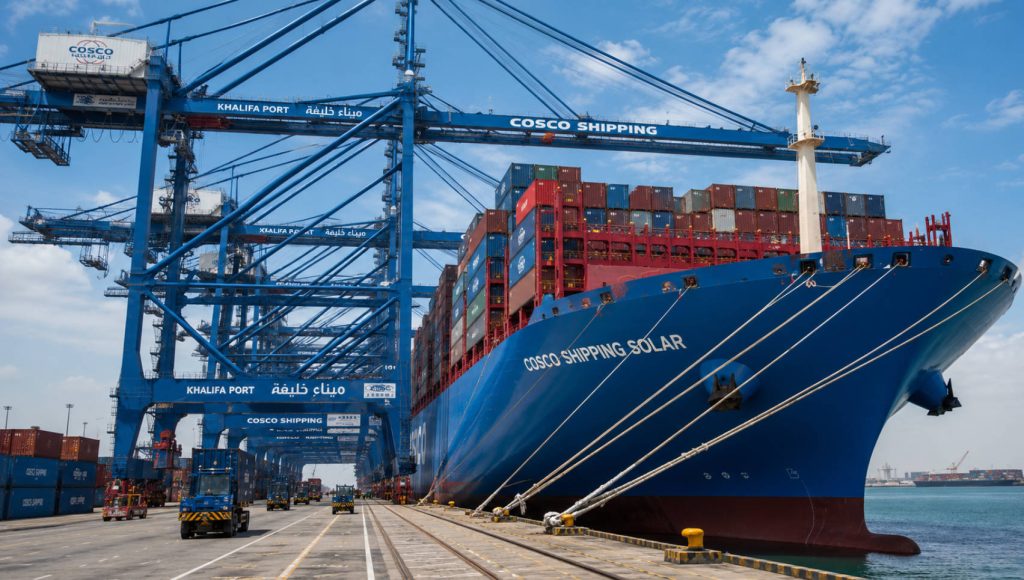
Yantian International Container Terminals in eastern Shenzhen in Guangdong province is the main export terminal for the manufacturing center of south China. Factories in Shenzhen, Dongguan, Huizhou and much of the Pearl River Delta depend on Yantian to send containers overseas. The terminal mostly handles FCL shipments and is always one of the most efficient container terminals in the world – a key differentiator when you need to achieve cut-off times to the minute.
Yantian is built for long haul deep-sea services and not for regional and LCL consolidation traffic as in Shekou or Chiwan. The docks can take ultra-large container boats (ULCVs) and the result is that the largest and most direct strings of the main alliances, including THE Alliance, 2M and Ocean Alliance, are run through Yantian. For FCL shippers bound for the U.S. Gulf or East Coast, this results in fewer transshipments, more predictable ETDs and a significant improvement in transit time reliability.
Another plus is Yantian’s inland connectivity. A container trucked from a factory in Shenzhen’s industrial zones to Yantian takes two to four hours, a fraction of the time it would take to reach Guangzhou Nansha or Hong Kong Kwai Tsing. “For shippers whose suppliers are primarily in Shenzhen, Dongguan or Huizhou, Yantian just makes the most sense as the most logical and cost-effective port of origin.
The Two Main Routing Options: Gulf Coast vs. East Coast
When delivering FCL from Yantian to Alabama, shippers have two main routing plans, each with a transit time profile, cost structure and risk factors.
Route A: Via Port of Mobile (Gulf Coast)
The Port of Mobile, Alabama’s only deep-water seaport, is the most direct ocean entrance point for Alabama-bound cargo. APM Terminals’ Mobile container terminal has seen growth of more than 85% in volume since 2015 and now handles about 500,000 TEUs a year. It also provides fast crane lifts – 35 container lifts per hour on average – and truck turn times of about 45 minutes, figures that immediately result in speedier drayage and quicker cargo availability for importers.
A standard FCL cruise from Yantian to Mobile through the Panama Canal is about 28 to 35 days port to port. Service may be direct calls or transshipment via Houston or New Orleans. Mobile is part of the rotation for services operated by CMA CGM, Evergreen, COSCO and OOCL. The port also is making major investments in infrastructure. In October 2025, it announced a $131 million development that includes a new container berth, a 33-acre yard expansion and expanded on-dock rail access, which would further alleviate congestion and increase import cycle times.
Mobile is always the most effective gateway for cargo moving to Birmingham, Huntsville, Montgomery or other inland points in Alabama. The road travel from Mobile to Birmingham is about 250 miles and most drayage carriers can deliver in one to two working days from when the container is available.
Route B: Via Port of Savannah (East Coast)
For shippers whose Alabama distribution serves larger southeast U.S. markets, or who require a backup routing option, the Port of Savannah in Georgia is an attractive alternative. Savannah is the fourth-largest container port in the U.S. and offers some of the most competitive transit times from Yantian on the East Coast, often 25 to 30 days via the Panama Canal on premium services.
Cargo can be trucked from Savannah to Birmingham in around six to eight hours, so it’s a viable alternative for time-sensitive shipments. However, the Savannah-to-Alabama routing has a somewhat longer inland trucking distance than Mobile-to-Birmingham and, due to the high cargo quantities at Savannah, port congestion is a more regular variable to manage.
FCL Transit Time Reference: Yantian to Alabama
The table below reflects realistic, plannable transit benchmarks for FCL shipments from Yantian to Alabama ports of entry, based on current market conditions in 2025. These numbers reflect time spent at sea and normal port procedures, but do not include inland trucking to your final destination.
| Route | Entry Port | Ocean Transit (Days) | Routing | Typical Frequency |
| Yantian → Mobile (Gulf) | Port of Mobile, AL | 28–35 | Panama Canal | Weekly |
| Yantian → Savannah (EC) | Port of Savannah, GA | 25–30 | Panama Canal | Multiple/Week |
| Yantian → Houston (Gulf) | Port of Houston, TX | 26–32 | Panama Canal | Weekly |
| Yantian → New Orleans | Port of New Orleans, LA | 30–36 | Panama Canal | Weekly |
| Yantian → East Coast (Alt) | Various EC Ports | 35–42 | Suez Canal | Less Common |
Note: Transit times are port-to-port sailings. Allow 1-3 days for customs processing and port drayage at destination. Peak season (August-October) and Panama Canal congestion can add 2-5 additional days.
FCL Rate Reference: Yantian to U.S. Destinations
Ocean freight prices from Yantian to U.S. ports are subject to changes in fuel costs, seasonal demand, capacity utilization and trade policy. The table below shows indicative rate benchmarks based on publicly available market data as of mid-2025. Rates will vary according on airline, booking lead time and cargo type.
| Destination Port | 20GP (USD) | 40GP / 40HQ (USD) | Market Trend (2025) |
| Mobile, AL | $3,500 | $4,200 | Stable-to-firm |
| Savannah, GA | $3,300 | $3,900 | Competitive |
| Houston, TX | $3,500 | $4,200 | Stable |
| New Orleans, LA | $4,100 | $4,500 | Moderate |
| Los Angeles / Long Beach | $2,300 | $2,800 | Lower (West Coast) |
| New York / Newark | $3,300 | $3,900 | Firm |
Asia/U.S. Container rates rose 2-4% in late May 2025 as carriers dealt with extra demand. Rates to Gulf Coast and East Coast ports remain much higher than West Coast rates due to Panama Canal fees, longer sailing distances and higher fuel consumption.
What Actually Adds Time: The Hidden Variables in Your Transit Window
The ocean transit time from Yantian to Mobile is the most predictable portion of your whole transit. The true variability—and where most of the shipment delays actually occur—is in the work that is done before and after the vessel sails.
Cut-Off Compliance
There is a hard documentation cut-off date for each voyage (SI cut-off) and a cargo receipt cut-off. Missing these by a day means you have to wait for the next available sailing, which is usually one week later. For Alabama importers with lean inventory, it’s generally the single biggest delay they can bypass. The most effective mitigation is to work with an experienced freight forwarder that monitors cut-off calendars attentively and books with plenty of lead time.
ISF Filing (Importer Security Filing)
ISF (10 + 2) – U.S. Customs requires ISF to be filed at least 24 hours before vessel departure. Filing ISF late or incorrectly might result in holds and penalties, which can delay your goods reaching the destination port for several days. With today’s tariff environment, there’s more attention on goods coming from China, so it’s more crucial than ever to have accurate and timely customs documentation.”
Panama Canal Scheduling
The Panama Canal continues to be the major route for eastbound FCL trans-Pacific. Drought-related draft limits caused major delays in 2023–2024. Although conditions have improved significantly in 2025, the canal still adds an average of 1–2 days in schedule buffer compared to pre-drought baselines. This is now included by most experienced forwarders in their normal transit estimations.
Port of Mobile Congestion
Mobile is a smaller efficient port than the main East Coast hubs and under normal circumstances has quick cargo availability However, during peak import seasons (usually September to November leading into the holiday retail cycle), vessel bunching and chassis shortages can extend port dwell by 2–4 days. During these windows it’s vital to book drayage ahead of time and have a reputable trucking partner with Alabama-wide coverage.
Tariff and Customs Clearance Complexity
The trade policy environment for 2025-2026 has significantly altered the customs clearance dynamics for China-origin commodities. With taxes on Chinese imports rising as high as 145% on some product categories and the de minimis exemption of USD 800 coming to an end in May 2025, it becomes more critical to ensure appropriate HTS code classification and pre-arrival preparation. Documentation problems or arguments over tariff classification might add 3–7 days to the overall door-to-door schedule.
Inland Trucking and Warehousing in Alabama
Getting your container to the Port of Mobile or Port of Savannah is only half of the delivery equation. Alabama’s industrial locati0n means that most shippers need dependable inland haulage and, increasingly, local warehousing to service their customers well.
Truck drayage from Mobile to Birmingham is usually 250 miles and takes one to two business days. Huntsville, a significant industrial and logistics hub in north Alabama (home to automotive suppliers and aerospace manufacturers), is about 330 miles from Mobile and can typically be reached within two business days. Montgomery, the capital of Alabama and a rising distribution point, is located about 165 miles north of Mobile—a simple one-day drayage trip.
Topway Shipping is a United States trucking network that includes all main destinations across Alabama. They offer port-to-warehouse and warehouse-to-door delivery services. Topway also has U.S. warehouse facilities, in addition to drayage, which act as staging hubs for multi-stop domestic distribution, inventory buffering, or FBA prep. This is especially beneficial for e-commerce importers who need to break a complete container down into specific SKUs for numerous retail or fulfillment channels in Alabama and nearby southeastern states.
| Alabama Destination | From Port of Mobile | From Port of Savannah | Typical Drayage Time |
| Birmingham, AL | ~250 miles | ~380 miles | 1–2 Business Days |
| Huntsville, AL | ~330 miles | ~460 miles | 1–2 Business Days |
| Montgomery, AL | ~165 miles | ~340 miles | 1 Business Day |
| Mobile, AL (local) | Port arrival | ~320 miles | Same/Next Day |
| Tuscaloosa, AL | ~220 miles | ~370 miles | 1–2 Business Days |
How Topway Shipping Manages the Full Yantian–Alabama Chain
Topway Shipping, based in Shenzhen, has been a dedicated provider of cross-border e-commerce and commercial logistics solutions for China–U.S. trade. The Founding Team has more than 15 years of experience working in International Logistics and Customs Clearance, with a focus on the Trans-Pacific Corridor.
The difference between Topway and a normal ocean freight broker is the depth of the service chain. Topway provides coverage from plant gate in South China, organizes first leg trucking to Yantian, manages cut-off compliance, handles ISF filing and books the most reliable FCL sailing for your goal arrival window. This is not passive bookings management, this is active supply chain coordination.
On the U.S. side, Topway’s network covers the entire country. For goods heading to Alabama, it includes licensed customs brokerage at Mobile or Savannah, port drayage coordination, U.S. warehousing for staging and fulfillment and final-mile delivery through Topway’s nationwide transportation connections. As part of an integrated solution, Topway manages last mile logistics, whether your shipment is destined for an Amazon FBA facility, a third party logistics warehouse in Birmingham, or a manufacturer’s plant in Huntsville.
Topway has FCL and LCL maritime freight solutions. For shippers with bigger volumes – generally above 15 CBM or one full container – FCL from Yantian is the most cost-effective and time-reliable choice. Topway’s LCL consolidation service is a cost-effective choice for smaller, more frequent shipments, while yet keeping some predictability in transit.
What stands out about the company is its stance on open communication in an industry that is not often known for it. Clients are proactively updated on vessel ETDs, customs clearance status and delivery ETAs – the kind of information that helps inventory managers to plan with certainty rather than react to shocks.
Planning Your Shipment Calendar: Practical Tips for Alabama Importers
Knowing transit benchmarks is only valuable if you translate them into a workable shipping calendar. Experienced importers in Alabama organize this way the Yantian FCL planning.
The first rule of thumb is to work backwards from your in-warehouse date. If you want goods in your Birmingham warehouse on a given Monday, count backwards: 2 days interior trucking from Mobile, 3 days customs clearance and port drayage, and 32 days for the ocean sailing from Yantian. This means that your needed cargo cut-off date is about 37 days before your intended warehouse delivery. Most seasoned shippers build in an additional 5-7 day cushion to allow for unexpected delays, bringing the effective planning window to 42-45 days from factory pickup to Alabama warehouse.
The second principle is the early booking. Yantian sailings to Gulf Coast ports are popular and space on direct Mobile-calling strings can book up fast, particularly during pre-holiday high season. It is normal to book 3-4 weeks in advance of your cargo ready date (CRD) and booking 6 or more weeks ahead during peak periods will provide you access to preferred vessels and less danger of rollovers.
The third concept is compilation of paperwork in tandem with production of cargo. Gather and review ISF data, commercial invoices, packing lists and HTS code confirmations while your factory is still producing, not when cargo is ready. As U.S. Customs looks more closely at Chinese goods, pre-clearance work with your customs broker is one of the best investments you can make in your supply chain.
Port of Mobile’s Infrastructure Investment and What It Means for Shippers
Over the past decade, Alabama’s Port of Mobile has been on a major expanding growth trend. The terminal has increased in traffic by over 85 percent since 2015 and recently unveiled a $131 million expansion initiative, funded with a combination of federal appropriations and private investment from APM Terminals (a division of A.P. Moller-Maersk). The program comprises a new container berth, a 33-acre yard expansion and a rail flyover bridge that will provide direct on-dock rail access, a big advance for shippers looking to circumvent truck congestion on long-haul inland moves.
The Alabama Port Authority is also constructing a new $100 million Montgomery Inland Container Transfer Facility (ICTF) slated to open in early 2027. This facility will offer seamless rail and truck connectivity from the Port of Mobile to Montgomery and beyond, linking Alabama’s industrial zones to international commerce lanes through a direct rail path. For importers seeking to develop long-term supply chain strategy, these expenditures show that Mobile is positioning itself as a Tier 1 U.S. Gulf import gateway – not merely a regional alternative.
The 2025–2026 Market Context: Tariffs, Capacity, and Rates
Any meaningful discussion of Yantian–Alabama FCL logistics in 2025 must consider the deep impact of U.S.-China trade policy on supply chain planning. Tariffs on Chinese imports are at their highest levels in decades, with tariffs in several categories reaching at 100 percent. The removal of the de minimis exemption for goods under USD 800 in May 2025 has shifted greater volumes to formal entry FCL and LCL channels, raising demand for professional customs clearance service.
On the freight market side, trans-Pacific capacity has been brought into reasonable balance until mid-2025, while pricing have firmed off 2023 lows. The brief jump in rates in late May 2025, driven by faster reservations ahead of policy changes, is a reminder that rate volatility is a valid planning variable. Shippers with longer-term volume commitments might consider space commitments or service contracts with their freight forwarder to ensure capacity and tariff consistency during difficult periods.
A key tactical note: US port taxes on Chinese-built vessels went into effect in October 2025, surcharging freight invoices for specific vessel calls. Topway Shipping is closely watching these regulatory changes and advising clients on the most cost-effective vessel alternatives to minimise surcharge exposure while achieving transit time objectives.
Conclusion
Shipping FCL from Shenzhen Yantian to Alabama is a simple, reliable supply chain activity, but only when it is prepared meticulously. Typically, the ocean trip from Yantian to Mobile takes 28-35 days, and the whole door-to-door cycle from a South China manufacturer to the Alabama warehouse usually lands in the 40-50 day range, interior logistics and customs clearance included.
The Yantian terminal’s operating efficiency combined with the Port of Mobile’s developing infrastructure and Alabama’s growing logistics ecosystem provides importers with a truly competitive supply chain route from the manufacturing base in South China. The main variables to handle (cut-off compliance, ISF correctness, Panama Canal schedule and tariff categorization) are all controlled with the right logistics partner.
Topway Shipping has been running on the China-U. circuit since 2010, with a Shenzhen-based team that knows Yantian’s cut-off calendars, carrier relationships, and first-mile trucking, and a U.S. network that includes drayage, warehousing, and last-mile delivery to every region of Alabama. If you are developing or optimizing a supply chain between South China and Alabama, Topway provides the integrated, transparent, end-to-end service that turns a difficult international freight move into a predictable, repeatable process.
FAQs
Q: How long does FCL shipping from Yantian to Mobile, Alabama take?
A: Port-to-port sailing normally takes 28-35 days through the Panama Canal. Normally the overall time door-to-door including customs processing and inland trucking from Mobile to your Alabama destination is 40 to 50 days.
Q: Is the Port of Mobile a reliable entry point for China FCL shipments?
A: Yeah. APM Terminals operates Mobile, featuring fast crane operations, short truck turnaround times and direct services from major Asian carriers such as CMA CGM, Evergreen, COSCO and OOCL. The terminal is in the midst of a massive $131 million expansion to increase its capacity and rail connections.
Q: What container sizes does Topway Shipping offer for Yantian–Alabama FCL?
A: Topway has 20GP, 40GP, 40HQ(High Cube) container. For most Alabama importers shipping common merchandise, the 40HQ is the most economical way to ship by cubic meter. Topway also provides LCL consolidation for shipments not filling a full container.
Q: How do current U.S.-China tariffs affect my FCL shipment from Yantian?
A: Tariffs on Chinese goods are highly variable per HTS code and can be as high as 100%+ on some categories right now. Proper product classification and customs pre-arrival preparation are critical. Topway Shipping partners with registered US Customs Brokers to ensure accurate duty computations and smooth clearing.
Q: Can Topway Shipping handle the full door-to-door service from Shenzhen to my Alabama warehouse?
A: Yeah. Topway offers complete coverage from first leg trucking in China to Yantian, FCL ocean freight booking, ISF and customs brokerage, port drayage in Mobile or Savannah, U.S. warehousing, and final mile transportation to points across Alabama and beyond.