
Ship from China to Spain: Why Rail via Poland Beats Sea Freight in 2026
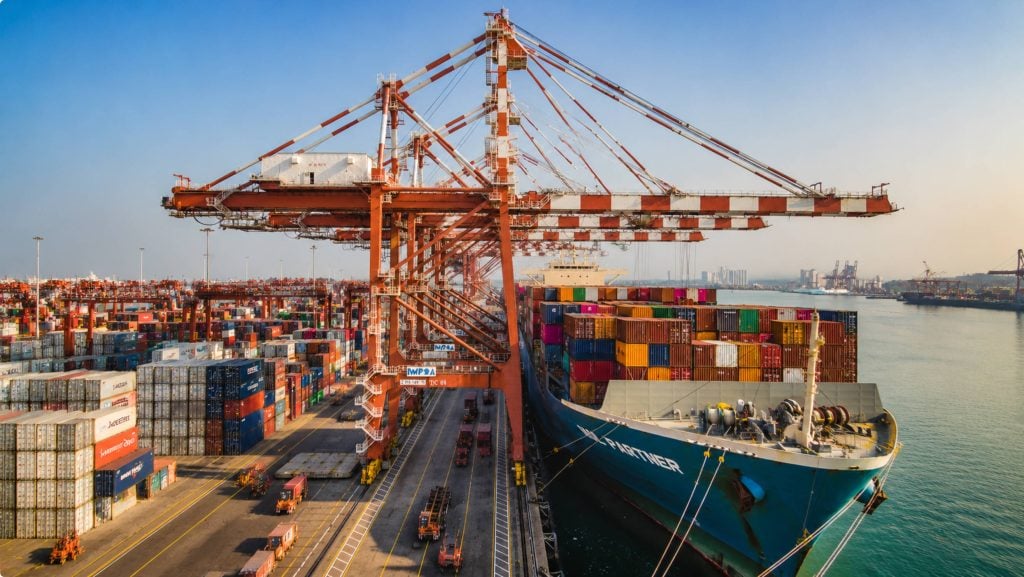
For most of the past two decades, the China-to-Spain maritime discourse started and finished with one word: ocean. Container lines ran weekly strings from Shanghai, Ningbo and Shenzhen to Valencia and Barcelona on a predictable schedule, and importers planned their whole replenishment calendar around a 30-to-35-day sea leg. That assumption has quietly fallen away. The marine freight baseline Spanish importers used to plan against no longer exists in its former shape, with the extended Red marine interruptions, the Cape of Good Hope detour most ships still need to rely on and the increased cost of EU carbon compliance all playing a role.
Meanwhile, train freight through Poland has moved from being a marginal possibility for time-sensitive electronics to a mainstream option. The China-Europe Railway Express is now moving record quantities through the Malaszewicze gateway and an increasing share of that cargo is on reaching Spain by truck or intermodal link. This essay looks at why rail via Poland has become the more rational alternative than sea freight for a considerable chunk of Spain-bound exports in 2026, and where sea freight still wins.
The Sea Freight Reality on the China-Spain Lane in 2026
Ocean freight has not stopped functioning, it’s just not straightforward anymore. There’s now a routeing fork for ships calling on Spain from China’s major ports that didn’t exist until late 2023: go via the Suez Canal with greater security risk, or detour around the Cape of Good Hope and add ten to fifteen extra days of sailing. As of mid-2026, most carrier capacity is still being deployed via the Cape route, but a few operators, like Maersk, have completed limited test journeys back through the Red Sea. Industry analysts see the return to Suez as a multi-quarter process, not a clean switch-back, meaning shippers booking today still have to plan around the longer, Cape-based transit time as the realistic default.
The difference in the distance is not small. The trip from Shanghai to Barcelona via the Suez Canal is about 8,900 nautical miles; the equivalent trip around the Cape is more than 13,000 nautical miles. At the average speeds of container ships, that gap alone is more than a week of extra sailing time, not even including port congestion, customs processing, or blank sailings during high season.
On top of the routeing problem, the expenses of EU carbon requirements are now permanently included in the landed cost calculation. The EU Emissions Trading System, which came into full effect for marine shipping Jan. 1, 2026, is applying a carbon premium on ocean freight headed to Europe that most carriers have either incorporated in base rates or listed separately as an ETS adjustment. None of this makes sea freight a bad choice for all shipments, but it does suggest the old mental model of a stable, low-risk 30-day sea leg to Spain needs to be revised.
Current Sea Freight Transit Times to Spain
The table below shows realistic port-to-port transit windows in 2026 for the main Chinese export hubs, plus the door-to-door range including destination customs clearance and inland delivery.
| Origin (China) | Destination Port (Spain) | Via Suez (port-to-port) | Via Cape of Good Hope |
| Shanghai / Ningbo | Valencia / Barcelona | 28-38 days | 40-52 days |
| Shenzhen / Yantian | Valencia / Barcelona | 30-40 days | 42-54 days |
| Qingdao / Tianjin | Bilbao / Vigo | 32-40 days | 44-55 days |
| Guangzhou | Barcelona (transshipment) | 30-40 days | 42-53 days |
For a true door to door number add another 5-10 days for customs processing and ultimate delivery. For LCL cargo, consolidation and de-stuffing often takes an extra five to seven days to the above timetable.
How the Poland Rail Corridor Actually Works
The China-Europe Railway Express network has evolved from a novelty to a true trunk-line infrastructure. The corridor alone saw some 3,500 trains in the first two months of 2026, up some 32 percent year on year, and the network as a whole has now passed the 120,000 cumulative trips mark, linking well over a hundred Chinese cities with more than two hundred destinations across two dozen European countries.
Almost all of that volume passes through one choke point before fanning out over the continent: the Malaszewicze terminal in eastern Poland, some nine kilometres from the Belarusian border. This gateway is used by around 85 to 90 percent of China-Europe freight trains entering the EU to move containers from the 1,520mm broad gauge used across Russia, Belarus and Kazakhstan to the 1,435mm standard gauge used across the EU. From there, cargo is either shipped farther into Europe by rail or transloaded to trucks for distribution by road, including on to Spain and Portugal.
Newer full-timetable services have reduced transport times still further. As early as 2026, the quickest scheduled corridor between Xi’an and Malaszewicze is completing the voyage in less than eleven days, reducing the unpredictable dwell time that was formerly experienced at border crossings. Regular, non-timetabled train services from the big Chinese hubs to Poland are still averaging a reliable 14 to 22 days, which is still considerably faster than any ocean routeing that exists today.
It is worth being particular about what train via Poland means for a shipment specifically headed for Spain. Most rail-to-Spain freight, unlike the dedicated Yiwu-Madrid line that goes point-to-point from an inland Chinese origin, is shipped in two legs: China to Poland (or a German centre such as Duisburg) by rail, and then Poland to Spain by intermodal rail-road or dedicated trucking. It is precisely this two-leg structure where an experienced forwarder earns its pay, because the hand-off coordination at the border terminal, the securing of onward capacity and the management of customs paperwork in several countries are not things an unskilled shipper should attempt to accomplish alone.
Rail vs Sea: Side-by-Side Comparison
| Factor | Sea Freight (Cape routing) | Rail via Poland |
| Typical door-to-door transit | 40-55 days | 22-32 days |
| Cost per 40ft container | $3,000-$5,500 | $4,300-$9,100 |
| Schedule reliability | Variable; congestion-prone | Fixed timetables on core lanes |
| Carbon/ETS exposure | EU ETS surcharge applies | Lower carbon footprint, no ETS |
| Cargo restrictions | Broad: reefer, DG, oversized OK | Limited: mostly general dry cargo |
| Best suited for | Bulk, low-urgency, big volume | Mid-value, time-sensitive, mid-volume |
Where Rail via Poland Genuinely Wins
Speed is the headline advantage, but not the only one. A 22-to-32-day door-to-door shipment instead of a 40-to-55-day shipment frees up several weeks of working capital that would have been tied up in transit inventory. For a corporation importing electronics, seasonal fashion or fast-moving consumer products into the Spanish market, that difference can be the gap between hitting a sales window and missing it.
Rail also does better under geopolitical stress than maritime routeing does now. Risks are well documented with the Northern Corridor through Russia and Belarus, and there have been short-term border closures in the past, but it has tended to be more resilient and easier to reroute around localised disruptions than the Red Sea where the entire Asia-Europe ocean fleet has been detouring around Africa for more than two years with no firm end-date in sight. The fundamental lesson is that diversification beats blind commitment to either method – shippers splitting traffic between sea and rail are much less exposed when either corridor meets turbulence.
There is also a frequently neglected cost-predictability issue. Short notice swings have been seen in Asia-Europe prices as carriers weigh up Cape routeing expenses, possible Suez re-opening and a structurally over-supplied vessel market. Rail prices are higher per container but have moved in a tighter band comparably, making for better budgeting for finance teams who need consistent landing expenses quarter to quarter.
That doesn’t imply rail is always winning. But there is limited rail capacity for these types of cargo on the China-Europe axis thus reefer cargo, risky items, big machinery and anything that necessitates flat-rack or open-top equipment still normally needs to transit by sea. 60 to 80 percent cheaper than air but rail is two to three times more per container. For very low-value, high-volume bulk commodities, where the cost per kilogram is the only variable that matters, sea freight will also frequently be favoured solely because of these factors.
Illustrative Cost and Time Comparison for a Mid-Size Shipment
To show the trade-off, the table below shows a 40ft container of ordinary consumer products transiting from Shenzhen to Madrid under current 2026 market circumstances.
| Metric | Sea Freight (Cape route) | Rail via Poland |
| Door-to-door transit | 44-52 days | 24-30 days |
| Approximate freight cost | $3,200-$4,800 | $5,300-$8,500 |
| Inventory carrying cost impact | Higher, longer capital lock-up | Lower, faster inventory turns |
| Exposure to Red Sea disruption | Direct | None |
| Exposure to Poland-Belarus border risk | None | Present, though generally short-lived |
What to Watch Before Booking Rail Cargo
There are dangers in rail and any honest comparison has to take them into account. In September 2025, Poland temporarily closed its border crossings with Belarus following joint Russia-Belarus military exercises, and train transit times for shipments to Malaszewicze increased from a normal two to four days at the border to as much as twenty days, with over one hundred trains stuck at Brest during the shutdown. The border went back to normal in about two weeks but the incident serves as a helpful reminder that the Northern Corridor is not immune to sudden political shocks connected to the wider regional security situation, although it is normally dependable.
Practical limitation is another cargo eligibility. Most carriers won’t carry lithium battery banks, aerosols or other risky products on regular rail service and equipment choices are generally confined to standard 40-foot high-cube boxes. That means anything that needs a flat rack or open-top box will have to move by ocean instead. Rail booking lead times also tend to be longer than many shippers think, often two to three weeks out from departure, as block train capacity is booked to a fixed schedule, not sold as needed as is often the case with ocean berths.
Finally, the second leg is equally important as the first. A container can reach Malaszewicze swiftly, but if the Poland to Spain transportation or intermodal link is not well organised, it doesn’t help a consignment going to Madrid or Barcelona. This is the very area where the time advantage that rail was meant to provide in the first place is most often lost by untrained forwarders.
How Topway Shipping Supports China-to-Spain Rail and Sea Freight
Since 2010, Shenzhen-based Topway Shipping has developed its business on tackling this kind of routeing complication for cross-border e-commerce and B2B importers. The founding team has more than fifteen years of total experience in international logistics and customs clearance, with specific deep expertise surrounding China-U.S. transportation evolved into full chain solutions over additional important trade channels, including China-Europe.
For shippers weighing rail against sea on the China-to-Spain lane, Topway Shipping handles the entire logistics chain, not just one leg of it. That includes first-leg pickup and export documentation in China, coordinating the rail or ocean main-haul, overseas warehousing at key European hubs, customs clearance on both ends and last-mile delivery into Spain. That end-to-end framework is especially important for rail bookings since the handoff at the Poland border and the subsequent trucking leg are where timetables most commonly slide if they are not actively controlled by a skilled partner.
Topway Shipping also provides flexible ocean freight services from China to key ports globally, including full-container-load and less-than-container-load, so firms are not tied to one mode. The pragmatic answer for many clients is not to go rail or sea exclusively, but to split volume between the two, with rail being used for time-sensitive or mid-value cargo, and sea freight for bulk, low-urgency shipments, with one logistics partner managing both so that nothing falls through the gap between modes.
Conclusion
China to Spain shipping corridor 2026 no longer one obvious default. Sea freight is still the right choice for bulk, low-value or oversize cargo and it is still the only realistic option for reefer and dangerous goods, but Cape of Good Hope routeing has added a layer of cost and schedule volatility that did not exist a few years ago, extending typical transit times to well over six weeks. Rail via Poland, in comparison, has become a real, reliable middle way: 22 to 32 days door-to-door, standardised schedules on key routes, and less risk from Red Sea disruption, at a price level comfortably between sea and air. And that combination is becoming harder and harder to ignore for time-sensitive, mid-value shipments destined for Madrid, Barcelona or Bilbao. In most cases, importers should not commit to one mode for the long haul, but rather develop a logistics plan that is flexible enough to utilise both modes, with a partner that can orchestrate the handoffs between them.
FAQs
Q: Is rail freight from China to Spain always faster than sea freight?
A: Yes, in most present cases for 2026, especially as long as most ocean transports route around the Cape of Good Hope. Rail through Poland is 22 to 32 days door-to-door, compared with 40 to 55 days for marine freight transported around the Cape. If Suez Canal transits fully normalise, the sea-rail gap will close, but rail is still likely to retain a considerable speed advantage.
Q: How much more expensive is rail freight compared to sea freight?
A: Rail is often two to three times more expensive per container than sea freight but still 60 to 80 per cent cheaper than air freight. Expect between $5,300 to $8,500 by train (from Shenzhen to Madrid, a normal 40ft container) against $3,200 to $4,800 by sea (Cape routeing).
Q: Can all types of cargo move by rail through Poland?
A: Rail is often two to three times more expensive per container than sea freight but still 60 to 80 per cent cheaper than air freight. Expect between $5,300 to $8,500 by train (from Shenzhen to Madrid, a normal 40ft container) against $3,200 to $4,800 by sea (Cape routeing).
Q: What happens if the Poland-Belarus border is disrupted again?
A: Short-term closures have occurred in the past, most recently in September 2025, and can add one to two weeks to impacted shipments as backlogs clear. An skilled forwarder can rebook to other channels or keep the cargo for strategic reasons to mitigate the impact.
Q: Does Topway Shipping handle both rail and sea freight to Spain?
A: Sure. Topway Shipping handles the first leg of transport, main-haul freight by rail or ocean, overseas warehousing, customs clearance and last-mile delivery, and offers flexible FCL and LCL ocean freight services from China to major ports worldwide, allowing shippers to consolidate both modes in one coordinated plan.
