
Shipping Hazardous Goods from China to Portugal: Rules & Requirements
Introduction
Shipping dangerous items from China to Portugal is one of the hardest things to undertake in international logistics. It is at the intersection of Chinese export legislation, worldwide marine rules, and the European Union’s increasingly severe import criteria. All three layers have witnessed significant changes in 2024 and 2025. If you mess up on any of them, your cargo could be stuck at the Port of Sines, you could get penalty notices from Portuguese customs, or worse, your shipment could be sent back to you at your own expense.
On March 1, 2025, China’s Ministry of Transport (MOT) put into effect its updated Regulation on the Safety Supervision and Management of Ships Carrying Dangerous Goods. This new version replaces the 2018 version and adds further requirements for shippers to declare. The International Maritime Organization’s IMDG Code Amendment 42–24, which includes batteries, new UN numbers, new packing instructions, and more than 300 other changes, becomes optional on January 1, 2025, and will be required on January 1, 2026. Portugal follows EU REACH chemical rules, the General Product Safety Regulation (GPSR) that went into effect in 2024, and ordinary EU customs rules at its main container ports.
This essay goes over everything: how dangerous products are classified, what Chinese authorities need before cargo leaves port, what the IMDG framework requires at sea, and what Portuguese and EU standards say about arrival. It also talks about the most prevalent compliance problems and how partnering with a freight partner like Topway Shipping can keep your supply chain flowing without any extra delays.
What Counts as a Hazardous Good?
The United Nations’ approach for classifying dangerous commodities puts them into nine groups based on how harmful they are. Everyone who is involved in the China-to-Portugal corridor, from Chinese port officials to Portuguese customs to the carrier’s dangerous goods officer on the ship itself, uses this taxonomy as their common language.
| Class | Hazard Type | Typical Examples |
| 1 | Explosives | Fireworks, ammunition, pyrotechnics |
| 2 | Gases | Aerosols, LPG, helium, fire extinguishers |
| 3 | Flammable Liquids | Paints, adhesives, perfumes, ethanol, acetone |
| 4 | Flammable Solids | Matches, metal powders, self-reactive substances |
| 5 | Oxidisers / Organic Peroxides | Hydrogen peroxide, bleach, some fertilisers |
| 6 | Toxic & Infectious | Pesticides, laboratory chemicals, medical waste |
| 7 | Radioactive Materials | Medical isotopes, industrial gauges |
| 8 | Corrosives | Lead-acid batteries, sulfuric acid, cleaning agents |
| 9 | Miscellaneous | Lithium batteries, dry ice, magnetised materials, EVs |
Class 9 is the most prevalent type of shipment for electronics manufacturers and e-commerce exporters. Lithium-ion and lithium-metal batteries power almost every consumer device that comes from Chinese factories. IMDG Amendment 42-24 has added new UN numbers just for sodium-ion batteries and vehicles that run on lithium- or sodium-batteries. This shows how quickly this part of the market is changing. If your product has a rechargeable cell of any kind, handle it like a dangerous good from the moment you book it, not as an afterthought.
The GB 12268 List of Dangerous Goods is China’s official list of dangerous goods. It was updated in March 2025 and will replace the 2012 version on October 1, 2025. The changes make China’s classification system more like UN Model Regulations Revision 23. Exporters should check their items against both the new GB 12268 and the IMDG Dangerous Goods List at the same time. This is because little differences in how things are classified in China and how they are classified in other countries might cause problems when clearing Chinese exports through customs or inspecting Portuguese imports.
China’s Export Regulatory Framework
Before goods may depart a port in China, it must meet the needs of a number of different Chinese authorities that work together. The first step in making an export process that follows the rules is to know who is in charge of what.
The 2024 Maritime Safety Regulation (Effective March 1, 2025)
Regulation 2024, which is the most important recent modification on the Chinese side, is the new rule about how to keep an eye on and manage ships that carry dangerous goods. On March 1, 2025, it took the place of the 2018 edition. Article 23 is the most important change for exporters. In addition to the type, quantity, and hazardous nature information that was already required, shippers must now also give their carrier the official name of the dangerous items and the precise precautionary measures that need to be taken in case of an incident. The list of things you have to declare has grown a lot.
Regulation 2024 also made deadlines for procedures stricter. The Maritime Safety Administration (MSA) now has five business days, instead of seven, to decide on periodic vessel dangerous goods declarations. And for infractions involving dangerous chemicals, penalties are now based on the Regulations on the Administration of Safety of Hazardous Chemicals instead of the transport regulation itself. This usually entails greater fines.
Chinese Authorities and Their Roles
| Authority | Role |
| Maritime Safety Administration (MSA) | Approves vessel DG declarations; inspects Chinese port compliance |
| General Administration of Customs (GAC) | Export clearance; chemical export licensing |
| Ministry of Transport (MOT) | Issues and amends transport regulations, including Regulation 2024 |
| Civil Aviation Administration of China (CAAC) | Governs air freight DG under CCAR-276-R2, effective July 2024 |
| SAMR / AQSIQ | Product quality inspection and certification |
The Dangerous Goods Transport Condition Appraisal Report
This is a document that is only for China, and many first-time exporters don’t find out about it until a carrier or terminal won’t take their shipment. The Appraisal Report, which comes from certified testing organizations like CCIC or SGS China, officially certifies that your goods satisfies transportation safety standards and confirms the UN classification and Proper Shipping Name (PSN). Without it, Chinese carriers and most major port terminals won’t ship dangerous commodities. Processing usually takes five to ten business days after the sample is sent in, so you need to order it well in advance of hiring a vessel.
The International Maritime Framework: IMDG Code
The International Maritime Dangerous Goods (IMDG) Code is the law for the ocean leg once cargo leaves a Chinese port. It is required under the International Convention for the Safety of Life at Sea (SOLAS) and applies to all commercial ships, which make up more than 99 percent of the world’s commerce fleet by gross tonnage.
The version that matters right now is Amendment 42-24. It was available for voluntary adoption on January 1, 2025, and it will be the only mandatory standard on January 1, 2026. At that point, the 2022 edition will no longer be suitable for compliance. The amendment makes more than 300 modifications, such as more than 60 amendments to the Dangerous Goods List, 11 new UN numbers (for example, for sodium-ion batteries and battery-powered vehicles), more than 50 updates to packing instructions, and new rules for labeling compounds that make smoke. If a shipper wants to send cargo in January 2026 or later, they should be following the rules in Amendment 42-24 right now to avoid a last-minute rush.
The IMDG Code also tells you how to store things and keep them separate. Flammable solids should not come into contact with oxidizers. You shouldn’t keep corrosives next to dangerous substances. Amendment 42-24 included a new stowage code, SW31, which says that some chemicals that give off dangerous gasses when wet must stay a safe distance from sources of fire on the ship. Port state control inspectors in Portuguese ports have the right to board ships and check that these rules are being followed. If a container is not in conformity, it can be isolated, taken off the ship, or sent back to its original locati0n.
Documentation: The Full Checklist
Most of the time, shipments of risky items fail because of paperwork. It’s not enough to just have the right forms; they also need to be filled out correctly, regularly, and in a way that matches each other. Portuguese customs and port state control check documents against each other in a methodical way. If there is even one difference between the commercial invoice description and the dangerous goods declaration, the cargo might be stopped right away.
| Document | What It Covers | Who Prepares It |
| Dangerous Goods Declaration (DGD) | UN number, PSN, hazard class, packing group, quantities | Shipper / Forwarder |
| Material Safety Data Sheet (SDS/MSDS) | Chemical properties, hazards, emergency response; must comply with GHS; English version mandatory | Manufacturer |
| DG Transport Condition Appraisal Report | China-specific: certifies product meets DG transport safety standards | CCIC, SGS China, or accredited lab |
| Commercial Invoice | Must match DG declaration product descriptions exactly | Exporter |
| Packing List | Identifies which packages contain DG; references DGD numbers | Exporter |
| Bill of Lading (B/L) | Must include DG notation, handling codes, and DGD reference | Carrier / Forwarder |
| Container Packing Certificate | Confirms DG correctly loaded and secured in container | Packer / Forwarder |
| Port DG Declaration (MSA) | Submitted to local MSA before vessel loading at Chinese port | Shipping Agent |
| Import / Export Permits | Required for specific regulated chemicals or controlled substances | Chinese Customs / Portuguese AT |
Chapter 5.4 of the IMDG Code says that the Dangerous Goods Declaration and the Container Packing Certificate can be integrated into one Multimodal Dangerous Goods Form. This is a useful alternative that cuts down on the number of documents and the chance of mistakes between the two. A Multimodal DG Form is the format that most carriers expect for marine freight.
The SDS needs to be looked at closely. Chinese producers must make versions that meet both the Globally Harmonised System (GHS) and the native GB/T requirements. For overseas delivery, the English version is required. Portuguese customs will not accept an SDS that just refers to Chinese national standards and does not have a suitable GHS section structure, signal words, danger and precautionary statements. This could mean that the items will need to be re-documented at the port, which could cost a lot of money.
Packaging and Labelling Requirements
All dangerous commodities sent by sea must be in UN-certified packaging. This means that the containers have been examined by a third party and tagged with a UN specification code that shows they meet the performance standards for the packing group and hazard class they belong to. Inspectors can identify right away if the packaging has been approved for the drug inside by looking at the code on it. One of the most prevalent causes for cargo being turned away at Chinese loading terminals is that the packaging doesn’t have the right UN marks or is missing them altogether.
Packing groups set the level of hazard: Group I is for high danger, Group II is for medium danger, and Group III is for moderate danger. The packaging must be rated for the right group. For example, a Group I corrosive needs much stronger containment than a Group III miscellaneous item. This difference is especially essential for chemical shipments, when the packing group assignment isn’t always clear from the product description alone.
The labels on the outside of the package must fulfill IMDG standards and be easy to see from at least one side during the whole trip. Diamond-shaped hazard class labels tell handlers, ship crew, and emergency responders what kind of risk they are dealing with. If anything is bad for the environment, it needs a Marine Pollutant designation. Amendment 42-24 has also made it necessary for compounds that make smoke to have corrosive or toxic inhalation hazard labels on them when they are needed. Orange placards with the UN number must be attached to the outside of containers that weigh more than 4,000 kg gross mass.
Portugal and EU Import Requirements
Customs Classification and Duty Calculation
As a full member of the EU, Portugal has to follow the EU’s common external tariff rates for goods from China, which are based on the HS code classification. Before shipping, exporters should check their HS codes in the EU TARIC database. This is because anti-dumping taxes apply to a wide variety of Chinese product categories and can greatly affect the cost of landing. Portugal uses the CIF (Cost, Insurance, Freight) system to figure out how much customs duties to charge. The taxable base includes the value of the products, the cost of shipping, and the cost of insurance up to the Portuguese border. Carriers usually apply DG surcharges on shipments of dangerous goods. This raises the CIF value, which also raises the customs duty and VAT that must be paid when the products arrive. Importers who use FOB values to figure out landing costs will always underestimate how much duty they owe.
REACH and the General Product Safety Regulation
Chemical exports that come into Portugal must follow the EU’s REACH rules. If you bring more than one ton of a substance into the EU each year, you may need to pre-register or fully register with the European Chemicals Agency (ECHA). If you don’t register, you may not be able to sell the chemical in the EU at all. The General Product Safety Regulation (GPSR), which went into full effect in 2024, also says that non-EU producers, like those in China, must name an EU-based Responsible Person or Economic Operator for most regulated product categories. This means that most Chinese exporters need to officially hire a compliance agent or distributor who lives in Portugal or the EU and is legally responsible for the product’s compliance paperwork and market surveillance duties.
Port of Sines and Port of Leixoes
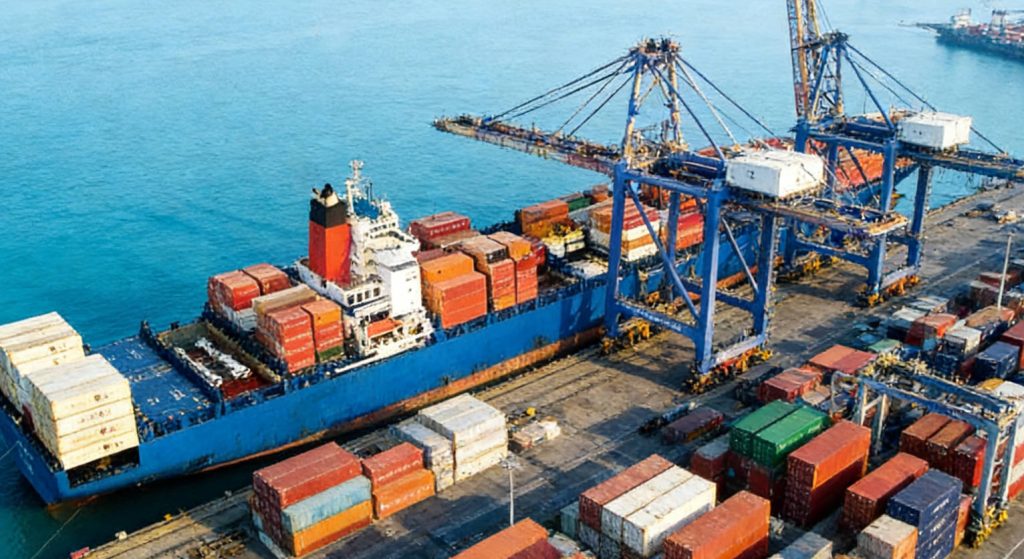
The Port of Sines on Portugal’s Atlantic coast is the main entrance point for container traffic from Asia. It handles most of the deep-sea freight between China and Portugal. The Port of Leixoes, which is close to Porto, also handles a lot of traffic, especially for northern Portugal and Spain. Both ports need to be told in advance of dangerous goods when a ship arrives, and they have special protocols for managing DG. Port state control inspectors can board ships coming into port to check that they are following IMDG rules. If they find dangerous items that were not reported or were not properly documented, they can be isolated, forced to fix the problem, or sent back to their point of origin, with all costs incurred to the importer.
Common Compliance Failures — and How to Avoid Them
The same types of mistakes keep happening along the China-to-Portugal route. The most harmful thing is to think that old documents apply to a new batch of products or a changed product design. EU regulation says that each product must have its own conformity evaluation. A DG designation from a previous model does not transfer to a design featuring a changed battery capacity or chemical formulation.
Document misalignment costs just as much. The customs systems immediately flag the shipment when the commercial invoice says “cleaning compound” and the DGD says “corrosive liquid, acidic, inorganic, n.o.s., UN1760, Class 8, Packing Group II.” Although each document has a different legal purpose, they must both agree on the identify of the product. It’s easy to fix: when you send in your shipping paperwork, look at them all together as a group, not one at a time.
Lithium battery shipments cause a lot more compliance problems than other shipments. People often don’t understand the difference between batteries “contained in equipment” (UN3481), batteries “packed with equipment” (UN3481, but with separate packing requirements), and standalone batteries (UN3480). Each one has distinct constraints on watt-hours, the number of items that can fit in a box, the amount of charge needed, and the rules for how to pack them. Since 2024, carriers have been doing more thorough checks on China-origin DG cargo before it ships. If a battery shipment doesn’t meet the requirements, the carrier will refuse it at the booking stage.
Finally, a lot of exporters don’t give enough thought to how long it will take to get the DG Transport Condition Appraisal Report. If you book a ship before you get this report, the cargo will be ready to ship, but the Chinese port terminal won’t take it. For this stage alone, you should add at least ten working days to your pre-shipment schedule.
Working with Topway Shipping
Ad-hoc arrangements are not a good way to follow three sets of rules that overlap: Chinese export law, IMDG maritime norms, and EU import restrictions. It needs a logistics partner that has moved dangerous commodities all the way through the transportation chain and knows where the risks are highest.
Since 2010, Topway Shipping has been a professional cross-border e-commerce logistics company based in Shenzhen. The founding team has more than 15 years of real-world experience in customs clearance and international logistics. Topway is known for shipping goods from China to the US, but it can also handle shipments to and from major worldwide ports including Portugal’s Port of Sines and Port of Leixoes. The company handles every step, from getting the goods from the plant to the departure port, storing them overseas, clearing customs in China and the destination country, and finally delivering them to the final consignee.
Topway offers both FCL (full container load) and LCL (less-than-container-load) ocean freight services for risky goods. The team is in charge of putting together the paperwork that DG shipments need. This includes working with certified Chinese testing organizations to get the Transport Condition Appraisal Report, making sure that Dangerous Goods Declarations meet IMDG standards, checking that SDS documents meet GHS standards, and making sure that all shipping paperwork is consistent before anything gets to the port gate. This integrated approach takes away the risk of having to coordinate with a customs broker, a compliance consultant, and a freight forwarder who are each in charge of different parts of the process. This is especially helpful for e-commerce sellers or manufacturers who are new to regulated product categories like cosmetics with alcohol, consumer electronics with lithium cells, or industrial chemicals.
China’s Regulation 2024 and IMDG Amendment 42-24 are both changing compliance standards at the same time, which makes this time especially hard. Because Topway knows both frameworks well, clients don’t have to deal with two regulatory changes at once without expert help.
Pre-Shipment Compliance Checklist
Before you book a ship to send dangerous items from China to Portugal, make sure you follow all the steps below. The most prevalent reason for port delays and fines on this trade corridor is not picking up a single item.
| # | Action Required | Responsible Party |
| 1 | Confirm UN number, PSN, and hazard class against both GB 12268 (2025 version, effective Oct 2025) and the IMDG Dangerous Goods List | Shipper / Manufacturer |
| 2 | Commission the DG Transport Condition Appraisal Report from an accredited Chinese testing body — allow 10 working days minimum | Shipper / Forwarder |
| 3 | Prepare bilingual SDS (Chinese GB/T + English GHS); verify English version has correct signal words, hazard statements, and precautionary statements | Manufacturer |
| 4 | Confirm UN-certified packaging is selected for the correct hazard class and packing group | Manufacturer / Packer |
| 5 | Apply IMDG hazard labels; add Marine Pollutant mark where required; affix orange UN placards if gross container weight exceeds 4,000 kg | Packer |
| 6 | Complete Dangerous Goods Declaration (and Container Packing Certificate, or combined Multimodal DG Form for sea freight) | Freight Forwarder |
| 7 | Submit Port Dangerous Goods Declaration to local MSA before vessel loading — response expected within 5 working days under Regulation 2024 | Shipping Agent |
| 8 | Cross-check commercial invoice and packing list language against DGD to ensure consistent product descriptions | Exporter |
| 9 | Verify EU REACH registration status; appoint an EU Responsible Person under GPSR where required | Importer / Compliance Agent |
| 10 | Submit advance DG notification to Port of Sines or Port of Leixoes before vessel arrival, as required by port DG handling procedures | Carrier / Forwarder |
Conclusion
Shipping dangerous items from China to Portugal requires working under three different regulatory systems that are all changing right now. Regulation 2024 in China has made it harder for shippers to declare their goods at the port of origin. From January 2026, IMDG Amendment 42-24 will change the rules for packaging, labeling, and classifying goods on the maritime leg. And the EU’s GPSR and REACH frameworks make it harder for non-EU firms to follow the rules at the destination end.
All of these frameworks are required, and none of them functions on its own. Just because you meet Chinese export criteria doesn’t mean you meet IMDG standards, and just because you meet IMDG standards doesn’t mean that Portuguese customs will clear your goods without any problems. Exporters that always transfer regulated cargo without any problems are the ones who have spent money on proper packing, accurate categorization, complete and consistent documentation, and a logistics partner who knows how to handle risky items at every stage of the transport chain. In a compliance environment this tough, getting ready isn’t a waste of time; it’s a way to get ahead of the competition.
FAQs
Q: Do products containing lithium batteries always count as dangerous goods?
A: Yes. Lithium batteries, whether they are separate, in a package with other equipment, or built into a gadget, are considered Class 9 dangerous items by the IMDG Code. Each configuration has its own UN number and guidelines for packing. If your product has a lithium cell in it, you should treat it like a DG shipment from the start.
Q: Is IMDG Amendment 42-24 already mandatory for China-to-Portugal shipments?
A: Not yet, but it will be starting on January 1, 2026. Shippers can employ either Amendment 41-22 or Amendment 42-24 in 2025. Companies should start using 42-24 immediately instead of waiting until the deadline because there are so many changes, like over 300 adjustments that include new UN numbers and new packing instructions.
Q: How long does it take to get a DG Transport Condition Appraisal Report in China?
A: Usually, it takes five to ten business days after sending product samples and technical data to a recognized testing agency like CCIC or SGS China. Don’t book space on a ship until this report is confirmed; a terminal won’t take cargo without it.
Q: Which Portuguese port handles most China-origin dangerous goods shipments?
A: The Port of Sines on Portugal’s Atlantic coast gets most of the container traffic from Asia, including dangerous goods. The Port of Leixoes, which is close Porto, is the second best choice. Both need to get DG notices ahead of time and follow certain rules for handling dangerous goods.
Q: Can one freight forwarder handle both Chinese export compliance and EU customs clearance for DG shipments?
A: Yes, and this is very important for risky commodities. When numerous distinct parties handle different phases of the same cargo, there is a possibility of document inconsistency. Using a single integrated supplier like Topway Shipping for first-leg logistics, DG paperwork, customs clearance at both ends, and last-mile delivery gets rid of this risk.