
The Hidden Costs of Shipping from China to France: THC, Destination Charges & Last-Mile Fees Decoded
Introduction
You obtained a wonderful ocean freight rate. You checked the cargo dimensions, booked the container and were happy with the landed cost. Then the invoice came through — and it was nothing like you expected.
This is a daily reality for cross-border traders and importers sending heavy or enormous items from China to France. The ocean goods line item is a beginning. Beneath it is the terminal handling charge, destination port fees, customs broking costs, VAT obligations, gasoline surcharges and the notoriously complex last-mile delivery charges for big cargo in France. For companies shipping sofas, treadmills, freezers, industrial gear or anything that falls within the category of “super-large freight,” these supplementary charges can easily add 30 – 50% to the base freight rate.
In this article, we’ll break down all the costs you’re likely to encounter when shipping from China to France in 2025 and beyond, with a particular focus on oversized and heavy cargo — sometimes called 超大件 in the China cross-border logistics industry, meaning items weighing up to 8 metric tonnes per piece with a single side length of up to 8 meters. We will discuss what each charge is, why it is there, how it is calculated and what you can do to control it.
Understanding Terminal Handling Charges (THC)
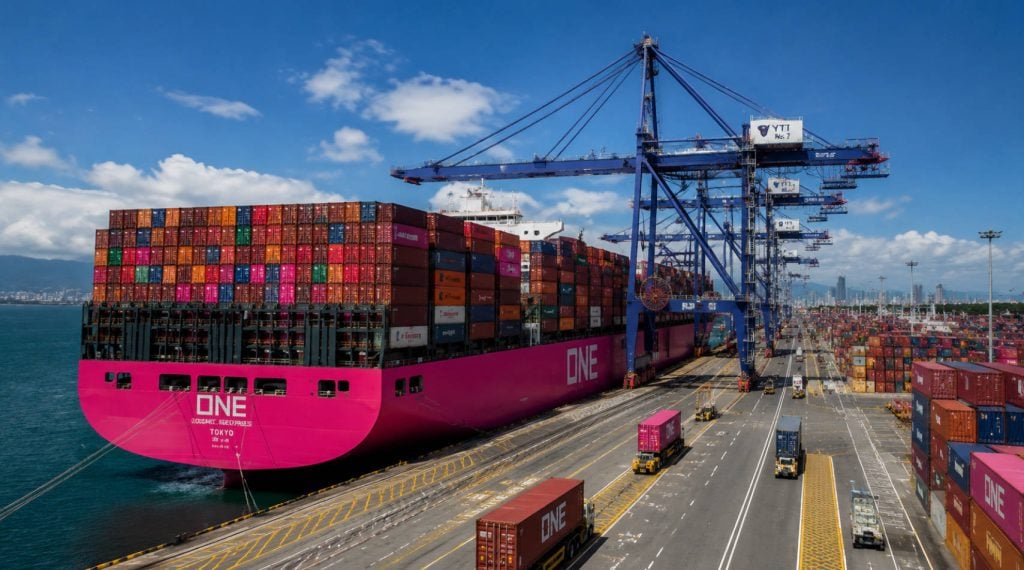
Terminal Handling Charges, or THC for short, are charges charged by port terminals for the physical handling of containers from the time they enter the terminal until they leave. This encompasses crane operations to load and discharge vessels, reposition containers within the yard, administrative processing, and short-term storage in specified stacking areas. And THC is really a collection of services that keeps the whole port ecosystem ticking, even if it’s a single price on your invoice.
If you are shipping from China to France, you will meet THC twice on the route: At the port of origin in China and the port of destination in France. These are known as Origin THC (OTHC) and Destination THC (DTHC) correspondingly. If the cargo is transiting a hub port (e.g. Singapore, Rotterdam) in route, then you may also encounter transshipment THC. Normally this is absorbed by the ocean carrier and not passed on directly to the shipper.
Origin THC in China
OTHC is charged at the Chinese port you load your shipment. Major export hubs such as Shenzhen, Shanghai, Ningbo, Guangzhou and Qingdao each have their own terminal handling rates, which might vary depending on terminal operator, container type and cargo classification. As of 2025, normal OTHC prices at major Chinese ports are approximately USD 80 to USD 140 for a 20ft container and USD 140 to USD 230 for a 40ft or 40ft high-cube container. Special handling for oversized cargo, flat-rack containers or open-top containers will cost a premium over these baseline numbers.
Destination THC at French Ports
DTHC is levied on your cargo when it arrives in a French port – usually Le Havre, which handles most of the container traffic from Asia, or Marseille-Fos for Mediterranean routing. Le Havre, the largest container port in France, handles almost 2.5 million TEUs yearly, and is the main gateway for China-France exports. Destination THC is generally greater at French ports than at Chinese origin ports, reflecting the higher cost of European port labour and infrastructure.
Historically, DTHC at Le Havre for conventional containers has been between EUR 200 and EUR 350 per TEU as a general benchmark, with 40 foot high-cube containers at the top end. Additional fees apply in the case of overweight or out-of-gauge cargo needing special terminal handling, in addition to the usual DTHC cost.
| Charge Type | Typical Range (2025) | Who Pays | When Charged |
| Origin THC (20ft) | USD 80–140 | Shipper | At loading port in China |
| Origin THC (40ft/HC) | USD 140–230 | Shipper | At loading port in China |
| Destination THC (Le Havre, 20ft) | EUR 150–250 | Consignee | At arrival in France |
| Destination THC (Le Havre, 40ft/HC) | EUR 220–350 | Consignee | At arrival in France |
| Oversized/OOG surcharge | USD/EUR 100–400+ | Shipper/Consignee | Origin and/or destination |
Destination Charges Beyond THC
Many importers make the mistake of thinking DTHC is the only charge on the destination side they need to budget for. In fact, after a shipment arrives in Le Havre or Marseille-Fos, it entails a series of additional costs until the cargo reaches a truck heading to the buyer’s address.
Documentation and Bill of Lading Release Fees
The ocean carrier must issue a delivery order for you to take delivery of your cargo. This has its own fees. Documentation charges, often known as D/O (delivery order) fees or telex release fees, are between EUR 50 and EUR 150 per bill of lading. These may be combined into a bigger “destination handling” line item by freight forwarders, but it’s always worth asking for an itemised break-down.
Customs Clearance and Brokerage
If you do not have the authority to do this yourself you will require a qualified customs broker to get any products coming into France from China through French customs. Broking fees in France are usually in the range of EUR 100 to EUR 300 for normal shipments, although outsized or complicated goods could fetch higher fees since more paperwork and classification work would be needed. It is also worth mentioning that, from January 2022, non-EU enterprises bringing goods into France must obtain a French VAT number and establish a fiscal agent – this regulation change adds additional administrative burden for Chinese exporters who ship DDP (Delivered Duty Paid).
Import Duties and French VAT
In France, the EU Common External Tariff applies to imports from China, therefore tax rates are based on the HS code of your product. The most frequent oversized freight categories coming from China, such as furniture, fitness equipment and home appliances, often are subject to duty rates between 0% and 6.5% of the CIF (cost, insurance and freight) value. But France also applies its normal VAT of 20% on almost all imported products on the basis of the CIF value plus any customs tax payable.
Here’s a real-life example: your shipment is worth EUR 10,000, freight and insurance are EUR 1,500 (so your cif is EUR 11,500), and your duty is 5%. Your duty would be EUR 575. VAT would then be computed on EUR 12,075 (CIF + Duty) giving £2,415 VAT. Your total tax burden is EUR 2,990 – a figure worth adding to your pricing model.
One key legislative issue to watch: France will put a EUR 2 customs charge on low-value shipments (under EUR 150) sent directly to French consumers from non-EU countries, commencing early 2026. The EU is also heading for a bigger customs reform, with a EUR 3 tax fee on low value imports adopted at EU level from July 2025. This is mostly about tiny parcel e-commerce rather than huge freight, but it implies a wider tightening of the regulatory environment that importers should watch closely.
Fuel Surcharges and BAF
Bunker Adjustment Factor ( BAF ) : A premium levied by maritime carriers to cover fluctuating fuel prices . BAF can be as high as 20-30% of the base ocean freight charge for Asia-Europe trade corridors. It changes with each carrier’s quarterly or monthly update cycle. BAF is often a per-container price for large goods carried by sea from China to France and is a significant line item that fluctuates greatly according on market conditions and the carrier you employ.
| Fee Category | Estimated Cost (EUR) | Notes |
| Destination THC (40ft HC) | 220–350 | Charged by terminal at Le Havre/Marseille |
| Documentation/D.O. fee | 50–150 | Per bill of lading |
| Customs brokerage | 100–300 | Higher for oversized/complex cargo |
| Import duty (avg 3–5% CIF) | 300–700 | Varies by HS code |
| French VAT (20% on CIF+duty) | 2,000–4,000+ | Based on shipment value |
| BAF surcharge | 200–500 | Per container, market-dependent |
| Customs exam fee (if triggered) | 150–400 | Not always applicable |
The Last-Mile Challenge for Oversized Freight in France
One area where the inexperience of shippers is always reflected in their cost is the last mile of delivery of oversize cargo in France. Shipping a 200kg massage chair or a 400kg treadmill from a port terminal or overseas warehouse to a customer’s home is a very different proposition to conventional parcel delivery – and the pricing reflects that complexity.
What Qualifies as Oversized Freight?
In the China cross-border logistics context, cargo is generally divided into four tiers: small parcels (under 2 kg), standard parcels (under 30 kg with a girth under 3 meters), large items (under 150 kg with a longest side under 4 meters) and super-large goods — items weighing up to 8 metric tonnes with a single side up to 8 meters and a height restriction of 2.57 meters. The last category contains all sorts of e-commerce products such as sofas, mattresses, dining tables, refrigerators, washing machines, dishwashers, electric bikes, and industrial equipment such as street lighting, commercial ice cream makers etc.
In France, oversized goods need special vehicles for last mile delivery, usually flatbed trucks or vehicles with tail-lift devices. Sometimes you will also need crane assistance or specific installation services which can contribute to the ultimate delivery cost.
Appointment-Based Delivery and White-Glove Service
End consumers in France purchasing large items via platforms like Amazon.fr or independent e-commerce websites are increasingly demanding appointment-based delivery with specific time slots and, for heavier items, room-of-choice and packaging removal. That “white-glove” level of service comes at a steep price over curbside delivery. In France, for example, the price of white-glove delivery for a single large item such as a sofa or exercise machine can range from EUR 80 to EUR 200 or more depending on the region of delivery, the level of the floor and whether assembly is included.
Deliveries to Paris and other particularly dense cities are charged additional surcharges for traffic limitations, low emission zones (Zones à Faibles Emissions, or ZFE) and the difficulty of manoeuvring big trucks in city streets. Surcharges based on distance may also apply to delivery to rural areas throughout the length and breadth of France, which are not usually obvious from the original goods quotes.
B2B vs. B2C Last-Mile Delivery
Last mile pricing is very much dependent on the type of the consignee. For B2B deliveries – to the retailer’s warehouse, hotel or place of business – the process is usually simpler and less expensive per unit as several products can be delivered in one stop and the receiver is set up to receive goods. Deliveries to private residences (B2C), especially with big or bulky goods, are more operationally intensive – and are priced accordingly. For Amazon or independent store cross-border e-commerce sellers, it is critical to understand the B2C last-mile cost structure in France for pricing and margin management.
Transportation Channel Options and Their Cost Profiles
Choosing the best transportation channel for your China-to-France shipment is a matter of balance between speed, cost, reliability and the sort of cargo you are moving. If you know the cost profile of each channel then you are in a position to make an informed selection.
| Channel | Transit Time | Cost Level | Best For | Typical Surcharges |
| Ocean Freight (Sea) | 45–50 days | Lowest | High volume, heavy/bulky goods | BAF, DTHC, documentation |
| Air Freight | 12–15 days | Highest | High-value, time-sensitive goods | Fuel surcharge, security fee |
| China-Europe Rail | 30–45 days | Medium | Mid-value, time-sensitive LCL | Rail handling, customs |
| Road (Trucking) | 30–45 days | Medium | Hazardous, electric products | Fuel, driver surcharges |
| Overseas Warehouse + Last Mile | Varies | Flexible | E-commerce, repeat shipments | Storage, pick & pack |
Size and weight limits restrict plane and rail transit, therefore the ocean remains the primary route for super-large goods. One 5-ton thing can’t just fly through the air at a sustainable cost. For most big categories of goods — furniture, appliances, fitness equipment, machinery — maritime freight supported by efficient last-mile delivery in France is the norm.
Rail freight on China-Europe express trains provides an intermediate solution for time-sensitive commodities that are not big enough to require full container handling. They run on a fixed weekly schedule from major Chinese cities including Chengdu, Zhengzhou, Yiwu and Chongqing to destinations in Europe, with transit times of around 30 to 45 days. The China-Europe rail network has grown substantially over the last decade, offering a competitor to ocean freight when port congestion or high BAF surcharges are in place.
DDP Shipping: The All-In Solution and Its Trade-Offs
Delivered Duty Paid (DDP) shipping is gaining popularity among cross-border e-commerce vendors that seek to provide their consumers a clear, landing pricing without any surprise charges at delivery. Under DDP terms, the freight forwarder or logistics provider handles all aspects, including the initial conveyance from China, customs clearance upon arrival in France, payment of import duties and VAT, and the final delivery to the specified address. The buyer gets the items without any dealing with the French customs or payment pages of the carriers.
DDP is better from a customer experience viewpoint. However, it needs to be carefully vetted from a cost-transparency standpoint. Some DDP suppliers quote very appealing headline rates but include in large margins on the customs duty and VAT component or apply opaque handling costs at the overseas warehouse stage. Before you sign up to a DDP arrangement for your shipments to France, it makes sense to ask for a detailed cost breakdown itemising ocean freight, origin charges, destination THC, customs broking, duty, VAT and last mile delivery – even if they are ultimately packaged into a single billing amount.
DDP contracts for oversized goods, in particular, also need to clearly state what the last-mile service includes: curbside only, room-of-choice, with or without package removal, with or without assembly. Such differences can be in the range of EUR 50-150 per shipment that will not be shown in the headline DDP rate.
How Topway Shipping Approaches China-to-France Oversized Freight
Based in Shenzhen, Topway Shipping has been a professional provider of cross-border e-commerce logistics solutions since 2010, specialising in large and super-large goods to Europe and North America. The company’s founding team has over 15 years of experience in international logistics and customs clearance, with significant expertise in end-to-end management of the whole spectrum of enormous categories including furniture, home appliances, fitness equipment, electric vehicles, commercial machinery and more.
The service architecture of Topway covers the whole logistical chain. On the origin side, this means door-to-door pickup from manufacturers and suppliers throughout China, consolidation at their Shenzhen warehousing facility, and skilled cargo packing including wooden crate options specifically suited for fragile or high-value big items. The company provides flexible FCL (full container load) and LCL (less-than-container-load) ocean freight services from China’s major export ports to key European destinations, with a number of weekly sailings to Le Havre and Marseille.
On the destination end, Topway’s DDP service to France includes customs clearance by professional in-country agents who are familiar with the French customs procedures and the subtleties of the growing import legislation in the EU. They transport across the 25 EU member nations through their European last mile delivery network, with France being one of their most active markets. The company’s full-tracking platform offers end-to-end visibility from the moment the cargo leaves the supplier’s facility in China to the signature of the delivery confirmation at the French recipient’s address.
Topway’s offshore warehouse capacity in Europe provides an additional layer of cost optimisation for e-commerce sellers on Amazon.fr or Cdiscount or in standalone Shopify-based businesses. Pre-positioning goods at a European fulfilment center and handling B2C last-mile delivery from this point can result in substantial savings in last-mile costs per unit and faster delivery to the end consumer for sellers. The company also offers FBA preparation services for merchants that are using Amazon’s fulfilment network in France and Germany.
Topway’s ability to carry big freight is a key differentiator, including goods up to 8 tonnes per piece and 8 meters in single side — dimensions that many traditional logistics providers are unwilling or unable to manage. Dedicated truck fleets, access to crane equipment and strong contacts with European last mile providers with experience in very big consignments support this. With respect to their DDP ocean freight transit time from China to France, according to their internal statistics, they have managed to achieve a 91% sign-off rate within 45-55 days.
Practical Strategies to Control Your Total Landed Cost
When importers and cross-border sellers are fully aware of the costs they are subject to, they can take tangible actions to lower the overall cost of transporting big items from China to France.
First up, the goods deal. Negotiate all inclusive pricing where OTHC, DTHC and BAF costs are included in the ocean freight rate and not added as unbundled extras. A slightly higher headline freight charge with clear inclusions is often cheaper than a low rate padded with add-ons. This is especially true in a market where BAF surcharges alone can fluctuate by hundreds of dollars per container in a single quarter.
Another issue with large financial ramifications is the proper classification of HS codes. Many importers use wide or approximate codes to declare their goods, which can lead to paying more import charges than necessary or, even worse, delays and customs queries. So, working with a professional customs broker in France who will verify the exact TARIC number before shipment, will save you money and time. The EU TARIC database is public and should be checked prior to completing your landing cost calculations.
For shippers in huge volumes, container shipments with several SKUs cut per-unit THC and documentation costs. If you have a high enough monthly volume, moving from LCL to FCL shipments will remove per unit handling surcharges that are applied at the container goods station (CFS) level, which for LCL cargo can be USD 30-80 per cubic metre.
Last but not least, you have to consider the cost of adequate insurance coverage for your big cargo, which is sometimes omitted from landed cost calculations. Marine cargo insurance for large products normally costs 0.3 to 0.8% of the stated cargo value. It covers loss and damage in transit — which is a bigger risk for enormous objects that require special handling and equipment at several points along the route.
Conclusion
Shipping big products from China to France is far more than the ocean freight rate you received with your original query. Terminal handling charges, French customs duties, the 20% VAT obligation, fuel surcharges, documentation fees and last-mile delivery costs for super-large goods all add up to a total landed cost that can be much higher than early estimates if not properly anticipated, at both origin and destination.
The secret to controlling these costs is transparency – asking for itemised cost breakdowns from your logistics provider, understanding the regulatory framework in France, and working with a goods specialist like ourselves that has genuine expertise in handling oversized cargo across the entire logistics chain. As China’s cross-border e-commerce business matures, and competition in the European market heats up, being able to precisely evaluate and optimise your landed cost is becoming more and more of a competitive difference, not just an operational detail.
For companies serious about the China-to-France corridor, partnering with an experienced oversized goods specialist like Topway Shipping — with its dedicated infrastructure for super large items, transparent DDP pricing and the ability to track shipments from start to finish — is the most reliable way to achieve cost certainty and delivery performance in this demanding logistics category.
FAQs
Q: What is the difference between Origin THC and Destination THC?
A: Origin THC (OTHC) is charged at Chinese loading port and includes handling from port gate to vessel. Destination THC (DTHC) – Charged at the port of arrival in France, it includes the handling of goods from the vessel to the port gate. Both of these are different charges, and both show up on your goods invoice. Depending on the Incoterms agreed to in the shipping contract, both are eventually paid by the owner of the cargo.
Q: How is French VAT calculated on imported goods from China?
A: France charges a 20% VAT on the CIF value (cost of goods + insurance + products) plus any customs levy. If, for example, you have a CIF value of EUR 11,500 and a duty of EUR 575, then you will pay VAT on EUR 12,075 which is EUR 2,415. As of January 2022, non-EU importers will need to register for French VAT, or designate a fiscal representative, in order to clear products into France.
Q: What counts as super-large or oversized freight in the context of China cross-border shipping?
A: Super-large goods is commonly described as any single item of goods weighing up to 8 metric tonnes, with any single side measuring up to 8 meters, and a height of less than 2.57 meters. Typical examples are commercial exercise equipment, industrial machinery, huge furniture sets, electric vehicles and several residential appliances. This category requires specific handling at origin and destination.
Q: Is DDP shipping always the best option for shipping from China to France?
A: DDP makes life easy for the buyer by simplifying the importing process and removing surprises at delivery. That’s good for e-commerce businesses. But it’s not always the cheapest option and you need to check carefully to see what’s included. It’s always good to ask for a complete itemised DDP breakdown before comparing it to a DDU (Delivered Duty Unpaid) or DAP (Delivered at Place) alternative.
Q: How long does it typically take to ship oversized freight from China to France by sea?
A: Normal travel time for standard ocean freight from the big Chinese ports to Le Havre or Marseille is about 45-50 days. Including customs clearance and last-mile delivery in France, the overall door-to-door transit usually varies between 50 and 65 days based on the exact origin and destination locations, the customs processing time and the last-mile carrier’s delivery schedule.
