
U.S. Customs Clearance at Port of Tacoma: A Step-by-Step Guide for China Importers
Introduction
One of the busiest trade routes in the world is the one that ships commodities from China to the United States. The Port of Tacoma, which is part of the Northwest Seaport Alliance (NWSA), is one of the best places on the West Coast to ship goods. Tacoma is a popular port of entry for thousands of importers every year because it has direct rail links to the U.S. interior and can hold a lot of containers.
But for a lot of exporters in China and importers in the U.S., the customs clearance process is still a maddening mystery. A missing paperwork, a wrongly categorized HS code, or an ISF file that was missed can all cause delays, fines, or even the seizure of cargo. The U.S.-China tariff situation is changing quickly in 2025, making the process even more important than it has ever been.
This guide shows you how to get your goods through U.S. customs at the Port of Tacoma, step by step. It tells you what paperwork you need and how duties are computed so you can transfer your goods quickly and stay within the law.
1. Understanding the Port of Tacoma as a Customs Entry Point
The Port of Tacoma is a U.S. Customs and Border Protection (CBP) Service Port, which means it does all the things that need to be done to process cargo, like filing entry papers, checking the cargo, collecting duties, and releasing it. The CBP Area Port of Seattle/Tacoma, which is in charge of making sure that trade at seaports in the Pacific Northwest follows the rules, is in charge of it.
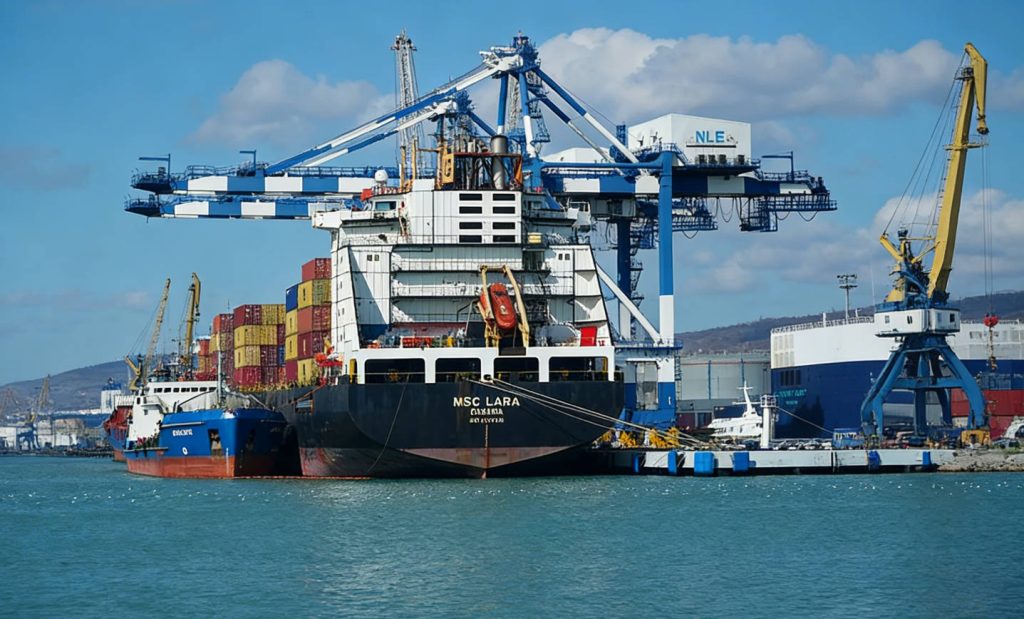
Tacoma’s infrastructure makes it attractive to importers who ship goods from China. There are several marine terminals at the port with deep-water berths that can handle the biggest container ships. The port is also close to major interstate highways (I-5) and intermodal rail yards, so goods may be easily sent all over the continental U.S. after it has cleared customs.
The Port of Tacoma is a member of the Customs-Trade Partnership Against Terrorism (C-TPAT), which gives trustworthy traders incentives. Importers who are part of C-TPAT often get their shipment processed faster and have fewer physical inspections. This is a big plus for supply chains that need to move quickly.
2. The 2025 Tariff Landscape: What China Importers Must Know
Importers who are shipping goods from China need to know about the current tax situation before they start filling out paperwork and following procedures. The tariff situation has changed a lot since 2024. In early 2025, U.S. tariffs on Chinese imports rose dramatically, reaching a high of 145%. But by late 2025, the U.S. and China had negotiated a historic trade agreement that lowered rates by a lot.
The Kuala Lumpur Joint Arrangement, which was signed in November 2025, makes tariffs much more predictable until at least November 2026. But the tariff situation is still complicated. Depending on the product, Section 301 duties, Section 232 tariffs, and baseline taxes all add up. Importers need to look at each layer that applies to their HS code.
| Tariff Category | Current Rate (as of Feb 2026) | Applies To |
| Section 301 Tariffs | 7.5% – 25% | Most Chinese manufactured goods (List 1–4) |
| IEEPA Reciprocal Tariff | 10% | All Chinese goods (post Nov 2025 deal) |
| Fentanyl-Related Tariff | 10% (reduced from 20%) | All Chinese goods, effective Nov 10, 2025 |
| Section 232 – Steel/Aluminum | 25% / 50% | Applicable metal products |
| De Minimis Exemption | ELIMINATED | All Chinese-origin goods regardless of value |
One important change that impacts e-commerce importers in particular is that the de minimis exemption, which used to let products worth less than $800 enter without paying duties, is no longer available for any items from China. Now, every cargo from China, no matter how much it costs, has to go through formal customs clearance and pay tariffs.
3. Required Documents for Customs Clearance
The most crucial thing for a smooth clearing process is to make sure your paperwork is correct. The Automated Broker Interface (ABI) is the only way to file all entry paperwork with CBP. Here is what you need:
| Document | Purpose | Who Prepares It |
| Commercial Invoice | Declares the value, description, and origin of goods | Seller/Exporter |
| Packing List | Details weight, dimensions, and contents of each package | Seller/Exporter |
| Bill of Lading (B/L) | Contract between shipper and carrier; proof of shipment | Ocean Carrier |
| Importer Security Filing (ISF) | Filed 24 hrs before loading in China; required for ocean freight | Importer/Broker |
| CBP Form 7501 (Entry Summary) | Official import entry; defines duties, HS codes, and values | Customs Broker |
| Customs Bond | Financial guarantee to CBP for goods valued over $800 | Surety Company/Broker |
| Partner Government Agency Forms | FDA, USDA, CPSC forms for regulated goods | Importer/Broker |
The Importer Security Filing (ISF), which is often called “10+2,” is very critical for shipments from China. It must be sent in at least 24 hours before the ship leaves the Chinese port where it is loading. If you don’t file your ISF on time or at all, you could have to pay up to $5,000 for each infraction.
Your commercial invoice must be in English (or have an English translation) and include the value of the transaction, a detailed description of the items, the nation of origin, and all fees, including shipping and insurance. This document helps CBP figure out how much duty you owe on your cargo.
4. Step-by-Step: The Customs Clearance Process at Port of Tacoma
Step 1 — ISF Filing (24 Hours Before Departure from China)
Your customs broker must file the ISF with CBP through ACE before your shipment ever leaves China. The filing has 10 pieces of information from the importer (such the buyer, seller, where the container is being stuffed, and the HS codes) and 2 from the carrier (the vessel stow plan and the container status messages).
Step 2 — Vessel Arrival and Arrival Notice
When your ship gets to the Port of Tacoma, the ocean carrier sends you or your customs broker an Arrival Notice. This notice has the name of the ship, the voyage number, the container number, and the date when the container is likely to be available. You usually have a few free days before demurrage fees start, so it’s important to respond swiftly on the arrival notice.
Step 3 — Entry Filing Through ACE
The ACE system is used by your customs broker to file the official entry (CBP Form 7501—Entry Summary). This submission uses the Harmonized Tariff Schedule of the United States (HTSUS) to classify your items, state where they came from, and figure out how much in tariffs and fees they will cost. After that, CBP looks over the entry and either gives it an Immediate Release or puts the shipment on hold for more scrutiny or a physical inspection.
Step 4 — CBP Review and Possible Examination
CBP may choose to check your cargo by looking at documents, using an X-ray, or physically checking it. A physical exam can add 2 to 5 business days to your clearance time and may cost more. Statistically, shipments that have a history of following the rules or come from C-TPAT-certified companies are less likely to be chosen for close inspection.
Step 5 — Duty Payment and Cargo Release
You pay the duties, taxes, and levies that have been set after CBP is happy with the entrance. Once payment is confirmed, CBP authorizes a release, and you or your truck driver can pick up the container from the marine terminal. This is when the goods are formally in U.S. trade.
Step 6 — Liquidation
Release doesn’t really mean that customs clearance is “final.” CBP has up to a year (and in certain situations, up to four years) to officially liquidate an entry. This means that it can review the entry again and change the final duty amount if necessary. Importers should save all of their paperwork for at least five years.
5. Common Mistakes That Cause Delays
Most of the time, customs delays in Tacoma can be avoided. One of the most common and expensive mistakes is putting the wrong HS code on items. This can lead to underpayment of tariffs, CBP holds, and even fines. In the same way, putting a lower value on products on the commercial invoice to lower duties is against the law and can lead to audits, cargo seizure, and even criminal charges in egregious circumstances.
Another common mistake is not taking into account all of the relevant tariff levels when figuring out the landing cost. Importers that merely check at the basic duty rate are typically taken off guard by the current stacking of Section 301, fentanyl duties, and possible Section 232 tariffs. It’s important to work with a customs broker who knows a lot about the CBP and stays up to date on their advice.
Last but not least, late ISF files are still a big problem for importers that handle their own logistics without enough time to plan ahead. Adding the ISF file to your procurement timeline instead of doing it as an afterthought before the vessel leaves is a step that pays off.
6. How Topway Shipping Simplifies Your China-to-Tacoma Customs Process
Topway Shipping, based in Shenzhen, China, has been a reliable provider of cross-border e-commerce logistics solutions for importers sending goods to the U.S. since 2010. Topway was developed for the complicated world of importers today, with a founding team that has more than 15 years of experience in China-U.S. transportation and customs clearing.
Topway Shipping handles the whole logistical chain from one place. This includes scheduling ocean freight (both FCL and LCL) and first-leg transportation within China, customs processing at U.S. ports like Tacoma, overseas warehousing, and last-mile delivery. This full-service approach implies that experts who know the current U.S. tariff policy and CBP procedural requirements will take care of your ISF filing, entry preparation, and duty payment.
Topway is easy to use for both e-commerce sellers and B2B importers because it offers both full-container-load (FCL) and less-than-container-load (LCL) choices. This means that it can handle any amount of shipments. Topway’s team handles the clearance process for both LCL shipments of consumer electronics and FCL containers of industrial parts. This keeps the time your goods spend at the port to a minimum and gets them to your warehouse or Amazon FBA center as quickly as possible.
Conclusion
The process for clearing customs at the Port of Tacoma is set up in a certain way, but the specifics—ISF timing, HS code accuracy, tariff stacking, bond requirements—can have actual financial and operational effects on importers. In the present trade situation of 2025–2026, when tariffs on Chinese goods are still high and CBP is watching closely, it’s more crucial than ever to obtain clearance properly the first time.
The best importers don’t see customs compliance as a last-minute headache; they see it as a key component of supply chain planning. By working with skilled logistics and customs experts, like the team at Topway Shipping, and adding compliance checks to your procurement cycle, you can turn a process that has always been unpleasant into a competitive advantage.
FAQs
Q: How long does customs clearance take at the Port of Tacoma?
A: Most of the time, simple shipments with all the paperwork are released within one to three business days. If CBP chooses your shipment for a physical exam, it will take an extra 2 to 5 working days. Having a licensed customs broker register your entry right away when you get a notice of arrival cuts down on processing time by a lot.
Q: Do I need a customs broker to clear goods at Tacoma?
A: CBP says that you should hire a licensed Customs House Broker, especially for maritime freight. Importers can technically file their own paperwork, but most businesses find that getting help from a pro is the best option because HS classification, tariff stacking, and ACE filing are all so complicated.
Q: What is the current tariff rate on goods from China in 2026?
A: As of February 2026, most Chinese goods are subject to a mix of Section 301 duties (7.5%–25%), a 10% IEEPA reciprocal tax, and a 10% fentanyl-related tariff. The sum that applies relies a lot on the HS code for your merchandise. Ask your customs broker how much duty you owe on a given goods.
Q: What happens if my ISF is filed late?
A: If you file your ISF late or incorrectly, you might be fined up to $5,000 for each infraction, and CBP may hold your shipment for inspection. Always ask your broker to file the ISF at least 24 hours before your items are put on the ship in China.
Q: Can Topway Shipping handle both the ocean freight and U.S. customs clearance?
A: Yes. Topway Shipping is a one-stop shop for all of your logistical needs, from first-leg transit in China to ocean freight (FCL and LCL), U.S. customs clearing, warehousing, and last-mile delivery.