
Why More Importers Are Choosing San Diego Over Los Angeles for China Shipments
Introduction
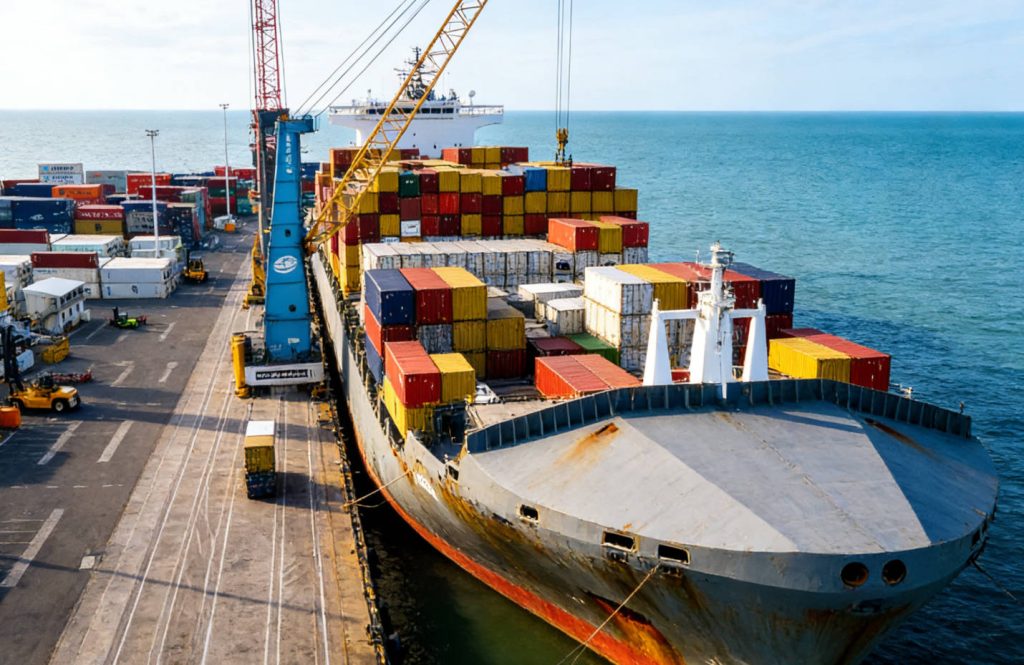
For many years, Los Angeles and Long Beach have been the clear leaders in the U.S. Container imports to the West Coast. The San Pedro Bay port complex seemed like the only obvious place for products from China to enter the U.S. because it handles around 40% of all U.S. containerized imports. But something has been changing slowly. More and more importers, from small online stores to big freight forwarders, are sending their cargo from China to San Diego instead, and the reasons are getting difficult to ignore.
In 2024, the U.S. In the first quarter of this year, ports on the West Coast were 20–30% busier than they were at the same time last year. Many supply chain managers are quietly asking, “Is there a better way in?” because of the traffic, rising drayage prices, PierPASS surcharges, uncertain demurrage charges, and a disorganized truck appointment system at LA/Long Beach. Based on transit delay statistics from Descartes Datamyne’s 2024 Top 30 U.S. According to the Port Report, San Diego and Gulfport had an average transit delay of only 1.67 days. In contrast, New York-New Jersey had an average delay of 8.93 days, and Los Angeles had consistently high numbers. The numbers are clear.
This paper looks closely at the operational, financial, and strategic reasons why San Diego is becoming a real alternative to LA for imports from China. It’s not a narrative about one port taking the place of another; it’s about how savvy importers are changing how they get into the market in a world where tariffs are uncertain, ports are disrupted, and supply chains need to be strong.
The Hidden Costs of LA/Long Beach That Nobody Talks About
Los Angeles seems like the best option on the surface. In 2024, it handled 5.36 million TEUs, which is a 21.4% increase from 2023. This makes it the busiest container port in the Western Hemisphere. It has direct train links to all of the major inland destinations, and there is a huge network of warehouses in the Inland Empire. But the traits that make it strong also make it hard to utilize.
The PierPASS program was made to cut down on traffic during the day, but it now costs $167 more for every 40-foot container moved between 8 AM and 5 PM. That’s $334,000 in costs just for picking up goods during normal business hours for an importer who moves 2,000 containers a year. Drayage base fees at LA/Long Beach are 20% higher than at ports that aren’t as busy, according to records. During busy times, congestion surcharges cost between $100 and $300 per container. At the Port of Los Angeles, it costs between $280 and $345 to hoist a container. And then there are detention and demurrage fees. The Federal Maritime Commission said that between April 2020 and March 2025, ocean carriers charged U.S. shippers $15.4 billion in these fees, with LA/Long Beach getting a bigger percentage of that total.
These figures are not just ideas. They attack importer’s margins every three months, and they add up. Chassis fees start at $32.50 per day when an importer misses a pickup window because the appointment system is too busy. This happens much more often in LA than most logistics teams expect. Demurrage fees start at $100 per day for containers that stay for nine days or more. The total cost of these fees is one of the most overlooked costs in U.S. import logistics, and it is making many experienced supply chain managers look to the south.
Cost Comparison: LA/Long Beach vs. San Diego (Per 40-ft Container, Approximate)
| Cost Item | LA / Long Beach | San Diego | Notes |
| PierPASS / Off-Peak Fee | $167 per container (peak hrs) | Not applicable | LA/LB only |
| Drayage Base Fee (est.) | $450–$650 | $320–$500 | LA carries ~20% congestion premium |
| Congestion Surcharge (peak) | $100–$300 | Minimal to none | Based on terminal conditions |
| Container Handling Fee | $280–$345 per lift | Lower — less terminal pressure | Port of LA published rate |
| Average Transit Delay | 4–6+ days (peak) | ~1.67 days (annual avg.) | Descartes 2024 data |
| Warehouse Availability (Immediate) | Tight — high competition | Better availability | IE market is heavily saturated |
San Diego’s Port Performance in a New Light
San Diego is not a big port, and it doesn’t want to be one. Its main strengths have always been in importing cars, shipping large amounts of cargo, and shipping specialty commodities that need to be broken apart. That picture, though, has been evolving. The San Diego Union-Tribune reported in November 2025 that the Port of San Diego’s total cargo volume from January to August 2025 was up 1% from the same time the previous year. February 2025 was one of the port’s busiest months in years, with 246,414 metric tons of cargo, a 26% increase over February 2024.
The raw volume numbers are less important than what they mean: importers are picking San Diego on purpose to avoid tariff uncertainty, which shows that they are becoming more familiar with and confident in the port’s capabilities. When importers need to transport goods quickly and reliably, they usually go through ports where they know the system will operate. The fact that San Diego’s numbers went up during the times when importers were in a hurry says a lot about how reliable it is.
The port’s performance in terms of transit delays is quite impressive. San Diego had the best average transit delay time of 1.67 days in 2024, which equaled it for first place among all main U.S. ports. During busy times, though, LA/Long Beach just can’t match San Diego’s reliability. For importers who run lean inventory models or sell directly to customers through e-commerce platforms, a port timeline that is reliable and predictable is frequently more important than the size of the infrastructure at a mega-port.
Geographic and Distribution Advantages for Specific Import Profiles
People usually say that San Diego isn’t a good place to import things because it’s near the southern tip of California, distant from the major inland distribution centers like the Inland Empire, the Central Valley, and others. This criticism is valid for some types of goods. For example, if you’re delivering furniture or heavy appliances to Walmart’s distribution centers in the Midwest, LA/Long Beach with direct BNSF intermodal rail access is probably the better option.
But the fact that San Diego located where it is is really good for some types of imports. The port is only 20 minutes from the US-Mexico border, which makes it a great place for items that are part of cross-border manufacturing supply chains or that serve the fast-growing Southwest U.S. market. The San Diego-Tijuana metropolitan area is one of the most active binational economic zones in the world. There is manufacturing, retail, and consumer demand on both sides of the border. For importers who do business in that area, routing through San Diego means they don’t have to truck goods south from the LA basin, which can add a lot of expense, time, and trouble.
Also, for importers whose final destination is in the Southwest—Arizona, Nevada, and sections of New Mexico—San Diego has truck transit times that are similar to or even shorter than those of an Inland Empire warehouse served by LA/Long Beach. The I-8 corridor connects San Diego to the Phoenix metro area in around five hours of driving time in typical conditions. This makes it possible to deliver many sorts of freight on the same day or the next day.
How Tariff Uncertainty Is Reshaping Port Selection Strategy
Importers now think about port routing in a very different way because of the tariff situation in 2025 and 2026. When the Trump administration started raising tariffs on Chinese imports, with rates going over 100% for several types of commodities at different times in 2025, importers realized the hard way how much it costs to be stuck in a busy port during a tariff surge. The LA/Long Beach complex, which was hit hardest by a surge of shipments before tariffs went into effect, has serious problems with its appointment system, increased demurrage exposure, and declining reliability.
Importers who had more than one port of entry were in a better position. People who went through San Diego had shorter lines, more accessible trucking space, and speedier customs clearance. Logistics teams that went through this now have this experience built into their risk management frameworks. It’s easy to see why: when a tariff deadline is coming up and every importer on the West Coast is trying to get their cargo there before the deadline, being in a smaller, less crowded port can mean the difference between getting through customs on time and having to wait an extra week on a ship while the deadline passes.
It is also important to note that the customs system in San Diego has come a long way. To handle more containers, CBP has hired more people and increased its processing capacity at the port. Electronic pre-clearance programs have also helped to speed up physical inspections. For importers of high-SKU, high-value consumer products from China, like electronics, clothes, and specialty items, the speed at which customs clears goods is very important for cash flow and inventory speed.
Port Risk Profile Comparison: LA/Long Beach vs. San Diego
| Risk Factor | LA / Long Beach | San Diego | Impact Level |
| Congestion during tariff surges | High | Low to moderate | Critical |
| Demurrage exposure | High — 9-day trigger | Lower — less dwell pressure | High |
| Customs clearance speed | Variable — high volume | More consistent | High |
| Drayage availability during surges | Often constrained | Generally available | Medium-High |
| Labor disruption risk | Higher — larger workforce | Lower exposure | Medium |
| Schedule reliability | Moderate (alliance reshuffles) | Comparable | Medium |
The LCL Opportunity: Why Small and Mid-Size Importers Benefit Most
One of the most useful and frequently ignored benefits of San Diego as a China import gateway is that it is good for less-than-container-load (LCL) shipments. Big importers who move dozens of full containers per month have the volume and power to deal with LA/Long Beach’s complexities. They have specialized drayage contracts, preferred berthing agreements, and 3PL connections that have been built up over years. Small and medium-sized importers, who usually move two to ten containers a month, don’t have that extra space.
LCL consolidation services through San Diego are a great option for these importers, who make up the vast majority of U.S. enterprises that import from China. They offer reduced entry costs, easier logistics, and faster processing. At the origin ports in Shenzhen, Guangzhou, or Ningbo, LCL cargo is put together with other shippers’ goods and loaded onto containers. At the destination port, it is taken apart. The main benefit of San Diego is that deconsolidation and customs clearance occurs faster and more reliably than in LA/Long Beach, where huge LCL volumes cause delays at deconsolidation warehouses (called Container Freight Stations, or CFS).
For e-commerce sellers, product importers, and smaller businesses who use a just-in-time inventory model, where delays of even three to five days can cause out-of-stock situations and lost sales, the stability of San Diego’s CFS network is a clear, measurable benefit. This is where the talk about choosing a port stops being just a theory and starts being a quarterly P&L talk.
Topway Shipping: Building the China-to-San Diego Logistics Bridge
As more importers look into San Diego as a good place to enter the country, the question rapidly becomes: which freight partners really know this lane? To build a solid supply chain from China to San Diego, you need to do more than just book space on a ship. To move freight quickly after it gets to the San Diego port of entry, you need to know a lot about Chinese export logistics, have good relationships with ocean carriers that serve the transpacific route, and know the U.S. customs rules.
Topway Shipping, which is based in Shenzhen, China, has been doing this kind of end-to-end shipping from China to the U.S. since 2010. knowledge of logistics. Topway has a founding team with more than 15 years of experience in international logistics and customs clearance. This gives them a level of operational depth on the China side that many U.S.-based forwarders can’t match. The main focus of the company is on China and the US. Transportation means that its connections, processes, and institutional knowledge are all in the right place for importers to use them.
Topway’s services encompass the whole logistics chain, from the first leg of transportation within China (from the factory to the origin port) to ocean freight consolidation, U.S. customs clearance help, and last-mile delivery to the importer’s warehouse or fulfillment center. The company provides both FCL and LCL ocean freight services from China to key U.S. ports. This lets importers choose the best container arrangement for their volume and frequency. For importers who go through San Diego, this implies that one partner is responsible for the whole trip, from a factory floor in Shenzhen’s Pearl River Delta production corridor to a distribution facility in San Diego, Phoenix, or Las Vegas.
What makes Topway Shipping different from other freight brokers is that they keep things running smoothly throughout the entire shipping process. Importers require a partner who knows both the Chinese export system and the U.S. import system equally well. This is true when a tariff window is closing, when a vessel itinerary changes, or when a customs question comes up. It is very difficult to find someone with bilingual and bicultural logistical skills, and that is exactly what Topway has been working on for fifteen years.
Topway Shipping: Service Overview for China–San Diego Lane
| Service | Description | Best For |
| First-Leg Transportation | Factory pickup to Shenzhen/Guangzhou/Ningbo port | All importers |
| FCL Ocean Freight | Full container loads, flexible 20ft & 40ft options | High-volume importers (10+ CBM/month) |
| LCL Ocean Freight | Consolidated shipments sharing container space | Small/mid-size importers, e-commerce brands |
| U.S. Customs Clearance | ISF filing, CBP entry, classification support | All importers |
| Overseas Warehousing | U.S.-side storage and inventory management | Importers needing U.S. buffer stock |
| Last-Mile Delivery | Delivery from San Diego port to final destination | B2C and B2B fulfillment |
Practical Considerations Before Switching to San Diego
The case for San Diego is strong, but it’s not the same for everyone. Before changing ports, any importer should carefully look at their individual cargo profile, distribution network, and partnerships with carriers. There are a few important things that need to be thought about honestly.
First, the availability of vessel service. Almost all of the major ocean carriers that work on the transpacific trade channel serve LA/Long Beach. There are several sailings each week from all of China’s major ports. San Diego doesn’t have as many direct services, therefore certain products may have to go through transshipment—usually through LA/Long Beach, Oakland, or an Asian hub—before they reach their final destination in San Diego. Importers should check with their forwarder to see if direct vessel service is available from their specific origin port in China. They should also find out how long it will take and how much it will cost to transship.
Second, the compatibility of the cargo types. San Diego’s infrastructure is especially good for bringing in cars, break-bulk cargo, containerized consumer items, and LCL consolidations. It doesn’t work well for ultra-high-volume containerized commodities that need direct-to-rail intermodal transportation to the Midwest or East. Importers who move hundreds of containers each month to distribution centers in Chicago, Dallas, or Atlanta will probably find that LA/Long Beach’s intermodal network is hard to match when it comes to cost per mile.
Third, the connections between 3PL and drayage. If your current logistics provider doesn’t have established operations and ties in San Diego, switching ports could be risky during the transition. To avoid the learning curve and possible delays that come with starting a new port operation from scratch, collaborate with a freight partner like Topway Shipping that already has the local network in place, such as drayage carriers, CFS operators, and customs brokers.
What the Data Tells Us About Where This Is Heading
The structural trends that make San Diego a good place to import goods from China are not going away. As long as transpacific import volumes are at historically high levels, congestion at LA/Long Beach is unlikely to get much better. In 2024, the Port of Los Angeles handled almost 6.7 million loaded TEUs, which was 17% of all U.S. containerized trade. This amount of traffic puts structural congestion pressure on the port, no matter how well it is managed.
At the same time, the tariff situation keeps things unstable. Gene Seroka, the port’s executive director, says that China’s proportion of imports at the Port of Los Angeles has dropped from around 60% in 2018 to about 40% by early 2026, and it is still declining. At the same time as tariff-driven front-loading incidents keep causing demand spikes, the mix of cargo coming into LA and LB is becoming more complicated because of the different nations of origin. The result is a port complex that is dealing with both structural change and sudden volume shocks at the same time. This is a very hard combination to manage without causing congestion.
In contrast, San Diego is rising in a more controlled pace from a smaller basis. Its import volume from January to August 2025 was up 1% over the same time last year. This isn’t huge growth, but it is constant and continuous. The port’s management has proven a dedication to keeping operations running well instead of trying to get the most volume possible. This is the kind of culture that importers who value dependability above raw scale will appreciate. As more importers learn what the data already shows—that San Diego has the best transit delay performance, that its cost structure is much lower for many types of cargo, and that its geographic locati0n is good for the growing Southwest U.S. market—the movement of cargo southward is likely to continue.
Conclusion
Sending cargo from China to San Diego instead of Los Angeles is not a risk on an unproven port. A increasing number of savvy importers are making logistics decisions based on hard data about transit delays, total landing costs, and lessons learned the hard way during tariff surges and traffic jams at LA/Long Beach.
San Diego has a mix of features that are hard to find in a single port. For example, it has the best transit delay performance (1.67 days on average in 2024), a much lower cost structure for drayage and port fees, strong customs processing efficiency, a great locati0n for the Southwest U.S. and cross-border markets, and the kind of operational predictability that high-velocity importers need to run lean, responsive supply chains.
For importers whose cargo profile, distribution network, and volume match what San Diego has to offer—especially e-commerce businesses, small to mid-sized brands, and any importer serving the Southwest U.S. market—the case for at least routing some of their China freight through San Diego is strong and getting stronger.
The move is far less dangerous and runs much more smoothly when you work with a logistics partner like Topway Shipping, which has a lot of experience with exports from China and can handle customs clearance and last-mile delivery on the U.S. side. There is already a bridge between China and San Diego. The question is if your supply chain is on it.
Frequently Asked Questions (FAQs)
Q: Is the Port of San Diego actually equipped to handle large volumes of China containerized cargo?
A: Yes, however it works on a different scale than LA/Long Beach. San Diego does a great job of handling containerized products, break-bulk, automobiles, and LCL consolidations. Its strength comes from consistently good operating performance, not just a lot of throughput. In 2024, it took an average of 1.67 days longer to get to its destination than it did to get to any other major U.S. port.
Q: What types of China shipments are best suited for San Diego routing?
A: LCL consolidations, e-commerce commodities, specialist consumer products, automobile parts, and any cargo that is going to be distributed in the Southwest U.S. (Arizona, Nevada, southern California, or Mexico). High-volume FCL shippers who use direct-to-rail intermodal service to go to markets in the Midwest may discover that LA/Long Beach is a better deal.
Q: How does Topway Shipping handle the China-to-San Diego logistics chain?
A: Topway takes care of the whole trip, from picking up the goods at the factory in China to booking ocean freight (FCL or LCL) to clearing U.S. customs to delivering the goods to the importer’s U.S. address or warehouse. Topway, which has its headquarters in Shenzhen, China, was founded in 2010 and has been doing business between the U.S. and China for more than 15 years. knowledge of logistics.
Q: Are there direct vessel services from China to San Diego, or does cargo need to transship?
A: The availability of direct service depends on the carrier and the port of origin. Some routes from China to San Diego stop at another West Coast port to transfer goods. Your freight forwarder should check the different routes and how long it will take to get there. When you add in port processing and drayage, overall transit durations are often still similar to direct LA/Long Beach service, even with transshipment.
Q: How much can an importer realistically save by switching to San Diego?
A: The kind, amount, and locati0n of the cargo all have a big effect on savings. LCL importers and people who want to avoid PierPASS fees and LA/LB congestion surcharges can save 10–25% on the total cost of logistics for each container. Avoiding congestion surcharges, lowering drayage base rates, and lowering demurrage exposure are usually the best ways to save money.