
Why Spain Is Becoming a Strategic Logistics Hub for the Iberian Peninsula
Introduction
For most of the twentieth century, Spain’s role in Europe’s logistics was secondary. It was a small market on the edge of the continent, connected to the rest of Europe by a single mountain range and a rail gauge that didn’t work with its northern neighbors. That story has evolved a lot. Spain has the largest road network in the European Union, the second-longest high-speed rail network in the world, three of Europe’s top ten container ports by throughput, and more than 88.4 million square meters of logistical space spread among more than 279 logistics parks. The transport and logistics business makes €149 billion a year, which is 4.58% of GDP. When you include in logistics work done in other industries, that number goes up to 10%. It also employs more than a million people.
None of this was a mistake. Spain sits at the crossroads of Europe, Africa, and the Americas, which is where the world’s primary commerce flows meet. This is the consequence of decades of investment in infrastructure, EU-funded corridor development, and Spain’s geographic locati0n. In 2025, Spain’s strategic locati0n is paying off in the form of more port traffic, more warehouse leases, and faster cross-border investment. This is because global supply chains are under stress from Red Sea disruptions, post-pandemic restructuring, and US tariff changes that are sending Chinese goods to European markets.
This article looks at the specific topographical, infrastructural, commercial, and regulatory reasons that are making Spain the most important logistics center on the Iberian Peninsula and one of the most important freight gateways in Southern Europe. It uses data from Puertos del Estado, Valenciaport, Invest in Spain, the European Investment Bank, and other top logistics market intelligence sources from 2025 and early 2026.
Geography as Competitive Advantage
The Iberian Peninsula is in one of the best places for global maritime trade. It is in the southwestern edge of Europe, where the Atlantic Ocean meets the Mediterranean Sea. It is next to the northern African coast and is directly on the main shipping route that connects Asian ports with Northern European ports via Suez or the Cape of Good Hope. This geography is not just pretty to look at; more than 80% of world trade goes by sea, and a large part of it passes via the waterways around Iberia. It is important for business.
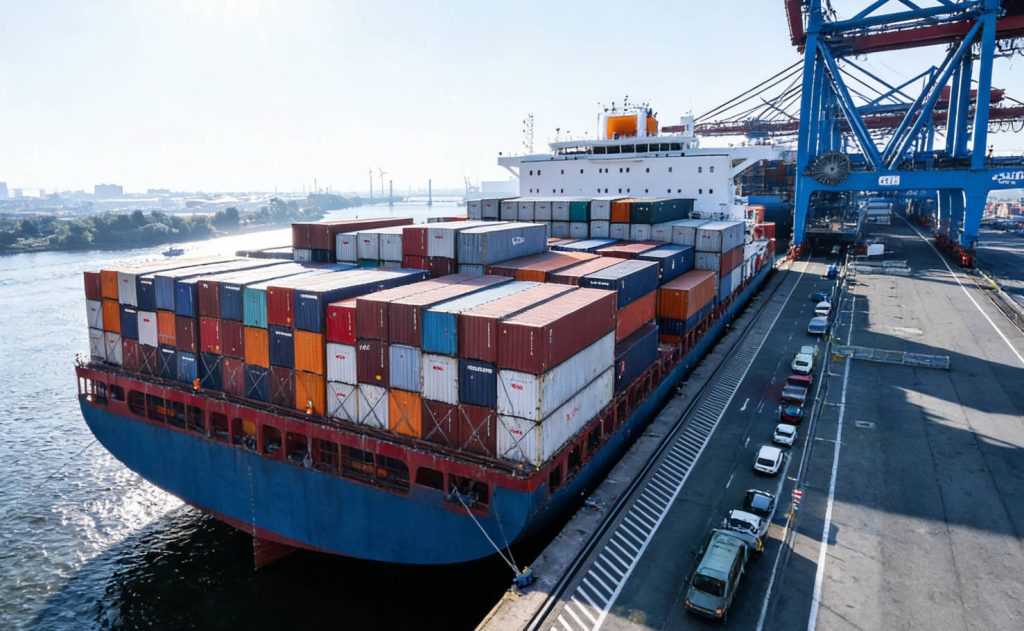
Puertos del Estado runs 46 ports of general significance along Spain’s 8,000-kilometer-long coast. The Port of Algeciras is located on the Strait of Gibraltar, which is one of the busiest shipping routes in the world. This makes it the best place for cargo to move between Asia, the Middle East, West Africa, and the Americas. Valencia is the main city on the Mediterranean Corridor, which is Spain’s most important inland freight route. It connects the eastern coast to France and the rest of the European rail network. Barcelona is the main port for shipping cars, chemicals, and cross-border e-commerce. Bilbao connects the north to Atlantic lines that go to Northern Europe and North America.
No other Iberian or Southern European country of a similar size has the same number of ports. During the Red Sea crisis, container rerouting helped Portugal’s Port of Sines develop and improve. However, Spain’s mix of port depth, throughput capacity, hinterland infrastructure, and geographic spread offers it a systemic edge that a single-port strategy can’t match. Spain is the best place for enterprises who want to serve the Iberian market, which includes Spain and Portugal and has over 58 million consumers and a GDP of almost €2 trillion. Spain’s locati0n is perfect for enterprises who want to get to Southern Europe or North Africa through Iberia.
Port Performance: The 2025 Numbers
The port traffic data is the best proof that Spain’s logistics are getting better. Valenciaport achieved a new record for container throughput in 2025, moving 5.66 million TEU, which is 3.41% more than the previous year. The port also made €164.3 million in net turnover (+9%) and €43.7 million in pre-tax profits, which is a 50.51% increase over the previous year. For the first time in the port’s history, full-container imports went above one million TEU. China made up more than half of that volume and grew by 19.62% over the previous year. These numbers are not small improvements; they are record-breaking numbers that show the China–Spain trade connection is getting deeper.
Algeciras stayed the fifth-largest container port in Europe and the best place to transfer goods between ships, carrying about 4.7 million TEU. In the first half of 2025, Barcelona’s full-container exports grew by 8% and its imports grew by 12%. This was despite the fact that the transhipment windfall from Red Sea rerouting that boosted volumes in 2024 was starting to level off. Spanish ports handle more than 557 million tons of cargo every year and add about €24 billion to GDP. In terms of total container port capacity, Spain comes in second only to the Netherlands-Belgium complex. Three of Spain’s ports—Valencia (4th), Algeciras (5th), and Barcelona (9th)—are in the top ten in Europe.
| Port | 2025 Throughput | EU Rank | Strategic Role |
| Valencia (Valenciaport) | 5.66 million TEU (record) | 4th | Mediterranean gateway; #1 China import port in Spain; €902m expansion underway |
| Algeciras | ~4.7 million TEU | 5th | Europe’s largest transhipment hub; Atlantic–Mediterranean pivot; Africa gateway |
| Barcelona | ~3.9 million TEU | 9th | Automotive, chemicals, cruises; Mediterranean Corridor anchor |
| Bilbao | Growing; Atlantic focus | Top Northern Spain | Atlantic Corridor; industrial goods; Northern Europe connectivity |
| Málaga | Expanding | Emerging | EIB €50m investment; Europe–Africa intermodal hub; TEN-T reinforcement |
One important detail in the 2025 statistics is that while the number of transshipments went down as the Cape of Good Hope route became more typical, the number of full containers being imported and exported kept going up. This difference is important for business: transshipment is a type of transit business that can change with shipping line alliances, whereas full-container origin and destination cargo shows real demand for imports and exports from Spain and the Iberian Peninsula. The latter is structural, increasing, and linked to the Peninsula’s real economy.
A €7 Billion Investment Cycle: Building for the Next Decade
Political posturing is when infrastructure moves forward without money. Spain has the money and a plan to back it up. Spain is one of the most aggressive port nations in Europe when it comes to investing in ports. The Ministry of Transport and Sustainable Mobility’s investment program for the port system from 2025 to 2029 is expected to be worth more than €7 billion. The approved port budget for 2026 was €1.617 billion. The allocations tell a clear strategic story: €900 million for expanding port capacity, €240 million for connecting rail and port, and €280 million for electrifying docks. All three of these reflect the priorities of a logistics system that has outgrown its current infrastructure and knows it.
Valenciaport’s own Strategic Plan sets aside €902.4 million just for the extension of its northern terminal. This will help the port reach an annual capacity of 7 million TEU by 2030. This is not just planning; it is a financial commitment backed by a port authority that made €43.7 million in profit before taxes in 2025 and had €82.8 million in cash flow. In 2025, the European Investment Bank gave €50 million to the Port of Málaga to help with its development and electrification. They made it clear that the project was meant to be a Europe–Africa intermodal hub that would strengthen the Trans-European Transport Network Mediterranean Corridor.
| Investment / Programme | Value | Impact |
| Spain port system 2025–2029 investment plan | €7 billion+ | Capacity expansion, rail hinterland, electrification and digitalisation across 46 ports |
| Approved 2026 port infrastructure budget | €1.617 billion | €900m capacity; €240m rail-port links; €280m dock electrification |
| Valenciaport northern terminal expansion | €902m (APV plan) | Target 7+ million TEU by 2030; reinforce China–Spain trade lane |
| EIB loan – Port of Málaga electrification | €50 million | Intermodal hub Europe–Africa; TEN-T Mediterranean Corridor strengthening |
| Dock electrification / shore power | €280 million | Reduce vessel emissions at berth; EU Green Deal and IMO 2030 compliance |
The amount of money ports make is going up together with the investment cycle. By 2026, port usage fees are expected to reach €653 million, and the entire turnover of the port system is expected to rise from €1.29 billion in 2024 to €1.38 billion. Spain’s port system is financially self-sufficient, which sets it apart from other Southern European competitors whose infrastructure plans sometimes get stuck because they can’t get public funding. Spain’s ports pay for a lot of their own growth through successful businesses. This means that the investment plan is more likely to be carried out on time and is more credible.
Spain vs. Its European Peers
It can seem strange to compare Spain to the well-known logistics giants of Northern Europe, such Rotterdam, Hamburg, and Antwerp. Rotterdam processes more than 14 million TEU every year. Antwerp-Bruges and Hamburg have been working with the world’s biggest shipping companies for hundreds of years. But the parallel doesn’t make sense. Spain’s competitive position does not involve supplanting the Northern European hubs. It has to do with serving the regional market that those hubs are not as good at serving: Southern Europe, the Iberian Peninsula, the Mediterranean corridor, and the way to Africa and Latin America.
A container that arrives in Rotterdam and is going to Madrid takes two to three days longer to get there than one that goes to Valencia. That difference in time and cost is important for business when there are millions of containers and just-in-time supply chains. Spain has the EU’s largest road network (over 17,550 kilometers) and the world’s second-largest high-speed rail network (over 3,900 kilometers). This makes it the best place in Southern Europe for inland transportation. Italy’s Genoa-Savona and Gioia Tauro are getting bigger, but Italy’s rail freight integration and logistics park environment are still smaller than Spain’s. Greece’s Piraeus serves a smaller area around it. France’s Marseille-Fos is strong in the Western Mediterranean but not so much in the Atlantic.
| Metric | Spain | Netherlands | Germany | Italy |
| World Bank LPI Rank (2023) | #13 | #6 | #3 | #19 |
| Motorway network | 17,550+ km (EU’s longest) | ~5,700 km | ~13,100 km | ~6,900 km |
| High-speed rail | 3,900+ km (2nd world) | ~400 km | ~3,400 km | ~1,480 km |
| Logistics space | 88.4 million m² | ~50m m² est. | ~100m m² est. | ~60m m² est. |
| Top-10 EU container ports | 3 (Valencia, Algeciras, Barcelona) | 1 (Rotterdam) | 1 (Hamburg) | 2 (Genoa-Savona, Gioia Tauro) |
| Number of logistics parks | 279+ | ~120 est. | ~200 est. | ~150 est. |
In conclusion, Spain is in a unique situation since it has access to the Atlantic Ocean, depth in the Mediterranean Sea, the EU’s largest road network, a world-class rail system, and enough interior logistics infrastructure to move goods efficiently over the Peninsula and into Southern France. Spain is the only country in Southern Europe that has all of these resources at the level it has currently.
The Rise of Inland Logistics Hubs: Beyond the Ports
Being in charge of a port is only part of the story. The inland infrastructure that links maritime entry points to manufacturing zones, distribution networks, and end consumers is what makes a port gateway a real logistics hub. Spain has created this interconnectedness in a planned way, creating a national logistics geography that goes far beyond its shore.
Zaragoza – PLAZA: Europe’s Largest Logistics Platform
Zaragoza’s Platform Logistics (PLAZA) is the largest logistics platform in Europe in terms of land area. Located in the middle of the Iberian Peninsula, PLAZA is the hub of Spain’s logistics system. It has direct road and rail connections to Barcelona (150 km east), Madrid (300 km southwest), and the French border (300 km northeast). Trucks and trains can easily move goods that come to Valencia or Barcelona by ship to PLAZA and then disperse them over the Peninsula and into Southern France. PLAZA is currently running pilot projects for green hydrogen, making it a testing ground for the future generation of freight logistics. This will become more important as EU emissions rules get stricter over the next 10 years.
Madrid and Coslada: The National Distribution Centre
Coslada dry port in Madrid is the inland customs and distribution center for the Spanish capital and the area around it. It has a market of 7 million people and is one of the richest metro areas in Europe. The A-2 and A-4 motorways to the east and south of the city are home to most of the major 3PL operators and e-commerce fulfillment centers. These two areas account for more than 85% of all warehouse leasing activity in the region. In the first quarter of 2025, Madrid received 22% of Spain’s total national industrial and logistics investment. This shows that Madrid is still the country’s main distribution hub. The fact that the Coslada dry port is close to Barajas Airport adds an air freight aspect that makes the Madrid cluster truly multi-modal.
Catalonia: Industrial Density and Port Integration
Catalonia got all of Spain’s national industrial and logistical investment in the first quarter of 2025. The area has both the port traffic of Barcelona and one of Spain’s most densely populated manufacturing ecosystems, which includes automotive supply chains, chemical logistics, and cross-border e-commerce fulfillment. Barcelona’s Free Zone is one of seven free zone ports in Spain that offer bonded warehouse space and special tax breaks. It gives logistics companies more options when it comes to customs. The Barcelona-Tarragona corridor has become an important logistics area in Europe, and UPS’s Barcelona hub, which runs on renewable energy, is a paradigm for sustainable last-mile infrastructure.
| City / Region | Logistics Role | Key Developments (2025) |
| Madrid | National distribution; dry port Coslada | 22% of national logistics investment; major 3PL and e-commerce fulfilment; A-2 / A-4 corridors >85% of warehouse activity |
| Catalonia / Barcelona | Industrial manufacturing + port integration | 50% of national industrial logistics investment; automotive, chemicals, cross-border e-commerce |
| Valencia | Mediterranean freight gateway | Record 5.66m TEU 2025; China imports +19.6% YoY; northern terminal expansion |
| Zaragoza – PLAZA | Europe’s largest logistics platform | Central Peninsula node; multimodal road–rail; green hydrogen pilots; 300 km from Barcelona, Madrid, French border |
| Seville | Andalusia gateway; Atlantic port access | Growing 3PL demand; logistics activity zone (ZAL); Africa–Europe corridor position |
| Algeciras / Bay of Gibraltar | Transhipment mega-hub; Africa connector | ~4.7m TEU; Strait of Gibraltar chokepoint position; Red Sea rerouting beneficiary |
E-Commerce and the Last-Mile Transformation
Domestic e-commerce is one of the most dynamic forces behind the expansion of Spain’s logistics sector. It is growing at an average annual pace of about 24%, which is one of the quickest rates in the EU. This increase is creating a new layer of logistical demand that is changing where investments are made across the country. This demand is centered on urban and peri-urban fulfillment. In the first quarter of 2025, leasing of national logistics space grew 34% from the previous year to 710,000 m². 3PL operators and package transport businesses together made up more than 73% of new lease activity.
Secondary cities are growing quickly. In the first quarter of 2025, Valencia, Seville, and Zaragoza made up almost 50% of all national logistics space demand. This was a change from the previous five years, when Madrid and Barcelona were the most important cities in the market. Some notable individual deals were warehouse leases of 37,000 m² in Azuqueca de Henares and 30,000 m² in Pinto, both of which are on significant logistics routes. In just one quarter, investments in industry and logistics went above €400 million.
Spain’s digital infrastructure makes its logistics more competitive. The country boasts the greatest fiber-to-the-home (FTTH) penetration rate in the EU, and ultrafast broadband covers 87% of the land, which is more than the EU average of 60%. It is one of the most sophisticated 5G networks in the EU. Digital infrastructure quality is becoming just as critical as the availability of physical warehouses for logistics companies that are establishing European networks based on smart warehousing, real-time inventory management, and AI-driven delivery optimization. Spain’s dominance in these areas is not by chance; it comes from years of investment that is finally paying off in the widespread use of logistics technology.
Accessing Spain as a Logistics Hub: How Topway Shipping Helps
Spain’s logistics environment really does offer a structural opportunity, and it is getting bigger. But taking advantage of it means dealing with Spanish port regulations, customs clearance for imports, coordinating interior transportation, and last-mile delivery networks that can be highly complicated, especially for enterprises that are shipping goods from China or other Asian countries for the first time. Topway Shipping, based in Shenzhen and in business since 2010, is perfectly positioned to fill this operational void.
The people who started Topway have more than 15 years of real-world experience in international logistics and customs clearance. They know a lot about cross-border e-commerce supply chains and have a lot of experience with freight coming from China. Its services cover the entire logistics chain, from the first leg of transportation from the factory or warehouse in China to the port or rail terminal at origin, to export customs clearance, sea freight booking (FCL and LCL) to major Spanish ports like Valencia and Barcelona, to import customs clearance at destination, to overseas warehousing, and finally to last-mile delivery within Spain, Portugal, or across Europe.
The 2025 data makes the business case very strong. Valenciaport’s imports from China climbed by 19.62% over the previous year, and China now makes up more than half of all full containers that come in. This means that enterprises that send goods from China through Valencia or Barcelona are working in one of Europe’s fastest-growing bilateral commerce corridors. This corridor has all the benefits of a high-volume corridor, like low prices, frequent scheduling, and competition amongst carriers. If you have a logistics partner who knows a lot about exporting from China and has a proven track record of delivering to Spain, you won’t lose the benefits of using Spain as a hub because of paperwork mistakes, customs delays, or problems with coordinating deliveries at the last mile.
Businesses of all sizes may use the China–Spain route thanks to Topway’s versatile FCL and LCL maritime freight services. A small or medium-sized business (SME) that wants to test the waters in the Spanish market can use an LCL service to combine shipments without having to pay for a whole container. A bigger shipper that is already doing business in Europe can grow to offer direct FCL services with set schedules. In a logistics environment where Spain’s port capacity is growing but the border is getting more complicated because of EU customs reforms and ICS2 documentation requirements, being able to choose the right mode for each shipment and have one partner manage the whole chain is very useful.
Sustainability, Rail, and What Comes Next
Three things will determine Spain’s logistics story over the next ten years: sustainability mandates, the growth of rail freight, and the Atlantic Corridor’s growth, which connects the Iberian Peninsula to France and Germany in the north.
Spanish ports are spending more money than most other European ports on shore electricity, green hydrogen, and electrified handling equipment. The €280 million dock electrification scheme in the 2026 port budget is a real promise that puts Spanish ports ahead of the IMO 2030 emissions compliance standards. For shippers whose supply chain reporting requires Scope 3 emissions reduction—something that is becoming more and more required by the EU’s Corporate Sustainability Reporting Directive (CSRD)—routing through Spain’s greening ports is a better option for ESG documentation than routes with higher carbon emissions.
The Atlantic Corridor, which runs from France to Germany and connects Spain and Portugal by rail, is the most important medium-term infrastructure project for Iberian logistics. The corridor connects economies that make up 12% of the EU’s GDP. Spain’s €240 million rail-port connection budget for 2026 shows that they know that maritime-rail intermodality is the way to make European freight more efficient in the future. As the China–Europe rail network grows, with regular services from Yiwu and other Chinese cities already going to Madrid’s Abroñigal terminal, rail will become more and more important as a way to get goods to Spain’s inland distribution network and connect Spain to the rest of Europe without the road congestion that currently slows down the Pyrenean crossings.
The overall prediction is for more consolidation to happen. Spain is already the second busiest country in Europe for container ports. Its investment pipeline is full, its e-commerce growth is built-in, its digital infrastructure is the best in the business, and its locati0n can’t be copied. The Iberian Peninsula is Europe’s gateway to the Global South, which includes Africa, Latin America, and more and more Asia through the Mediterranean. As these trade routes get bigger, this role will only get stronger. Businesses who get into Spain’s logistics ecosystem now, before capacity gets much tighter, have a big chance to grow.
Conclusion
Spain’s rise to the top logistics hub in the Iberian Peninsula is not just a guess; it is a fact. For example, Valenciaport’s record 5.66 million TEU in 2025, a €7 billion+ port infrastructure investment plan running through 2029, a 34% increase in national logistics space leasing in Q1 2025, China imports at Valencia growing nearly 20% year-on-year, and a logistics park network spanning 88.4 million square meters across 279 facilities. The transportation sector brings in €149 billion a year and employs more than a million people. These data show that the logistics system is already working at the highest level in Europe.
The forces behind this change are not only adding to each other; they are making things worse. Spain’s logistics advantage is becoming more and more durable because of its geographic locati0n, multi-modal infrastructure, funded investment programs, a booming domestic e-commerce market, EU corridor development, and a port system that can pay for itself. No single competitor from Southern Europe is now able to copy this combination, and the investment gap between Spain and its closest competitors is getting bigger, not smaller.
The strategic rationale is apparent for enterprises that want to create supply chains between China and Europe, increase their distribution across the Iberian Peninsula, or be ready to grow into North Africa and Latin America. The infrastructure is in place, the capacity is being constructed, and record amounts of goods are already passing through Spanish ports. The question isn’t if Spain can be a logistics hub. The key is whether your organization is ready to use it well and whether you have the correct logistics partner, like Topway Shipping, to move goods from the Chinese factory floor to the Spanish warehouse door with accuracy and dependability.
FAQs
Q: Why is Spain considered the leading logistics hub for the Iberian Peninsula?
A: Spain has three of the top ten container ports in Europe, the EU’s largest road network (17,550+ km), the world’s second-longest high-speed rail network (3,900+ km), more than 88 million m² of logistics space, and is located at the Atlantic-Mediterranean intersection. No other Southern European country has this mix on such a large scale.
Q: What were Spain’s port traffic highlights in 2025?
A: Valenciaport achieved a new record with 5.66 million TEU (+3.41% YoY). For the first time, full-container imports went over 1 million TEU. More than half of the containers that came in came from China, which is a 19.62% increase from the previous year. As Europe’s largest transshipment hub, Algeciras handled almost 4.7 million TEU. Spain has the second most cargo port traffic in Europe.
Q: How much is Spain investing in port and logistics infrastructure?
A: Spain plans to spend more than €7 billion on ports between 2025 and 2029. The budget for 2026 is €1.617 billion. This includes €900 million for port capacity, €240 million for rail-port connectivity, and €280 million for dock electrification. Valenciaport is putting €902 million into expanding the northern terminal on its own, with the goal of reaching a capacity of 7 million TEUs by 2030.
Q: What is driving the surge in Spanish logistics space demand?
A: The main reason is e-commerce, which is expanding about 24% a year. In the first quarter of 2025, the amount of space leased for logistics climbed 34% year over year to 710,000 m². More than 73% of new leases are for 3PL operators and parcel transit providers. Secondary markets like Valencia, Seville, and Zaragoza now account for over half of all demand.
Q: How can Topway Shipping help businesses access Spain’s logistics network?
A: Topway Shipping takes care of all the logistics from Chinese factories to Spanish distribution centers. This includes clearing customs for exports, shipping goods by sea to Valencia and Barcelona, handling customs for imports, storing goods in Spain, and delivering them to their final destination. They have worked across the entire China–Spain region for more than 15 years.
Q: Is Spain also a hub for distribution beyond the Iberian Peninsula?
A: Yes. Spanish ports connect directly to North Africa, Latin America, and the Western Mediterranean. The main port for marine trade between Africa and Europe is Algeciras at the Strait of Gibraltar. The Atlantic Corridor connects Spain and Portugal to France and Germany. These countries make up 12% of the EU’s GDP. The EIB’s investment in Málaga is meant to improve the Europe–Africa intermodal axis.