Txinatik Italiara DAP bidalketa: Baimen prozesua eta tasak
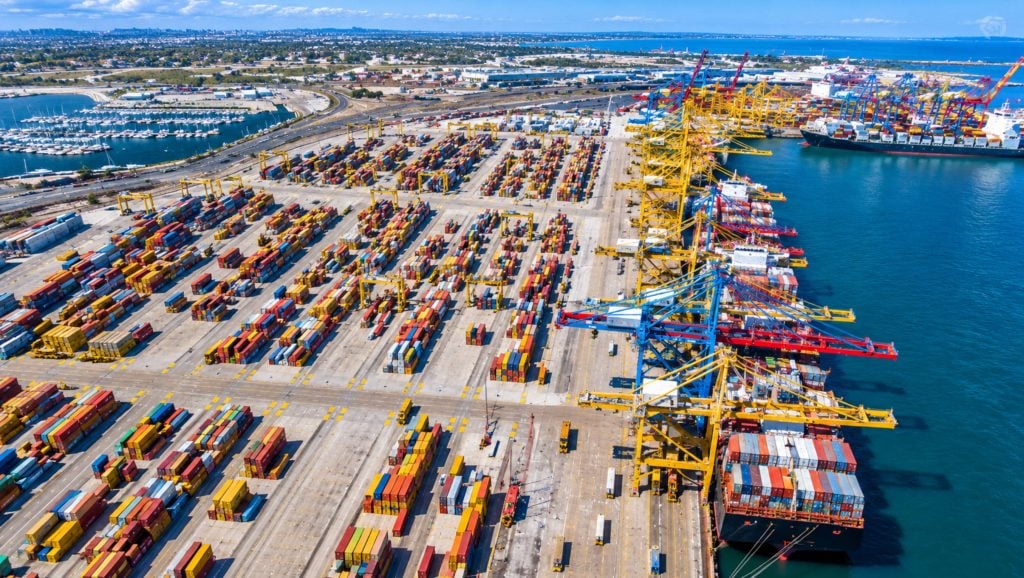
Few trade terms cause as many arguments between Chinese suppliers and Italian buyers as DAP. The supplier believes the job is done once the container is delivered to the named place. The buyer believes the supplier has taken care of everything. Then the cargo arrives at Genoa or La Spezia, a customs declaration is suddenly needed, an invoice for terminal charges lands in someone’s inbox, and nobody is sure whose problem it is. Delivered at Place, as the term is formally known, is simple on paper, but it leaves one very important task in the importer’s hands: import clearance in Italy.
That task has also become more expensive and more demanding in 2026. Italy introduced a fixed administrative fee on low-value imports from January 1, 2026. The European Union then ended its long-standing customs duty exemption for parcels valued at €150 or less on July 1, 2026, replacing it with a temporary flat duty of €3. Import VAT in Italy remains at 22 percent with no minimum threshold, and the ocean schedules between Asia and the Mediterranean are still adjusting to the question of whether carriers will fully return to the Suez Canal.
This guide walks through how DAP works on the China to Italy lane, what happens at each stage of Italian customs clearance, which documents you need, and how much the whole process realistically costs. It is written for importers, e-commerce sellers, sourcing managers and procurement teams who want to avoid surprises at the port. Wherever possible, numbers are drawn from current market data, but please treat every figure as indicative and confirm it against a live quotation before you commit to a shipment.
What DAP Really Means When Goods Move from China to Italy
DAP is one of the eleven rules in Incoterms 2020, published by the International Chamber of Commerce. Under DAP, the seller arranges and pays for carriage to a named destination, bears the risk of loss or damage until the goods are ready for unloading at that place, and handles export clearance in the country of origin. The buyer takes over at the moment the goods are available for unloading, and from that point the buyer is responsible for unloading, import clearance, import duties, import VAT and everything that follows.
In a typical China to Italy shipment, the named place might be a warehouse in Lombardy, a distribution center near Bologna, or an inland terminal such as Padua or Milan. The seller books the ocean or air freight, pays the main carriage, covers the origin charges in China and often arranges the trucking to the final address. What the seller does not do is lodge the Italian customs declaration or pay the Italian taxes. This is the part that is most often forgotten when a quotation is compared with a DDP offer.
Saltzailearen erantzukizuna non amaitzen den
The seller’s duties end when the goods arrive at the agreed place on the arriving means of transport, ready for unloading. If the named place is the port of Genoa, the seller’s job is over once the container is available at the terminal. If the named place is your warehouse, the seller must organize trucking from the port to your door, but still does not pay duties or file the declaration. Because risk transfers at the point of delivery, any damage that occurs during the sea voyage remains the seller’s problem, while any damage that occurs while your own crew unloads the truck is yours.
This is why the named place should be written precisely in the contract. A vague phrase such as DAP Italy invites disagreement. A phrase such as DAP Via Example 12, 20100 Milan, Italy, leaves no room for interpretation, and it tells the freight forwarder exactly which leg of transport must be priced.
Why DAP trips up first-time importers
The first problem is that DAP looks like a door-to-door service, but it is not. A buyer who has never imported into the EU may not even have an EORI number, which is the registration that allows a company to lodge customs declarations. Without it, the cargo can sit at the terminal accumulating storage charges while paperwork is sorted out.
The second problem is cost visibility. The supplier’s DAP quotation covers freight to the destination, but the buyer will still receive invoices for aduana-artekaritza, duty, VAT, terminal handling at destination in some cases, and any inspection or storage fees. If the buyer budgets only for the supplier’s price, the landed cost is routinely 25 to 35 percent higher than expected, and a large part of that difference is VAT that a registered business can recover later but still has to fund at the border.
DAP, DDP and CIF: How the Three Terms Compare
Before choosing DAP, it helps to see where it sits between the other terms that Chinese suppliers most commonly offer on exports to Italy. The table below compares who is responsible for each major step.
Table 1. Responsibility split under common Incoterms on China to Italy shipments
| Task or cost | CIF Genoa | DAP named place | DDP named place |
| Esportazioen baimena Txinan | Seller | Seller | Seller |
| Main ocean or air freight | Seller | Seller | Seller |
| Karga asegurua | Saltzailea (gutxieneko estaldura) | Seller’s risk, insurance optional | Seller’s risk, insurance optional |
| Helmugako portuaren kudeaketa | Buyer | Kontratuaren araberakoa da | Seller |
| Italiako aduana-aitorpena | Buyer | Buyer | Seller |
| Inportazio-zerga eta % 22ko BEZa | Buyer | Buyer | Seller |
| Inland delivery in Italy | Buyer | Seller to named place | Seller to named place |
| Arriskuen transferentziak hemen | Txinako portuan itsasontzian | Named place, ready to unload | Named place, ready to unload |
The practical lesson is that DAP sits in a middle position. It gives the buyer a delivered price for transport, which makes budgeting easier, but it keeps the buyer in control of customs, which is useful for a company that has its own broker, wants to claim the VAT immediately, or prefers to select the HS code itself. DDP, by contrast, appeals to small buyers and to e-commerce customers who want one all-inclusive price, although it requires the seller or its forwarder to be able to act as an importer of record or appoint an indirect customs representative in Italy.
CIF is cheaper to quote but leaves the buyer with the most coordination. In practice, many Italian importers end up asking for DAP when they want the supplier to remain accountable for the delivery leg while they keep direct control of the customs file.
The Italian Clearance Process, Step by Step
Clearing a DAP shipment in Italy is a sequence of linked events rather than one single act. Each step depends on the one before it, and a mistake early in the chain tends to surface later as a delay at the terminal gate. The sections below follow the typical path of a itsas merkantzien container, which is how the large majority of commercial DAP cargo between China and Italy moves.
Step 1: Pre-arrival safety and security filing
Long before the vessel reaches Genoa, La Spezia, Naples or Trieste, the carrier or its representative must submit an Entry Summary Declaration to the EU’s Import Control System 2, known as ICS2. This filing contains detailed data on the shipper, consignee, goods description and routing. The consignee’s name and address must be accurate, and the goods description must be specific enough for risk analysis. Vague entries such as general cargo, parts or gifts are the most common reason for a hold before the cargo is even unloaded.
Your forwarder in China should confirm that the data on the bill of lading matches the commercial invoice and packing list exactly. A mismatch in consignee name, an incomplete address or a missing EORI number at this stage can trigger a do not load message at origin, or a customs hold on arrival.
Step 2: EORI number and customs representation
To lodge a customs declaration in Italy, the importer needs an EORI number. For Italian companies this normally starts with the letters IT followed by the VAT number, and it is obtained from the Italian Customs and Monopolies Agency, known as ADM. A company based outside the EU needs an EORI number too, and typically also needs a VAT registration or a fiscal representative if it wants to act as importer of record.
The importer can then choose between two models. In direct representation, the customs broker acts in the name of the importer, who remains the party liable for duties and VAT. In indirect representation, the broker acts in its own name but on the importer’s behalf, and becomes jointly liable with the importer for the amounts due. Most Italian brokers prefer direct representation for routine imports, and indirect representation is more common for non-resident companies that have no local presence.
The broker needs a signed power of attorney before lodging anything. Many delays that look like customs problems are in fact paperwork gaps between the buyer and the broker.
Step 3: Customs declaration and tariff classification
The heart of the process is the single administrative document, which is the import declaration lodged electronically in the Italian customs system. It states the importer, the exporter, the HS code, the customs value, the country of origin, the Incoterm and the applicable duty and VAT. Customs value in the EU is generally based on the transaction value plus transport and insurance costs up to the point of entry into the EU, which is why freight forwarders often talk about CIF value even when the commercial term is DAP.
Classification is where most of the money is won or lost. A single digit difference in a ten-digit TARIC code can mean a duty rate of 0 percent instead of 6.5 percent, or the unexpected addition of anti-dumping duty. Chinese origin goods are particularly exposed, because the EU maintains anti-dumping and countervailing measures on many categories, including some steel products, ceramics, certain bicycles and solar components. A broker should check the TARIC database for every new product before the first shipment, not after the container arrives.
Where the classification is truly uncertain, the importer can apply for a Binding Tariff Information decision, which gives legal certainty for three years. This takes time, so it is a tool for regular products rather than one-off orders.
Step 4: Risk analysis, inspection and release
After the declaration is accepted, Italian customs applies automated risk analysis. Most consignments receive a green channel result and are released after payment or guarantee of the amounts due. A smaller share is directed to documentary checks, and a still smaller share to scanning or physical inspection. Under the current EU reform process, with a new EU Customs Authority being set up in Lille, risk-based data screening is expected to become even stricter, so complete and consistent data matter more than ever.
When a container is selected for a scanner or a physical exam, the terminal moves it to the inspection area, which adds extra handling fees and usually one to five days. Importers who ship products requiring conformity marking, such as electronics, toys, or cosmetics, should expect more attention and should keep their CE documentation and General Product Safety Regulation information ready.
Step 5: Payment of duty and VAT, and final delivery
Duty and import VAT must be paid or guaranteed before release. Regular importers usually use a deferred payment arrangement supported by a bank guarantee, which lets them settle the amounts on a monthly basis. Occasional importers normally pay per shipment through the broker, who advances the funds and invoices them back with a service fee.
Once customs releases the goods, the delivery order is issued by the carrier, the terminal confirms the container is cleared, and the trucker can collect it. The container must be returned to the designated depot within the free days allowed by the shipping line, otherwise detention charges start. Under DAP, the seller’s forwarder normally coordinates this final trucking leg, but the buyer must ensure the delivery slot is booked and that the consignee premises can actually receive a 40-foot container.
After unloading, the importer keeps copies of the declaration, invoice, transport documents and payment proof for at least ten years in Italy for tax purposes, and the customs authority can request them for post-clearance audits, which cover a period of three years or more.
Documents You Need Before the Vessel Arrives
The documents below form the basic file for most commercial imports from China to Italy. Some product categories need extra certificates, but missing any of these items will almost always stop the declaration.
Table 2. Core documents for Italian import clearance
| Dokumentu | Nork ematen du? | Why customs needs it |
| Merkataritza faktura | Txinako hornitzailea | Establishes customs value, goods description, Incoterm and parties |
| Pakete zerrenda | Txinako hornitzailea | Confirms quantities, weights, packages and marks |
| Garraio-agiria edo aire-agiria | Garraiolaria edo bidaltzailea | Proves the contract of carriage and ownership of the cargo |
| EORI zenbakia | inportazio | Identifies the declarant in the EU customs system |
| Ahaldunak | Importer to broker | Authorizes the broker to lodge the declaration |
| Jatorri agiria | Chamber of commerce in China | Supports origin claims; required in some anti-dumping cases |
| Conformity documents (CE, test reports) | Hornitzailea edo fabrikatzailea | Required for regulated products under EU product rules |
| Import licence or surveillance document | inportazio | Needed for certain controlled or monitored goods |
The commercial invoice deserves special attention. It must show the full legal names and addresses of seller and buyer, a clear description of each product in plain language, the unit price, the currency, the Incoterm and the named place. Descriptions such as sample, spare parts or hardware are a frequent cause of questions from customs, because they cannot be classified without more detail.
Importers who work with Chinese suppliers should also request a draft of the bill of lading before sailing. Correcting a name or a number at this stage costs nothing, whereas amending a bill of lading after departure can cost a fee from the carrier and add days to the process.
What Changed in 2026: The €3 Duty, Italy’s €2 Fee and the End of the €150 Free Pass
For years, goods with an intrinsic value of €150 or less entered the EU without customs duty, although VAT was due on everything since 2021. That gap was central to the rapid growth of cross-border e-commerce from China. In November 2025, EU member states agreed to end the exemption, and on July 1, 2026, a temporary flat customs duty of €3 started to apply to low-value consignments. According to publicly available figures cited by EU institutions, roughly 5.9 billion low-value items were shipped directly to EU consumers in 2025, which explains the political pressure behind the change.
The €3 duty is applied by tariff line rather than by parcel. A shipment that contains products falling under three different tariff subheadings can therefore attract €9, not €3, which is why multi-category bundles with a low total value are now much less attractive. The measure is temporary and is designed to bridge the period until a permanent reform of EU customs duties and a handling fee are fully implemented, and the final form of that handling fee had not yet been fixed at the time of writing.
Italy’s national administrative fee
Italy moved before the EU. The 2026 Italian Budget Law introduced an administrative contribution of €2 on low-value imports not exceeding €150 arriving from non-EU countries, effective January 1, 2026, to cover the cost of customs procedures on these consignments. Carriers such as FedEx have published guidance on how the charge is collected, and Italian customs has issued follow-up notes on accounting and collection. In practice, this means a small parcel to Italy can now carry the €2 national fee, the €3 EU duty per tariff line and 22 percent VAT.
What it means for IOSS sellers and B2B importers
The Import One-Stop Shop, known as IOSS, is still available for consignments up to €150. It allows the seller to collect VAT at checkout and remit it to the EU tax authorities, so the consumer does not pay at the door. The new flat duty applies whether or not the seller uses IOSS, so IOSS reduces friction but does not remove the duty.
For business importers shipping commercial cargo, the story is different. Consignments above €150 were never covered by the exemption, so standard tariff rates continue to apply. For B2B VAT-registered recipients, standard duty rates apply even to low-value goods. The practical effect for a DAP container shipment is limited, but a buyer who splits an order into many small parcels to save duty will now find that approach counterproductive.
Duty, VAT and Fees: What You Will Actually Pay
The total cost of a DAP import from China to Italy has four layers: the transport price paid to the supplier or forwarder, the duty determined by the HS code, the 22 percent import VAT, and a collection of smaller charges that are easy to overlook. Understanding each layer separately makes budgeting far more accurate.
Inportazio-zerga
Duty rates depend on the HS code and the origin of the goods. Many industrial inputs and some consumer products carry low or zero rates. Clothing, footwear, ceramics, certain furniture and many electrical goods fall into higher bands, commonly between 2 and 12 percent, and some goods from China also face additional trade defence duties. The TARIC database published by the European Commission is the reference source for the current rate of any ten-digit code, and your broker should confirm it in writing before you place a firm order.
Inportazio BEZa % 22an
Italy applies a standard VAT rate of 22 percent on imports, with reduced rates of 10, 5 and 4 percent for certain categories such as some foods and printed matter. VAT is calculated on the customs value, plus duty and other charges that are due up to the first destination in the EU. A VAT-registered Italian company can usually recover this amount through its periodic VAT return, but it still has to pay at the border or draw on its deferred payment arrangement, which affects cash flow.
Typical destination charges
Alongside duty and VAT, importers should budget for the destination-side service charges shown below. The ranges are indicative for a 40-foot container and vary considerably between ports, terminals, brokers and carriers, so use them as a planning guide only.
Table 3. Indicative Italian destination charges for a 40-foot container (euros)
| kobratzen | Barruti tipikoa | Iruzkina |
| Customs broker declaration fee | 60 € 150 € | Extra tariff lines usually cost extra |
| Helmugako terminaleko manipulazioa | 200 € 350 € | Sometimes included in the freight quotation |
| Entregatzeko agindua eta dokumentazioa | 60 € 120 € | Charged by the carrier or agent |
| Port security and ISPS charges | 10 € 25 € | Small but frequently omitted from quotes |
| Eskanerra edo ikuskapen fisikoa | 100 € 400 € | Plus extra handling and possible delay |
| Denbora librearen ondoren biltegiratzea | 30 eurotik 100 eurora egunean | Rises with time at the terminal |
| Inland trucking, port to northern Italy hub | 350 € 700 € | Depends on distance and fuel surcharges |
| Bank guarantee or deferred payment cost | Aldakorra | Relevant for regular importers |
These costs are modest compared with the cost of delay. A container stuck for five days over a weekend can easily double the destination charges, which is why forwarders and brokers put so much emphasis on document accuracy.
Adibide funtzional bat
To see how the layers combine, imagine a 40-foot container of home furnishings. The invoice value of the goods is €30,000, and the freight and insurance to Genoa total €4,500, giving a customs value of €34,500. For the illustration we assume a duty rate of 4 percent. Duty is therefore €1,380. VAT is applied to the customs value plus the duty, which is €35,880, producing VAT of €7,893.60 at 22 percent.
Table 4. Illustrative landed-cost calculation for one container
| Item | oinarria | Amount (euros) |
| Goods value on invoice | Hornitzailearen prezioa | 30,000.00 |
| Freight and insurance to Italy | Quoted by forwarder | 4,500.00 |
| Aduanako balioa | Goods plus transport | 34,500.00 |
| Inportazio-zerga | 4 percent of customs value | 1,380.00 |
| Inportatu BEZa | 22 percent of 35,880 | 7,893.60 |
| Total taxes payable at import | Zerga gehi BEZa | 9,273.60 |
| Broker, terminal and local charges | Estimated mid-range | Approx. 700 to 1,200 |
In this example the importer must fund roughly €9,300 in taxes plus around €1,000 in service charges at the border, even though the supplier’s invoice and freight looked complete. If the importer can recover VAT, the true cost is closer to the duty and fees, but the cash still has to be available at the time of release.
A low-value e-commerce parcel behaves differently. For a €120 parcel with a single tariff line, the buyer faces the €3 flat duty, VAT of roughly €27 on the value including duty, and the €2 Italian administrative fee, which adds up to about €32 before any carrier handling charge. For a parcel with two tariff lines, the flat duty doubles to €6.
Freight Costs and Transit Times in Late 2026
Under DAP, the supplier pays the main freight, but the price is built into the quotation, so understanding the market lets you judge whether you are being offered a fair figure. Ocean rates from China to the Mediterranean have softened after the summer. Market data for September 2026 put 20-foot container rates into Genoa and Naples at roughly $2,678 to $3,273, and 40-foot rates at roughly $4,185 to $5,115, both lower than in August as demand from Asia to Europe weakened.
Transit times are more uncertain. Direct sailings from Shanghai or Ningbo to Genoa through Suez traditionally took 30 to 35 days door to door. When carriers divert around the Cape of Good Hope, the voyage can reach 45 to 50 days, and Italian forwarders have noted that Adriatic ports suffer more from the diversion than Genoa, La Spezia or Livorno on the Tyrrhenian side. In July 2026, the Gemini Alliance announced its decision to resume services via the Red Sea and Suez Canal, which has lowered spot rates but also created uncertainty over schedule reliability while the network reorganizes.
Table 5. Planning ranges for China to Italy transport modes
| modua | Ohiko garraio-denbora | Egokiena |
| Sea FCL to Genoa, La Spezia or Naples | 25 to 35 days, longer via the Cape | Full containers, regular replenishment |
| Itsasoko LCL bateratzea | 30 egun 45 egunean | Smaller volumes under about 15 CBM |
| Rail to northern Italy | Roughly 12 to 25 days depending on origin and terminal | Time-sensitive cargo at moderate cost |
| Aire salgaiak | About 3 to 7 days airport to airport plus clearance | High-value, urgent or perishable goods |
| mezularitza espresa | 3 eta 6 egun artean atetik ate | Laginak eta pakete txikiak |
Northern ports such as Genoa and La Spezia are the preferred gateways for most industrial and consumer cargo bound for Lombardy, Emilia-Romagna, Veneto and Tuscany, because they sit close to the manufacturing heartland and have the most modern container terminals. Naples serves southern Italy, and Trieste and Venice serve the Adriatic corridor and Central Europe. Choosing the right port can save several hundred euros in trucking and several days in transit.
Common Clearance Problems and How to Avoid Them
Most clearance problems on the China to Italy lane are caused by a handful of repeat issues, and all of them are preventable. The most frequent is an incorrect or vague goods description. If the invoice says accessories while the packing list says LED lamp holders, customs cannot match them and the declaration is put on hold. The solution is simple but requires discipline: every document must tell the same story, in plain language, with part numbers where relevant.
The second recurring problem is undervaluation or inconsistent pricing. Italian customs has access to databases of comparable import prices, and a declared value that is far below market invites an audit and potential penalties. Splitting an invoice into a low declared value and a separate payment outside the paperwork is a risk no serious forwarder will accept.
Third, many buyers underestimate the importance of product compliance. Electrical and electronic goods need CE marking and the relevant declaration of conformity, toys need safety testing, and cosmetics need a responsible person in the EU. Since the General Product Safety Regulation applies, consumer products must also carry traceability information and an identified EU contact. A shipment that arrives without the supporting documents may be refused release, or it may be released and then withdrawn from the market.
Fourth, regulations are tightening for certain material categories. The definitive phase of the EU Carbon Border Adjustment Mechanism started in 2026 for goods such as iron and steel products, aluminum, cement, fertilizers and some other categories. Importers of these goods may need an authorized declarant status and must plan for the reporting obligations, although smaller importers below an annual volume threshold are exempt.
Finally, storage and demurrage often take the importer by surprise. Terminals offer a limited number of free days, and a container that waits for a missing power of attorney or an unpaid duty bill starts to accrue charges immediately. Ask your broker for the free time at the destination terminal and plan the clearance schedule backward from that date.
How Topway Shipping Supports DAP Shipments from China to Italy
Since 2010, Topway Shipping, headquartered in Shenzhen, China, has been a professional provider of cross-border e-commerce logistics solutions. Our founding team has more than 15 years of experience in international logistics and customs clearance, with a strong focus on China to U.S. transportation. That background in one of the most regulated trade lanes in the world shapes how we handle every other destination, including Italy and the wider European Union: documents are checked before cargo moves, classification is confirmed before booking, and costs are explained before they are incurred.
Our services span the entire logistics chain, including first-leg transportation, overseas warehousing, customs clearance and last-mile delivery. For a DAP shipment to Italy, that means we can collect goods from your supplier in China, consolidate them in our Shenzhen operation if several factories are involved, prepare export documents, and book either full container or less-than-container ocean freight to the Italian port that best fits your delivery address.
We offer flexible FCL and LCL ocean freight services from China to major ports worldwide. A buyer shipping a single full container of furniture can use FCL, while an e-commerce seller testing a new product with six or eight cubic meters can use LCL and avoid paying for empty space. Because we see both kinds of cargo every day, we can advise honestly on the break-even point between consolidated and full-container shipping.
What importers value most is clarity. Before the cargo sails, we help review the invoice and packing list for consistency, flag products that may need extra certificates, and give a transparent estimate of destination charges so that the duty and VAT funds can be prepared. If you are comparing DAP with DDP for your Italian customers, our team can quote both and show you exactly where the differences in cost and responsibility lie.
Garbiketa leunago bat lortzeko aholku praktikoak
The most effective improvement any importer can make is to appoint the customs broker before the order is placed rather than after the container is booked. A broker who sees the product, the invoice draft and the HS code early can spot duty traps, anti-dumping measures and certification needs while there is still time to change the specification or the supplier. A broker who first sees the file when the vessel is already approaching Genoa can only react.
It also pays to standardize the paperwork. Create a template for the commercial invoice that includes the Incoterm and named place, the full legal names and EORI numbers, the HS code, and a plain-language description of each product. Ask the supplier to use it for every shipment. Keep a master file of classification decisions for repeat products, so the same item is never declared under two different codes.
Finally, budget for the whole landed cost, not only the supplier’s DAP price. Add the duty, the 22 percent VAT, the destination charges and a contingency for inspection or storage. Importers who do this rarely face unpleasant surprises, and those who share the budget with their forwarder early often discover savings in port choice, container type and consolidation.
Ondorioa
DAP is a useful and widely used term for shipping from China to Italy, because it gives the buyer a clear delivered price for transport while leaving control of import clearance in the buyer’s hands. That control is valuable, but it comes with real obligations: an EORI number, a competent customs broker, accurate documents, a correct HS code and the funds to pay duty and 22 percent VAT at the border.
The rules have also become less forgiving in 2026. Italy’s €2 administrative fee, the EU’s temporary €3 flat duty on low-value goods and tighter data screening mean that small parcels and large containers alike need better preparation than they did a year ago. Meanwhile, shifting Red Sea routing keeps transit times and freight rates in motion. The importers who succeed are those who plan the whole chain in advance and choose a logistics partner who can coordinate it from the factory gate to the final delivery address. Topway Shipping is ready to support that process with FCL and LCL ocean freight, customs clearance expertise and end-to-end logistics from China to Italy and beyond.
Maiz egiten diren galderak
Q: Who pays import duty and VAT under DAP from China to Italy?
A: The buyer. Under DAP, the seller delivers the goods to the named place but does not clear them for import. The buyer, as importer, is responsible for the customs declaration, duty, 22 percent VAT and any destination fees unless the contract states otherwise.
Q: Do I need an EORI number to import into Italy?
A: Yes. Any company lodging customs declarations in the EU needs an EORI number. Italian companies obtain it through the Italian Customs and Monopolies Agency, and your customs broker can often assist with the application.
Q: Is the €3 EU duty charged in addition to VAT?
A: Yes. The flat €3 duty applies to low-value consignments of €150 or less per tariff line since July 1, 2026, and it is separate from import VAT. Italy’s €2 administrative fee on low-value imports is a further national charge.
Q: How long does customs clearance in Italy usually take?
A: When documents are complete and the declaration is accurate, release often takes one to three working days after arrival. Inspections, missing certificates or unpaid duties can extend this to a week or more.
Q: Should I choose DAP or DDP for my first shipment to Italy?
A: If you have an Italian importer with its own broker and VAT registration, DAP is usually cheaper and gives better control. If your customers are consumers or small businesses without import experience, DDP offers a simpler all-inclusive experience, provided your forwarder can legally act as importer of record.