
Why Southeast Asia’s Infrastructure Still Can’t Absorb the China Exodus
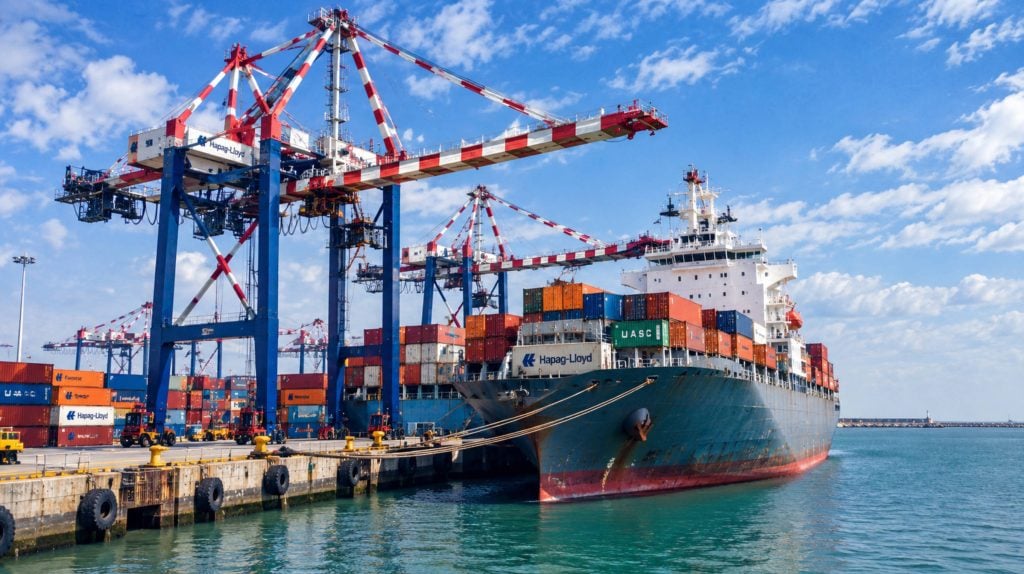
For the better part of a decade, “China Plus One” has been the phrase every sourcing manager reaches for when explaining a factory move to Vietnam, a new warehouse in Johor, or a supplier switch to central Java. The logic is sound on paper: spread tariff exposure, hedge against geopolitical shocks, and tap into cheaper labor pools before wage inflation catches up. But logic on a spreadsheet and throughput on a wharf are two very different things. Ask any freight forwarder who has spent the last eighteen months booking space out of Haiphong, Laem Chabang, or Tanjung Priok, and you will hear a more complicated story — one where container yards run out of stacking space during peak season, where a factory in Bac Ninh loses a production day to a rolling blackout, and where a truck carrying export cargo sits for six hours on a two-lane provincial road because the expressway extension still is not finished. The exodus is real. The infrastructure to absorb it, in most cases, is not there yet.
The Exodus That Isn’t Quite an Exodus
It helps to be precise about what is actually happening, because the word “exodus” oversells the pace of change. China still anchors the region’s manufacturing ecosystem: its port automation, supplier density, and component ecosystem remain unmatched anywhere in Southeast Asia. What is unfolding instead is a layered relocation — final assembly, labor-intensive stitching, and selected sub-assembly work shifting to Vietnam, Thailand, Indonesia, Malaysia, Cambodia, and the Philippines, while high-value R&D, precision tooling, and core supplier networks stay put in Guangdong and Jiangsu. Industry analysts increasingly describe this as a “China+ASEAN” model rather than a clean handoff.
The scale is still meaningful for anyone booking freight. Vietnam alone now produces roughly half of Samsung’s global smartphone output and close to a third of the world’s hard disk drives, while Malaysia holds a double-digit share of global semiconductor packaging and testing capacity. Electronics has become the single largest category of relocated manufacturing, and automotive assembly is following a similar path into Thailand and Indonesia. None of that changes the underlying constraint this article is built around: cargo volumes are arriving in these markets faster than roads, ports, and power grids can expand to carry them.
Ports: The First Chokepoint Forwarders Actually Feel
Port congestion is where the infrastructure gap becomes visible fastest, because it shows up as a demurrage invoice rather than a policy footnote. In southern Vietnam, Cat Lai terminal alone handles more than seventy percent of the country’s container throughput, yet it sits inside Ho Chi Minh City’s dense urban road grid, sharing lanes with commuter traffic during the exact hours export trucks need to move. The result is a documented cost penalty: logistics analysts tracking the corridor put southern port-to-factory trucking costs fifteen to twenty percent higher than the northern corridor, where Lach Huyen’s deep-water berths connect directly to the Hanoi–Haiphong Expressway without passing through a city center at all.
Demurrage penalties tell the same story from a different angle. Northern terminals in Vietnam were charging roughly eighty to one hundred twenty US dollars per container per day for cargo left past free time in the first quarter of 2026, while southern terminals ran ninety to one hundred fifty dollars per day. A single unresolved customs document — an unverified certificate of origin, for instance — can leave a container sitting in a yard for two weeks, quietly consuming a shipment’s entire margin before it even reaches the vessel.
Vietnam is not an isolated case. Global port congestion has crept back into the system across 2026 as early peak-season ordering, rerouted vessel strings, and regional infrastructure limits combine to slow terminal turnaround from Southeast Asia through Northern Europe. For shippers used to thinking of China’s automated mega-ports as the baseline, the adjustment in expected transit reliability out of newer Southeast Asian gateways is often the first real surprise of a relocation project.
Comparing Port Reality Across the Region
| Gateway | 2026 Congestion Pressure | Core Constraint |
| Ho Chi Minh City (Cat Lai), Vietnam | High – recurring peak-season backlog | Urban road network shared with city traffic |
| Haiphong (Lach Huyen), Vietnam | Mugatzea | Strong expressway link, but limited berth count for ultra-large vessels |
| Laem Chabang, Thailand | Ertainetik altuera | Yard capacity lagging EV and auto-parts export growth |
| Tanjung Priok, Indonesia | High | Hinterland road and rail connections still fragmented |
| Port Klang, Malaysia | Mugatzea | Strong overall capacity, but semiconductor-driven volume spikes |
| Sihanoukville, Kanbodia | Rising | Shallow-draft limits force transshipment via Singapore or Vietnam |
None of these figures are meant to discourage a move into the region — they are meant to set realistic expectations. A shipment routed through Cat Lai during a July peak needs a different buffer built into the customer delivery promise than the same shipment moving through Lach Huyen in March. Forwarders who plan lane-by-lane, rather than country-by-country, tend to avoid the worst of these penalties.
Power Grids Under Strain
Container yards get the headlines, but power reliability is arguably the more expensive constraint for the factories generating the cargo in the first place. Vietnam’s electricity demand is projected to rise from roughly 330 terawatt-hours in 2025 to over 1,100 terawatt-hours by 2050, and industrial hubs are already feeling the gap between that trajectory and grid buildout. A 2023 power crisis that hit Bac Ninh and Bac Giang — two of the country’s densest electronics manufacturing clusters — is estimated to have cost factories there roughly 1.4 billion US dollars in lost production, and hot-season shortage risk has not gone away since.
Vietnam’s government has responded with policy moves, including a national energy security resolution passed in August 2025 targeting grid modernization through 2030, alongside a broader push for at least ten percent annual economic growth built substantially on manufacturing expansion. That is the right direction, but grid infrastructure takes years to build, and the factories arriving today are being asked to plan production schedules around outage risk that will not disappear before 2027 or 2028 at the earliest.
Malaysia and Indonesia face a lighter-touch version of the same pressure. Malaysia’s grid is generally more stable than Vietnam’s, but semiconductor fabs and data-center buildout in Penang and Kulim are pulling on the same substations that serve export manufacturing, creating localized tightness rather than a national crisis. Indonesia’s challenge is less about total capacity and more about distribution — industrial zones outside Java’s core corridor often depend on diesel backup generation to cover gaps that a more built-out grid would not require.
Roads, Rail, and the Last-Mile Problem
Highway construction across the region is genuinely accelerating, and that progress deserves acknowledgment rather than dismissal. Vietnam’s Eastern North-South Expressway is gradually stitching together a logistics backbone that will eventually let manufacturers produce in the north and export through the south, or vice versa, without the fragmented routing that adds days to a delivery today. Inland container depots are also expanding, giving shippers a way to stage containers closer to factories and reduce direct exposure to port-gate congestion.
Rail tells a less optimistic story almost everywhere in the region. Vietnam’s rail network is extensive on a map but underutilized in practice, held back by aging track and weak integration with ports and industrial parks. Inland waterways, which could offer a genuinely low-cost alternative for bulk and semi-bulk shipments, remain constrained by shallow channels and outdated loading facilities in most provinces. The practical consequence is that road freight absorbs a disproportionate share of first- and last-mile movement, which keeps trucking costs high and schedule variability wide.
Cold chain infrastructure deserves a specific mention because it is easy to overlook until a shipment fails. Ho Chi Minh City and Hanoi are both growing faster than their cold storage capacity, which is a serious constraint for any shipper moving temperature-sensitive electronics components, pharmaceuticals, or food products through those corridors. Industrial parks across the wider region still need meaningful upgrades to water treatment, waste handling, and power reliability before they can comfortably host the higher-value manufacturing that companies increasingly want to relocate.
Country Snapshot: Where the Infrastructure Gaps Sit Today
| Market | Fabrikazio indarra | Primary Infrastructure Gap |
| Vietnamgo | Electronics, footwear, furniture | Grid reliability and southern port-to-factory trucking costs |
| Thailandia | Automotive, EV assembly | Terminal yard capacity vs. auto-parts export growth |
| Indonesia | Electronics assembly, textiles | Fragmented hinterland road and rail connections |
| Malaysia | Erdieroaleak, elektronika | Localized grid tightness around fab and data-center clusters |
| Kanbodiako | Ehunak, oinetakoak | Shallow-draft ports forcing transshipment |
| Filipinetan | Electronics, business process exports | Inter-island logistics and limited deep-water gateways |
Special Economic Zones: Faster Incentives, Slower Utilities
Governments across the region have leaned hard on special economic zones and tax holidays to pull in the factories that are leaving China, and on the incentive side this strategy is working. Corporate tax breaks, streamlined licensing, and duty exemptions on imported machinery have made it genuinely faster to set up a legal entity and start production in Vietnam, Thailand, or Indonesia than it was five years ago. The mismatch shows up one layer down, at the level of the physical park itself. Many of these zones were approved and marketed before the water treatment plant, the substation upgrade, or the internal road network was actually built, which leaves early tenants operating in a park that looks finished on the developer’s brochure but is still running on temporary utility connections.
This is not a uniquely Southeast Asian problem — China went through the same sequencing issue in its own special economic zone era in the 1980s and 1990s — but it does mean that a factory’s on-paper approval date and its actual full-capacity operating date can be a year or more apart. For a shipper building a production ramp-up schedule, that gap needs to be priced into the plan rather than discovered mid-project.
The Labor and Skills Layer Behind the Physical Infrastructure
Physical infrastructure gets most of the attention because it is visible and photographable, but a parallel constraint sits in workforce depth. Southeast Asia’s manufacturing base has grown fast enough that skilled technicians, licensed customs brokers, and experienced warehouse managers are in shorter supply than the factory floor space built to employ them. Wage inflation in electronics-heavy clusters like Bac Ninh and Batam has already outpaced the regional average, and brain drain toward higher-paying roles in Singapore or overseas continues to thin out the most experienced layer of the workforce in several markets.
The practical effect for logistics planning is subtle but real: a customs clearance that would take a fixed, predictable number of hours in Shenzhen can take noticeably longer in a newer inland customs post simply because the staff processing it have less institutional experience with high-volume electronics or automotive HS codes. This is not a criticism of the workforce — it is a natural consequence of capacity scaling faster than training pipelines — but it is one more reason lead-time buffers for new Southeast Asian lanes should be more generous than the buffers a shipper is used to building for mature China routes.
Lead-Time Reality: Southeast Asia Lanes vs. Established China Routes
| Ibilbide-segmentua | Typical China Baseline | Typical Southeast Asia Adjustment |
| Factory to port trucking | Same-day, high predictability | Add 0.5–2 days buffer in congested urban corridors |
| Aduana | Highly automated, hours | Add 1–3 days in newer inland posts |
| Port dwell time before loading | 1–2 days at major automated terminals | 2–5 days at peak season in secondary gateways |
| Power-related production risk | Low, grid highly stable | Moderate in hot-season peak demand periods |
None of these adjustments are dramatic in isolation, but they compound. A shipment that loses half a day at the factory gate, three days in customs, and another three days of port dwell has quietly added a week to its schedule before the vessel has even sailed — and a week is often the difference between meeting a retail delivery window and missing it.
What This Means for Freight Forwarders and Shippers
For a shipper planning a relocation, the practical takeaway is not to abandon Southeast Asia — the labor cost advantage, trade agreement access under RCEP, and tariff diversification benefits are all still real. The takeaway is that lane-level planning has to replace country-level planning. A factory in Bac Ninh routing cargo through Haiphong faces a genuinely different risk profile than the same factory routing through Cat Lai, and building that distinction into contracts, lead-time promises, and safety stock levels is now a core part of sourcing strategy rather than a logistics afterthought.
This is also where the difference between a booking agent and an operating freight forwarder becomes obvious. A forwarder with real visibility into terminal-level congestion, current demurrage windows, and alternative inland routing can absorb a disruption before it reaches the customer. One without that visibility simply passes the delay downstream and calls it force majeure.
Insurance and contract terms deserve a second look as well. Force majeure clauses written for mature China lanes often assume a level of port and grid reliability that simply does not hold across every Southeast Asian gateway yet, which can leave a shipper under-protected when a documented congestion event or power curtailment disrupts a delivery window. Reviewing these clauses lane by lane, alongside a forwarder who can supply real congestion and outage data, is a small step that prevents a much larger dispute later.
Reading the Next Two to Three Years
The trajectory here is not static, and forwarders who assume today’s constraints are permanent will misprice tomorrow’s lanes. Vietnam’s Eastern North-South Expressway is scheduled to reach substantial completion within the current planning window, which should meaningfully narrow the cost gap between the northern and southern corridors once through-traffic no longer needs to route around unfinished segments. Grid modernization tied to Vietnam’s 2025 energy security resolution is a multi-year program, but early transmission upgrades in the most congested industrial provinces are expected to reduce the frequency of hot-season curtailment before the full plan is complete.
Indonesia and the Philippines are earlier in this cycle than Vietnam, which means shippers moving into those markets today should expect the widest gap between announced infrastructure investment and completed, usable capacity. That is not a reason to wait — first movers into a market typically get better warehouse locations, better labor access, and stronger relationships with local customs brokers — but it is a reason to build contingency into the first eighteen to twenty-four months of any new production line rather than assuming steady-state performance from day one.
How Topway Shipping Helps Bridge the Gap
Since 2010, Topway Shipping, headquartered in Shenzhen, China, has built its business around exactly this kind of operational complexity. Our founding team brings more than fifteen years of experience in international logistics and customs clearance, with particular depth in China–U.S. transportation, and that experience now extends across the wider China-plus-Southeast Asia network that shippers are navigating today.
Because our services span the full logistics chain — first-leg transportation, overseas gordailu, customs clearance, and last-mile delivery — clients moving production between China and emerging Southeast Asian hubs do not need to stitch together separate vendors for each leg of the journey. We also offer flexible full-container-load and less-than-container-load ocean freight from China to major ports worldwide, which gives smaller and mid-size shippers a way to test new sourcing lanes without committing to full-container volumes before demand is proven.
In practice, that means a client relocating a production line can lean on Topway Shipping to plan around exactly the constraints described above: choosing routing that avoids the worst port-gate congestion, timing shipments to reduce demurrage exposure, and coordinating customs documentation before a container ever reaches the yard. Infrastructure gaps are not going to close overnight, but a forwarding partner that understands where they sit can keep a supply chain moving despite them.
Ondorioa
Southeast Asia’s manufacturing rise is not a mirage, and the infrastructure investment underway across the region — new expressways, expanded ports, grid modernization programs — is genuine and, in several markets, moving faster than at any point in the last decade. But investment and completion are not the same thing, and the gap between them is exactly where freight forwarders, shippers, and factory operators are living right now. Ports that were designed for a smaller economy are absorbing today’s export volumes; grids built for yesterday’s industrial base are powering tomorrow’s electronics clusters; and roads still under construction are carrying cargo that cannot wait for the ribbon-cutting. None of this means the relocation slows down. It means the companies that plan around these specific, well-documented constraints — rather than treating Southeast Asia as a single, interchangeable alternative to China — are the ones that will move cargo reliably while the region’s infrastructure catches up.
Maiz egiten diren galderak
Q: Is Southeast Asia’s infrastructure actually behind schedule, or is this a temporary growing pain?
A: It is largely a pace problem rather than a permanent gap. Ports, expressways, and grid capacity are expanding across Vietnam, Thailand, Indonesia, and Malaysia, but manufacturing relocation is outrunning construction timelines in several corridors, particularly around southern Vietnam and Java’s industrial belt.
Q: Which infrastructure issue causes the most shipment delays right now?
A: Port and yard congestion tends to cause the most immediate, cost-visible delays, especially at urban terminals like Cat Lai in Ho Chi Minh City. Power reliability is a close second because it disrupts production schedules before goods ever reach the port.
Q: Should shippers avoid the southern Vietnam corridor because of congestion?
A: Not necessarily. The southern corridor still offers strong supplier density and export volume; the key is building extra transit buffer and choosing routing and terminal windows carefully rather than avoiding the corridor altogether.
Q: How can a freight forwarder reduce exposure to these infrastructure constraints?
A: By planning at the lane level rather than the country level, maintaining flexible routing options across multiple ports, and managing customs documentation proactively to avoid demurrage triggered by administrative delays rather than actual congestion.
Q: Does Topway Shipping support shipments between China and Southeast Asian manufacturing hubs?
A: Yes. Topway Shipping offers first-leg transportation, overseas warehousing, customs clearance, and last-mile delivery, along with flexible FCL and LCL ocean freight from China to major ports worldwide, supporting shippers as they diversify production across the region.