
Tashar jiragen ruwa ta Algeciras: Ƙofar Sipaniya don jigilar kaya ta China
Gabatarwa
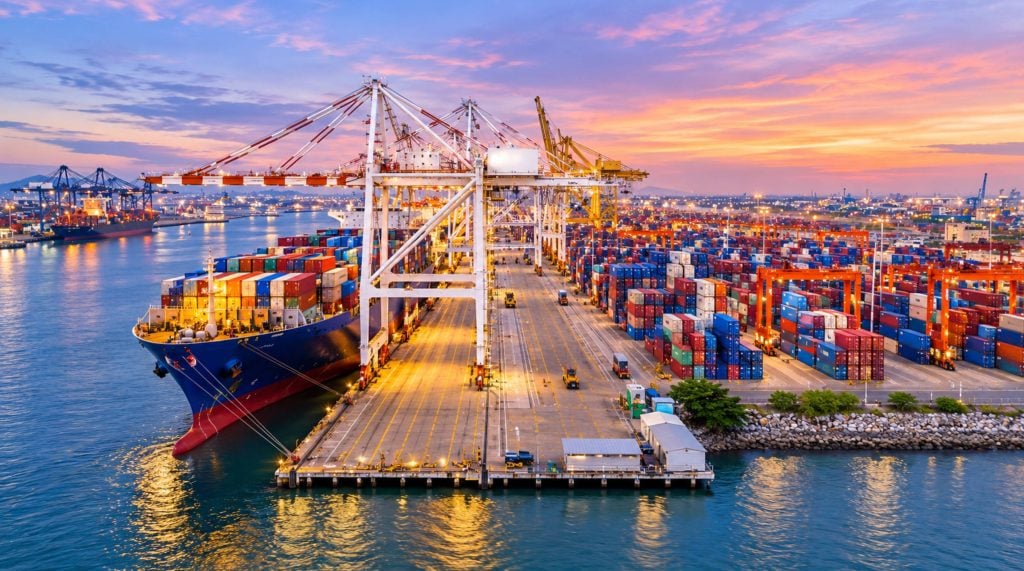
Ask a freight forwarder where a container from Shenzhen, Ningbo or Qingdao enters Southern Europe and, for a growing share of shipments, the answer is a wide bay at the foot of the Rock of Gibraltar. The Port of Algeciras sits on the Strait of Gibraltar, the only sea gateway between the Atlantic and the Mediterranean, and almost every Asia–Europe, Asia–West Africa and Asia–South America service that wants to be efficient passes within sight of its cranes. That geography has made Algeciras one of the most important container hubs in the western Mediterranean and the natural first port of call for China-origin cargo bound for Spain and Portugal.
The port has also become more relevant to importers in 2026 for reasons that go beyond geography. Container volumes in the first half of the year grew by roughly 3.5 percent to about 2.38 million TEU even though total tonnage slipped slightly, and carriers have been moving more than half of their Far East–Europe capacity back onto the Suez Canal route. At the same time, the European Union introduced a flat customs duty on low-value e-commerce parcels on 1 July 2026, which changes the economics for sellers who once relied on duty-free small parcels. For anyone moving goods from China to the Iberian Peninsula, these shifts all feed into one practical question: how should cargo be routed, cleared and delivered through Algeciras?
This guide is written for importers, cross-border e-commerce sellers and logistics managers who want working answers rather than a port brochure. It explains how the port operates, what the latest traffic and routing data say, how transit times and costs behave on the China–Algeciras lane, what Spanish clearance requires, and how to choose between FCL and LCL. It closes with the risks to watch through 2027 and a section on how Topway Shipping can support shipments on this trade.
Why Algeciras Matters for China-Origin Cargo
A hub built on the world’s busiest chokepoint
The Strait of Gibraltar is only about 14 kilometres wide at its narrowest point, and tens of thousands of ships pass through it every year. Algeciras exploits that position better than any other port in the region. Mainline carriers use it as a pivot where cargo from Asia is discharged and reloaded onto feeder vessels or onto other ocean services heading for Spain, Portugal, North and West Africa, the Canary Islands and the Americas. The port marked 50 years of containerised cargo in 2026, a milestone that coincided with Maersk’s 40th year of operations there and with a decade of annual throughput above 100 million tonnes.
For a China shipper the practical benefit is a very short deviation. A vessel sailing between Asia and Northern Europe via Suez enters the Atlantic through the Strait, so a call at Algeciras adds little sailing time, and the port’s deep-water berths and large terminals can handle the biggest container ships afloat. For cargo destined for southern Spain, Portugal or the western Mediterranean, that means fewer handling steps than discharging in a North European port and then moving the box back south by truck or rail.
What the latest numbers say
The most recent published statistics show a port whose container business is healthy even while its bulk cargoes soften. Container throughput for 2025 reached 4.74 million TEU, up 0.5 percent, as stronger import and export volumes offset a small decline in transhipment, while total cargo slipped 3.2 percent. In the first half of 2026 the pattern continued: containers grew while liquid and dry bulk fell. The table below pulls the key figures together, including national and regional comparisons that help put Algeciras in context.
Key traffic indicators for Algeciras and neighbouring benchmarks
| nuna alama | Period | Figure | Change |
| Algeciras container throughput | Cikakken shekara 2025 | 4.74 miliyan TEU | + 0.5% |
| Algeciras total cargo | Cikakken shekara 2025 | Above 100 million tonnes | % 3.2% |
| Algeciras container throughput | Rabin farko na 2026 | Kimanin TEU miliyan 2.38 | + 3.46% |
| Algeciras total cargo | Rabin farko na 2026 | Tan miliyan 50.04 | % 1.62% |
| Algeciras vessel calls | Rabin farko na 2026 | Kiran 13,903 | % 3.25% |
| All Spanish state ports, containers | Cikakken shekara 2025 | Almost 19 million TEU | Record |
| All Spanish state ports, containers | Janairu – Afrilu 2026 | 6.15 miliyan TEU | + 4.2% |
| Tangier Med (Morocco), containers | Cikakken shekara 2025 | 11.1 miliyan TEU | + 8.4% |
Two readings of this data matter for shippers. Vessel calls fell by about 3 percent in the first half of 2026 while container volumes rose, which suggests that ships calling at Algeciras are larger or fuller, and that the port is handling more boxes per call. That favours importers because bigger vessels tend to sit on the better-connected mainline loops with more reliable schedules. The second reading is competitive: Tangier Med, only a short sail across the Strait, handled 11.1 million TEU in 2025, more than twice the volume of Algeciras. The two ports are both rivals and complements, and the choice between them depends on where your goods are going and how your cargo is cleared.
There is also a structural reason for the port’s resilience. Transhipment traffic and import-export traffic reinforce each other, because the volume of boxes moving between mainline and feeder vessels justifies more frequent calls, and those frequent calls then give local importers and exporters more departures and arrivals to choose from. For Spanish and Portuguese cargo owners, that translates into more weekly options than a purely domestic port of the same size could support.
Routes and Transit Times from China to Algeciras
Most China–Algeciras cargo moves in one of three ways. It may travel on a direct Asia–Mediterranean loop that calls at Algeciras as an early European port, on an Asia–North Europe service that stops at Algeciras on its way, or on a transhipment itinerary in which the container is first carried to a hub in Asia or the Mediterranean and then forwarded on a second vessel. Each pattern has its own transit profile and its own failure modes, so the useful question is not simply which route is cheapest this week but which service has the right mix of speed, frequency and reliability for your cargo.
Suez versus the Cape of Good Hope
For almost two years after late 2023, most Asia–Europe services avoided the Red Sea and sailed around southern Africa to escape attacks on shipping, adding roughly ten to fourteen days to a typical voyage. In 2026 that picture has been shifting. Alphaliner’s survey of the ten largest carriers between 15 September and 15 October 2026 found Red Sea transits on 24 of 46 direct Far East–Europe services, equal to about 63 percent of deployed capacity. Some of those loops, however, pass through Suez only on the westbound leg and return to Asia around the Cape, so the headline figure does not mean every sailing is using the canal in both directions.
For an importer in Spain the westbound leg is the one that matters, and that is where the gains are most visible. A service that reaches Algeciras via Suez delivers cargo noticeably earlier than the same service routed around Africa, and it cuts the number of vessels needed to maintain a weekly schedule. The caveat is that the security situation has reversed before. Carriers announced returns earlier in 2026 and then rerouted some services again when tensions rose, so any plan that relies on the shorter route should include a fallback transit time.
Rates are the other half of the story. Xeneta reported that early 2026 long-term contract rates from the Far East to the Mediterranean had fallen to their lowest level since before the Red Sea crisis, and analysts have warned that a full return to Suez would release a large block of surplus capacity into an already oversupplied market. There is a downside for shippers as well. If Suez and Cape-routed vessels arrive at European ports at the same time, congestion and schedule disruption can erase some of the savings. Booking earlier, avoiding the tightest cut-offs and asking your forwarder for service-level reliability data are sensible protections.
Indicative China–Algeciras ocean transit times (main Chinese port to Algeciras, port to port)
| Zaɓin hanya | Hanyar wucewa mai nuna alama | Babban fa'ida | Babban haɗari |
| Kai tsaye sabis ta hanyar Suez Canal | 24-30 kwanaki | Shortest and most predictable when the canal is open | Exposure to Red Sea security events and sudden rerouting |
| Direct service via Cape of Good Hope | 36-46 kwanaki | Stable, avoids the Red Sea security risk | Longer, higher fuel cost and diversion surcharges |
| Transhipment through an Asian or Mediterranean hub | 28-40 kwanaki | More sailing options and wider port coverage | Extra handling and connection risk at the hub |
These transit ranges are planning estimates drawn from typical scheduling patterns for ports such as Shanghai, Ningbo, Yantian and Nansha, and they should not be treated as guarantees. Actual voyage times change with the specific service, weather, port congestion and any blank sailings. Importers should also add several days after discharge for customs clearance, terminal release and trucking to the final consignee.
Frequency is worth as much as speed. A weekly service that is occasionally late can be easier to manage than a fortnightly one that is nominally faster, because a missed vessel on a fortnightly loop costs two weeks. When comparing quotes, ask how many departures per week serve your origin port and what share of recent sailings arrived within two days of schedule.
Direct call or transhipment
A direct call into Algeciras is almost always preferable when the cargo is time-sensitive, fragile or high in value, because every additional lift increases the risk of damage, delay or a missed connection. Transhipment is not inferior by definition, however. When the origin port is a smaller Chinese gateway with limited direct services, a well-run connection through a hub can offer better frequency and an earlier departure than waiting for the next direct sailing, and carriers often price those itineraries more competitively. The key is to understand the connection window and the carrier’s record of making it.
Algeciras itself is a major transhipment point, which has an important consequence for Spanish importers. Boxes bound for Algeciras share terminal capacity with a large volume of boxes that are only passing through, and the terminals prioritise vessel productivity. Import containers usually move smoothly, but during storms or schedule bunching the yard can become busy, so it pays to arrange customs clearance and truck pickup before the vessel arrives rather than after.
Terminals, Carriers and Inland Connections
Who handles the boxes
Container handling in Algeciras is concentrated in two large terminals, APM Terminals Algeciras and TTI Algeciras, each with its own gates, cut-offs and release procedures. Which one your vessel uses depends on the carrier alliance, so it is worth confirming the terminal at booking rather than discovering it when the truck driver calls. Maersk’s network, including its Gemini Cooperation with Hapag-Lloyd, is widely reported to rely on Mediterranean hubs such as Algeciras to feed regional ports, which helps explain why the port keeps attracting high-frequency mainline calls.
Practical differences between terminals are small but real. Gate opening hours, the length of free storage time and the speed with which a container is released after customs clearance can vary, and they change with seasonal demand. A forwarder with regular volumes through the port will usually know these details and can avoid the most common source of unexpected cost, which is storage charges accrued while paperwork catches up with the vessel.
Getting containers inland
Most import containers leave Algeciras by truck, and the motorway network toward Málaga, Seville and Madrid is dense and well used. Andalusian consignees can often receive delivery within a day of terminal release, while Madrid is a long but routine haul of roughly 650 kilometres. The table below gives approximate road distances to the main destinations, which are useful for judging whether Algeciras or a different Spanish port is the better entry point.
Approximate road distance from Algeciras to major destinations
| manufa | Approx. distance | Daidaito na yau da kullun |
| Malaga | 130 km | Same-day or next-day delivery for Costa del Sol consignees |
| Seville | 210 km | Strong fit for Andalusian distribution and retail |
| Lisbon | 600 km | Workable for Portuguese cargo, compare with Lisbon or Sines |
| Madrid | 650 km | Common for national distribution, rail shuttles available |
| Valencia | 700 km | Usually better served through Valencia port directly |
| Barcelona | 1,100 km | Generally better served through Barcelona port directly |
Rail links connect the port area with Madrid and other inland centres, and some forwarders offer rail shuttles for larger flows. Capacity, frequency and cost vary, so rail suits regular volumes better than one-off shipments. For most small and mid-sized importers, trucking remains the simplest and most flexible option, and the real decision is whether the total landed cost to the final address is lower through Algeciras or through another port.
Algeciras Compared with Valencia, Barcelona and Tangier Med
Algeciras is not the right door for every shipment into Spain. The best entry port is the one that minimises total landed cost and transit time to your actual delivery address, not the one with the lowest ocean rate on the day you request a quote. A pallet of furniture for a store in Seville and a pallet of the same furniture for a distribution centre in Zaragoza may share an origin and a commodity, yet the sensible port for each is different.
Port comparison for China–Spain import cargo
| Port | karfi | Mafi dacewa da | Maki da za a duba |
| Algeciras | Mainline calls, Strait location, strong transhipment network | Andalusia, Portugal, southern and central Spain, onward feeders | Long haul to north-east Spain, yard activity during transhipment peaks |
| Valencia | Large Mediterranean import gateway close to Madrid corridor | Valencia region, Madrid, central and eastern Spain | Congestion at peak periods, vessel schedule changes |
| Barcelona | Proximity to Catalonia, Aragon and southern France | North-east Spain and cross-border cargo into France | Volume volatility, longer road leg to Andalusia |
| Tangier Med | Very large African-side hub, 11.1 million TEU in 2025 | Moroccan cargo and transhipment flows | Not an EU port, so Spanish-bound cargo needs onward feeder and EU clearance |
In practice, many forwarders quote more than one discharge port for the same shipment and compare the combined ocean, port, haulage and time cost. If the ocean freight to Algeciras is cheaper but your consignee is in Barcelona, the extra trucking or coastal feeder leg may erase the saving. If the ocean freight to Valencia is cheaper but your customer is in Seville, the opposite logic applies.
Spanish Import Clearance: What You Need to Know
Roles, numbers and the declaration
Spain applies the EU Customs Code, so the legal framework is the same as for any other EU member state, but the day-to-day process runs through the Spanish tax and customs agency. The importer of record needs an EORI number, and in practice most importers appoint a customs agent who files the import declaration electronically and holds a power of attorney. A non-EU seller that wants to be the importer normally needs a Spanish or EU-based fiscal representative, which is one reason many Chinese exporters sell on delivered terms through a local importing partner.
The declaration depends on correct classification. Each product needs a commodity code under the EU tariff, which determines the customs duty rate, any anti-dumping measures and any import restrictions. Duty is calculated on the customs value, usually the CIF value, which includes freight and insurance to the EU border. Import VAT, at Spain’s standard rate of 21 percent for most goods, is then charged on the customs value plus duty and certain related costs. Eligible VAT-registered businesses can often use a deferred accounting mechanism so that VAT is declared and recovered in the same return rather than paid in cash at the port, which is a significant cash-flow advantage, though your customs agent should confirm eligibility before the first shipment.
Core documents and the mistakes that cause delays
Standard import documents for sufurin teku into Spain
| Takardun | Nufa | Matsaloli gama gari |
| Daftarin kasuwanci | Establishes value, terms and goods description | Vague descriptions, missing commodity codes, undervaluation |
| Jerin sakawa | Lists pieces, weights and volumes | Totals that do not match the invoice or bill of lading |
| Lissafin kaya ko takardar hanya ta teku | Kwangilar sufuri da shaidar jigilar kaya | Wrong consignee, late telex release, mismatched container numbers |
| Customs power of attorney and EORI | Authorises the agent and identifies the importer | Missing or expired authorisations |
| Takaddun Asali | Needed where origin evidence is required | Inconsistent origin declarations across documents |
| Product compliance file | CE marking, declarations of conformity, test reports | No EU responsible person, missing labelling or markings |
The most frequent cause of delay is not a complex legal issue but a mismatch between documents. When the invoice says 480 cartons, the packing list says 478 and the bill of lading says 480, the customs system or an officer will flag it, and the container can sit in the terminal accruing storage. Agree the document set with your supplier before the cargo leaves China and have your forwarder check it against the draft bill of lading.
Product compliance beyond customs
Clearing customs is not the same as being allowed to sell. Many consumer and industrial goods must carry CE marking, an EU declaration of conformity and, under the General Product Safety Regulation that has applied since December 2024, an identified EU-based responsible person. Electrical products, batteries and packaging are also subject to producer responsibility schemes in Spain, and textiles, toys, cosmetics and food contact materials each come with their own labelling and testing requirements. Goods of animal or plant origin, or certain food products, can be directed to border inspection, which adds time.
Compliance is easiest to fix before shipping. Ask your supplier for test reports and marking evidence in advance, and have your agent confirm whether the product category is likely to attract inspection at the port. A shipment that arrives with the right documents moves; one that arrives without them can be held, returned or destroyed.
The €3 parcel duty and what it means for sea freight
On 1 July 2026 the European Union ended duty-free treatment for low-value e-commerce imports by applying a temporary flat customs duty of €3 per item to parcels valued at up to €150 sent from outside the bloc. The duty applies per customs item, which in practice means per tariff line within a parcel, and it is scheduled to run until 1 July 2028, when the EU plans to move to its permanent customs data system and standard tariff treatment for low-value goods. The measure targets the surge in direct-to-consumer parcels, which reached about 4.6 billion in 2024 with roughly 91 percent coming from China. VAT rules are separate and continue to apply regardless of value, and a separate handling fee on e-commerce parcels remains under discussion.
For sellers who ship by sea, the rule changes the comparison between direct parcels and stocked inventory. A bulk container delivered to a Spanish or EU warehouse is a commercial import cleared under the normal tariff, where many product categories carry low duty rates, whereas a €3 flat charge on a parcel containing a €6 accessory is equivalent to a 50 percent levy. The per-unit economics of FCL or LCL replenishment into a local warehouse followed by domestic last-mile delivery therefore improve relative to cross-border parcel shipping. Sellers should still model duty, VAT, storage and local delivery costs before changing their fulfilment model.
Because parcels sold to consumers and goods imported in bulk fall under different treatment, classification and data quality matter more than ever. Accurate product descriptions and commodity codes at item level will help avoid delays regardless of the route.
A last practical point on documents concerns the Incoterm. Shipping on FOB terms gives the buyer control of the ocean leg and the freedom to choose the carrier and routing, while CIF and DAP terms leave those decisions with the seller and can hide higher costs inside a single price. Buyers who care about reliability on the Algeciras lane usually prefer FOB or FCA, and they use a forwarder to manage the rest.
Cost Structure of a China–Algeciras Shipment
Quotes for sea freight are often compared on the ocean rate alone, but that number is only one part of the landed cost. The charges below appear in most FCL and LCL shipments into Algeciras, and the party that pays each one depends on the Incoterm agreed with the supplier.
Typical cost components on a China–Algeciras import
| cajin | Abin da ya rufe | Comment |
| Tushen asali | Trucking, export customs clearance, terminal handling and documentation at the Chinese port | Included in some quotes, separate in FOB terms |
| Jirgin teku | Sufurin tashar jiragen ruwa zuwa tashar jiragen ruwa | Varies with route, season and carrier capacity |
| Karin caji | Fuel, peak season, diversion and emissions-related charges | Can change between quote and sailing, so confirm validity |
| Kudin tashar tashar | Terminal handling and port fees at Algeciras | Paid by the consignee unless sold on delivered terms |
| Dillalan kwastam, duty and VAT | Declaration filing, tariff duty and import VAT | Duty rate depends on classification, VAT may be deferred |
| Jirgin cikin gida | Truck or rail from the terminal to the consignee | Depends on distance, container type and time window |
| Storage and equipment charges | Terminal storage, container detention and demurrage | Avoidable with prompt clearance and pickup |
Environmental charges deserve a separate mention. Shipping has been brought into the EU Emissions Trading System in phases, with 40 percent of 2024 emissions covered, 70 percent of 2025 emissions and 100 percent from 2026, and carriers pass the cost to customers through emissions surcharges on services calling at EU ports. The charge applies to voyages into and out of the EU and also affects how carriers weigh hub choices between EU ports such as Algeciras and neighbouring non-EU hubs, a topic regularly debated in the industry.
Storage and equipment charges are the item most often underestimated. Free time at the terminal and for the container is limited, and delays caused by missing documents, unpaid duties or unavailable trucks translate quickly into demurrage and detention. The cheapest way to control them is to line up customs clearance and delivery appointments while the vessel is still at sea.
Choosing Between FCL and LCL for Algeciras
The decision between full-container and less-than-container shipping looks like a simple volume calculation, but it also affects transit time, handling risk and customs complexity. As a rough rule of thumb, once a shipment approaches 12 to 15 cubic metres, a 20-foot FCL booking begins to compete with LCL on cost, and above that threshold FCL usually becomes cheaper per cubic metre and safer for the cargo.
FCL versus LCL on the China–Algeciras lane
| Factor | FCL | LCL |
| Mafi kyawun kewayon girma | Roughly 12–15 CBM and above, or high-value cargo | Below roughly 12 CBM or when testing a new market |
| handling | Container loaded and sealed at origin, opened at destination | Cargo consolidated at a freight station and deconsolidated at the destination |
| Lokacin wucewa | Port-to-port sailing plus clearance | Several extra days for consolidation and deconsolidation |
| Damage and loss risk | Lower, fewer touchpoints | Higher because cargo is handled more often |
| kwastam | Single declaration for the container’s contents | Separate declaration per consignee, delays on one shipment can affect release |
| Kudin sarrafawa | Predictable per container | Charged per cubic metre or tonne, with minimums |
LCL is the practical entry point for smaller sellers and for importers testing a Spanish market, but its extra steps need to be planned. Cargo is consolidated at a container freight station in China, travels with other shippers’ goods, and is separated at a destination freight station that may be at Algeciras or at a connecting port. The time spent waiting for consolidation and deconsolidation can add several days, and a documentation error on one consignee’s cargo can slow the release of the whole container.
Many growing importers move from LCL to FCL as volumes increase and then use buyer’s consolidation, in which goods from several Chinese suppliers are gathered into one container before shipping. That approach preserves the cost advantage of a full container while still sourcing from multiple factories.
A Practical Playbook for Your First Algeciras Shipment
Kafin kayi booking
Start with the final delivery address and the Incoterm. If the consignee is in Andalusia or Portugal, Algeciras is the first port to quote, whereas deliveries to the north-east may point elsewhere. Confirm who is responsible for clearance and VAT, because a mistake here can leave goods in the terminal with no authorised party able to release them. Have the supplier prepare an invoice and packing list that match, with accurate descriptions and commodity codes, and gather any compliance documents the product requires.
Booking, cut-offs and tracking
Request quotes from your forwarder for at least two routing options, such as a direct service via Suez and an alternative via a hub, and compare transit time as well as price. Check the vessel’s cut-off dates for cargo, container release and documentation, since missing the documentation cut-off can roll the cargo onto the next sailing. Ask about the carrier’s record of blank sailings on the service, particularly during Lunar New Year and peak season.
While the vessel is at sea, use the waiting time. Submit the pre-arrival information required for customs, arrange the delivery appointment with the consignee and confirm the truck booking. If the bill of lading is original, plan for its transfer or choose a telex release or sea waybill to avoid a delay.
Arrival, release and last mile
When the vessel berths, your agent submits or finalises the declaration, duty and VAT are settled or deferred, and the carrier and terminal release the container. A container that is released on the day of discharge costs far less than one released a week later. Deliver the container to the consignee, return the empty equipment on time and keep proof of delivery with the customs file, since Spanish authorities can audit declarations for several years.
Cash flow deserves attention too. Duty and VAT are due on or soon after arrival, freight is often paid before release, and storage charges begin quickly if documents are incomplete. A first shipment should be budgeted with a contingency for these items, and repeat importers should ask their agent about deferment arrangements that smooth the timing.
Risks and Outlook for 2026 and 2027
The most visible risk is still the Red Sea. A larger return to Suez would cut transit times but could bring congestion, and a new security incident could send services back around Africa within days. Importers should avoid assuming that today’s routing will hold for the next season and should plan inventory for the longer transit time.
Weather and operational disruption are a second consideration. Algeciras reported lower container traffic and fewer ship calls in January 2026 after bad weather, a reminder that winter storms can delay berthing and cranes. Allow additional buffer in the winter months, particularly for time-critical cargo.
Market conditions are a third factor. Container fleet growth has outpaced demand, which has pushed rates down, and carriers respond with blank sailings and capacity management. Lower rates are positive for importers, but weaker carriers may cancel sailings or consolidate services, so reliability is as important as price. The best contract arrangements include clear definitions of surcharges and clauses that remove them when conditions change.
Regulation rounds out the picture. The €3 parcel duty is a bridge to a permanent system in 2028, the EU’s carbon border adjustment mechanism entered its definitive phase in 2026 for certain carbon-intensive goods such as steel, aluminium, cement and fertilisers, and product-safety rules continue to tighten. Importers who build compliant, well-documented supply chains now will be better placed as these rules mature.
How Topway Shipping Supports China–Spain Cargo
Since 2010, Topway Shipping, headquartered in Shenzhen, China, has been a professional provider of cross-border e-commerce logistics solutions. The founding team has more than 15 years of experience in international logistics and customs clearance, with a strong focus on China–U.S. transportation, and that depth of operational experience carries over into the planning of ocean freight to Europe.
Topway’s services span the full logistics chain, including first-leg transportation, overseas warewa, customs clearance and last-mile delivery. The company also offers flexible FCL and LCL ocean freight from China to major ports worldwide, which means a shipper can use the same provider whether the cargo is a single full container for Algeciras or a smaller consolidated shipment that needs to reach a Spanish or Portuguese consignee.
For importers using Algeciras, the value of an integrated provider lies in coordination. First-leg collection in China, documentation checks before sailing, a routing decision that compares Algeciras with other Spanish ports, clearance planning ahead of arrival and onward delivery all affect whether a container reaches its destination on time and within budget. Sellers who are rethinking their fulfilment model after the EU’s July 2026 parcel duty can also discuss how bulk sea freight combined with overseas warehousing and local last-mile delivery compares with shipping individual parcels. To plan a shipment, share your commodity, volume, origin city and delivery address with the Topway Shipping team, and they can help you compare FCL and LCL options and routing.
Kammalawa
Algeciras earns its place as Spain’s gateway for China cargo through a combination of location, scale and network. It sits on the Strait of Gibraltar, handles a large and growing container volume, connects to major carrier networks, and offers short, direct access to southern Spain and Portugal. The data for 2026 show container traffic rising even as the port’s bulk cargoes fall, which confirms that its future lies in the container business.
Using it well requires attention to detail. Choose the entry port by landed cost to the final address, confirm the real routing behind any quote, check the documents and compliance requirements before cargo leaves China, and plan clearance before the vessel arrives. With the Red Sea situation unsettled, rates under pressure and new EU rules taking effect, the importers who do best are those who treat logistics as a planned process, and a forwarding partner with end-to-end capability, such as Topway Shipping, can make that process more predictable.
FAQs
Q: Why is Algeciras a good port for China–Spain shipments?
A: It sits on the Strait of Gibraltar, where most Asia–Europe services pass, so many carriers call there with little deviation. It also has large terminals and good road access to Andalusia, Madrid and Portugal.
Q: How long does shipping from China to Algeciras take?
A: As a planning range, direct services via Suez typically take about 24 to 30 days port to port, while routings around the Cape of Good Hope can take 36 to 46 days. Transhipment itineraries fall in between, and clearance and trucking add several more days.
Q: Does the EU €3 parcel duty apply to FCL or LCL cargo?
A: The flat duty targets low-value parcels of up to €150 sent to consumers. Commercial sea freight imported in bulk is cleared under the normal tariff, plus VAT. Always confirm treatment with your customs agent for your product.
Q: Should I choose FCL or LCL for Algeciras?
A: As a rule of thumb, FCL becomes economical from about 12 to 15 cubic metres. Below that, LCL is usually more practical, though it adds handling and several days for consolidation.
Q: What documents do I need to clear goods in Spain?
A: At minimum a commercial invoice, packing list, bill of lading or sea waybill, and an importer with an EORI number and a customs agent. Many products also need CE marking and a declaration of conformity.