
Ship from China to Slovakia: A Market Hidden Behind Germany’s Shadow
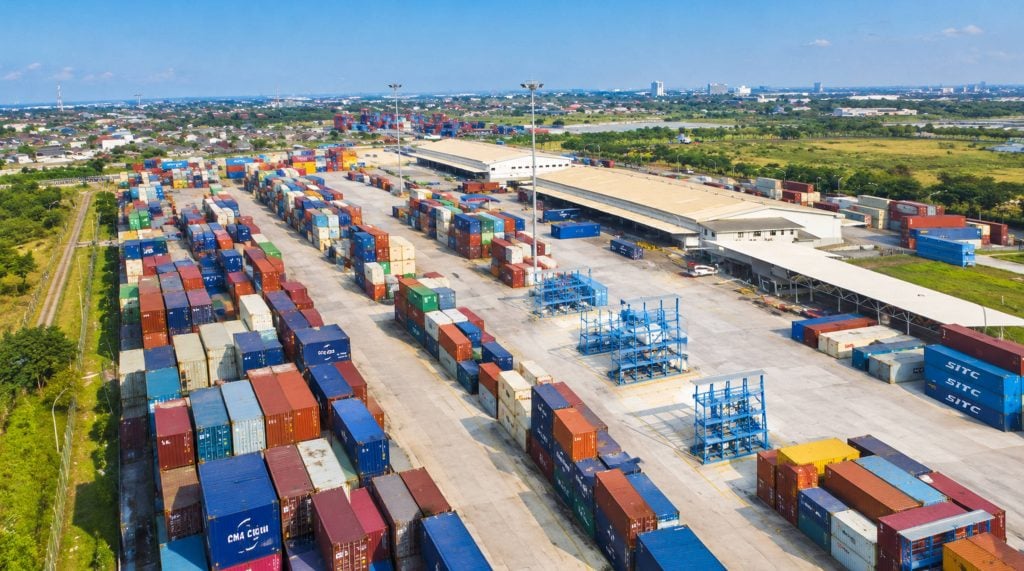
Ask a freight forwarder in Shenzhen or Ningbo how to move a container into Central Europe, and the conversation almost always drifts toward Germany, the Netherlands, or perhaps Poland. Slovakia rarely gets mentioned first. It is a country of just 5.4 million people, wedged between Austria, Czechia, Poland, Hungary, and Ukraine, and it does not have a single seaport of its own. On paper, it looks like a rounding error next to its larger neighbors.
That impression is misleading. Slovakia builds more passenger cars per capita than any other country on earth, and its factories are wired directly into Chinese supply chains for components, machinery, and electronics. Billions of dollars in goods move between the two countries every year, much of it quietly routed through German or Dutch ports and then trucked east as if Slovakia were simply an extension of the German market. This article looks at what actually happens once a container or parcel needs to reach Bratislava, Košice, or Žilina, and why treating Slovakia as a shipping destination in its own right, rather than an afterthought to Germany, tends to save both time and money.
Why Slovakia Deserves Its Own Shipping Strategy
Most forwarding quotes for Central Europe are built around a single template: ship to a major German port, clear customs there, then hand the cargo to a trucking network for onward delivery. That approach works reasonably well for Czechia or western Poland, but it starts to break down once the final destination sits in eastern Slovakia, where an extra day or two of road transport, an extra customs handover, and an extra layer of subcontracted trucking all get added to the timeline without anyone mentioning it upfront.
Slovakia is a full member of the European Union, the Eurozone, and the Schengen area, so once goods clear EU customs at the port of entry, they can, in theory, move freely to any Slovak city without further border checks. In practice, the country’s economy is unusually concentrated around automotive manufacturing. Volkswagen operates its largest single production site in Bratislava, Kia Motors has a major plant near Žilina, Stellantis (formerly PSA) builds vehicles in Trnava, and Jaguar Land Rover runs a plant in Nitra. Together these plants have made Slovakia the world leader in cars produced per capita for more than a decade.
That industrial base changes the profile of what actually needs to move between China and Slovakia. Alongside the consumer parcels typical of any European e-commerce market, there is a steady, high-value flow of electronic components, precision machinery, tooling, and automotive parts feeding assembly lines that run on just-in-time schedules. A shipment that is a day late to a Berlin warehouse is an inconvenience; a shipment that is a day late to an assembly line in Trnava can shut down production. Any shipping strategy for Slovakia needs to account for both realities at once.
There is also a currency of trust involved that is easy to underestimate. Slovak importers, particularly the smaller manufacturers and distributors who do not have the buying power of a Volkswagen or a Kia, often report that generalist forwarders treat their shipments as low priority precisely because the destination is unfamiliar. A dedicated Slovak strategy is not really about finding some secret shorter route; it is about working with people who have actually solved the last-mile puzzle into Bratislava or Košice before and are not learning on the job with someone else’s cargo.
Slovakia’s Trade Relationship with China, By the Numbers
Trade data tells the same story from a different angle. China has become one of Slovakia’s top three sources of imports, trailing only Germany and Czechia, with the total value of goods flowing from China into Slovakia running somewhere between 8.5 and nearly 10 billion US dollars depending on the year and the dataset used. The reverse flow, Slovak exports into China, is smaller but far from trivial, and its composition is unusual for a country of Slovakia’s size.
| Trade flow | Value (2024–2025) | Leading categories |
| China exports to Slovakia | approx. USD 8.5–9.9 billion | Electrical & electronic equipment, machinery, vehicles, footwear, apparel |
| Slovakia exports to China | approx. USD 2.7–2.8 billion | Vehicles and vehicle parts, machinery, electrical equipment |
| China’s rank as Slovak import source | 3rd largest, behind Germany and Czechia | Consumer electronics, industrial components |
The dominance of electrical and electronic equipment and machinery on the import side confirms that Slovak buyers are not only small online retailers restocking shelves. A large share of the value is industrial: control systems, motors, wiring harnesses, circuit boards, and factory equipment destined for manufacturing sites rather than living rooms. That has direct implications for how cargo should be booked and insured, since a single container of precision components can be worth far more than a container of the same volume filled with clothing or toys.
The export side is even more telling. Vehicles are, by a wide margin, the single largest category of goods Slovakia ships to China, worth well over two billion dollars in a typical year. In other words, cars assembled in Bratislava or Nitra using Chinese-made components are frequently shipped back to China as finished vehicles. This creates a genuine backhaul opportunity for forwarders who can arrange both legs of the journey, rather than treating China-to-Slovakia and Slovakia-to-China as two unrelated trade lanes handled by different partners.
The Geography Problem: Landlocked, But Not Isolated
Slovakia has no coastline, which is the first fact every importer learns and the reason the country is so often bundled into someone else’s shipping plan. What gets lost in that shorthand is that Slovakia sits almost exactly at the geographic center of the enlarged European Union, with direct road and rail connections to Austria, Czechia, Poland, and Hungary, and a functioning, if underused, river port network along the Danube in Bratislava and Komárno.
The habit of routing everything through Hamburg or Bremerhaven and then trucking it south persists partly because those ports have the deepest carrier networks and the most competitive ocean freight rates, and partly because most forwarders simply have not built dedicated Slovak trucking and customs relationships the way they have for Germany or the Benelux countries. That is not necessarily the wrong choice, but it is a default, not always the optimal one, and it is worth knowing that alternatives exist before accepting it automatically.
The Danube river ports at Bratislava and Komárno handle mostly bulk cargo such as grain, minerals, and construction materials rather than containerized freight from China, so they are not a realistic option for a typical import shipment today. They do, however, illustrate that Slovakia’s transport infrastructure is more developed than its landlocked status suggests, and rail and road corridors linking the country to every neighboring EU market are well established and heavily used by the automotive sector already.
Road infrastructure reinforces the same point. Slovakia sits along sections of the Trans-European Transport Network, with motorway and expressway links connecting Bratislava to Vienna in under an hour, to Prague and Brno within a few hours, and eastward toward Košice and the Ukrainian border along a corridor that is still being upgraded but is already heavily used by freight traffic. None of this makes Slovakia a port country, but it does mean that once cargo has legally entered the EU anywhere along its western or northern border, reaching even the more remote eastern Slovak cities is a matter of hours on a truck, not days.
Sea Freight Routes: Choosing the Right European Port
Ocean freight remains the backbone of China-Slovakia trade for anything that is not urgently needed, simply because it is the cheapest way to move a full or partial container load across such a long distance. The real decision is which European port to use as the entry point, since Slovakia’s inland location means every shipment needs a second leg by truck or rail no matter which port is chosen.
Hamburg and Bremerhaven: The Established Northern Gateway
Hamburg is the port most forwarders default to for Central European cargo, and for good reason: it has the widest choice of carriers, the most frequent sailings from Chinese ports, and rail links running deep into Central and Eastern Europe already built for German industry. Bremerhaven plays a similar role and is particularly strong for automotive and heavy machinery cargo, which suits Slovakia’s manufacturing profile well. The trade-off is distance. Both ports sit roughly 900 to 950 kilometers from Bratislava by road, and while that trucking leg is well served, it adds a day or more compared with a southern routing.
Koper: The Southern Shortcut Through the Adriatic
Koper, Slovenia’s only major seaport, is often overlooked by shippers unfamiliar with the region, yet it offers a genuinely shorter path for cargo bound for western and central Slovakia. Vessels calling at Koper avoid the extra sailing distance around Western Europe and through the North Sea, which can shave several days off the ocean leg compared with Hamburg or Rotterdam, and the port has invested heavily in rail connections toward Austria and onward into Slovakia. For importers prioritizing speed over the absolute lowest freight rate, Koper is worth a direct comparison rather than being dismissed by default.
| Port | Typical sea transit from South China | Approx. road distance to Bratislava | Best suited for |
| Hamburg, Germany | 32–38 days | about 900 km | High-frequency FCL/LCL, mature rail links east |
| Bremerhaven, Germany | 32–38 days | about 950 km | Automotive parts, heavy machinery |
| Koper, Slovenia | 26–30 days | about 700 km | Faster transit for western/central Slovakia |
| Rotterdam, Netherlands | 32–38 days | about 1,100 km | LCL consolidation, wide carrier choice |
Rotterdam and Antwerp remain useful for buyers who need maximum flexibility in carrier choice or who are consolidating less-than-container-load cargo with shipments bound for multiple European destinations, even though the inland leg to Slovakia is the longest of the options above. In practice, many experienced forwarders will quote more than one port option side by side, because the right answer depends on whether the cargo is headed for Bratislava in the west or Košice in the east, and on how much of a premium the shipper is willing to pay to shave a few days off transit.
Rail Freight: The China-Europe Express and the Dobrá Question
Rail freight between China and Europe has grown into a genuine third option alongside sea and air, typically landing somewhere in between on both price and speed, with transit times often quoted around three to four weeks depending on the exact route and border conditions. For Slovakia specifically, rail freight carries an interesting historical footnote that is worth understanding before assuming it is a straightforward option.
Slovakia is one of the few EU countries where the wide, 1,520 millimeter gauge track used across the former Soviet space physically meets the standard 1,435 millimeter gauge used across the rest of Europe. That meeting point is the Dobrá terminal near the Slovak-Ukrainian border, purpose-built to transfer containers between broad-gauge and standard-gauge wagons. In the mid-2010s this made Slovakia a genuine candidate to become a major transshipment hub for China-Europe rail traffic, and trial trains from cities like Xi’an and Dalian did arrive in Bratislava with real fanfare.
That momentum did not hold. Volumes through Dobrá dropped sharply even before 2022, falling from over a hundred trains in a single year to a handful, largely due to deteriorating conditions on the Ukrainian rail network. The war in Ukraine since 2022 has made the route effectively unusable for the foreseeable future. Today, most China-Europe rail cargo destined for Slovakia does not cross via Dobrá at all; it runs through Kazakhstan, Russia, and Belarus into Poland, transships at hubs such as Małaszewicze, and finishes its journey to Slovakia by truck. Anyone quoted a rail solution routed directly through Ukraine into Slovakia should ask very specific questions about the current operating status of that corridor before booking.
Air Freight to Slovakia: Flying Through Vienna’s Shadow
Air freight is the fastest and most expensive way to move goods from China to Slovakia, and it is where the country’s shadow relationship with its neighbors becomes most obvious. Bratislava’s own airport has limited cargo handling capacity, so the large majority of air freight destined for Slovak businesses actually lands at Vienna International Airport, roughly 60 kilometers from Bratislava, or occasionally at Budapest or Prague, and is trucked across the border from there. A shipment can legitimately be marketed as flying to Slovakia while never actually touching Slovak soil until the final truck leg.
This matters most for the categories where speed genuinely changes the outcome: consumer electronics that need to hit a retail launch date, pharmaceuticals and temperature-sensitive medical supplies, high-value luxury goods needing frequent replenishment, and, crucially for Slovakia’s economy, urgent automotive components. Just-in-time manufacturing means a missing part can idle an entire production line within hours, and the cost of that downtime routinely dwarfs the price difference between sea and air freight. Experienced forwarders serving Slovak automotive clients tend to keep an air freight contingency plan on standby even when the primary shipping mode is ocean freight, precisely because the penalty for guessing wrong is so lopsided.
Customs Clearance and the New EU Rules Arriving in 2026
Because Slovakia sits inside the EU customs union, importers do not file a separate Slovak customs declaration distinct from the rest of the bloc; the same EU-wide rules, tariff schedules, and VAT principles apply whether the goods clear formally at Hamburg, Koper, or a Slovak inland customs office. Any company importing regularly needs an EORI number, and someone in the chain, whether that is the buyer, the buyer’s customs broker, or the forwarder acting as declarant, has to take formal responsibility for the accuracy of the import declaration.
The rules governing that process are changing significantly in 2026, and the change is large enough that it affects almost every China-to-EU shipment, Slovakia included. For years, goods valued at 150 euros or less could enter the EU without customs duty, a threshold that fueled the explosive growth of direct-to-consumer parcels from Chinese e-commerce platforms. EU finance ministers agreed to remove that exemption, introducing a temporary flat duty of 3 euros per customs declaration line on low-value parcels starting 1 July 2026, with full standard duty rates expected to apply once a permanent system is finalized around 2028.
| Rule | Before 1 July 2026 | From 1 July 2026 |
| Duty on shipments under EUR 150 | Exempt from customs duty | Flat EUR 3 duty per HS code line (temporary, until mid-2028) |
| Import VAT | Applied regardless of value | No change, still applied |
| Product identifiers | Optional | Mandatory from 1 November 2026 (SKU, manufacturer ID, GTIN/EAN/UPC) |
| Liability for duty | Often the consumer, collected on delivery | The declarant, i.e. the platform or forwarder filing the entry |
The practical effect reaches beyond the 3 euro figure itself. From 1 November 2026, customs declarations for these parcels will require detailed product identifiers, including manufacturer product codes and standardized identifiers such as GTIN, EAN, or UPC codes, data that many small Chinese sellers and marketplaces have never been required to collect before. Responsibility for the customs debt on low-value shipments also shifts toward the declarant rather than the end consumer, which in practice pushes more compliance weight onto forwarders and customs brokers. Sellers shipping into Slovakia through e-commerce channels should treat 2026 as a year to tighten up product data and confirm exactly who in their supply chain is registered to act as declarant, well before the deadlines arrive.
Choosing a Freight Forwarder for the Slovak Market
Because Slovakia is rarely anyone’s headline market, the quality of service between forwarders varies more than it does for Germany or France. Some agencies genuinely have direct trucking and customs relationships reaching Bratislava, Košice, and Žilina; others simply relabel a generic Central Europe service and hope the difference goes unnoticed until a shipment sits at a German cross-dock for an extra week. Asking a forwarder for specific, named experience with Slovak delivery points, rather than accepting a vague reference to Central Europe, is a reasonable and worthwhile question to ask before signing a contract.
Topway Shipping is one option built around exactly that kind of end-to-end accountability. Headquartered in Shenzhen and operating since 2010, the company was founded by a team with more than fifteen years of experience in international logistics and customs clearance, built initially around a strong focus on China-U.S. transportation and since expanded across global lanes. Its service scope covers the full logistics chain rather than a single segment, including first-leg transportation out of Chinese factories, overseas warehousing for consolidation or buffer stock, customs clearance, and last-mile delivery, alongside flexible full-container-load and less-than-container-load ocean freight services to major ports worldwide.
For a market like Slovakia, that full-chain structure is particularly useful, because it means a single provider can compare Hamburg, Koper, and Rotterdam routings on the same terms, coordinate the onward trucking leg into Slovak territory, and manage the customs entry under one point of accountability rather than handing the shipment between three or four disconnected vendors along the way. Buyers evaluating any forwarder for this lane, Topway included, should still confirm concrete details before committing: how consolidation and warehousing options work for their specific cargo volume, what visibility they get into tracking once the container leaves the port of entry, how cargo insurance is structured, and who formally takes on the role of declarant for EU customs purposes.
FCL, LCL, and Warehousing Choices for Slovak-Bound Cargo
Full-container-load shipments make sense for the automotive and industrial buyers who dominate Slovak import volume, since a dedicated container avoids the extra handling and consolidation delays that come with sharing space with other shippers’ cargo. For a factory in Trnava or Nitra ordering components on a recurring schedule, booking FCL directly to a port with strong onward rail service, then running a fixed weekly or biweekly trucking slot into the plant, tends to produce the most predictable results over time.
Smaller Slovak importers, including distributors and online retailers, are usually better served by less-than-container-load shipping, consolidating their cargo with other shipments heading to the same general region. The trade-off is a slightly longer and less predictable timeline, since LCL cargo waits for a container to fill and passes through an extra deconsolidation step at a European warehouse before the final leg into Slovakia. Working with a forwarder that operates its own overseas warehousing, rather than subcontracting consolidation to a third party, generally shortens that waiting period and gives the shipper better visibility into exactly when their goods left the warehouse floor.
Overseas warehousing also opens up a strategy that many Slovak buyers overlook: shipping in bulk on favorable ocean freight terms, storing inventory at a European warehouse, and then releasing smaller batches to the final Slovak destination on demand. This decouples the slow, cheap international leg from the fast, more expensive last-mile delivery, and it can be particularly useful for businesses that need to smooth out seasonal demand without committing to a full container load timed to a specific sales event.
Practical Tips for First-Time Shippers to Slovakia
Build extra time into any quoted schedule rather than assuming Slovak delivery will match a German timeline exactly. Every route into Slovakia involves at least one additional handover, whether that is a port-to-rail transfer, a cross-border truck relay, or a gauge change at a rail terminal, and each of those steps introduces a modest but real chance of delay that a straight port-to-Berlin shipment simply does not carry.
Get product data in order well ahead of the November 2026 identifier requirement if any part of the shipment moves through low-value e-commerce channels, since scrambling to collect manufacturer codes and standardized identifiers after a shipment is already held at customs is a far more expensive fix than sorting it out in advance.
Finally, match the shipping mode to what is actually at stake in the cargo rather than defaulting to whichever mode was used last time. A container of finished goods replenishing retail stock can usually absorb the five to six weeks of a full ocean freight journey without issue, while a shipment of components feeding an active assembly line may justify paying for rail or even air freight to avoid a costly production stoppage. Manufacturers with recurring automotive or electronics volume into Slovakia often benefit from a blended strategy, running the bulk of cargo by sea while keeping a standing rail or air contingency plan ready for anything time-critical.
Conclusion
Slovakia will probably never top anyone’s list of headline shipping destinations the way Germany or the Netherlands does, and its lack of a coastline means every shipment from China will always involve at least one extra step compared with a straight port delivery. But the country’s outsized role in European automotive manufacturing, its genuine multibillion-dollar trade relationship with China, and its central position within the EU road and rail network mean it deserves a shipping plan built specifically for it, rather than an afterthought bolted onto a German routing. Understanding which port actually makes sense for the final Slovak destination, knowing the real status of rail options like Dobrá, planning for the upcoming customs changes, and working with a forwarder that can genuinely manage the full chain into Bratislava, Košice, or Žilina are the differences between a shipment that arrives on schedule and one that quietly gets lost in Germany’s shadow. Providers such as Topway Shipping, with full-chain coverage from first-leg transportation through overseas warehousing, customs clearance, and last-mile delivery, are built to close exactly that gap for importers who want Slovakia treated as a destination in its own right.
FAQs
Q: Is it cheaper to ship to Slovakia via Germany or via Slovenia?
A: It depends on the final destination inside Slovakia. Hamburg or Bremerhaven usually offer lower ocean freight rates and more sailing frequency, while Koper in Slovenia can offer a shorter overall transit time for cargo bound for western Slovakia because the sea leg is shorter. Comparing both on the same shipment is worth the extra quote request.
Q: Can I still use the China-Europe rail route through Ukraine to reach Slovakia?
A: Not reliably. The Dobrá terminal near the Ukrainian border was built for exactly this purpose, but volumes collapsed even before 2022, and the war in Ukraine has made the route effectively unusable for now. Most rail cargo today reaches Slovakia via Poland instead, with a truck leg for the final distance.
Q: Does Slovakia have its own customs rules separate from the rest of the EU?
A: No. Slovakia is part of the EU customs union, so the same tariff schedules, VAT principles, and declaration requirements apply whether goods clear at a German port, a Slovenian port, or a Slovak inland office. An EORI number and a registered declarant are required either way.
Q: How will the EU’s 2026 customs changes affect small parcel shipments to Slovakia?
A: From 1 July 2026, the long-standing exemption for parcels under 150 euros is replaced by a temporary flat duty of 3 euros per customs line, and from 1 November 2026 detailed product identifiers become mandatory for these declarations. Sellers relying on low-value parcel shipping into Slovakia should prepare their product data and confirm who acts as declarant well before these dates.
Q: Why do so many shipments to Slovakia actually pass through Vienna’s airport?
A: Bratislava’s airport has limited air cargo capacity, so most air freight bound for Slovak businesses lands at Vienna International Airport, about 60 kilometers away, and is trucked across the border for final delivery. It is a normal part of how the route works, not a sign of a routing error.
Q: Should I choose FCL or LCL for a first shipment to Slovakia?
A: If the cargo is enough to reasonably fill a large share of a 20 or 40 foot container, FCL is usually more predictable because it skips the consolidation and deconsolidation steps that add time to LCL shipments. For smaller volumes, LCL through a forwarder with its own overseas warehousing tends to give better visibility and shorter waiting times than working through a generic consolidator.