
Ship from China to Slovenia: The EU’s Smallest Big Opportunity
Introduction
Slovenia rarely tops the list when importers think about entry points into the European Union. Germany, the Netherlands, and France dominate the conversation, and Slovenia’s population of just over two million makes it easy to overlook. Yet this small Alpine-Adriatic country sits at one of the most strategically valuable crossroads in Europe, and for shippers moving cargo from China, that geography translates directly into faster transit times, lower inland trucking costs, and access to some of the wealthiest consumer markets in Central Europe without ever touching a northern European megaport.
This guide walks through what it actually takes to ship from China to Slovenia in 2026: which ports and routes matter, how sea, air, rail, and express options compare on cost and speed, what customs and VAT rules apply after the EU’s July 2026 changes to low-value consignments, and how to avoid the mistakes that trip up first-time importers on this route. Along the way we will look at where Topway Shipping fits into the picture for businesses that want a single partner handling the entire chain from a Shenzhen factory floor to a doorstep in Ljubljana.
Why Slovenia Matters More Than Its Size Suggests
The case for Slovenia starts with the Port of Koper, the country’s only commercial seaport and one of the fastest-growing container gateways on the Adriatic. Unlike shipments routed through Rotterdam or Hamburg that then need to travel overland for a week or more to reach Austria, Bavaria, or the Czech Republic, cargo landed at Koper is already sitting at the southern doorstep of Central Europe.
Goods cleared at Koper can reach Vienna, Munich, and Prague within roughly 24 hours by truck, and Warsaw, Copenhagen, and London within about 48 hours. For an importer whose real customers are spread across Austria, southern Germany, Slovakia, Croatia, and Hungary rather than Slovenia itself, routing through Koper instead of a North Sea port can shave several days and a meaningful chunk of trucking cost off the total landed time and price.
Slovenia’s own economy adds a second layer of opportunity. It is a small but high-income market with strong demand for consumer electronics, automotive components, furniture, and industrial machinery, much of which historically arrives from Asia through intermediary distributors in Germany or Italy. Businesses that ship directly into Koper can bypass that extra layer, cut a step out of the supply chain, and often improve their margins simply by choosing a more direct routing.
The Port of Koper: Slovenia’s Gateway to Central Europe
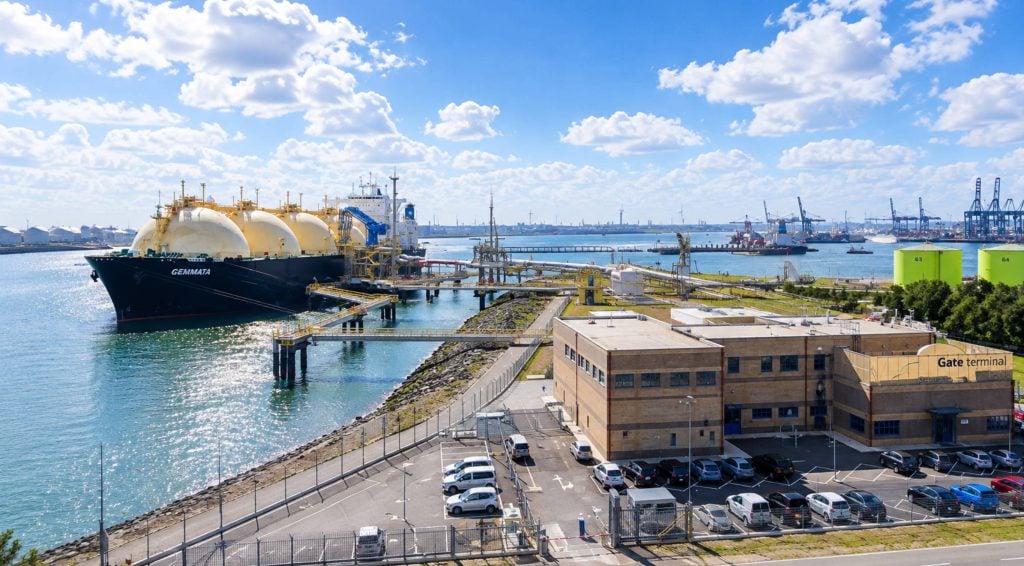
Koper is Slovenia’s only deep-water seaport and functions as the country’s primary link to Asian trade lanes. It is a full-service container terminal with regular connections to major Chinese origin ports including Shanghai, Ningbo, and Shenzhen, and it has invested heavily in rail-linked hinterland connections that let containers move onward by train rather than truck for longer inland journeys.
Two smaller ports, Izola and Piran, exist along the same short stretch of Adriatic coastline, but neither handles meaningful container volume, so in practice almost every ocean shipment bound for Slovenia clears through Koper. Some forwarders also route cargo through the nearby Italian port of Trieste, just across the border, when Koper’s terminal capacity is tight or when a carrier’s schedule favors that call instead.
There are no direct passenger or cargo flights between China and Slovenia, so air freight destined for Ljubljana Jože Pučnik Airport typically transits through a major European air hub such as Frankfurt, Vienna, Paris, or Moscow before completing the final short hop or a road transfer into Slovenia. This adds a connection but rarely adds much time, since these hubs handle dense daily China-Europe air freight capacity.
Shipping Modes from China to Slovenia
Choosing how to move a shipment from China to Slovenia usually comes down to a trade-off between cost, speed, and cargo volume. Ocean freight remains the backbone of the trade lane for anything beyond a few hundred kilograms, air freight covers urgent or high-value cargo, and rail freight has become an increasingly practical middle option for shippers who want to avoid both the slowest sea transit times and the highest air freight bills.
| Shipping Mode | Typical Use Case | Approximate Transit Time | Relative Cost |
| Sea Freight – FCL | Large volume, full container loads | 25–32 days to Koper | Lowest per unit for full loads |
| Sea Freight – LCL | Smaller volume, shared container | 26–36 days to Koper | Low, but higher per-CBM than FCL |
| Rail Freight | Mid-size volume, time-sensitive but not urgent | 18–25 days door to hub | Moderate |
| Air Freight | Urgent, lightweight, or high-value goods | 5–8 days | High |
| Express Courier | Samples, small parcels, e-commerce orders | 5–9 days | Highest per kilogram |
For most B2B importers moving furniture, machinery parts, electronics, or general merchandise, sea freight FCL remains the default choice once monthly order volume justifies a full container. Businesses still testing a product line, or those needing frequent smaller restocks, tend to lean on LCL consolidation or a hybrid strategy that pairs regular sea shipments with occasional air freight for anything that cannot wait.
Rail freight via the China-Europe rail network deserves more attention than it usually gets on this route. It is not as fast as air, but for cargo moving toward landlocked destinations in Central Europe, a rail-to-truck handoff can sometimes outperform a sea-to-Koper-to-truck routing on total door-to-door time, particularly when ocean schedules are disrupted.
Current Freight Rates and Transit Times (2026)
Ocean freight pricing on the China-Slovenia lane has been unusually volatile through the first half of 2026. Rerouting around the Cape of Good Hope, driven by continued disruption in the Red Sea and Strait of Hormuz corridor, has added sailing days and pulled available capacity out of the market, and rates into Koper jumped sharply as a result.
As of June 2026, FCL sea freight from China into the Port of Koper is running roughly $3,338 to $4,080 for a 20-foot container and $5,680 to $6,960 for a 40-foot container, an increase of around 60 percent compared with the prior month on a broad ocean freight index. Air and LCL rates have stayed comparatively stable through the same period, which has pushed some shippers who would normally default to FCL to reconsider LCL or air for time-sensitive partial loads.
| Mode | Equipment / Basis | Indicative Rate Range (June 2026) |
| Sea Freight FCL | 20GP container to Koper | $3,338 – $4,080 |
| Sea Freight FCL | 40GP container to Koper | $5,680 – $6,960 |
| Sea Freight LCL | Per CBM, consolidated | Held relatively stable |
| Air Freight | Per kg, general cargo | Held relatively stable |
These figures are indicative rather than fixed, since ocean freight pricing on this route can shift week to week depending on fuel surcharges, seasonal demand swings around Chinese holidays, and how carriers respond to the ongoing Cape rerouting. Anyone budgeting a shipment should treat published rate ranges as a planning benchmark and confirm a live quote before committing to a sailing date.
Transit time tells a similar story. Direct FCL sailings into Koper currently run about 25 to 32 days door to port, LCL slightly longer at 26 to 36 days because of the extra handling at consolidation and deconsolidation warehouses, and some indirect multi-stop sailings can stretch out considerably further, in rare cases toward 60 days or more when a carrier’s routing includes several intermediate port calls. Air freight, by contrast, typically clears in 5 to 8 days including customs processing, and express courier services can match or slightly beat that on door-to-door delivery for smaller parcels.
Customs Clearance and VAT Essentials in Slovenia
Slovenia’s customs and tax authority, the Financial Administration of the Republic of Slovenia, known locally as FURS, administers both import customs clearance and VAT collection. As an EU member state, Slovenia applies the EU’s common external tariff and customs code, so the documentation requirements will look familiar to anyone who has shipped into other EU countries, but a few local details are worth knowing before cargo arrives.
Every shipment needs, at minimum, a commercial invoice, a packing list, and the relevant transport document, a bill of lading for ocean freight or an air waybill for air shipments. Depending on the product category, additional certificates such as CE conformity documentation, phytosanitary certificates for plant-based goods, or safety data sheets may also be required, and missing paperwork is one of the most common causes of delay at Koper.
Slovenia’s standard VAT rate is 22 percent, with reduced rates of 9.5 percent applying to items such as basic foodstuffs, passenger transport, and certain medicines, and 5 percent applying to printed books and select publications. Import VAT is calculated on the customs value of the goods plus any duties and other charges payable on importation, so the tax base is not simply the invoice value of the cargo.
| Category | Rate / Threshold | Notes |
| Standard VAT rate | 22% | Applies to most imported goods |
| Reduced VAT rate | 9.5% | Food, medicines, passenger transport, and similar categories |
| Reduced VAT rate | 5% | Printed books and certain publications |
| Low-value parcel duty | €3 per item | Applies to consignments valued up to €150 from outside the EU, effective 1 July 2026 |
| VAT registration threshold | €60,000 | Nil threshold for non-resident businesses; a fiscal representative is required for non-EU companies |
The most significant recent change on this front took effect on 1 July 2026, when the EU closed the long-standing exemption that let parcels valued under €150 clear without customs duty. Under the new arrangement, low-value e-commerce consignments from outside the EU are now subject to a flat customs duty of €3 per item declared, in addition to the applicable VAT, and only customs representatives acting under indirect representation can process these declarations. For businesses that had been relying on that exemption to ship small parcels directly to Slovenian consumers, this changes the unit economics meaningfully and makes consolidated, professionally cleared shipments more attractive than ever.
Non-EU businesses that need to register for VAT in Slovenia are required to appoint a fiscal representative, and the registration threshold for distance sales of goods across the EU is €10,000 in aggregate, above which a company typically needs to register either locally or through the EU’s One Stop Shop scheme. None of this is unusual by EU standards, but it does mean that Chinese exporters selling directly to Slovenian buyers need a clear plan for who handles tax registration and customs representation before volume scales up.
FCL vs LCL: Which Fits Your Shipment
The FCL versus LCL decision on the China-Slovenia lane follows the same logic as most other trade routes, but the current rate environment adds a wrinkle worth factoring in. With FCL rates having jumped sharply in mid-2026 while LCL held comparatively steady, the cost gap between the two options has narrowed for shipments that do not fill a container much beyond half capacity.
FCL still makes sense whenever a shipment is large enough to use most of a container’s volume or weight capacity, since the buyer gets exclusive use of the box, faster loading and unloading, and less handling risk. LCL remains the right call for smaller, more frequent shipments, for businesses still validating demand before committing to full-container volumes, or for cargo that needs to be split across multiple final destinations within Slovenia or neighboring countries.
| Factor | FCL | LCL |
| Ideal shipment size | Fills most or all of a 20GP or 40GP container | Small to mid-size, sharing space with other cargo |
| Handling risk | Lower, single shipper per container | Higher, multiple shippers consolidated together |
| Cost structure | Fixed container rate regardless of fill level | Priced per cubic meter, scales with volume |
| Flexibility | Best for predictable, recurring volumes | Best for testing new markets or products |
A useful rule of thumb: once a shipment consistently exceeds roughly 15 cubic meters, it is worth running the numbers on FCL even if the container will not be completely full, since the per-unit cost advantage usually outweighs the underutilized space. Below that threshold, LCL consolidation into a shared container generally remains more economical, provided the consolidator has a reliable, frequent sailing schedule into Koper.
Inland Distribution: Moving Cargo Beyond Koper
Landing a container at Koper is only half the journey for most importers, since the majority of demand for Chinese-made goods sold into this corner of Europe sits outside Slovenia’s own borders. Understanding how cargo moves onward from the port terminal is just as important as understanding the ocean leg itself.
Koper’s terminal operator has invested significantly in rail infrastructure over the past decade, and a meaningful share of transit cargo now leaves the port by train rather than truck, particularly for destinations further inland such as Budapest, Bratislava, or southern Poland. Rail handoffs reduce road congestion costs and can be more predictable than trucking during periods of high demand, though they generally add a day or two compared with a direct truck run for closer destinations like Ljubljana, Graz, or Trieste.
For shipments that need to reach multiple final destinations across different countries, splitting a container at a bonded warehouse near Koper before onward distribution is common practice. This lets an importer bring in a single FCL shipment from China, clear it once under Slovenian customs jurisdiction, and then redistribute smaller lots by truck to buyers in Austria, Croatia, Hungary, or Italy without each leg requiring a separate customs process, since the goods are already in free circulation within the EU once cleared.
This is where the value of Koper’s geography becomes concrete rather than theoretical. A shipment bound for a buyer in Munich technically has to travel further overland from Koper than it would from Hamburg on a straight-line basis, but because Koper’s road and rail links into Bavaria are well developed and the port itself avoids the congestion that can build up at Europe’s largest container terminals, actual delivery times to many Central European cities are often comparable or faster.
Packaging, Labeling, and Cargo Preparation
Cargo preparation on the China-Slovenia lane follows standard EU import practice, but a few details are worth double-checking before goods leave the factory. Wooden packaging materials, including pallets and crates, must comply with ISPM 15 fumigation and marking standards, and missing or unclear stamps are a common reason for a container to be flagged for inspection at Koper.
Labeling should carry accurate CE marking where applicable, clear country-of-origin information, and product details that match the commercial invoice exactly, since discrepancies between physical labeling and paperwork are treated seriously by Slovenian customs and can trigger a full cargo examination rather than a routine document check. For electronics, toys, and machinery in particular, having conformity certificates ready before the shipment arrives, rather than scrambling to produce them once a container is held, saves days of storage fees and demurrage charges at the port.
Cargo insurance is worth budgeting into the landed cost calculation as well. Given how much ocean freight rates and sailing schedules have shifted through 2026, and the added transit time that Cape rerouting has introduced on some strings, the exposure window for damage or loss has effectively lengthened compared with a typical year, making adequate coverage a more meaningful line item than it might have been in calmer periods.
Common Challenges When Shipping to Slovenia
Despite Koper’s efficiency relative to its size, importers new to this lane run into a handful of recurring problems. The first is simply underestimating how much ocean freight rates can move month to month. The roughly 60 percent jump in FCL pricing between May and June 2026 caught plenty of shippers off guard, and businesses that had locked in pricing assumptions from a few months earlier found their landed cost projections badly out of date almost overnight.
A second common issue is documentation mismatches. Because Koper handles cargo destined for onward delivery across half a dozen countries, customs brokers there are strict about invoice values, HS code accuracy, and country-of-origin declarations, and even small inconsistencies between the packing list and the commercial invoice can trigger a hold. This is compounded by the fact that Slovenia’s customs volume, while efficient, is smaller than at Rotterdam or Hamburg, so a flagged shipment can sit longer relative to the overall transit time than it would at a larger port with more processing capacity running in parallel.
Third, businesses selling directly to Slovenian or nearby EU consumers sometimes overlook the July 2026 change to low-value parcel duties. A pricing model built around parcels clearing duty-free under the old €150 exemption no longer holds, and the €3-per-item charge plus VAT and any customs representative fee needs to be built into landed cost calculations or passed through to the customer transparently.
Finally, capacity planning around Chinese public holidays, particularly the weeks surrounding Lunar New Year and National Day, remains an underestimated risk on this route. Factory shutdowns compress booking windows before and after these periods, and combined with the current volatility from Cape rerouting, forwarders and importers who do not book early can find themselves squeezed out of available space during peak weeks.
Choosing a Freight Forwarder for the China–Slovenia Lane
Not every freight forwarder that lists Europe as a coverage area actually has depth of experience on smaller, specialized lanes like Koper. Many large forwarders default their European bookings toward Rotterdam, Hamburg, or Antwerp simply because those ports see the most volume, and a shipment destined for Slovenia can end up routed less efficiently than it needs to be if the forwarder is not actively managing capacity on Adriatic-bound strings.
A useful screening question for any prospective partner is how often they actually book cargo into Koper versus routing everything through a northern hub by default, and whether they can show real transit time data for that specific port rather than generic estimates. Familiarity with FURS documentation requirements, the July 2026 low-value parcel duty change, and current Cape-rerouting-driven rate volatility are all practical signs of a forwarder that treats this lane as a genuine specialty rather than an afterthought.
Beyond port-specific knowledge, the other differentiator worth weighing is how much of the chain a single provider can actually own. A forwarder that only books ocean freight still leaves an importer to separately coordinate factory pickup, customs brokerage, and last-mile trucking, each with its own point of failure. A provider that can manage first-leg transportation, the ocean or air booking itself, customs clearance, and final delivery under one contract removes several of those handoff points and generally makes it easier to trace a shipment and resolve problems quickly when something does go wrong.
How Topway Shipping Supports the China–Slovenia Route
Navigating rate volatility, customs documentation, and a two-step routing through a major hub before final delivery is exactly the kind of complexity that a specialized freight forwarder is built to absorb. Topway Shipping, headquartered in Shenzhen, has been providing cross-border e-commerce logistics solutions since 2010, and its founding team brings more than 15 years of combined experience in international logistics and customs clearance.
While Topway Shipping’s roots are strongly tied to China-U.S. transportation, the company’s service model covers the full logistics chain end to end, including first-leg transportation from factories across China, overseas warehousing, customs clearance, and last-mile delivery, along with flexible full-container-load and less-than-container-load ocean freight services from China to major ports worldwide, Koper among them.
For a shipment moving toward Slovenia, that end-to-end structure matters in practice. Rather than coordinating separately with a factory pickup agent, an ocean carrier, a customs broker at Koper, and a final-mile trucking company, an importer working with Topway Shipping can consolidate first-leg pickup, ocean or air booking, and customs clearance documentation through a single point of contact, which reduces the number of places a shipment can get stuck and makes it easier to react quickly when freight rates or sailing schedules shift, as they have repeatedly through 2026.
Topway Shipping’s overseas warehousing capability is also particularly useful for businesses running LCL consolidation or testing the Slovenian and broader Central European market before committing to full-container volumes, since it allows inventory to be staged and released flexibly rather than forcing every order into a single large shipment.
That flexibility matters most in exactly the kind of environment this lane has seen through 2026, where sea freight pricing can jump sharply within a single month and sailing schedules can be disrupted with little warning. A forwarder that already has established relationships with carriers serving Koper, and that can quickly pivot a booking between FCL, LCL, or air depending on how conditions shift, gives an importer meaningfully more control over both cost and delivery reliability than trying to book each leg independently through separate vendors.
Conclusion
Slovenia’s modest size on the map hides a genuinely strong logistics case. The Port of Koper puts Chinese cargo within a day’s drive of Vienna, Munich, and Prague, and within two days of much of the rest of Central and Eastern Europe, which makes it a legitimate alternative to routing everything through the North Sea ports that most importers default to without thinking twice. That said, 2026 has been a volatile year on this lane, with FCL rates spiking sharply, low-value parcel rules changing in July, and Cape rerouting adding uncertainty to sailing schedules.
Success on this route comes down to three things: choosing the right shipping mode for your volume and urgency, keeping customs documentation clean and current with the latest VAT and duty rules, and working with a forwarder experienced enough to adjust quickly when conditions change. For businesses that want that experience built in rather than assembled piecemeal, a partner like Topway Shipping, with its full first-leg-to-last-mile service chain and ocean freight network already reaching major global ports, offers a practical way to turn Slovenia from an overlooked destination into a genuinely efficient gateway into Central Europe.
None of this requires treating Slovenia as a niche curiosity. Once the routing, documentation, and partner selection are handled properly, it functions as exactly what its geography always promised: a compact, well-connected doorway into some of the EU’s wealthiest and most industrially dense regions, reachable from China with a transit profile that competes credibly with routes many importers assume are the only sensible option.
FAQs
Q: How long does it take to ship from China to Slovenia by sea?
A: FCL sea freight into the Port of Koper currently takes roughly 25 to 32 days, while LCL shipments typically run 26 to 36 days because of extra consolidation handling. Indirect sailings with multiple port stops can take considerably longer.
Q: Which port should I use to ship to Slovenia?
A: The Port of Koper is Slovenia’s only major container seaport and handles virtually all ocean freight into the country. Some forwarders also route through the nearby Italian port of Trieste when schedules or capacity make that more efficient.
Q: What is the current VAT rate in Slovenia for imported goods?
A: The standard VAT rate is 22 percent, with reduced rates of 9.5 percent and 5 percent applying to specific categories such as food, medicine, passenger transport, and printed publications.
Q: Do small parcels from China still ship duty-free to Slovenia?
A: No. As of 1 July 2026, the EU ended the exemption for consignments valued under €150, and shipments from outside the EU are now subject to a flat customs duty of €3 per declared item in addition to VAT.
Q: Should I choose FCL or LCL for a shipment to Slovenia?
A: FCL generally makes sense once a shipment fills a meaningful share of a container’s capacity, typically above roughly 15 cubic meters. Smaller or less frequent shipments are usually more cost-effective moved as LCL, especially while FCL rates remain elevated.
Q: Can Topway Shipping handle customs clearance and last-mile delivery in Slovenia?
A: Topway Shipping’s service chain covers first-leg transportation, overseas warehousing, customs clearance, and last-mile delivery, alongside flexible FCL and LCL ocean freight services from China to major ports worldwide, allowing shipments to be coordinated end to end through a single partner.
Q: Why has ocean freight to Slovenia gotten more expensive in 2026?
A: Continued disruption around the Red Sea and Strait of Hormuz has pushed many carriers to reroute via the Cape of Good Hope, adding sailing days and reducing available capacity. That combination pushed FCL rates into Koper up roughly 60 percent month-over-month as of June 2026.